




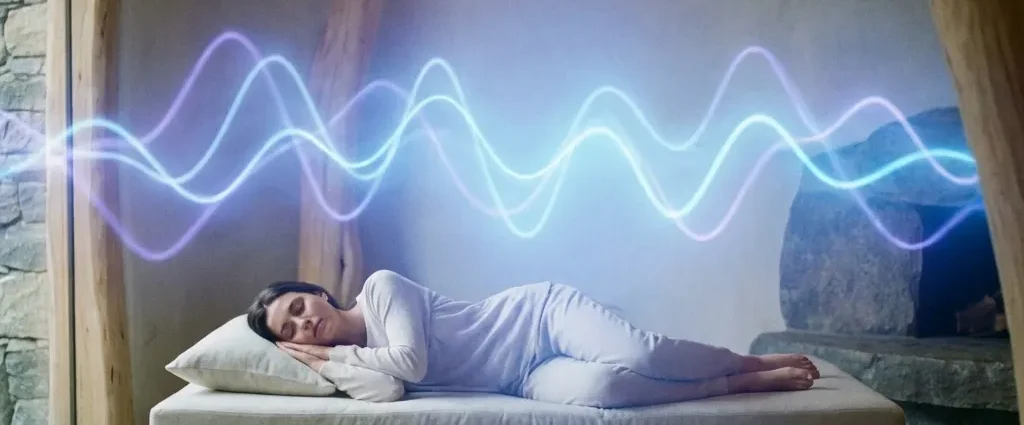
Many people feel it clearly: the body is tired, sleep is not restful and the immune system reacts sensitively. Especially with chronic complaints or Autoimmune diseases the feeling often arises that traditional approaches alone are not enough. This is precisely where Brain waves are increasingly coming into focus. They not only control thinking and emotions, but also regeneration, sleep quality and immune balance.
Brainwave regeneration is no longer an esoteric buzzword. Modern research clearly shows that certain frequencies influence profound physiological processes. Delta theta frequencies in particular play a key role in this. They are closely linked to deep sleep, cell repair, hormone regulation and the calming of the nervous system.
This article shows you step by step how brainwaves work, why delta and theta are so important and how they can be used in a targeted way. You will find out what scientific findings are available, how Frequency therapy is used in practice and what therapists and those affected should look out for. The connection to immune balance, chronic fatigue and emotional stability is also explained in an understandable way.
We deliberately remain down-to-earth. No empty promises. Instead, clear connections, simple language and practical examples. The aim is to give you a solid foundation so that you can not only understand brainwaves, but also integrate them meaningfully into your everyday life or therapeutic work.
What brainwaves really are and why they control the body
Brain waves are electrical oscillations caused by the activity of nerve cells. They can be divided into different frequency ranges. Each range represents a specific state of consciousness and body. In everyday life, fast waves often dominate, for example during stress, multitasking or constant sensory overload. However, these states are not very suitable for regeneration as they keep the sympathetic nervous system active.
Delta theta frequencies are among the slowest brain waves. Delta waves range from 0.5 to 4 Hertz. Theta waves are between 4 and 7 Hertz. Both occur primarily during sleep or in deep states of relaxation. This is exactly where the most important repair processes in the body begin. This not only affects muscles or organs, but also the hormonal and immunological balance.
In the delta state, the body releases more growth hormones. These are crucial for cell repair, tissue regeneration and the stabilization of the immune system. At the same time, the activity of pro-inflammatory messenger substances decreases. Theta waves, on the other hand, support emotional processing, memory consolidation and the activation of the parasympathetic nervous system. They create the basis for inner security.
Research shows that people with disturbed sleep often have too little delta activity. At the same time, the nervous system remains on alert. This can therefore promote inflammation, destabilize blood sugar and slow down healing processes. Brainwave regeneration therefore means giving the body access to these slow frequencies again and reactivating natural self-regulation.
| Brainwave | Frequency range | Central effect |
|---|---|---|
| Delta | 0.5, 4 Hz | Cell regeneration, immune modulation |
| Theta | 4, 7 Hz | Emotional processing, parasympathetic nervous system |
These correlations are not a theoretical construct. They form the basis of modern approaches in sleep medicine, neurotherapy and complementary frequency therapy.
Delta waves and deep sleep as the foundation of brainwave regeneration
Delta waves are the key to the deepest sleep. In this phase, the body shuts down almost all external stimuli. The brain switches into repair mode. Cells renew themselves, inflammatory processes are regulated and the immune system receives important stimuli. The glymphatic system, which removes waste products from the brain, also works particularly effectively here.
Studies show that an increase in delta activity measurably improves the quality of sleep. Typical effects include fewer waking phases at night, longer periods of deep sleep and a more rested feeling in the morning. People with chronic pain or autoimmune diseases in particular benefit from this, as pain processing and immune regulation are strongly dependent on sleep.
One exciting aspect is the role of the hippocampus. New findings show that this area is actively involved in the generation of slow waves. This makes it clear that memory, emotions and physical regeneration are more closely linked than long assumed.
Our research sheds light on a previously unrecognized aspect of brain activity during deep sleep. We have discovered that the hippocampus plays a crucial role in the generation of slow waves and sleep spindles.
For the Practice this means that deep sleep is not a passive state. It is highly active and crucial for long-term health. Methods such as acoustic frequency stimulation, gentle light pulses or rhythmic breathing patterns can help to facilitate entry into delta states.
Many therapists today combine these approaches with classic sleep hygiene. Regularity is important here. Brainwave regeneration does not develop its effect overnight, but through consistent use over weeks.
Theta frequencies for emotional healing and the nervous system
Theta waves have a more subtle and emotional effect than delta waves. They often occur when falling asleep, in REM sleep or during deep meditation. In this state, memories are processed and emotional tensions are released. Unprocessed experiences can be reorganized.
Theta states are particularly valuable for people with chronic stress, anxiety disorders or trauma. They promote the activation of the parasympathetic nervous system. The body switches from tension to regeneration. Heart rate, blood pressure and cortisol levels drop measurably.
The discovery of spindle oscillations in individual hippocampal axons opens up new avenues for understanding the mechanisms of memory consolidation during sleep.
In frequency therapy, theta frequencies are often used specifically to release emotional blockages or support inner imagery work. This frequency level can also help to ease the transition to sleep in cases of insomnia with inner restlessness or circling thoughts.
A practical approach is the combination of breath work, sound frequencies and inner focus. A calm environment without distractions is important. The nervous system needs security in order to open up and let go of old patterns.
At this point, it is also worth taking a look at the Long-term effect of Solfeggio frequencies, as many users describe similar effects over a period of months. In addition, the contribution Solfeggio frequencies Application: Dosage, duration, errors provide additional practical tips.
Brain waves, sleep deprivation and performance
The connection between brain waves and performance is also interesting. Studies show that increased delta and theta activity during wakefulness can be a sign of exhaustion. Concentration, reaction time and decision-making ability then decrease.
During sleep, on the other hand, the same frequencies have a regenerative effect. They balance neuronal networks and restore mental performance. Chronic sleep deprivation shifts this balance and increases the risk of depression and metabolic disorders in the long term.
We found a strong positive correlation between delta wave power and performance impairment (maximum r = 0.81), and a strong negative correlation between theta waves and performance (maximum r = -0.84).
This insight is important in practice. Frequencies must be used in a targeted and appropriately timed manner. Delta theta frequencies belong in resting phases, not in active everyday life or before demanding activities.
Therapists use this knowledge to consciously choose treatment times. These frequencies are particularly useful in the evening or before sleep. This supports the body's natural sleep program and prevents overload.
Modern frequency therapy and technical approaches
Technical systems have developed considerably in recent years. Modern devices combine acoustic signals, light pulses and electromagnetic fields. The aim is to precisely synchronize brain waves without overstraining the body.
A central keyword is brainwave entrainment. The brain adapts to an external rhythm. This process has been well studied and is also used in neurorehabilitation, pain therapy and stress medicine.
However, individualization is important. Every person reacts differently to frequencies. This is why EEG-supported adaptation is becoming increasingly important. It makes it possible to avoid overstimulation.
In addition, finely tuned frequency work can be helpful for autoimmune diseases or neurological stress. If you would like to delve deeper, you can find additional background information in the article on Frequency therapy effect and in the article Breast cancer and frequency therapy.
Immune balance and chronic diseases
The immune system reacts sensitively to sleep quality and the nervous system. Deep sleep phases promote the release of regulating cytokines and the activity of NK cells. If these phases are missing, the system becomes unbalanced.
Delta waves support precisely these processes. Theta waves relieve the stress axes and reduce the permanent activation of the sympathetic nervous system and HPA axis. Together they create the basis for immune balance.
This is particularly relevant in the case of long COVID, ME/CFS or fibromyalgia, where sleep disorders and neuronal dysregulation often occur together. Frequency work can have a regulating effect here, without additional stress.
It is important to have realistic expectations. Frequency therapy does not replace medical treatment. However, it can support regulatory processes and promote self-healing.
For those affected by autoimmune diseases, the contribution to the Autoimmune diseases and frequency therapy valuable additions.
Practical guide for beginners and advanced users
The introduction to working with brainwaves should be gentle. Start with short sessions of 15 to 20 minutes. Ensure a quiet environment, subdued lighting and a comfortable posture.
Advanced users can extend sessions or combine different frequencies. A clear intention is important. Would you like to sleep better, promote emotional relief or physical regeneration?
Note any changes. Sleep quality, energy levels, mood and pain perception are good indicators. This results in a personal practice guide that is geared towards your own needs and allows you to make adjustments.
Regular breaks and conscious integration into everyday life significantly increase the long-term benefits.
Frequently asked questions and typical mistakes
A common mistake is overstimulation. More is not better. Delta theta frequencies in particular have a deep effect and require rest. Sessions that are too long can cause tiredness or drowsiness.
Many people ask whether daily use makes sense. In most cases, yes, as long as the sessions remain short and are chosen consciously. Listen to your body and reduce if necessary.
Another point is patience. Brainwave regeneration often unfolds its effects gradually. After all, small improvements are a good sign. Fluctuations are also part of the process and are normal.
The essentials in a nutshell
Brain waves are a powerful key to regeneration, sleep and immune balance. Delta Theta frequencies support profound healing processes when used in a targeted and conscious way.
Research confirms their effect. Practice shows how valuable they can be for chronically ill people, exhausted people and therapists. Timing, individualization and a respectful approach to the nervous system are crucial.
If you want to take the next step, start small. Observe your body. And integrate frequency work as an integral part of your health routine. This will create lasting change, step by step.


Comments are closed, but trackbacks and pingbacks are open.