



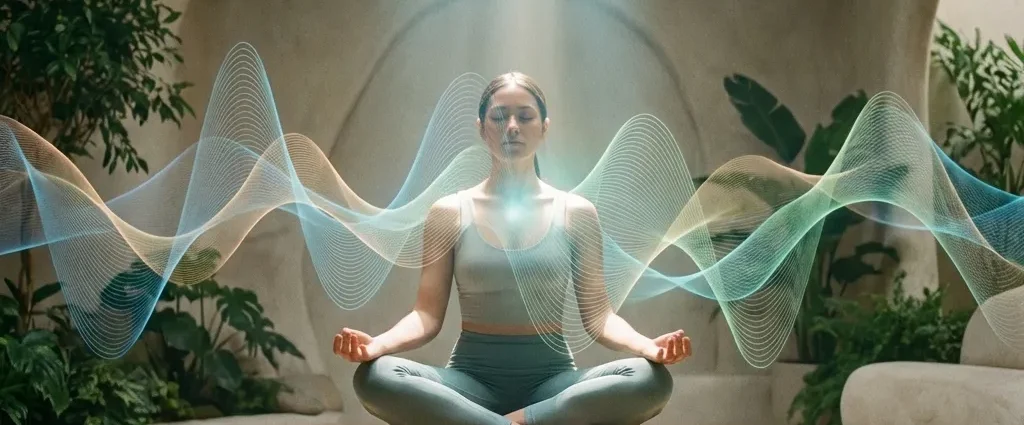
Many people intuitively sense that certain sounds are calming. Others make you anxious. Some music helps you fall asleep, others trigger stress. This is precisely where the interest in solfeggio frequencies and their effect on the nervous system begins. These frequencies have been used in complementary medicine for years. But what is feeling? And what can be explained neurophysiologically? This question is at the center of our Solfeggio frequencies effect in more detail.
Especially for people with chronic complaints, Autoimmune diseases or prolonged exhaustion, the nervous system is a central key. If it remains permanently in stress mode, no real regeneration can take place. Many sufferers therefore look for gentle methods to regain balance. Solfeggio frequencies are often presented as a simple solution. This leads to hope, but also to confusion.
In this article, we take a closer look. We separate myth from measurable effect. We explain clearly how the nervous system reacts to frequencies. And we show which Solfeggio frequencies can have an effect and where there are clear limits.
You will learn how auditory stimuli influence the autonomic nervous system. Why 432 Hz and 528 Hz in particular have been scientifically investigated. And how therapists can usefully apply these findings in Practice can use.
We are guided by current neurophysiological data. Not mystical numbers. Not on promises of salvation. But on what is measurable. This is exactly what makes this article valuable for alternative practitioners, therapists and advanced users of the Frequency therapy.
At the end you will know how to realistically assess Solfeggio frequencies. As a tool for regulating the nervous system. Not as a substitute for medicine. But as a useful supplement.
How the nervous system reacts to Solfeggio frequencies
The human nervous system is constantly busy evaluating information. Sounds are among the strongest stimuli of all because they are closely linked to safety and danger in evolutionary terms. Acoustic signals are not only processed in the auditory cortex, but are also coupled with vegetative reactions at the level of the brain stem. This is where reflexes develop that influence heartbeat, muscle tone and breathing patterns.
When a sound is steady, calm, and predictable, it can activate the parasympathetic nervous system. This is the part of the nervous system responsible for relaxation, Digestion and is responsible for recovery. Fast, loud, or chaotic sounds, on the other hand, activate the sympathetic nervous system—that is, stress, alarm, and tension. This mechanism explains why monotonous natural sounds or calm music often have a soothing effect.
This is exactly where Solfeggio frequencies come in. Not as magic numbers. But rather as clearly defined pitches that affect the ear and create rhythmic patterns. Low to medium frequencies with an even structure are particularly relevant, as they trigger fewer alarm reactions.
Research shows that certain frequencies can have measurable effects on heart rate variability, cortisol levels and respiratory rate. For example, studies report an increase in HRV of up to 10.15 %, which is considered a sign of improved parasympathetic activity.
The following overview shows which frequencies were examined in particular and which effects were observed.
| Frequency | Target system | Observed effect |
|---|---|---|
| 528 Hz | Autonomic nervous system | Increased parasympathetic activity |
| 528 Hz | Endocrine system | Reduction of cortisol |
| 432 Hz | Cardiovascular system | Reduction of pulse and blood pressure |
These effects do not mean a cure. But they do show that the nervous system can process frequencies and react to them, especially with repeated, mindful use.
528 Hz and the autonomic nervous system
The frequency 528 Hz is often referred to as the love frequency. This term is not scientifically tenable and originates from spiritual interpretations. Nevertheless, 528 Hz is one of the best-studied acoustic frequencies in a therapeutic context, especially with regard to stress regulation.
Studies by Juntendo University have shown that just five to ten minutes of listening to music at 528 Hz can trigger measurable changes. Particularly striking was the reduction in stress hormones such as cortisol and a slight increase in oxytocin, which is associated with relaxation and social security.
The results indicate that the influence of music on the autonomic nervous system and the endocrine system varies depending on the frequency of the music.
This means that not all music has the same effect. Both the pitch and the sound structure play a role. 528 Hz seems to be particularly effective in activating the parasympathetic nervous system and bringing the body out of permanent stress mode.
This is important in practice. Many chronically ill people are permanently in a stress reaction. The nervous system can no longer rest, which blocks healing processes. Here, targeted acoustic stimulation can help to bring the body back into a regulatory state.
However, the type of application is decisive. Pure sine tones have a different effect than musically embedded frequencies. Volume, duration, time of day and individual sensitivity also play a role.
In frequency therapy, 528 Hz is therefore usually used as a supporting element. Not in isolation. Instead, it is embedded in breathing work, relaxation or bioenergetic procedures to avoid overstimulation. Further information on long-term Long-term effect of Solfeggio frequencies: Experiences after 6-24 months can be found here.
432 Hz, music and vegetative balance
432 Hz is also often mentioned in connection with the solfeggio frequency effect. From a scientific point of view, this is an alternative tuning of music compared to the international standard of 440 Hz. The difference is small, but physiologically measurable.
Studies from Italy showed that music at 432 Hz led to greater relaxation in test subjects. Pulse and blood pressure dropped measurably, in some cases by several beats per minute. Subjective feelings of anxiety also decreased, which was recorded using standardized questionnaires.
The mechanism behind this is not fully understood. It is suspected that a better Resonance with natural body rhythms such as breathing and heartbeat. It is important to note that this is not about spirituality, but about physiology and perception processing.
This effect was particularly evident during medical procedures or in stressful situations. In waiting areas or during rehabilitation measures, music at 432 Hz can provide simple support.
This opens up practical possibilities for therapists. Music is low-threshold, inexpensive and easy to combine. It has an indirect but constant effect without actively challenging the body.
At this point, it is also worth taking a look at the connection between Brain waves and regeneration. This aspect is discussed in the article Brainwave regeneration: frequencies for sleep and immune balance dealt with in detail.
What neurophysiology confirms and what it does not
A common mistake in the discussion about Solfeggio frequencies is the mixing of proven effects and unsubstantiated claims. Neurophysiologically, some things can be clearly stated, but others cannot.
It has been confirmed that acoustic frequencies can modulate the autonomic nervous system. They influence the vagus nerve, the HPA axis and hormonal stress reactions. These effects can be measured via heart rate variability, EEG patterns and hormone analyses.
It has not been confirmed that certain sequences of numbers specifically heal organs, change cell structures or repair DNA. Such statements come from spiritual traditions or marketing, not from medicine.
Also important: the effect is individual. Factors such as hearing ability, previous experience, emotional conditioning and expectations strongly influence the reaction. This explains why some people react very sensitively and others hardly notice any effects.
In practice, this means that Solfeggio frequencies are no substitute for therapy. But they can support regulation. Especially in the case of functional disorders, chronic stress or psychosomatic complaints. You can find more background information in the article Frequency therapy effect: What frequencies do in the body.
This realistic classification protects against disappointment. And it strengthens the credibility of frequency therapy as a whole by clearly locating it within the framework of neurophysiology.
Use for chronic diseases
Chronic illnesses almost always have a nervous component. Constant stress, inflammation and exhaustion go hand in hand. The nervous system loses its flexibility and remains trapped in protective patterns.
Here, nervous system frequencies can help to enable more adaptability again. Not through coercion. But through gentle stimuli that signal safety.
In practice, therapists report better sleep, reduced pain perception and emotional stabilization. This approach is particularly interesting for autoimmune diseases, fibromyalgia or long-COVID.
Studies show that improved parasympathetic activity can indirectly reduce inflammatory markers such as CRP or TNF-α. Frequency work does not have a direct effect on the immune system, but rather via regulation.
An in-depth look at this can be found in the article Autoimmune diseases Frequency therapy: balance instead of suppression.
A clear structure is important: short applications, low volume, regular breaks. More is not better. The nervous system needs time to integrate new patterns.
Combination with modern frequency therapy
Solfeggio frequencies work best in combination with other methods. High-frequency therapy, neurofeedback or breathing techniques can enhance the effects because they address different levels of regulation.
Modern approaches work with heart rate variability as feedback. This makes it possible to individually identify which frequencies have a regulating effect. This is a big step away from blanket recommendations towards personalized therapy.
Plasma technologies and d'Arsonvalization ultimately aim to regulate the autonomic nervous system. Acoustic frequency work complements these procedures on a sensory and emotional level.
Another advantage of the combination is better compliance. Patients often find music and sound pleasant, which increases their willingness to practice regularly.
A clear practical guide is recommended for beginners. This is exactly where well-founded training courses come in, such as those offered on the website of Herbert Eder with a focus on safety and efficacy.
Frequently asked questions from practice
Many users ask themselves how often Solfeggio frequencies should be used. The answer is simple: less than expected. Two to three short sessions per week are often enough to feel the first effects.
Another question concerns children and young people. Special care is required here. The nervous system is still developing. Gentle pieces of music are recommended instead of pure frequency tracks.
You should also pause if you have strong emotional reactions. Regulation must not be overwhelming. Tears, restlessness or tiredness are indications to reduce the pace.
People often ask whether headphones are necessary. They can enhance the effect, but are not essential. Speakers in a quiet environment are often sufficient.
Basically, perception comes before theory. The individual reaction is more important than any frequency number.
The heart of the matter
Solfeggio frequencies are not a miracle cure. But they are not nonsense either. From a neurophysiological point of view, certain frequencies can have a measurable effect on the nervous system.
Especially 528 Hz and 432 Hz show effects on stress regulation, parasympathetic activity and emotional stability. This Solfeggio frequency effect is not a belief, but observable.
The right framework is crucial. Realistic expectations. Professional support. And the willingness to understand the nervous system as an adaptive system.
If you want to delve deeper, it is also worth reading the article Solfeggio frequencies Application: Dosage, duration, errors.
The next step is not more frequency. But more understanding. Then sounds become tools. And regulation becomes possible again.

Comments are closed, but trackbacks and pingbacks are open.