





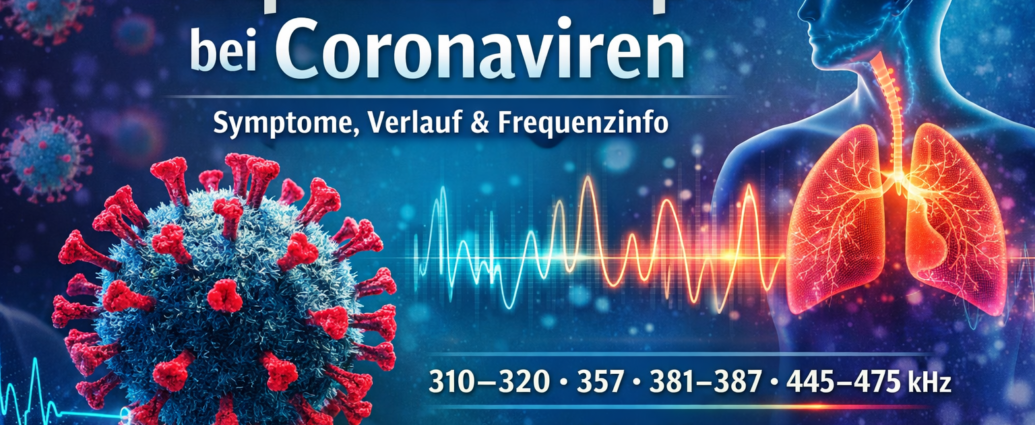
Coronaviruses belong to a group of RNA viruses with an envelope structure that can primarily affect the respiratory tract in humans. Several known strains are capable of causing infections in humans. These include HCoV 229E, HCoV OC43, SARS-CoV, NL63 and HKU1. Some of these Viruses are mainly associated with cold symptoms, while others have attracted particular attention in medical history due to more severe courses.
What are coronaviruses?
Coronaviruses are viruses that can affect both the upper and, in certain cases, the lower respiratory tract. Individual strains have long been known to trigger cold-like symptoms. Coronavirus-related infections are particularly common in the winter months and early spring. As these viruses are not always easy to cultivate and assess in the laboratory, their exact significance in common cold syndromes has long been more difficult to classify than with other respiratory viruses.
However, there are clear differences within this group of viruses. While some strains mainly cause mild infections of the upper respiratory tract, others are associated with more severe symptoms. The best-known example from the literature is SARS-CoV, which can infect both the upper and lower respiratory tract and in certain cases also affects the gastrointestinal tract.
Known coronavirus strains in humans
The known human pathogenic coronaviruses include HCoV 229E and HCoV OC43, which are usually associated with typical cold symptoms. There are also NL63 and HKU1, which have also been detected in humans. SARS-CoV, which became known as the trigger of severe acute respiratory syndrome, plays a special role.
The literature describes SARS as a disease that led to a major outbreak in Asia in the early 2000s. This made it clear that coronaviruses can not only cause banal cold symptoms, but can also be associated with considerable health risks in certain variants. As a result, the group of coronaviruses was also investigated much more intensively from a medical perspective.
Typical symptoms of a coronavirus infection
The symptoms can vary depending on the strain of the virus. The main symptoms are often reminiscent of a classic cold or flu-like infection. These include coughing, sore throat, a general feeling of illness, fatigue and sometimes muscle pain. Some sufferers also report gastrointestinal symptoms.
In connection with SARS, the literature describes particularly early symptoms that can become apparent within a few days of onset. These include myalgia, lethargy, cough, sore throat and gastrointestinal symptoms. High fever is described as a common and particularly noticeable feature. Depending on the severity, this can develop into a complex clinical picture that requires close medical attention.
Why coronaviruses can vary in severity
Not every coronavirus infection is the same. While some strains tend to be associated with milder respiratory infections, other variants can cause significantly more severe symptoms. Decisive factors here include the strain of virus affected, the individual's physical condition, the immune system and the involvement of deeper sections of the respiratory tract.
Especially when the lower airways are affected, the strain on the body can increase significantly. In more severe cases, breathing can be significantly impaired. The literature on SARS describes that some of those affected require intensified medical support, including mechanical ventilation. This shows how broad the spectrum of coronavirus diseases can be.
Conventional medical view of diagnosis and therapy
The conventional medical classification of coronavirus infections focuses on symptoms, clinical course, affected organ systems and possible complications. It is particularly important to differentiate between mild infections of the upper respiratory tract and more severe courses involving the lower respiratory tract. The medical assessment is based on the intensity, duration and dynamics of the symptoms.
The literature describes that a specific effective standard therapy is not always a priority for coronavirus infections. This makes clinical assessment, symptom-oriented support and attention to possible complications all the more important. Intensive medical support may be required in more severe cases.
The importance of the whole organism in viral infections
Coronavirus infections clearly show that an infection can be much more than a localized irritation of the mucous membranes. Depending on how it progresses, the entire organism can be affected. Tiredness, weakness, fever, muscle pain, coughing, breathing problems and gastrointestinal symptoms make it clear that the body can be affected on several levels.
With systemic stress in particular, it becomes clear why extended approaches take into account not only the isolated symptom, but the entire human condition. This includes resilience, regenerative capacity, vegetative stability and the way in which the organism reacts to infections. This consideration also forms the bridge to complementary models of thought.
Complementary perspective on frequency therapy and frequencies
Around the Frequency therapy is often associated with terms such as Resonance, vibration and regulation. In a complementary understanding, this involves looking at biological stress not only biochemically, but also from the point of view of system dynamics and inner order. Such perspectives are complementary to conventional medical descriptions and place certain frequencies in a larger context.
In the literature, frequency lists within such complementary models are understood as a thematic orientation. They are not considered in isolation, but are classified in relation to the reaction situation, stress patterns and the broader understanding of frequency therapy and frequencies. This creates a complementary perspective that deals with the topic of oscillation and regulation.
Frequency info
The following resonance ranges for coronaviruses are mentioned in the literature:
310-320, 350, 357, 381-387, 389, 395-398, 445, 464-475, 478-481 kHz
The following additional frequency ranges are listed in the literature for certain mutated coronaviruses:
458-462 kHz
In the complementary context of frequency therapy and frequencies, this information is understood as supplementary literature references.
Conclusion
Coronaviruses comprise several different virus variants that can trigger cold symptoms, respiratory symptoms and, in certain cases, more severe courses of disease in humans. Conventional medicine focuses on the virus group, typical symptoms, course, stress on the organism and the assessment of possible severe developments. In the complementary environment, the view of frequency therapy and frequencies can be understood as a thematic extension. The frequency ranges mentioned in the literature are used as short Frequency info in a larger context.


Comments are closed, but trackbacks and pingbacks are open.