





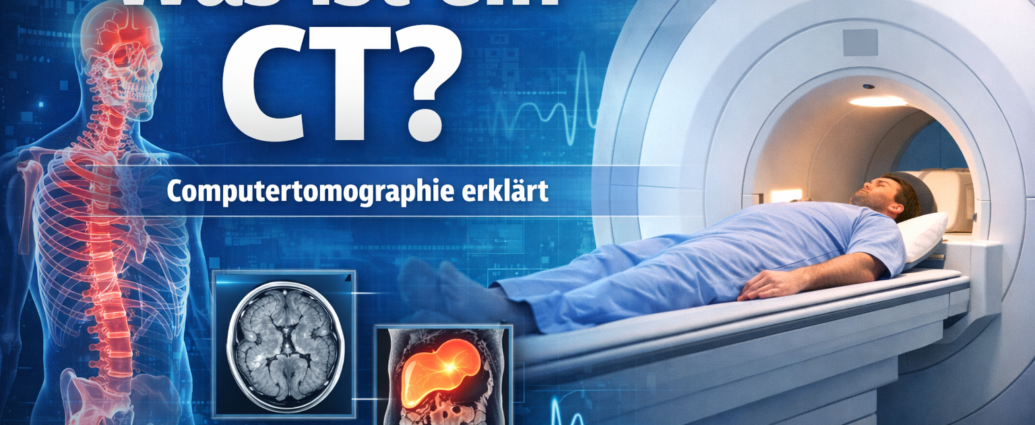
The Computer tomography, short CT, is one of the most important imaging techniques in modern medicine. It is used to visualize the inside of the body quickly and precisely. Particularly in emergency situations, in the case of unclear complaints, injuries, but also in connection with Cancer diseases CT has great significance. Many people hear the term in everyday life or when visiting the doctor, but do not know exactly how a CT works and how it differs from other examination methods.
What does CT mean?
CT stands for Computer tomography. This is an imaging procedure in which the patient is examined with the help of X-rays and computer-assisted analysis, detailed cross-sectional images of the body can be created. In contrast to conventional X-rays, where only a single image is taken, CT generates many cross-sectional images from different perspectives. These can then be combined to create very precise images of organs, bones, vessels and tissues.
This gives doctors a very precise insight into the inside of the body, which makes diagnostics much easier.
How does a CT work?
During the examination, the patient lies on a movable table that moves through a ring-shaped device. Inside the device, an X-ray tube circles around the body, taking numerous images in a very short time. A computer processes this data into sectional images that can be analyzed layer by layer.
Depending on the issue, an additional Contrast medium can be used. This helps to better visualize certain structures such as blood vessels, organs or pathological changes.
A major advantage of CT is its speed. Many examinations only take a few minutes, some even just a few seconds.
When is a CT scan used?
CT is used in many medical fields. It is used particularly frequently for
Injuries and emergencies
After accidents or suspected internal injuries, CT can provide important information very quickly. It is also often used for skull injuries, bleeding or broken bones.
Chest and abdominal discomfort
In the case of unclear pain, inflammation or changes in the lungs, liver, kidneys or intestines, a CT scan can help to identify the cause more precisely.
Examination of bones and joints
CT is very well suited for the visualization of bony structures and complex fractures.
Vessel representations
Special CT techniques can be used to visualize blood vessels, for example in cases of suspected vasoconstriction, aneurysms or pulmonary embolisms.
CT for cancer
Especially with Cancer diseases CT plays a central role. It is used to Tumors to recognize tumors, estimate their size, assess affected regions or monitor the course of treatment. Also in the search for Metastases CT is often an important diagnostic tool.
How does a CT scan work?
The examination is usually uncomplicated. Before the examination begins, it is clarified whether contrast medium is necessary and whether any special precautions need to be taken. The patient then lies quietly on the examination table while the device takes the images.
It is important to lie as still as possible during the examination. Sometimes you are instructed to hold your breath briefly to make the images even more accurate. Compared to the CT scanner, the MRI The process is usually more open and is therefore perceived by many people as less stressful.
If a contrast medium is used, you may experience a brief feeling of warmth in your body or a metallic taste in your mouth. This is normal in many cases and subsides quickly.
Is a CT scan dangerous?
CT is an established and routinely used diagnostic procedure. However, it works with X-ray radiation, which is why the benefits and potential risks are always carefully weighed up against each other. Doctors therefore generally only use a CT scan if the examination is medically appropriate and necessary.
The radiation exposure is higher than with a normal X-ray, but at the same time the CT provides much more precise information. In many situations, the diagnostic benefits clearly outweigh the risks.
In the case of contrast media, attention must also be paid to whether there are any intolerances, allergies or restrictions in kidney function.
What is the difference between CT and MRI?
CT and MRI are often compared with each other, but they differ significantly:
CT works with X-rays and is particularly fast. It is very suitable for emergencies, bones, lungs, bleeding and many acute issues.
MRI works with magnetic fields and radio waves and is particularly suitable for imaging soft tissue, nerves, brain, muscles or intervertebral discs.
Which method is more suitable always depends on the issue in question. In many cases, both methods complement each other.
Why is CT so important in medicine?
Computed tomography has fundamentally changed medical diagnostics. It enables a quick and precise view of the body and helps to detect diseases at an early stage or to reliably assess acute conditions. In emergency medicine, oncology and internal medicine in particular, CT has become an indispensable part of everyday clinical practice.
Particularly in the case of serious diseases such as cancer, precise imaging is often crucial to enable the correct treatment planning and to document the further course of the disease.
Holistic approach: diagnostics and information medicine
From the perspective of Information medicine CT is a highly developed procedure for visualizing structural changes in the body. It shows whether organs, tissue or bones show conspicuous changes. It therefore provides an important basis for conventional medical decisions and treatment methods.
In the area of Frequency therapy the human being is also often viewed from a regulatory and energetic perspective. While CT primarily records anatomical structures, holistic approaches deal with questions of regulation and stress, Resonance and information processing in the organism. Many people are therefore interested in a combination of precise medical diagnostics and complementary holistic support.
Particularly in the case of chronic stress or in connection with cancer, this provides some patients with a broader understanding of their own state of health. However, it is important to have a clear classification: CT is a recognized diagnostic procedure in conventional medicine, while complementary methods are considered supplementary.
Conclusion
A CT scan is a modern imaging procedure that uses X-rays to create detailed cross-sectional images of the body. It is used particularly frequently when things need to be done quickly or when precise information about bones, organs, vessels or tumor structures is required. CT is particularly important in emergency diagnostics and in the case of cancer.
If you know what a CT scan is and how an examination works, you can often look forward to an appointment much more calmly. At the same time, it shows how valuable a precise diagnosis can be for further medical and supplementary support.
Author: NLS Information Medicine Gmb


Comments are closed, but trackbacks and pingbacks are open.