





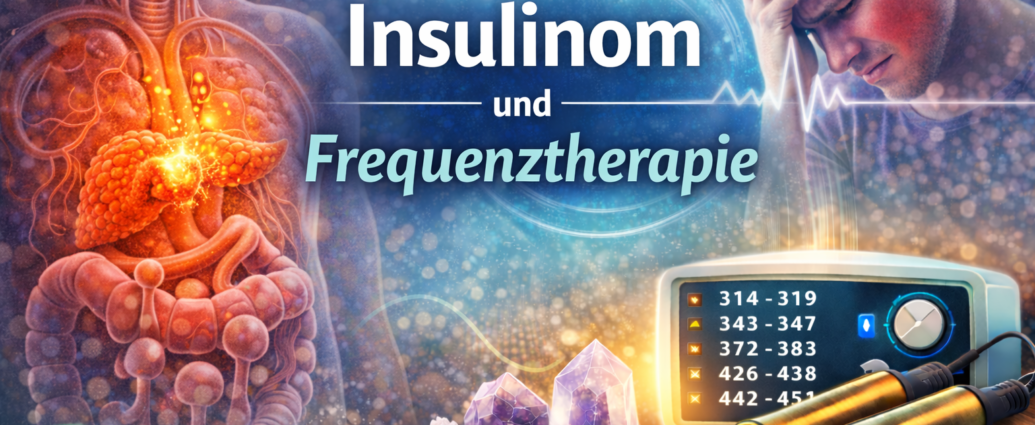
Conventional medical aspects of insulinoma, typical symptoms and complementary frequency information
An insulinoma is a rare Tumor of the pancreas that produces excessive amounts of insulin. Insulin is the hormone that lowers blood sugar levels. This is precisely the special feature of this clinical picture: the excessive release of insulin can cause blood sugar levels to drop sharply. This hypoglycaemia is at the heart of many complaints and can put considerable strain on the entire body.
In conventional medicine, insulinoma is particularly significant because the symptoms are often non-specific and do not immediately suggest a pancreatic tumor. Many signs can initially be reminiscent of neurological, psychological or general metabolic disorders. This is why precise clarification is particularly important. Following the conventional medical classification, the Frequency therapy complementary be considered. At the end follows the Frequency info with the resonance ranges mentioned in the literature.
Insulinoma and frequency therapy from a conventional medical perspective
Insulinoma is one of the hormone-active tumors of the pancreas. It develops in the cells that produce insulin. Under normal conditions, insulin ensures that glucose is absorbed from the blood into the cells. In this way, the blood sugar level is regulated. However, if an insulinoma produces insulin uncontrollably, the blood glucose level often drops more than is healthy for the body.
It is precisely these recurring or persistent hypoglycaemic episodes that make insulinoma so clinically relevant. The symptoms can occur suddenly, develop gradually or progress in episodes. In some cases, an insulinoma can also exhibit further pathological behavior, which is why conventional medical diagnosis and treatment are of great importance.
Insulinoma and frequency therapy for blood glucose drop
The main symptom of insulinoma is an excessive drop in blood sugar. The brain is dependent on a sufficient supply of glucose. If the blood sugar drops too low, the body quickly reacts with warning signs. These can easily be confused with other diseases.
Typically, the symptoms of hypoglycaemia occur particularly if nothing has been eaten for a long time or if the body's energy requirements are increased. However, because the insulinoma can release insulin continuously, an imbalance occurs that affects the nerves, muscles, circulation and consciousness.
Insulinoma and frequency therapy: typical symptoms
The symptoms of an insulinoma are varied. They are mainly caused by low blood sugar levels and can vary greatly in severity.
Headaches with insulinoma and frequency therapy
A drop in blood sugar can lead to a feeling of pressure, light-headedness and headaches. These symptoms are often not immediately associated with a hormonal cause.
Confusion with insulinoma and frequency therapy
Hypoglycemia can significantly impair mental clarity. Concentration problems, disorientation or temporary confusion are therefore typical warning signs.
Anxiety and restlessness with insulinoma and frequency therapy
When the body reacts to hypoglycaemia, nervousness, shakiness, feelings of anxiety or even panic-like states can occur. These symptoms often look like psychological stress reactions, but have a clear metabolic basis.
Weakness and uncertainty with insulinoma and frequency therapy
Muscle strength and coordination can suffer from a sharp drop in blood sugar levels. Those affected feel weak, unsteady on their feet or noticeably unstable.
Visual disturbances with insulinoma and frequency therapy
Vision may also be impaired. Blurred vision or other abnormalities in vision can occur as part of hypoglycemia.
Personality changes with insulinoma and frequency therapy
Recurrent hypoglycemia can significantly change behavior. Irritability, changes in character or unusual reactions are possible indications.
Seizures and impaired consciousness with insulinoma and frequency therapy
Severe hypoglycemia can lead to seizures, fainting or, in extreme cases, a coma. This shows how serious a disorder of the sugar metabolism can become.
Insulinoma and frequency therapy: why diagnosis is often delayed
It is precisely because the symptoms can be so varied that an insulinoma is not always recognized immediately. Some symptoms are reminiscent of neurological diseases, others of psychological stress or circulatory problems. This is why precise differentiation is particularly important.
From a conventional medical point of view, the connection between low blood sugar and simultaneously inappropriately high insulin levels is the decisive indication. If typical symptoms occur together with abnormal laboratory values, an insulinoma is suspected.
Insulinoma and frequency therapy: causes and background
The literature describes that a genetic predisposition can play a role in insulinoma. This makes it clear that certain people may have an increased susceptibility to such hormone-active tumors.
From a conventional medical perspective, however, the functional effect of the tumor remains decisive: it is not the size alone that is important, but the uncontrolled release of insulin and the resulting hypoglycaemia. It is precisely this metabolic derailment that characterizes the entire clinical picture.
Insulinoma and frequency therapy: Diagnostics
The diagnosis of an insulinoma is primarily based on the combination of symptoms and biochemical laboratory findings. Conventional medical clarification is aimed at repeatedly detecting low blood sugar levels and simultaneously elevated insulin levels.
Laboratory tests for insulinoma and frequency therapy
The focus is on blood tests to determine glucose and insulin. The combination of low blood sugar and inappropriately high insulin activity is particularly important.
Symptom-oriented clarification for insulinoma and frequency therapy
The exact description of the symptoms is also crucial. The time, duration, trigger and improvement after eating often provide important clues.
Holistic clinical classification for insulinoma and frequency therapy
As many symptoms can have a neurological or psychological effect, a careful conventional medical assessment is particularly important. Only an overall view of symptoms and laboratory values enables a clear assessment.
Insulinoma and frequency therapy: treatment options
The standard conventional medical treatment for insulinoma is surgical removal of the tumor. The aim is to directly eliminate the cause of the uncontrolled insulin production. This allows the regulation of blood sugar to return to normal.
Surgery for insulinoma and frequency therapy
If the insulinoma has been localized and is surgically accessible, the focus is on removal. This measure is considered the most important therapeutic option.
Metabolic stabilization with insulinoma and frequency therapy
It is important to keep the blood sugar as stable as possible until the final treatment. Avoiding severe hypoglycemia is a high priority.
Follow-up of insulinoma and frequency therapy
Monitoring remains important even after treatment. The decisive factor is whether blood glucose regulation normalizes and whether there are any other abnormalities.
A holistic view of insulinoma and frequency therapy
Insulinoma does not only affect the pancreas. The brain, nerves, muscles, autonomic nervous system and general performance are also affected by the constant influence on blood sugar. For this very reason, holistic thinking not only looks at the tumor itself, but also at the entire regulatory situation of the organism.
This is where the complementary approach of frequency therapy comes in. The focus is on the question of how a stressed organism can be given additional support. The topics of metabolic balance, vegetative regulation, nervous stress and energetic stability are particularly important from a complementary perspective.
Insulinoma and frequency therapy in a complementary context
In frequency therapy, the resonance ranges mentioned in the literature are classified as complementary. This means that they are integrated into a holistic concept in addition to conventional medical diagnosis and treatment. Not only the pancreas is considered, but also the interaction between sugar metabolism, nerve function, stress reactions and general regulatory ability.
Particularly in the case of complaints such as restlessness, weakness, confusion or vegetative overreaction, complementary attempts are often made to support the entire organism in its balance. Frequency therapy is seen as a complementary form of regulatory support.
Insulinoma and frequency therapy for vegetative stress
Recurrent hypoglycaemia represents a considerable stress situation for the body. This is why the complementary view is often also directed at the autonomic nervous system.
Nerve balance in insulinoma and frequency therapy
If the brain is repeatedly supplied with too little glucose, this can lead to significant nervous reactions. Complementary nervous regulation is therefore often also considered.
Energetic stability with insulinoma and frequency therapy
Strong fluctuations in metabolism can reduce resilience. From a complementary perspective, the general energy situation is therefore often also taken into account.
Metabolic regulation in insulinoma and frequency therapy
The balance of the sugar metabolism plays a key role. In a complementary context, this area is therefore often seen as a central component of holistic support.
Frequency info
According to the literature, the following resonance areas are mentioned particularly frequently in insulinoma:
314-319 kHz
343-347 kHz
372-383 kHz
426-438 kHz
442-451 kHz
These frequency ranges are viewed in a complementary way and placed in a holistic context within frequency therapy. In practical application, they are not used in isolation, but together with the individual regulatory situation, the metabolic situation, the nervous stress and the overall energetic state of the organism.
Insulinoma and frequency therapy in the overall picture
Insulinoma is a rare but clinically highly relevant tumor of the pancreas because it can lead to recurring hypoglycaemia due to excessive insulin production. The symptoms range from headaches and restlessness to confusion, seizures and impaired consciousness. In conventional medicine, precise biochemical diagnosis and surgical removal are crucial.
Complementary frequency therapy can be integrated into a holistic concept that takes into account the metabolism, nervous system, vegetative regulation and energetic balance. The frequency ranges mentioned in the literature are used as supplementary frequency information.



Comments are closed, but trackbacks and pingbacks are open.