




1 What is an adrenocortical carcinoma?
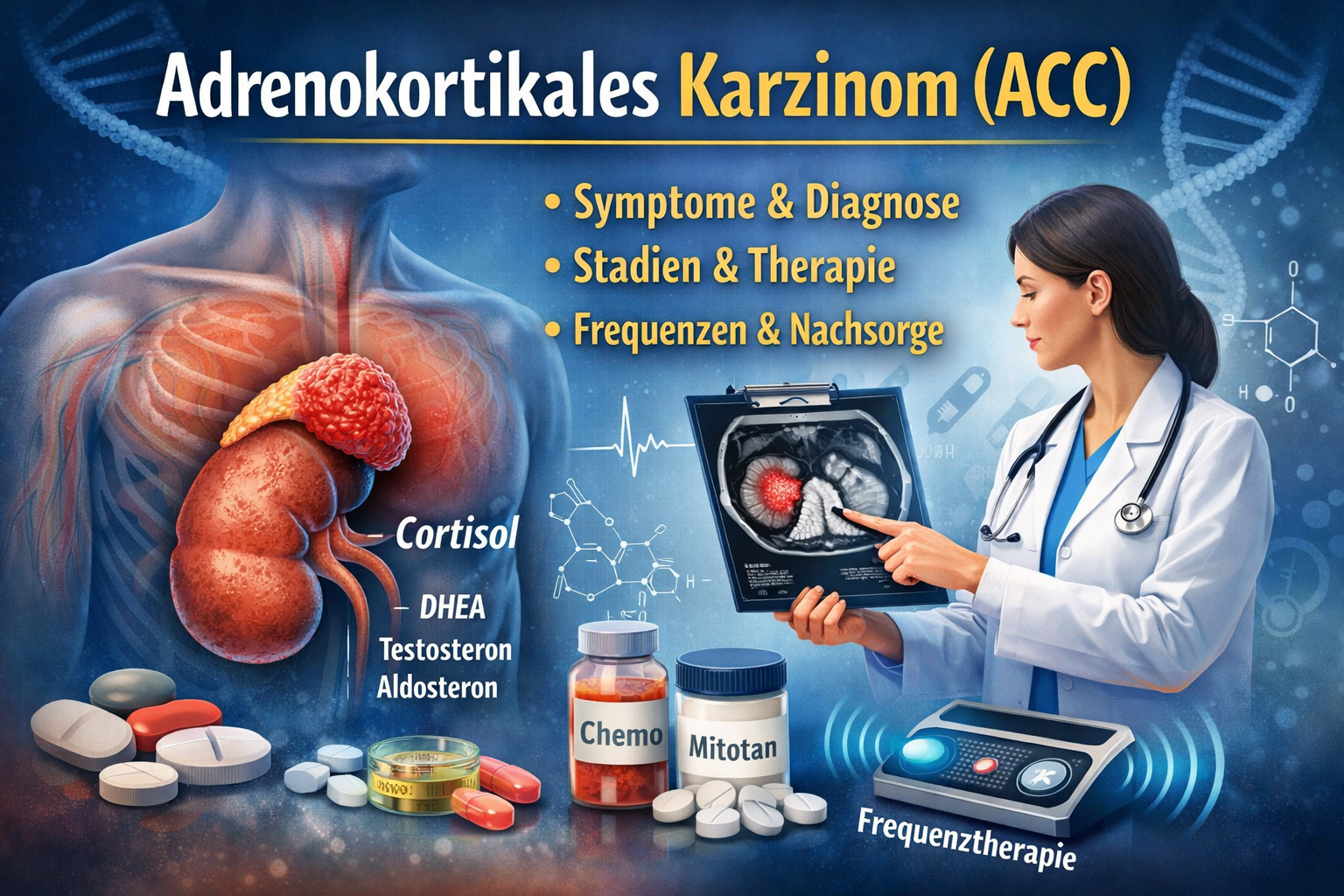
The adrenocortical carcinoma (ACC) is a Malignant tumor of the adrenal cortex. The adrenal glands sit like „caps“ on the kidneys and consist of Bark (cortisol, aldosterone, androgens) and Mark (adrenaline/noradrenaline). ACC is produced in the bark - and is therefore often associated with Hormone overproduction connected.
ACC is rare: Guidelines cite an estimated incidence in adults of approx. 0.7-2 cases per million people per year, with a peak often between 40 and 60 years.
2 Why is ACC so demanding?
ACC is medically challenging because several factors can come together:
- Hormonal imbalances (e.g. excess cortisol) can place a heavy burden on the body.
- The tumor is sometimes only detected late because it grow „still“ for a long time can.
- Therapy and aftercare often require interdisciplinary team (endocrinology, oncology, surgery, radiology, pathology).
3. symptoms and warning signs
ACC typically manifests itself in two ways: hormonal or through Space requirement.
3.1 Hormone-active tumors (common)
Excess cortisol (Cushing's syndrome):
- Weight gain on the torso, „full moon face“
- Muscle weakness, rapid exhaustion
- Thin skin, bruises, poor wound healing
- High blood pressure, elevated blood sugar levels/diabetes
Androgen excess (particularly noticeable in women):
- Acne, increased hairiness (hirsutism)
- Cycle disorders, voice changes
Aldosterone excess (less common):
- High blood pressure, low potassium (muscle weakness, cramps)
Excess oestrogen (rare, more visible in men):
- Breast enlargement, changes in libido
3.2 Space-occupying symptoms
- Pressure/pain in the upper abdomen or flank
- palpable resistance, feeling of fullness
- Non-specific complaints with large tumors
4. causes and risk factors
Most ACC cases are sporadically (without a clear cause). In a smaller proportion there is a connection to hereditary tumor syndromes, among others:
- Li-Fraumeni syndrome
- Lynch syndrome
- MEN1
- familial adenomatous polyposis (FAP)
In case of suspicion (e.g. young age, family clustering, multiple tumors), a Human genetic clarification may be useful - this is decided by the treating team.
5 Diagnostics - how is ACC diagnosed?
The clarification combines Hormone analysis, Imaging and Histopathological evaluation (usually after surgical removal).
5.1 Hormone clarification (typical components)
ENSAT describes, among other things, tests for:
- Glucocorticoid excess (e.g. dexamethasone suppression, 24-hour urinary cortisol, basal ACTH)
- Sex steroids and precursors (e.g. DHEA-S, androstenedione, testosterone)
- Mineralocorticoid excess (potassium, aldosterone/renin quotient - especially in hypertension/hypokalemia)
- in addition: Exclusion of a pheochromocytoma (important for adrenal tumors in general)
5.2 Imaging
These are common:
- CT or MRI of the abdomen (tumor size, invasion, organ reference)
- CT of the thorax to the staging
- Supplementary depending on the situation (e.g. bone clarification in case of suspicion)
5.3 Biopsy - why often reluctant?
If ACC is suspected, a biopsy not routinely made because:
- the diagnosis is often only in the surgical specimen is ensured,
- and because there may be risks/misinterpretations in individual situations.
Whether a biopsy makes sense belongs in a Center/Tumor Board.
6. staging: ENSAT (simplified)
For ACC this is ENSAT system and has been adopted by the UICC, among others.
Roughly understandable:
- Stage I: Tumor ≤ 5 cm, no lymph node/distant metastases
- Stage II: Tumor > 5 cm, no lymph node/distant metastases
- Stage III: Lymph node involvement and/or locally advanced growth (without distant metastases)
- Stage IV: Distant metastases present
7 Standard therapy: Which treatment is usually used?
The therapy depends on the stage, resectability, hormone activity, general condition and tumor biology.
7.1 Operation - the most important step (if possible)
If the tumor complete can be removed (R0 resection), surgery is the central component with a curative objective. Guidelines emphasize care in experienced centers.
7.2 Mitotane (adrenolytic therapy)
Mitotane can - depending on the risk adjuvant (after surgery) or in cases of advanced disease. It requires Close monitoring (including blood levels, hormonal substitution/monitoring).
7.3 Systemic therapy for advanced/metastatic ACC: EDP-M
The common first-line combination is EDP-M:
- Etoposide
- Doxorubicin
- Platin (cisplatin)
- plus Mitotan
This combination was used in the FIRM-ACT-context and is often mentioned as a standard option in guidelines/oncology.
7.4 Radiotherapy & local procedures
Depending on the situation, radiotherapy may play a role (e.g. in the case of local risks or symptomatic metastases) - decisions are made individually by the tumor board.
8 Aftercare: What is particularly important?
ACC can relapse (come back). This is why structured aftercare is crucial:
- regular Imaging (abdomen + thorax)
- for hormone-active tumors: Laboratory controls (Hormone profiles)
- Clinical monitoring of blood pressure, blood sugar, weight, muscle function, mental stress
ENSAT describes, among other things, close-meshed imaging checks as part of clinical procedures - however, the specific intervals are always individual (type of therapy, stage, risk).
9. living with ACC: supportive measures (accompanying)
In addition to tumor therapy, supportive measures can help:
- Nutrition for weight changes or metabolic problems
- Movement To stabilize muscle strength and resilience (adapted)
- Psycho-oncology for anxiety, sleep problems, exhaustion
- Good coordination of endocrine Co-treatment (especially for cortisol/hormone problems)
10. frequency list according to research
Source: ETDFL (Note: The term is predominantly used online as ETDFL is used; spelling variants are also frequently found. )
10.1 Classification
ETDFL is described in the context of „Bioresonance/Rife frequency lists“ as a collection of frequency data. Such lists are No clinical guidelines and replace neither diagnostics nor evidence-based cancer therapies. Statements about efficacy in cancer are conventional medical not recognized; if such approaches are used, then at most accompanying and in coordination with the treating team.
10.2 Frequencies in Hz
60 | 490 | 570 | 2500 | 7500 | 30000 | 225750 | 329530 | 419340 | 561930
(Source according to user information: ETDFL)
Practical note: If you work with frequencies, please document transparently what you use and how (duration, device, accompanying measures) and give priority to medically necessary treatment steps (surgery/oncology/endocrinology).
11) Frequently asked questions (FAQ)
Is ACC curable?
In early stages, complete surgical removal can enable a cure. In advanced stages, the focus is often on disease control and quality of life.
Why is a center so important?
Because ACC is rare and treatment decisions (surgical strategy, mitotane management, system therapy, hormone control) require experience and teamwork.
Author: NLS Informationsmedizin GmbH, Herbert Eder
Important disclaimer
The contents are for information purposes and replace none medical diagnosis or treatment. If you have symptoms or suspect a serious illness, please contact a doctor or a specialized center.
Complementary procedures (incl. frequency applications) are not recognized by conventional medicine and can No therapy by trained doctors or alternative practitioners.