




Abstract:
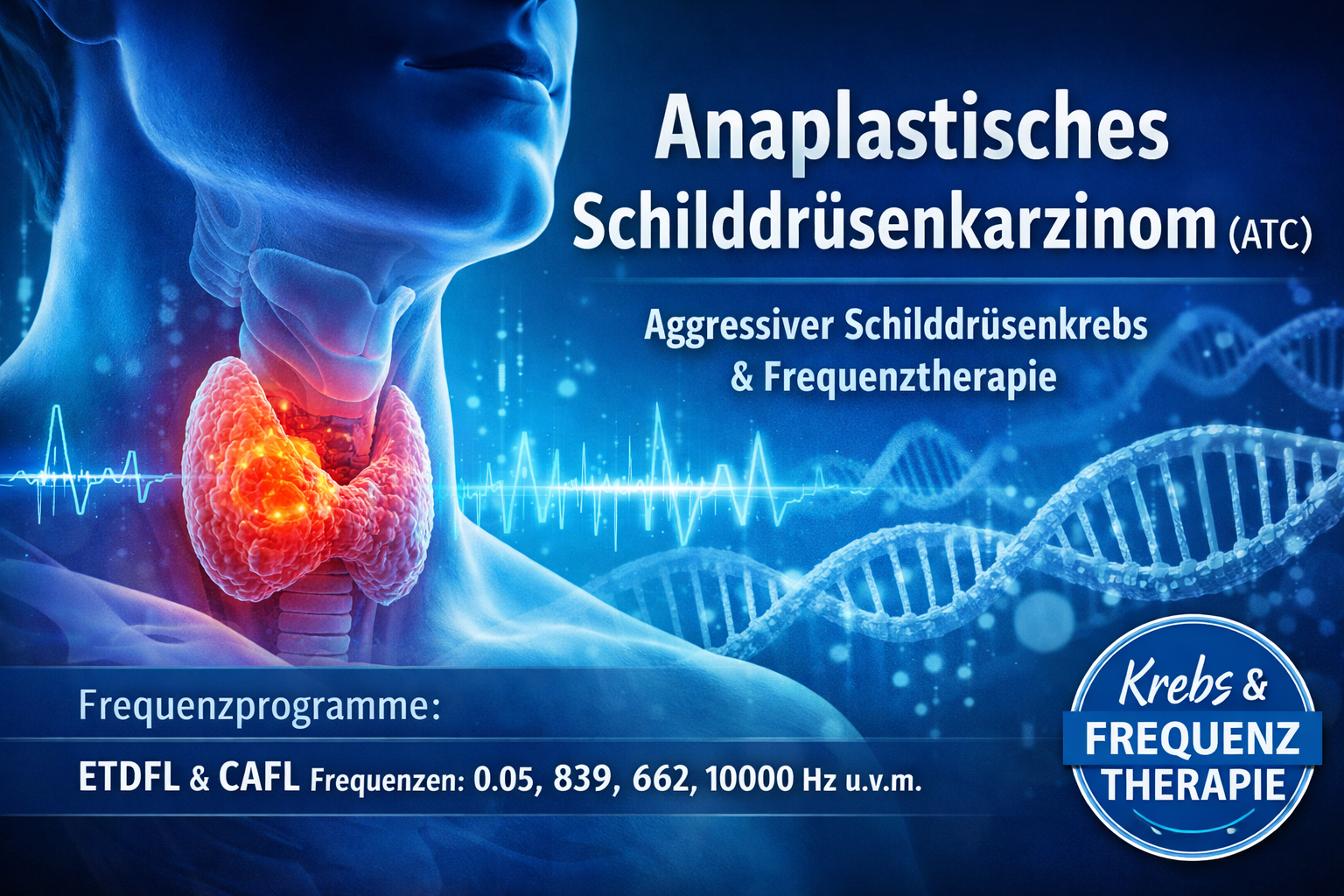
Anaplastic thyroid carcinoma (ATC) is rare but extremely aggressive. The article explains symptoms, diagnostics and modern therapies (including targeted approaches). In the frequency section: ETDFL and CAFL programs as an experimental supplement.
Author: NLS Informationsmedizin GmbH, Herbert Eder
1) What is anaplastic thyroid carcinoma?
The anaplastic thyroid carcinoma (ATC) is a rare one, undifferentiated form of thyroid cancer and is one of the most aggressive tumors of all. It usually grows very quickly in the neck area and can spread to the lungs, bones or other organs at an early stage.
2) Typical symptoms (warning signs)
ATC often causes significant symptoms within a short period of time, e.g:
- rapidly growing Neck swelling/knots
- Hoarseness, Difficulty swallowing
- Shortness of breath/stridor (due to narrowing of the windpipe)
- Pain, feeling of pressure in the throat
- Rapid general deterioration
The following applies to such symptoms: Immediate medical clarification (ENT/endocrinology/oncology).
3) Diagnostics: What is considered standard today
Clarification is usually quick and „multimodal“:
- Imaging (CT/MRI neck/thorax, if necessary PET/CT)
- Biopsy/cytology to confirm the diagnosis
- Molecular profiling (e.g. BRAF status), because this can influence treatment decisions
4) Therapy: Why speed is crucial
ATC usually requires a combination of several procedures (depending on the stage/resectability):
a) Operation (if possible)
If the tumor can be completely removed, surgery is performed - often supplemented by other therapies.
b) Radiotherapy & system therapy
Radiotherapy and systemic treatments are often used in combination.
c) Targeted therapy / immunotherapy (with suitable markers)
Depending on the molecular profile (e.g. BRAF V600E), targeted drugs can play a role; immunotherapies are also used in selected situations.
d) Palliative care & symptom control
Due to the often very rapid progression, early symptom control (breathing/swallowing/pain) is essential.
5) Forecast
ATC is associated with a very unfavorable prognosis; many reviews describe very short median survival times, whereby modern targeted approaches with suitable tumor profiles in individual cases improvements.
6) Frequency section: Programs from ETDFL and CAFL (experimental)
Important: The following frequency lists originate from collections of the frequency scene (ETDFL/CAFL) and are not part of evidence-based oncology. They serve - if at all - only as Complementary, experimental approach and do not replace medical treatment.
6.1 ETDFL - matching entries
For „anaplastic thyroid carcinoma“, the ETDFL list contains two close matches:
A) ETDFL: „Carcinoma, Anaplastic“ (Program #586)
Frequencies (Hz): 0.05, 0.16, 0.52, 0.94, 12.69, 125, 328.9, 434.03, 571, 839
B) ETDFL: „Thyroid Cancer“ (Program #3366)
Frequencies (Hz): 0.18, 0.49, 0.75, 0.95, 2.5, 7.5, 112.36, 325.95, 434.29, 534.25
Practical note (technical, general):
Many users create two programs from this (ATC/Thyroid-Cancer) and rotate these - e.g. alternating over days/weeks - always observing the individual tolerance.
6.2 CAFL - Entry search & result
In the CAFL PDF version we used No specific entry „Thyroid cancer“ or „Anaplastic thyroid carcinoma“. Instead, there are General crab basics sets and a Endocrine_RX_TR (incl. thyroid gland).
A) CAFL: „Cancer (Basic comprehensive set ...)“
This section is described as a general „basic set“ (without organ-specific allocation in this version).
B) CAFL: „Endocrine_RX_TR (... thyroid ...)“
Frequencies (Hz): 662, 1725, 1342, 1534, 1413, 1351, 635, 763, 1335, 645, 10000
C) CAFL: „Cancer_experimental_additional_frequencies“
Frequencies (Hz): 55.56, 6.8, 66.5, 440, 778, 1050, 1550, 2180, 663, 3672
- „CAFL has no ATC-specific entry in this version; therefore general cancer/endocrine sets have been included.“
7) Disclaimer
Frequency therapy/frequency lists (ETDFL/CAFL) are not recognized by conventional medicine and their efficacy in cancer is not documented as secured. The contents are for information purposes and replace No diagnosis or therapy by doctors or other medically qualified practitioners. In the case of suspected cancer or ongoing cancer treatment, consultation with the oncology team treating the patient is mandatory.