




Brief overview
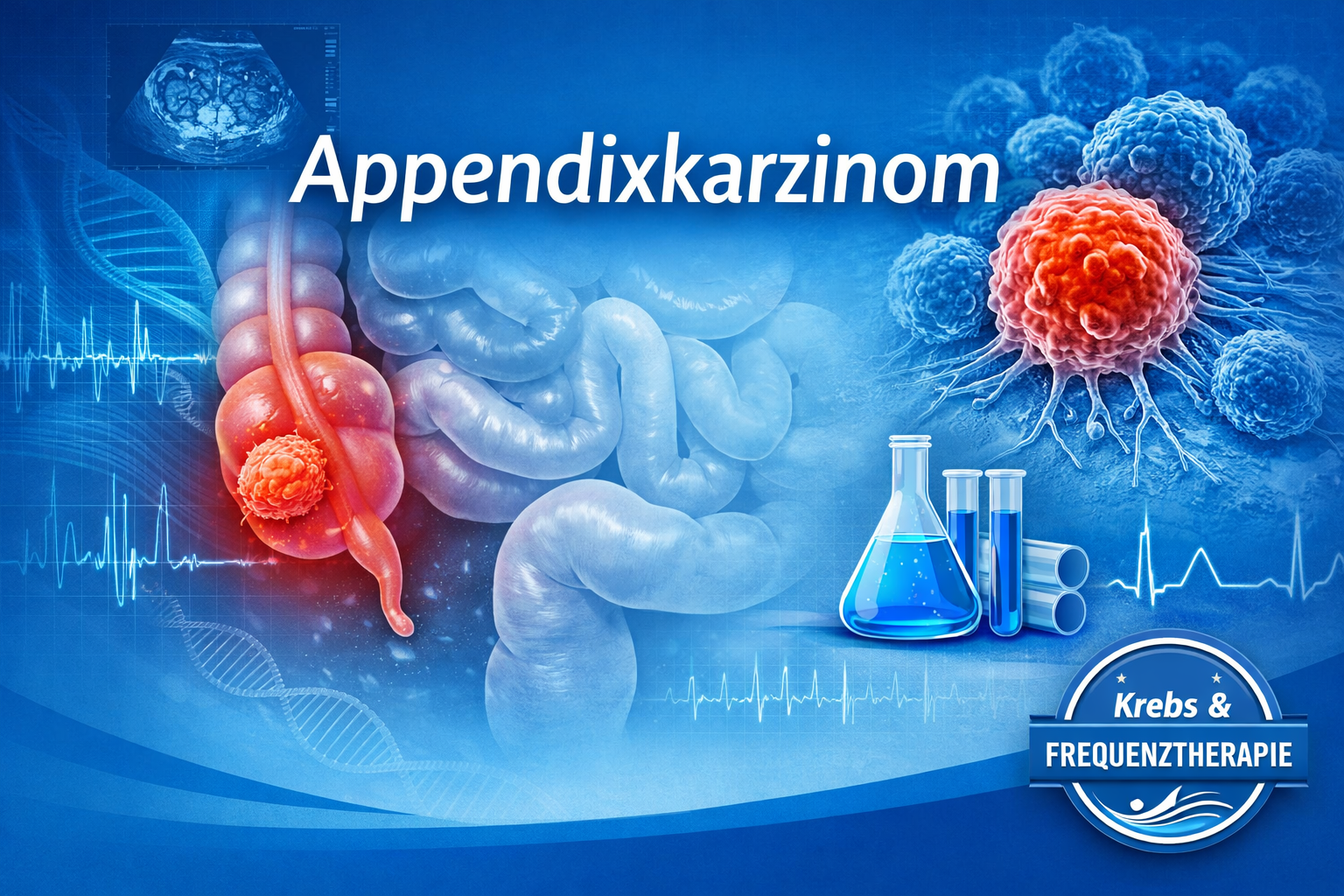
The Appendix carcinoma (also: appendiceal cancer / appendix cancer) is a Rare cancer of the appendix. Many cases are random discovered - e.g. after an operation for suspected appendicitis.
What is appendix carcinoma?
In appendix carcinoma, cells of the appendix grow uncontrolled and form a tumor. There are Different types of tumors, which sometimes differ significantly in their behavior (growth, metastasis, therapy).
Common types (simplified)
- Neuroendocrine tumors (NET, „carcinoid“)
- Adenocarcinomas (partly mucinous)
- Goblet cell tumors (today often classified as goblet cell adenocarcinoma)
- Peritoneal mucus formation / Pseudomyxoma peritonei (often in connection with mucinous tumors)
(The exact classification is based on histology/pathology).
Symptoms
Many of those affected have No typical symptoms for a long time. Possible options include:
- Right-sided lower abdominal pain (appendicitis-like)
- Bloated stomach, feeling of fullness, non-specific abdominal discomfort
- Nausea, changes in bowel habits
- In some cases, signs of intestinal obstruction or abdominal fluid/mucus accumulation
Diagnosis
The diagnosis often arises as Incidental finding after appendectomy. Frequent components are
- Histology (decisive: tumor type, grade, resection margin)
- Imaging: CT/MRI, PET depending on type
- Laboratory values/tumor markers (depending on the situation)
- Staging (spread diagnostics) - especially in cases of suspected peritoneal involvement
Therapy in conventional medicine
The treatment depends heavily on Tumor type and stage. Typical options:
- Operation (appendectomy, possibly extended resection such as right-sided hemicolectomy)
- HIPEC/CRS (cytoreductive surgery + hyperthermic intraperitoneal chemotherapy) for peritoneal involvement
- Systemic chemotherapy (e.g. in advanced disease, depending on histology)
- For NET: depending on the stage, additional specific concepts (e.g. somatostatin-based therapy strategies - individual)
Prognosis & aftercare
The prognosis depends mainly on:
- Tumor type (NET vs. adenocarcinoma etc.)
- Stage / Peritoneal infestation
- Tumor grade (aggressiveness) and complete removal (R0)
- General condition and therapy tolerance
Aftercare: individual, usually with imaging and check-ups at defined intervals.
Frequency therapy section (EDTFL & CAFL - depending on availability)
Note on spelling: In the ETDFL/EDTFL-PDF many values are considered kHz (e.g. 0.12 kHz). Below you will find the Conversion to Hz (×1000).
EDTFL / ETDFL - suitable programs (for tumor images close to the appendix)
Since „appendix cancer“ is not listed as a separate term in the ETDFL PDF, it is possible to work via Typical histologies and accompanying images:
1) Carcinoid / neuroendocrine tumors
ETDFL #583 - Carcinoid Tumor
- 0.08 - 0.12 - 0.85 - 20 - 40 - 352.93 - 434.72 - 517.5 - 684.81 - 712.42 kHz
= 80 - 120 - 850 - 20,000 - 40,000 - 352,930 - 434,720 - 517,500 - 684,810 - 712,420 Hz
ETDFL #584 - Carcinoid, Goblet Cell
- 0.06 - 0.23 - 20 - 60.5 - 125.75 - 150 - 357.3 - 532.41 - 653.65 - 759.83 kHz
= 60 - 230 - 20,000 - 60,500 - 125,750 - 150,000 - 357,300 - 532,410 - 653,650 - 759,830 Hz
2) Pseudomyxoma peritonei (peritoneal mucus formation, often associated with the appendix)
ETDFL #2831 - Pseudomyxoma Peritonei
- 0.16 - 0.17 - 0.87 - 2.5 - 27.5 - 82.5 - 85.52 - 165 - 692.5 - 825.52 kHz
= 160 - 170 - 870 - 2,500 - 27,500 - 82,500 - 85,520 - 165,000 - 692,500 - 825,520 Hz
3) Accompanying (if clinically relevant / after surgery irritation)
ETDFL #189 - Appendicitis
- 0.14 - 0.46 - 7.5 - 50 - 93.5 - 376.29 - 524.37 - 652.43 - 752.63 - 922.53 kHz
= 140 - 460 - 7,500 - 50,000 - 93,500 - 376,290 - 524,370 - 652,430 - 752,630 - 922,530 Hz
CAFL - Programs (depending on availability)
In the CAFL there is also no „Appendix cancer“ entry in the version that was available here - but it is solid Oncology basic sets and suitable Adenocarcinoma/colon carcinoma references.
1) Basic set (Cancer - comprehensive)
Cancer (Basic comprehensive set)
10000 - 11780 - 21275 - 17034 - 11430 - 10025 - 6766 - 6064 - 5000 - 3713 - 3176 - 3040 - 2950 - 2876 - 2790 - 2720 - 2452 - 2189 - 2182 - 2128 - 2127 - 2084 - 2048 - 2008 - 1604 - 1552 - 1489 - 880 - 854 - 800 - 784 - 776 - 766 - 728 - 690 - 683 - 676 - 666 - 524 - 464 - 333 - 120 - 20
2) For adenocarcinoma-typical appendix tumors
Cancer_adenocarcinoma
47 - 2182 - 2219 - 832 - 2084 - 2127 - 2160 - 2452 - 2876
3) Orientation towards the colon/transition region
Cancer_carcinoma_colon
656
Optional (in addition, if you want to keep it slim):
Cancer_carcinoma_general - 2128, 1820
Practical procedure (without promises of a cure)
- Basis (CAFL Cancer comprehensive) as basic set
- depending on histology ETDFL Carcinoid/Goblet or CAFL Adenocarcinoma/Colon supplement
- For peritoneum/mucus issues additionally ETDFL Pseudomyxoma peritonei
- everything in principle Symptom and tolerance-oriented (breaks/rotation), especially for concomitant oncological therapy
Important disclaimer
Frequency therapy or frequency-based applications are not recognized by conventional medicine and their effectiveness against cancer is not secured. They replace none Diagnosis or treatment by doctors, no surgery, no chemotherapy/radiotherapy and no oncological aftercare. In the event of complaints, alarm signals (e.g. severe abdominal pain, fever, signs of ileus) or ongoing cancer therapy, please always seek medical advice first.