






Many people are faced with a flood of information after being diagnosed with cervical cancer. In addition to surgery, chemotherapy or radiotherapy, the question often arises as to whether there are complementary ways to strengthen the body and psyche. This is precisely where the interest in frequency therapy for cervical cancer comes in. Many sufferers want holistic support that encompasses more than purely medical measures.
Cervical cancer affects several thousand women in Germany every year. The diagnosis changes life abruptly. Fear, uncertainty and physical stress are almost always part of it. In this situation, many people look for alternative or complementary approaches that can provide them with additional support. Frequency therapy is frequently mentioned, often in connection with terms such as information medicine or energetic support for cervical cancer.
This article takes you by the hand. It explains clearly what is medically proven and where the limits lie. We take a look at what frequency therapy can and cannot do. This is not about promises of a cure, but about an honest, scientifically sound classification. You will find out how complementary frequency therapy for cervical cancer can be sensibly classified, what therapists should look out for and how those affected can make informed decisions.
The focus is on support, not on replacing conventional medical therapies. We combine current figures, research and practical experience. The aim is to provide guidance and create trust. Because cervical cancer can only be treated holistically with clear information.
Understanding cervical cancer: Numbers, causes and medical context
In order to correctly classify alternative support for cervical cancer, a solid understanding of the disease itself is required first. Cervical cancer, also known as cervical carcinoma, is almost always caused by a long-lasting infection with certain types of the human papillomavirus. Over 99 percent of cases are caused by HPV. The high-risk types HPV 16 and 18 in particular play a central role.
Around 4,640 new cases are diagnosed in Germany every year. Around 1,546 women die from this form of cancer every year. The 5-year survival rate is around 65 percent, but varies greatly depending on the stage at diagnosis. Cervical cancer that is detected early has a significantly better chance of being cured than advanced stages.
In addition to the virus, other factors also play a role: smoking, a weakened immune system, many years of hormonal contraception or a lack of preventive check-ups increase the risk. From a medical point of view, it is a disease that often develops slowly. This is precisely why prevention and early detection are so crucial.
| Key figure | Value | Region |
|---|---|---|
| New cases per year | 4.640 | Germany |
| Deaths per year | 1.546 | Germany |
| HPV-related share | > 99 % | Europe |
Early detection through screening and HPV vaccination play a key role. Doctors follow clear guidelines for treatment. These come from specialist associations such as the German Cancer Society or the European Society for Medical Oncology. Frequency therapy is not mentioned as a form of treatment.
However, this does not mean that complementary approaches are fundamentally worthless. They just need to be classified correctly. This is precisely what is crucial for responsible energetic support in cervical cancer.
What does frequency therapy for cervical cancer mean from a scientific perspective?
The term frequency therapy is used in very different ways. This often causes confusion. In conventional medicine, frequency usually refers to clearly defined physical procedures. These include, for example, radiofrequency ablation, transcranial magnetic stimulation or high-intensity focused ultrasound. These methods work with measurable energies and clearly described mechanisms of action.
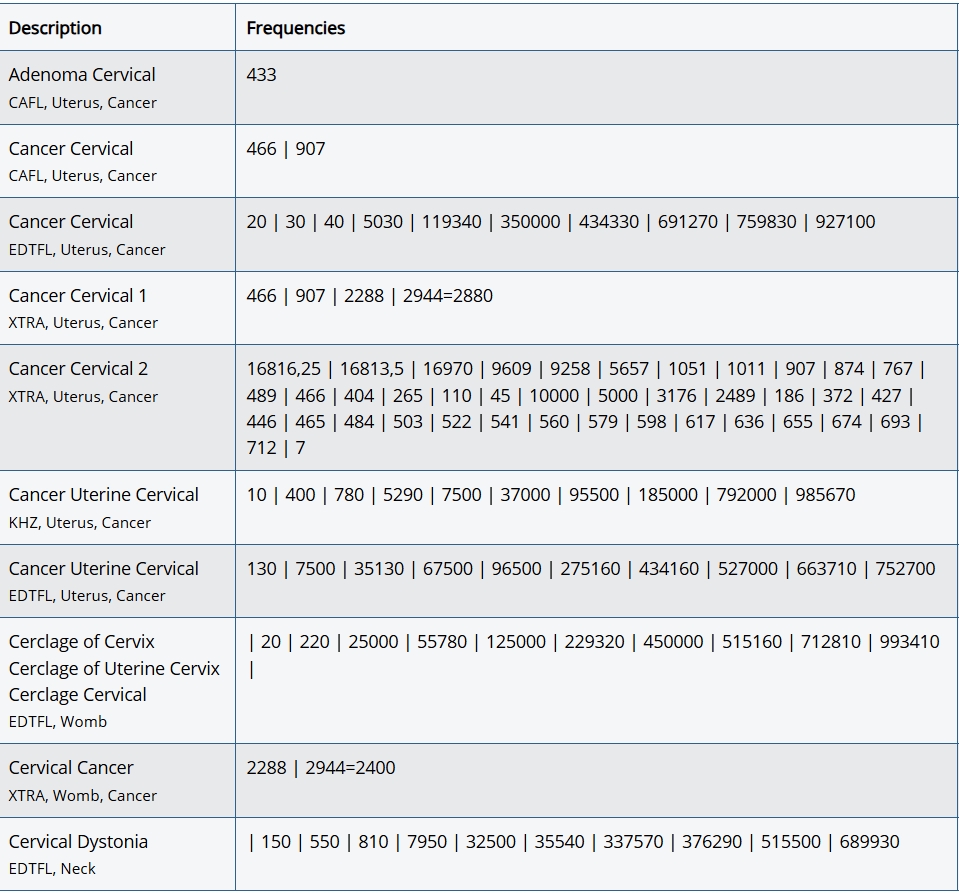
This is to be distinguished from so-called information medicine. This involves subtle electromagnetic or energetic impulses that are intended to have a regulating effect on the organism. It is often argued that cells communicate via electromagnetic signals and can thus be influenced. However, there is no recognized clinical evidence of effectiveness for this form of frequency therapy for cervical cancer.
Scientific institutions such as the Cancer Information Service of the German Cancer Research Center clearly emphasize that such procedures are not suitable for tumor treatment. At best, they can be used as an adjunct, for example for relaxation, stress reduction or subjective support of well-being (Cancer Information Service).
An important difference is therefore: frequency is not the same as frequency. If you want to work seriously, you have to communicate this distinction clearly. This protects patients, prevents false hopes and strengthens the credibility of complementary medicine as a whole.
Complementary frequency therapy for cervical cancer in the practice
In practice, frequency therapy is often used as a supportive measure. The aim is not to influence the tumor, but to improve subjective well-being. Many patients report better sleep, more inner peace, less tension and a more stable emotional state during stressful therapy phases.
A typical example: A patient is undergoing ongoing conventional medical treatment with radiotherapy and chemotherapy. She also uses gentle frequency applications for relaxation. These treatments take place separately from the medical measures and are communicated openly with both the therapist and the medical team.
Before starting the support, the patient often felt tense, slept badly and was emotionally exhausted. After a few weeks of accompanying treatments, she reported better sleep, less inner restlessness and the feeling that she could actively do something for herself. These effects are subjective, but relevant to quality of life.
It is important to communicate clearly: frequency therapy is no substitute for surgery, chemotherapy or radiation. However, it can help to improve the way you deal with the disease. This is precisely the approach of a cervical cancer holistic support strategy.
If you want to delve deeper into the basics, the article Practical guide for frequency therapy beginners, step by step an understandable introduction. It is also worth taking a look at Long-term effect of Solfeggio frequencies: Experiences after 6-24 months, to better understand long-term developments.
Demarcation and responsibility in energetic support
Responsibility is particularly important in the case of cancer. Alternative practitioners and therapists need to formulate very carefully and clearly define their role. Terms such as healing, tumor dissolution or fighting cancer through frequencies are scientifically untenable and legally problematic.
Clear statements such as „complementary support“, „supportive on an energetic level“ or „focus on well-being and relaxation“ are recommended. This transparency creates trust and protects patients from false expectations. It also shows that the aim is not to compete with conventional medicine, but to complement it.
Another aspect is documentation. Reputable companions keep a record of the goals being pursued and regularly check whether the support is doing the patient any good. Equally important is the willingness to refer patients to medical specialists in the event of uncertainty or deterioration.
Classification is also important from an ethical point of view. People with a serious illness are particularly vulnerable. Unrealistic hopes can cause harm. Serious energetic support for cervical cancer therefore strengthens personal responsibility and promotes informed decisions.
A look at the scientific discussion helps to understand these limits. A good overview can be found in the article Scientific study situation Frequency therapy 2026, current research & evidence.
Frequency, electromagnetic fields and oncology
Electromagnetic fields are the subject of intensive research in oncology. However, this involves clearly defined medical applications with precise parameters. For example, modulated electromagnetic radio frequency fields are being investigated in early studies as a possible additional therapy, usually under strictly controlled conditions.
A well-tolerated additional local therapy that works with modulated electromagnetic radio frequency fields has the potential to supplement existing oncological therapies, but does not replace them.
This quote shows the attitude of science very clearly. Supplement yes, replace no. And important: this statement does not refer to energetic frequency therapy or information medicine, but to medical-technical procedures with a clear study situation.
In practice, this means that frequency therapy for cervical cancer in the sense of information medicine remains in the area of complementary support. It must not be mixed with medical cancer therapy. A clear linguistic distinction is essential here.
Combination with other holistic approaches
Many people do not use frequency therapy in isolation, but as part of a holistic concept. They combine it with other methods such as breathing exercises, meditation, yoga, mindfulness training, psycho-oncology or even medicinal mushrooms in oncology.
This combination aims to regulate and stabilize the entire system. Stress reduction can relieve the autonomic nervous system. A calmer nervous system often has a positive effect on sleep, digestion, pain perception and emotional resilience.
Diet, moderate exercise and social support also play a major role. Holistic does not mean „everything at the same time“, but rather sensibly coordinated and individually adapted. It is important to avoid excessive demands.
Everything should be well coordinated and communicated openly with the medical team providing treatment. This ensures safety and avoids misunderstandings.
In the context of pain that can be caused by therapies, it is also worth taking a look at Frequency therapy for chronic pain, mechanisms of action & applications.
Future trends and realistic expectations
Interest in information medicine for cervical cancer will continue to grow. Many people want more personal involvement, gentle support and services that take both body and psyche into account. At the same time, research will take a closer look and demand clear terms.
More interdisciplinary dialog can be expected in the future. Conventional medicine, psycho-oncology and complementary methods could work more closely together, particularly in the areas of quality of life and aftercare. Transparency and scientific honesty remain a prerequisite.
Realistic expectations are crucial. Frequency therapy for cervical cancer can promote well-being, support relaxation and strengthen the feeling of self-efficacy. It can help you feel closer to your own body again.
However, it cannot cure cancer or influence tumor growth. This clear stance protects patients and therapists alike. It is the basis for serious alternative support for cervical cancer.
Frequently asked questions
Can frequency therapy cure cervical cancer?
No. There is no scientific evidence that frequency therapy can cure cancer or influence tumors. It is used exclusively as a complementary accompaniment, not as a treatment.
Is frequency therapy allowed during chemotherapy?
As a rule, yes, if it is non-invasive, does not use devices with strong fields and takes place at separate times. It is always important to consult the treating medical team.
What does information medicine mean for cervical cancer?
Information medicine describes energetic or frequency-based approaches that are not recognized by conventional medicine. It is aimed at regulation, relaxation and subjective well-being, not tumor treatment.
For whom is an energetic accompaniment useful?
For people who want to do something for stress reduction, emotional stability and inner balance in addition to medical therapy. Not as a substitute, but clearly as a supplement.
What should therapists pay particular attention to?
Clear communication, realistic expectations, a legal framework and consistent differentiation from medical cancer therapy. Transparency is the most important quality factor.
The essentials for your next step
Cervical cancer turns life upside down. Modern medicine offers effective therapies, but many people want more than that. Frequency therapy for cervical cancer can have a place as complementary support if it is used responsibly, transparently and without promises of a cure.
The most important points summarized once again: Frequency therapy is not a cancer therapy. It can improve well-being, reduce stress and promote emotional stability. It is not scientifically recognized, which is why it needs clear differentiation and clarification.
If you want to take a holistic approach to cervical cancer, you should focus on transparency. Open discussions, sound knowledge, interdisciplinary cooperation and realistic expectations are crucial. The result is support that empowers rather than unsettles.
If you want to delve deeper into frequency work, it is worth taking a sound education and a critical look at studies, ethics and practice. This is exactly where responsible energetic support for cervical cancer begins, in the service of people, not promises.
Comments are closed, but trackbacks and pingbacks are open.