





Author: NLS Informationsmedizin GmbH, Herbert Eder
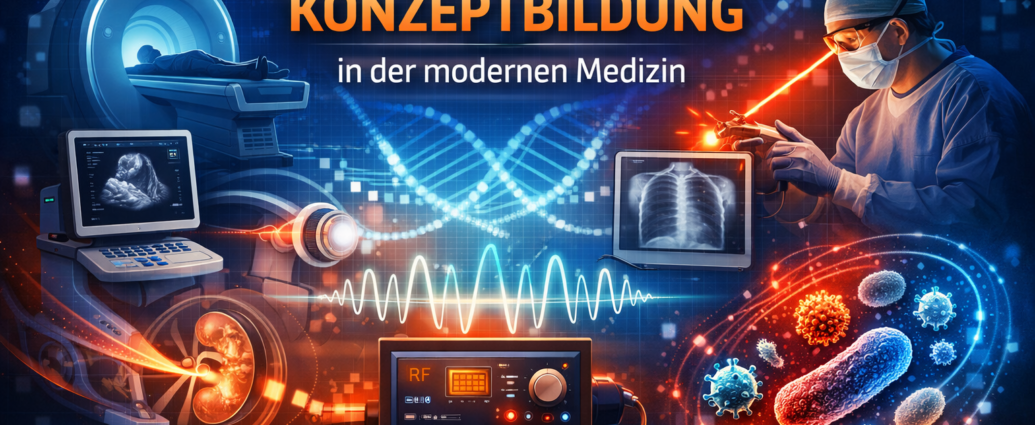
Modern medicine no longer works exclusively with drugs, scalpels and laboratory values. Numerous procedures are already used in clinics today that are based on Energy, waves, fields and physical stimuli are based. This is precisely where the bridge to frequency therapy and extended concepts of information medicine begins. Anyone who takes a sober look at today's technical medicine quickly realizes that the idea of influencing biological processes with physical signals is by no means exotic, but has long been part of everyday medical practice.
Against this backdrop, the Radiofrequency resonance method (RFR) interest. Its proponents see it as a possible next step in the development of physically oriented medicine. The underlying idea is that microorganisms, tissue and biological systems do not react randomly to electromagnetic stimuli, but according to certain resonance patterns. This gives rise to the hope that pathogenic stresses can be identified and influenced in a more targeted manner - especially where conventional medication reaches its limits or where chronic processes require an additional level of observation.
Particularly in connection with chronic infections, regulatory imbalances and also Cancer diseases It is therefore being discussed whether frequency-based methods could play a complementary role in the future. The following article sheds light on the basic electronic understanding behind these approaches and places key physical concepts such as sine waves, resonance, field strength, modulation and selectivity in a medical context.
Electric medicine has long been part of the present
When talking about electrical or electromagnetic medicine, many people immediately think of alternative healing methods. In fact, clinical medicine has been closely linked to physical technologies for decades. Various forms of energy-based medicine are used on a daily basis in hospitals and surgeries.
Physiotherapy uses Ultrasound, to stimulate tissue and treat complaints in the musculoskeletal system. In pain therapy Electrical nerve stimulation devices which are intended to influence stimulus conduction. In urology, kidney stones are treated with Shock wave lithotripsy without the need for a classic surgical procedure. In orthopaedics Pulsed electromagnetic fields used to support the healing of bone fractures. In operating theaters Laser The treatment with high-energy radiation has long been established as a standard procedure in oncology.
Imaging methods such as X-ray and Magnetic resonance imaging are based on physical interactions between energy and biological tissue. This clearly shows that medicine already works with waves, fields, resonance phenomena and electromagnetic interaction. From this perspective, RFR technology does not appear to be a complete foreign body, but rather a further attempt to make physical principles usable for therapeutic and diagnostic purposes.
The vision behind RFR technology
Proponents of RFR technology see it as a possible step towards a new medical future. According to this model, known and previously unknown bacteria, viruses, fungi or parasitic strains could be influenced by targeted resonance stimulation - in some cases much faster than is possible with antimicrobial drugs.
The appeal of this idea is obvious. While drugs often require days or weeks and can also promote the development of resistance, the RFR idea promises a non-chemical, selective and potentially resistant-independent influence. It is also assumed that such procedures can be combined with conventional medication and do not trigger any classic pharmacological interactions.
However, objectivity is important at this point. Such statements are part of an experimental and theoretical model, not a generally recognized standard medicine. Nevertheless, a central motive of frequency therapy can be seen here: the hope of reaching deeper causes of biological disorders through precisely tuned physical signals, instead of just suppressing symptoms.
Sinusoidal radio frequency waves - the basic language of RFR
To understand the technical logic of the RFR method, you first need to know what a Shaft is at all. A wave is a propagating disturbance or form of energy that travels through space or matter. There are mechanical, acoustic and electromagnetic waves. For RFR technology, it is primarily the electromagnetic waves relevant.
These waves occur periodically, i.e. in recurring cycles. The number of these repetitions per second is called Frequency. The unit for this is Hertz (Hz). The higher the number, the more often the wave is repeated in one second.
In the RFR literature, the focus is primarily on the low and medium frequency range, especially in the kilohertz range. This range is technically interesting because it is easy to generate, control and use in experimental setups. Frequently, frequencies between about 50 kHz and 1300 kHz the speech.
Why the sine wave is so important
For frequency therapy, the Sine wave of particular importance. It is considered the „purest“ form of a periodic wave. Mathematically, it is clearly defined, physically well describable and technically comparatively clean to generate.
Why is this important? Because, unlike angular or distorted signal shapes, a clean sine wave contains as few unwanted additional frequencies as possible. This makes it interesting for selective applications. If a specific microorganism is only to respond to a narrow frequency range, you want to avoid the simultaneous generation of many harmonics or secondary signals that could influence other biological structures.
This is why the sine wave is often described as the preferred signal shape in the RFR context - especially where selective detection or targeted resonance excitation is involved.
Propagation of waves and electromagnetic fields
Radiofrequency energy can propagate in two basic ways: through management or due to radiation. In a cable, the signal is conducted. If it is emitted via an antenna, it spreads out in the room as an electromagnetic field.
For medical applications, it is crucial that electromagnetic fields penetrate different materials differently. Air and many non-conductive materials allow spark energy to pass through relatively well. Metals, on the other hand, strongly shield electromagnetic fields. The human body occupies an intermediate position: it is not a perfect conductor, but neither is it an insulating material. Part of the electromagnetic energy can pass through it, while another part is absorbed or deflected.
It is precisely this fact that makes electromagnetic medicine fundamentally interesting. Because when waves reach biological tissue in a relevant way, they can trigger physical interactions there. We are already familiar with this from various medical procedures, such as short-wave diathermy, laser applications or radiation medicine concepts.
The RFR theory goes one step further: it assumes that not only the tissue in general, but also the microorganisms or biological structures within it can react selectively to certain field parameters.
Distortion and modulation - why signal purity is crucial
Not every wave that is technically generated is perfectly clean. As soon as a signal deviates from the ideal course, it is referred to as a Distortion. A distorted signal contains additional frequency components that do not belong to the fundamental frequency. This is easy to understand in music: different instruments sound different, even though they play the same note, because they produce different harmonics.
This is of great importance in frequency therapy. Because if you want to work with a specific frequency in the most targeted way possible, additional frequency components are problematic. They can trigger biological side reactions or reduce selectivity. Therefore, the cleaner the signal, the more precise the application.
Amplitude modulation and frequency modulation
In addition to unwanted distortion, there are also Intentional signal change, which is called modulation. There are two main forms of modulation:
Amplitude modulation (AM):
Here, the basic frequency remains the same, but the strength of the signal is changed. This is familiar from classic AM broadcasting.
Frequency modulation (FM):
Here, the signal strength remains largely constant, but the frequency fluctuates around an average value. This is familiar from FM radio.
Frequency modulation is of particular interest for RFR technology. As microorganisms can have slightly varying resonance frequencies according to this model, a slightly modulated signal should help to „better capture“ the target structure. You could say that instead of targeting just one point precisely, the signal scans a small area around the suspected resonance.
Resonance - the heart of the model
The most important term in the entire concept is the Resonance. Every physical system has one or more natural frequencies at which it reacts particularly strongly to external excitation. This principle can be found in musical instruments, mechanical systems, electronic oscillating circuits - and, according to RFR theory, also in microorganisms and biological structures.
A classic image of this is the swinging bridge. If an external rhythm happens to match the natural frequency of the bridge exactly, the vibrations can be amplified. This is precisely why soldiers on bridges should not march in step. In the biological model of frequency therapy, it is assumed that microorganisms also react sensitively to their natural frequency.
If an electromagnetic signal is applied to a pathogen at its specific resonance frequency, its internal oscillation could be amplified to such an extent that structural damage or functional disorders occur. This concept forms the basis of the idea of selectively weakening or destroying pathogens without putting the same strain on the surrounding tissue.
The technical background of the experiments
According to the theoretical RFR model, living systems emit very weak electrical or electromagnetic signals. These are said to be broadband, extremely low-energy and difficult to measure. Every biological system would therefore have a characteristic frequency range in which it prefers to oscillate or react.
It is assumed that simpler organisms - such as viruses, bacteria or fungi - tend to have lower and narrower frequency ranges, while more complex organisms have a broader and higher resonance spectrum. This is crucial for the RFR theory because it gives rise to the hope of selective frequency windows results.
If this assumption were correct, low-organization pathogens could be addressed in a frequency range that lies outside the dominant resonance ranges of humans. This gives rise to the idea of therapeutic selectivity.
The experimental technique - how a pathogen is to be recognized or influenced
The practical idea is comparatively clear: if a microorganism has a specific electromagnetic resonance frequency, then it could be brought into interaction with a field by means of a suitable signal. It should be possible to measure this interaction - for example via small changes in field strength or interference phenomena.
This is technically challenging because the expected changes are extremely small and can easily be distorted by sources of interference. Electromagnetic interference from the environment, body movements, tissue conductivity and many other factors make clean measurement considerably more difficult.
According to the model, the microorganism can not only passively absorb the field, but also slightly influence it. In a sense, it behaves like a small living resonance system. This explains why resonance is not understood as a static point, but rather as dynamic biological behavior.
Field strength, repetition and selectivity
An important aspect of the RFR discussion is the Field strength. It should be as low as possible to avoid undesirable effects, but high enough to generate a relevant resonance effect in the target structures. Experimental descriptions often mention relatively low field strengths.
At the same time, it is emphasized that a single application is often not sufficient. Two reasons are given for this. Firstly, pathogens could be located in partially shielded tissues or fluid spaces and only become accessible later. Secondly, incompletely damaged microorganisms could recover under certain circumstances.
This is why such concepts are often repeated applications worked. This also shows an important difference to the idea of a „one-off miracle frequency“. Frequency therapy is understood more as a process in which regulative or destructive impulses are set repeatedly until no further relevant resonance reaction can be detected.
At the same time, there is a warning that the stimulus is too weak. This is because if the energy is not enough to sufficiently influence the target structure, it could theoretically even have a stimulating effect. This consideration is not completely absurd in biophysics, as biological systems often react differently to weak stimuli than to strong ones.
Why direct current components can be problematic
In connection with the RFR method, it is often pointed out that DC offset, i.e. a direct current component in the signal, should be avoided. The reason for this is that direct current can promote electrochemical processes in body fluids. This can lead to ionic shifts, electrolysis effects and free radicals, which are undesirable.
The model therefore favors applications with the purest possible alternating character and minimal galvanic contact. This should reduce the dissociation of biological fluids and avoid unnecessary side effects.
This consideration shows that a distinction is made between different signal qualities within frequency therapy. It is therefore not just about „any current“, but about precisely defined signal forms and their biological compatibility.
Which devices are theoretically required?
At the heart of every RFR system is a High-quality radio frequency generator. This must cover a sufficiently wide frequency range, typically from around 50 kHz to at least 1300 kHz. The output voltage should be finely adjustable and the signal should be generated with as little distortion as possible.
Since pathogens can change their resonance slightly according to the model, precise tuning and often slight frequency modulation are also recommended. In addition, sensitive measuring circuits are needed to be able to detect even the smallest changes in the field or resonance effects.
In some experimental considerations, combinations of frequency and amplitude modulation are also described as potentially more effective. However, this again shows that many of these assumptions originate from preliminary studies and theoretical models, not from standardized medical guidelines.
On the claimed sensitivity of the method
The RFR literature attributes an extraordinarily high sensitivity to the method. In some cases, detection limits in the range of Femtogram per milliliter, in other words, extremely small quantities of substances. Such figures are impressive, but must be viewed with scientific caution.
Irrespective of this, the basic idea remains interesting: if resonance phenomena really do react highly sensitively to certain biological structures, this could open up new diagnostic possibilities. This would be of great interest from a frequency therapy perspective, particularly in the case of latent infections, hidden stress or very early regulatory disorders.
Periodicity, harmonics and the difference between sine and square waves
An exciting point is the observation that resonance occurs not only at a fundamental frequency, but also at its Multiples can occur. This is nothing unusual in physics. Many systems have harmonics or also react to harmonic frequency components.
This could explain why earlier systems - in the tradition of Rife, for example - were Rectangular signals worked. Square waves naturally contain many harmonics. This means that they can influence biological targets even if the fundamental frequency itself is relatively low. However, the price for this is significantly lower selectivity.
This is precisely why many modern concepts prefer the Sine wave, at least where the aim is to achieve the most targeted and differentiated applications possible. Rectangular signals may be broadly effective, but they carry the risk of unintentionally affecting other resonance ranges.
The path to biological balance
A particularly important idea within the RFR theory concerns the biological balance. Not all microorganisms in the body are harmful. Many live in symbiosis with humans and are even necessary for digestion, immune function and protection against pathogenic germs. A blanket „eradication of everything that resonates“ would therefore not only be nonsensical, but potentially harmful.
The trick would therefore be to identify those microorganisms or stress patterns that actually promote or maintain a disease, while at the same time maintaining a healthy microbiological balance as far as possible. This idea is remarkably modern. It is reminiscent of current knowledge about the microbiome and how sensitively biological balances react to disturbances.
Especially with chronic illnesses and also with Cancer diseases this idea could be relevant. This is because many disease processes are not caused by a single germ, but by a disturbed interaction of immunity, environment, inflammation, microbiome and regulatory situation. Frequency therapy would then not only work „against something“, but ideally for the restoration of balance.
Security requirements and critical limits
The safety aspect is of central importance for all electromagnetic applications. Even today, people live in an environment full of technical fields: High-voltage power lines, mobile telephony, microwaves, electrical devices and many other sources influence the electromagnetic environment. Some possible health effects have been discussed for years.
Within the RFR concepts, it is therefore emphasized that only clearly defined frequency ranges that are as low as possible and biologically compatible should be used. Particularly important is the assumption that the resonance ranges of primitive microorganisms are below those of humans. This leads to the warning that applications not to extend into the presumed human resonance range.
In some historical models, it is therefore recommended that frequencies above about 1300 kHz should be avoided. Earlier plasma tube technologies are also viewed critically in some cases because, according to some reports, they could be more harmful than low-energy, precisely guided signals. This discussion shows that Frequency therapy is not automatically harmless just because it is „energetic“. This is precisely why it requires a high degree of responsibility, caution and scientific testing.
Electronic medicine as a possible step towards a new healing logic
If you bring all these points together, it becomes clear why electronic concept formation in frequency medicine is receiving so much attention. It attempts to make medicine not just about substances, but about Information, oscillation, resonance and field effect to think.
This is particularly relevant in areas where traditional models reach their limits: chronic infections, recurring stress, elusive regulatory disorders and long-term degenerative or inflammatory processes. Also in the accompaniment of Cancer diseases the question of milieu, biological order and stressful co-factors is highly topical.
Frequency therapy does not promise a simple miracle solution here. But it opens up a space for thought in which the organism is understood as a dynamic, information-processing and resonance-capable system. This is precisely where its fascination lies.
Conclusion
The electronic concept of frequency medicine shows that the boundary between traditional medicine and physical healing technology is much more fluid than is often assumed. Modern medicine already uses waves, fields and radiation in a variety of ways. RFR technology builds on this development and expands it to include the idea of selective resonance of biological target structures.
The focus is on clean sinusoidal signals, precise frequency control, resonance measurement, field control and the hope of being able to influence microorganisms or pathological processes in a more targeted manner. At the same time, the topic calls for caution: biological systems are complex and every physical effect requires careful examination.
Electronic concept development therefore remains an exciting future field for frequency therapy and information medicine. It combines physics, biology and medical vision to create an approach that is of particular interest where the focus is on root cause research, prevention, regulation and the support of chronic processes - including stressful infectious and tumor-associated environments.
Disclaimer: Frequency therapy is not recognized by conventional medicine and cannot replace therapy by trained doctors or alternative practitioners. This article is for information purposes only and describes theoretical, historical and experimental concepts. It does not constitute a medical recommendation or promise of cure.

Comments are closed, but trackbacks and pingbacks are open.