





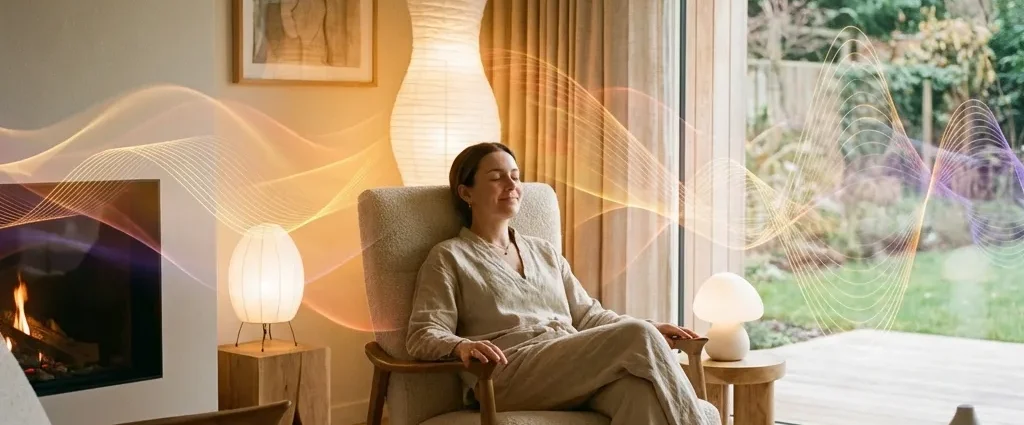
Frequency therapy inspires many people. It is considered gentle, holistic and deeply effective. This is precisely why it is often underestimated. Because where strong impulses are effective, caution is also required. This article addresses an often neglected question: when is restraint in frequency therapy therapeutically wiser?
Many users experience significant changes with frequency therapy. More energy. Less pain. Emotional relief. However, not every organism reacts in the same way. Particularly in the case of chronic illnesses, autoimmune processes or high sensitivity, too intensive an application can do more harm than good. This is precisely where contraindications arise that must be taken seriously.
Therapy does not always mean activation. Sometimes it also means taking a break. Or a conscious decision not to do anything. This is an unfamiliar thought, especially at a time when many therapy devices promise quick results. But experienced frequency therapists know: The body has its own pace. If you respect this pace, you will achieve better results in the long term.
In this article you will receive a well-founded overview of contraindications in frequency therapy. We shed light on physiological, emotional and energetic aspects. We talk about risk groups, typical mistakes in practice and sensible alternatives. The focus is on practical applicability, clear language and real experience from therapeutic work.
We are aimed at alternative practitioners, therapists and experienced users. However, chronically ill people and people with autoimmune diseases will also find important guidance here. The aim is to create safety. Because responsible frequency therapy begins with knowledge and ends with mindfulness.
Why frequency therapy is not always harmless
Frequency therapy is often described as having no side effects. This is only partly true. It works without medication or invasive interventions. But it does influence regulatory processes in the body. And it is precisely these processes that can become unbalanced under certain conditions.
Frequencies have an effect on cells, the nervous system and energetic fields. They can trigger detoxification, activate emotional issues or modulate the immune system. In healthy people, this is usually easy to regulate. However, overreactions can occur in people with a history of stress. Studies in neurophysiology show that external stimuli can significantly change neuronal excitability, especially in systems that are already sensitized.
Typical warning signs are severe fatigue, dizziness, emotional instability or a worsening of existing symptoms. These reactions are not always a sign of healing. Sometimes they indicate that the system is overstretched. The decisive factor is the duration and intensity of the reaction. If it lasts for several days or increases, the application should be questioned.
The situation is particularly critical for people with autoimmune diseases. Here the immune system is already reacting incorrectly. Additional stimuli can intensify inflammatory processes or activate silent inflammation. In such cases, a very cautious approach is necessary. You can also find out more about this in the in-depth article Autoimmune diseases and frequency therapy in balance.
Even in the case of neurological disorders, epilepsy or severe psychological stress, frequency therapy should only be used under professional supervision. Therapy devices for home use should be evaluated particularly critically here, as warning signals are often recognized too late.
Typical contraindications in frequency therapy
Contraindications are situations in which a therapy should not be used or should only be used to a limited extent. In frequency therapy, they are often relative, not absolute. This means that it depends on the dose, frequency range and condition of the person. This is precisely the challenge for users and therapists.
The most common contraindications include acute inflammation, fever and severe infections. During these phases, the body is working at full speed. Additional stimuli can overload it and delay recovery. Restraint is also advisable after operations, with recent injuries or in early pregnancy, as the body is already busy with adaptation processes.
Another important point is emotional stability. Frequencies can bring unconscious content to the surface. For people with trauma experiences, anxiety disorders or depressive episodes, this can lead to excessive demands. This requires a safe framework, clear objectives and often accompanying talk therapy.
In practice, it has also been shown that high-frequency applications can be problematic for very weakened people. The body then reacts not with regulation, but with stress reactions such as insomnia or inner restlessness.
For a better overview, you will find a simplified classification here:
| Situation | Risk | Recommendation |
|---|---|---|
| Acute inflammation | Overreaction | Pause or very gentle frequencies |
| Autoimmune disease | Immune stress | Individual coordination |
| Mental instability | Emotional flooding | Accompanied application |
This table does not replace a diagnosis. It serves as a guide for making responsible decisions and for reflecting on your own practice.
Dosage and frequency selection in frequency therapy
It is not the frequency therapy itself that is the problem. It is often the dosage. Many users think that a lot helps a lot. But the opposite is often the case. In frequency therapy in particular, less is more. Too high an intensity can block regulatory mechanisms instead of promoting them.
A sensible approach is the so-called creeping-in method. You start with short applications, often just a few minutes. Low intensity. Long breaks. The body is given time to react and make adjustments. Only when the reaction is stable, mild and easy to integrate is it carefully increased.
The choice of frequencies also plays a major role. Solfeggio frequencies tend to have a harmonizing effect, while high-frequency therapy or plasma technology trigger deeper and faster processes. Each method has its own depth and speed. Knowing these differences can significantly reduce risks.
A clear practical guide is helpful for beginners. Advanced practitioners benefit from observing and documenting progress, for example in the form of a therapy diary. Changes should not only be felt, but also reflected upon in order to recognize patterns.
At this point it is also worth taking a look at the basic mode of action. In the article What frequencies do in the body explains this connection clearly. You can also find additional information in the article Practical guide for frequency therapy beginners - step by step.
Critically assess therapy devices
The market for therapy devices is growing rapidly. Many devices promise ease of use and quick results. However, not every device is suitable for every person. Especially for sensitive users, powerful devices can be problematic and trigger unwanted reactions.
Important criteria in the selection process are adjustability, transparency of the frequencies used and the ability to finely regulate intensity. Devices without clear specifications or with predefined programs leave little room for individualization and harbour risks. Combinations of several devices should also be used with caution, as effects can overlap unpredictably.
Therapists repeatedly report cases in which patients have overextended themselves. Not out of recklessness, but out of hope for a quick recovery. This demonstrates the responsibility of professionals to convey realistic expectations and set clear boundaries.
Professional use of therapy equipment also means planning breaks and taking after-effects seriously. Regeneration does not happen during use, but afterwards. This aspect is often forgotten in advertising, but is central to a lasting effect.
Special situations: Chronic pain and palliative care
Frequency therapy can be a valuable support for chronic pain. At the same time, the nervous system is often highly sensitized. Constant pain stimuli change the way the brain processes stimuli. Excessive or incorrect frequency impulses can intensify this sensitization instead of alleviating it. You can find further information in the article Frequency therapy for chronic pain - mechanisms of action & applications.
In such cases, rhythmic, calming frequencies make more sense than aggressive programs. Duration also plays a major role. Short, regular impulses are often more effective than long sessions. The aim is not to stimulate, but to calm and reorient the nervous system.
In palliative care, the focus is not on healing, but on relief. Frequency therapy can provide gentle support here, for example with restlessness, anxiety or sleep problems. But here too, less is more. Each application should be based on the current state of health and should be able to be discontinued at any time.
The dignity and well-being of people are paramount. You can find more in-depth thoughts on this in the article Gentle support in palliative care.
Learning from practice: avoiding common mistakes
A common mistake is to ignore initial reactions. Not every reaction is positive or desirable. Therapists should take their clients seriously and not simply declare everything to be detoxification. Differentiation is a sign of professionalism.
Another point is the lack of individualization. Standard programs are convenient, but rarely optimal. Every person reacts differently, depending on their constitution, previous illnesses and life situation. Frequency therapy thrives on adaptation, not on rigid protocols.
Emotional processes are also often underestimated. When old issues come up, they need space, time and support. Otherwise, uncertainty or discontinuation of therapy can result. A good explanation in advance can go a long way here.
A helpful tool for many users is visual education. The following video explains the basics in an understandable way and shows why restraint is part of good therapy.
The future of frequency therapy: more awareness instead of more power
The future of frequency therapy does not lie in ever more powerful devices. It lies in better understanding. Scientific research, practical experience and ethical responsibility must come together in order to develop the method sustainably.
More and more therapists are recognizing that lasting effects take time. The trend is towards personalized applications and integrative concepts in which frequency therapy is part of a larger therapeutic framework. Combinations with nutrition, exercise and psychotherapy are becoming increasingly important.
Training and quality assurance are also becoming more important. If you want to learn frequency therapy, you need more than just technology. They need awareness, self-reflection, responsibility and humility towards the complexity of the human system. Similar approaches are described in the article What frequency therapy can do - and where its limits lie deepened.
The essentials for safe use
Frequency therapy is a powerful tool. Used correctly, it can promote regulation, relief and development. Used incorrectly, it can be overwhelming and destroy trust.
The most important points can be clearly summarized:
- Take contraindications seriously
- Increase dosage slowly
- Consciously select therapy devices
- Observe and respect reactions
- Understanding breaks as part of therapy
When you work therapeutically, restraint is not a sign of weakness. It is a sign of experience. If you are a user, trust your body. It gives clear signals when something becomes too much.
Frequency therapy is most effective where knowledge meets mindfulness. This is where the true art of healing begins.
Comments are closed, but trackbacks and pingbacks are open.