
What this is all about: Medicinal mushrooms (often called „medicinal mushrooms“ in medical terms) are mainly used in oncology for accompanying used - not „against the tumor“, but to treat it. Support for well-being, resilience and certain side effects. There are interesting data (especially on standardized extracts), but also limitations: Not everything is proven, much is plausible, some remains empirical medicine.
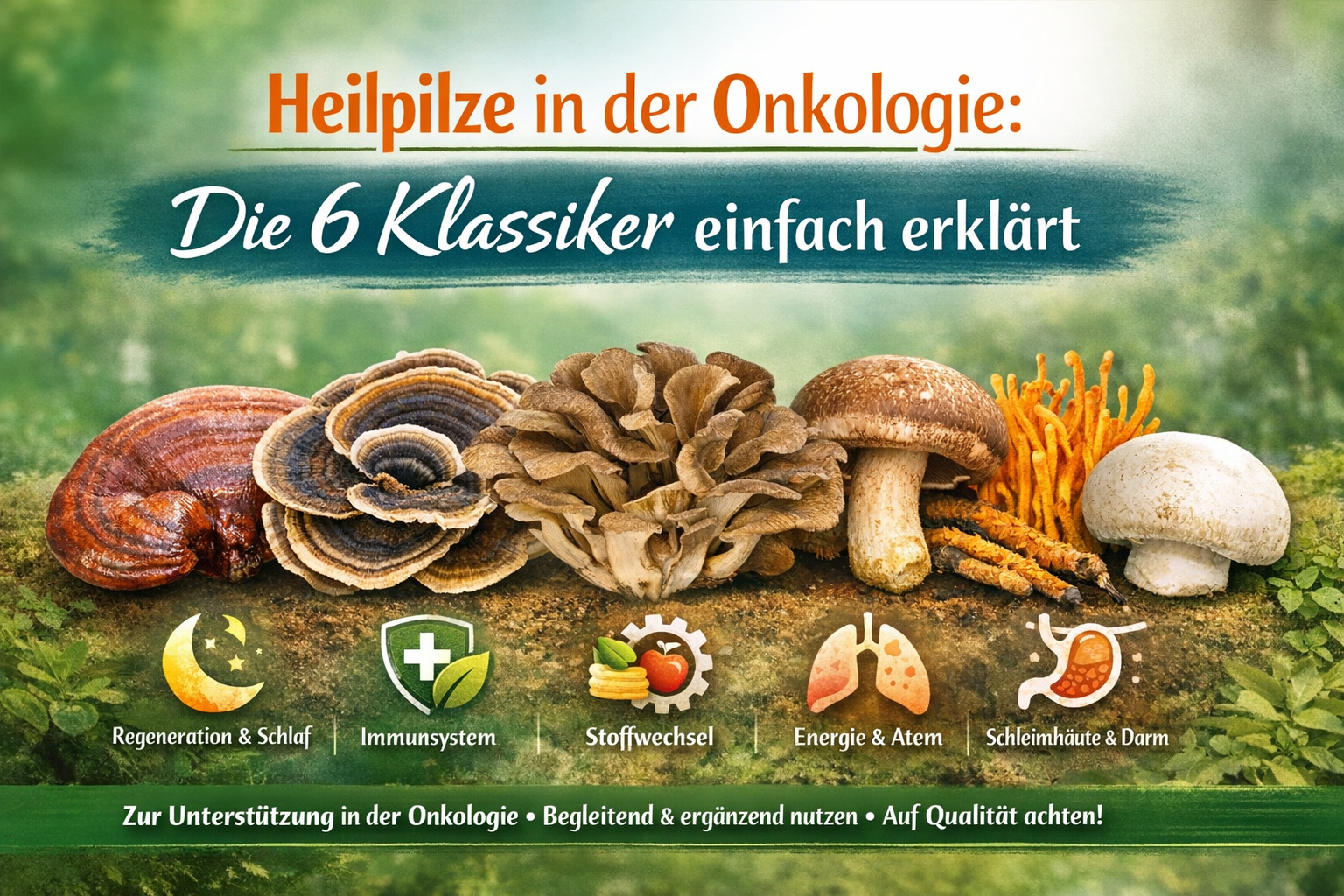
To help you find your way around quickly, here is a Brief presentation of the 6 most common medicinal mushrooms, which are repeatedly mentioned in the oncological context - Simple, clear, without promises of salvation.
The 6 medicinal mushrooms at a glance
Note: In practice, a distinction is often made between
- Powder (whole mushroom ground - contains a lot of fiber) and
- Extract (concentrated ingredients, often more standardized to certain polysaccharides/beta-glucans).
Rule of thumb: When thinking „immunologically“ standardized extracts often the better studied form. For „nutrition/tolerance Powder depending on the destination and gastrointestinal situation.
Brief overview (objectives, very simplified)
- Reishi (Ganoderma lucidum): Stress/sleep/regeneration, inflammation balance, general support
- Trametes versicolor (Butterfly Trametes): Immunological accompaniment (known extracts: PSK/PSP)
- Maitake (Grifola frondosa): Metabolism/immune signaling pathways (much discussed: „D fraction“)
- Shiitake (Lentinula edodes): immunological basis (lentinan), nutritional component
- Cordyceps (militaris/sinensis): Energy/performance, breathing and exhaustion issues
- Agaricus blazei / A. subrufescens: Immune system & mucous membranes (sometimes controversially discussed - quality is important)
1) Reishi - the „regeneration mushroom“ (Ganoderma lucidum)
Why it is often mentioned in oncology: Reishi has the reputation, dampen nervous tension, Sleep and recovery and to have an overall „balancing“ effect. This is a common goal during stressful treatment phases (chemotherapy, radiotherapy, anti-hormone therapy): sleep better, hold out better, less „constant stress feeling“.
What's inside (simplified):
- Beta-glucans/polysaccharides (immunomodulatory signals)
- Triterpenes (often associated with „inflammation balance“ and „calming“)
What it is practically used for (without any promise of a cure):
- Support with Sleep problems, inner restlessness, „pressure“
- Accompanying with Exhaustion (especially if stress/sleep is the bottleneck)
- General support for Feelings of inflammation and stress
Important notes: Reishi can help some people Stomach or Bowel movement influence. Caution with Blood thinners/platelet inhibitors (please check with your doctor), also around surgery appointments.
2) Butterfly Trametes - the immune classic (Trametes versicolor)
Why it is so prominent: Trametes is one of the most frequently cited medicinal mushrooms internationally in an oncological context - mainly due to standardized extracts/fractions such as PSK and PSP, which are being discussed as accompanying options in some countries.
What's inside (simplified):
- Polysaccharide complexes (PSK/PSP - immunologically relevant)
- Beta-glucans in various structures
What it is used for in practice (without any promise of a cure):
- Accompanying the Immune support (especially if you want to work „closer to the evidence“)
- Support in phases in which Susceptibility to infection or „immune stress“ are topics
- Partly also for Mucosal/intestinal support (depending on the preparation)
Important notes: With Autoimmune diseases, Transplantation or severe immunosuppression (certain medications), the intake must be clarified individually with the treatment team. Quality and clear declaration (extract, standardization) are particularly important here.
3) Maitake - „Metabolism + immune signals“ (Grifola frondosa)
Why it appears in oncology: Maitake is an edible mushroom that is discussed as a medicinal mushroom primarily because of certain extract fractions (often called the „D fraction“). Many people are interested in maitake when Immune signals and Metabolism (e.g. weight, appetite, blood sugar fluctuations) play a role.
What's inside (simplified):
- Beta-glucans/polysaccharides (immunomodulating signaling effect)
- Nutritionally relevant ingredients with powder/whole food content
What it is practically used for (without any promise of a cure):
- Accompanying the Immune balance
- For people who Metabolic issues have (energy, fluctuations, „crash“ feeling)
- As part of a „basic stack“ (e.g. together with reishi or trametes - depending on the goal)
Important notes: If you are taking medication for the Blood sugar it may make sense to monitor values more closely (not because maitake „replaces therapy“, but because some people react sensitively). Always adjust individually.
4) Shiitake - nutrition + immune base (Lentinula edodes)
Why it is popular: Shiitake is familiar, popular in culinary terms and is used as a medicinal mushroom for Lentinan (a polysaccharide) is mentioned. In practice, shiitake is often used as Well-integrated „basic“ mushroom especially if someone generally tolerates mushrooms well.
What's inside (simplified):
- Lentinan (polysaccharide, immunologically relevant)
- Dietary fiber and other nutrients (especially with powder/nutrition)
What it is practically used for (without any promise of a cure):
- „soft“ support for Immune system & regeneration
- As an introduction, if you want to use medicinal mushrooms Test carefully wants
- Nutritional companion, provided Intestine and mucous membrane are stable
Important notes: Shiitake can (rarely) trigger skin reactions in some people (a special „shiitake dermatitis“ mechanism is known to occur with raw/half-cooked mushrooms - with food). For extracts/powders: introduce slowly, check tolerance.
5) Cordyceps - energy, breath, „drive“ (Cordyceps militaris / sinensis)
Why it is mentioned in oncology: Cordyceps is traditionally often combined with Energy, respiratory function and sense of performance connected. This is attractive in everyday oncological practice because many patients have Fatigue (tumor- and therapy-associated fatigue). Important: Fatigue is complex - Cordyceps is Not a miracle cure, but some use it as a building block.
What's inside (simplified):
- Various secondary ingredients (e.g. cordycepin-like compounds depending on the type/extract)
- Polysaccharides/beta-glucans (depending on the product)
What it is practically used for (without any promise of a cure):
- Accompanying with Exhaustion/fatigue (especially „drive“ during the day)
- For „shortness of breath / feeling of exertion“ as subjective support (no substitute for diagnostics!)
- If you need stability during the day, while Reishi is more „evening“ thought
Important notes: Cordyceps can be „too activating“ in the case of pronounced restlessness/sleeping problems - then rather in the morning, lower doses or not at all. Always seek medical advice for severe symptoms (shortness of breath, palpitations, blood count problems).
6) Agaricus blazei / A. subrufescens - immune system & mucous membranes (with quality focus)
Why it polarizes: Agaricus blazei (often also A. subrufescens) is often described as „immune-strong“ and is traditionally used in part for Mucous membrane and intestinal issues used. At the same time, there are discussions about Quality, extraction methods and individual case reports - therefore applies here in particular: reputable manufacturers, clear analyses, cautious approach.
What's inside (simplified):
- Polysaccharides/beta-glucans
- Other ingredients, depending on origin and processing
What it is practically used for (without any promise of a cure):
- Accompanying for Immune system & mucosal barriers
- If intestines/mucous membrane (e.g. under therapy) are sensitive - however, check individually
Important notes: With Liver value topics, If you have unusual symptoms or complex medication, please be closely monitored. Agaricus is a good example of why „mushroom is mushroom“ is not enough: Laboratory quality, residues, standardization are crucial.
How to make a sensible start as a layperson (without overextending yourself)
1) Clarify the objective (1 sentence is sufficient):
Is it more about Sleep/stress, Fatigue, Immune support or Intestine/mucous membrane?
2) Start with 1 mushroom:
Test for 7-14 days, observe tolerance (stomach, stool, skin, sleep).
3) Note the product shape:
- „Immune“ target: rather Extract (standardized)
- „Nutrition/fiber“: rather Powder
- Often also Combinations used - but only when you know what you can tolerate.
4) Accompaniment is useful:
Especially with chemo/immunotherapy/blood thinners: talk back briefly (oncology team, doctor, pharmacy, experienced therapist).
Safety - the most important points (please really read)
- No promise of a cure: Medicinal mushrooms are Accompaniment, not „cancer therapy“.
- Interactions possible: Especially with Blood thinners, Immunosuppressants, certain Liver/kidney problems.
- Autoimmune & transplantation: always clarify individually.
- Quality counts: Mushrooms may contain residues - prefer reputable analyses/manufacturers.
Short practical excursus: frequency therapy as an accompanying approach
Some people combine naturopathic support (e.g. nutrition, microbiome focus, medicinal mushrooms) with Frequency therapy as a complementary procedure - for example with the aim of, Regulation/relaxation or to better cope with subjective stress. A sober view is important here: Frequency therapy is not intended as a substitute for standard oncological therapy, but - if at all - as a Accompaniment.
Conclusion
If you just remember one thing: The „6 classics“ are not miracle weapons, but they are as Accompanying modules interesting - with different focal points from Regeneration/Sleep (Reishi) about Immunologically discussed extracts (Trametes) up to Energy focus (Cordyceps). Decisive are Target clarity, quality and secure integration into the ongoing treatment concept.
Author: NLS Informationsmedizin GmbH, Herbert Eder
Disclaimer: This article is for general information purposes only and does not replace a medical diagnosis or treatment. In the case of cancer, ongoing chemotherapy/radiotherapy, immunotherapy or relevant medication (e.g. blood thinners, immunosuppressants), please clarify the use of medicinal mushroom products in advance with the oncology team treating you. Frequency therapy is not recognized by conventional medicine and cannot replace therapy by trained doctors or alternative practitioners.