





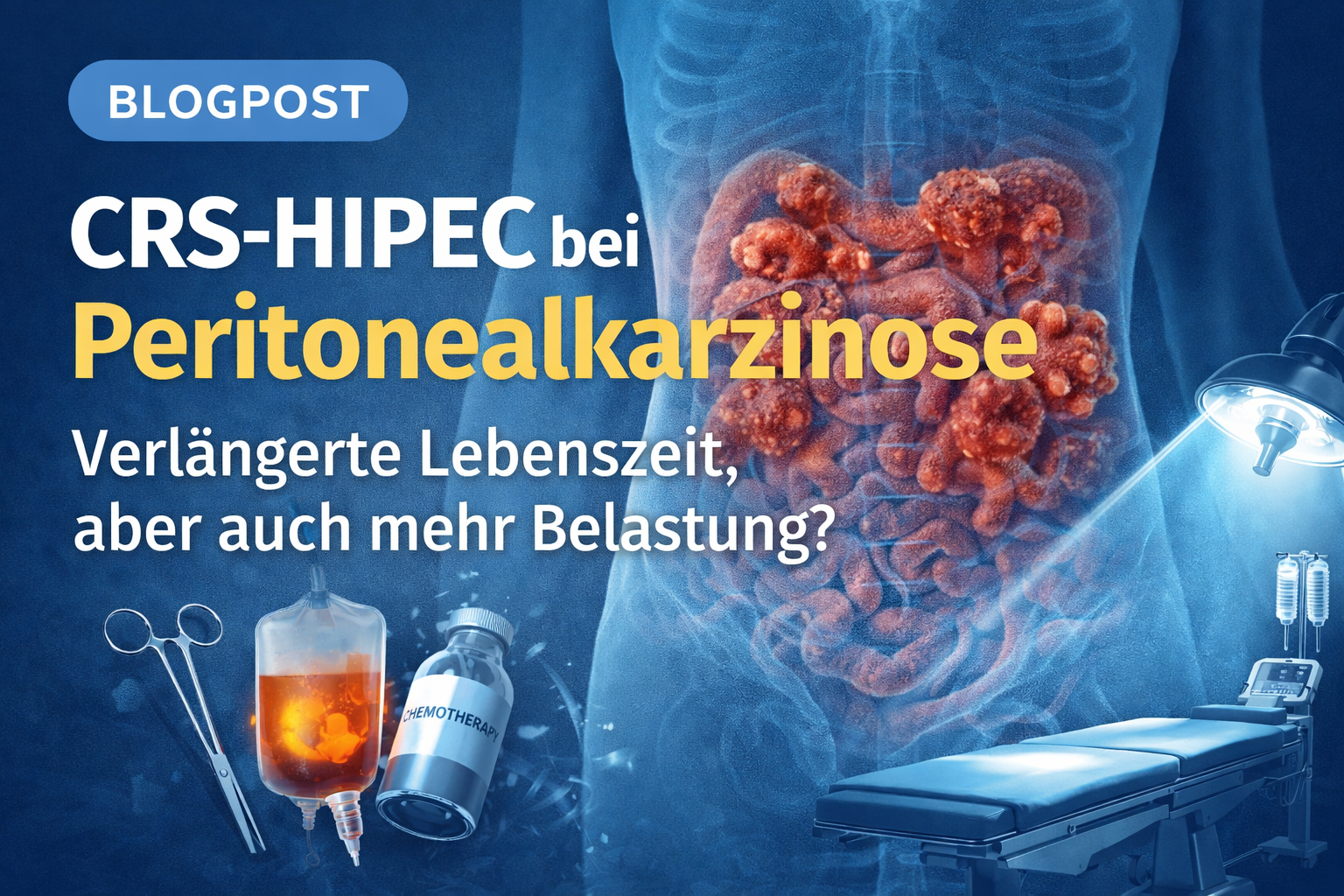
Peritoneal carcinomatosis (PC) - i.e. tumor metastases in the peritoneum - is one of the situations in oncology that is often particularly stressful for those affected: Abdominal fluid (malignant ascites), pain, an early feeling of fullness, shortness of breath due to pressure in the abdomen, loss of appetite, nausea, weight loss and often (partial) bowel obstruction can severely restrict quality of life. This is precisely where a recent review comes in, providing a palliative perspective on a very intensive treatment option: Cytoreductive surgery (CRS) combined with hyperthermic intraperitoneal chemotherapy (HIPEC).
What is CRS-HIPEC - and why „palliative“ at all?
- CRS (Cytoreductive Surgery) means: visible tumor foci in the abdominal cavity are surgically removed as far as possible.
- HIPEC means: a heated chemotherapy solution is circulated in the abdominal cavity directly in the operating room to treat microscopic tumor remnants locally.
„In this context, “palliative„ does not mean “doing nothing", but rather: Reduce symptoms, stabilize quality of life and - if possible - gain time to live, without the burden of the therapy outweighing the benefits. It is precisely this balance that is discussed in the review.
The core results of the review - short & honest
The authors reviewed 54 studies (up to June 2025) and paid particular attention to Symptoms, quality of life, complications and survival respected.
1) Symptom control: focus on ascites
A striking result: CRS-HIPEC was able to resolve malignant ascites in individual studies up to 100%. In total Symptom improvements from 26.5% to 100% reported - partly with permanent control up to 90% (depending on the study and initial situation).
This is crucial for many patients because ascites often leads to recurring punctures (paracentesis), hospital stays and a kind of „symptom carousel“ - with protein and electrolyte losses and risks of infection.
2) Survival: sometimes significantly longer - but strongly dependent on selection & tumor type
Across several tumor types, the review shows that CRS-HIPEC often has longer median survival times than purely systemic chemotherapy or CRS alone - albeit with wide ranges depending on the primary tumor and patient selection. For example. Median survival after CRS-HIPEC of around 6.6 to 50 months, while systemic therapy alone, depending on the context, is about 5.2 to 12.6 months achieved (in the summarized studies).
3) The price: relevant morbidity and mortality that cannot be ignored
And now the part that should not be soft-pedaled: CRS-HIPEC is a major operation - and you can see that in the figures:
- Morbidity (serious complications) about 15.1% to 56%
- postoperative mortality 0% to 12% (depending on the center/study/patient profile)
This is the reason why this therapy not „for everyone“ - and why the question of „does palliative care make sense?“ depends so much on the individual situation.
Who is most likely to benefit?
The review emphasizes very clearly: Patient selection is the key.
Two factors come up again and again:
- Tumor burden in the abdominal cavity (PCI - Peritoneal Cancer Index)
Lower PCI values correlate more frequently with better results. - Completeness of tumor removal (CC score / Completeness of Cytoreduction)
The more complete the cytoreduction, the more likely it is that both survival and symptom benefits will be seen.
In practical terms, this means that if the disease is very diffuse or the general condition is severely limited, the procedure can do more harm than good.
Quality of life: The blind spot in the data situation
One thing I like about this review is that it doesn't just say „sounds great“, but also mentions the gaps.
So had only 5 studies had a truly dedicated palliative-symptomatic endpoint, and Long-term (>12 months) quality of life trajectories were not consistently reported.
Some studies have shown that QoL can return to baseline later after an initial dip (3-6 months) - but overall the measurement is too heterogeneous, to derive a clean „guarantee“ from this.
What does this mean for those affected and their relatives?
If peritoneal carcinomatosis is present and ascites, pain or bowel problems dominate, then CRS-HIPEC for selected patients be an option that not only brings „time“, but also Reduce specific symptom burden can.
But: It is a high-risk strategy that
- an experienced clinic (high-volume center),
- multidisciplinary planning,
- and a very clear weighing up of benefit vs. burden
needs. Palliative_cytoreductive_surger...
And where does frequency therapy fit into such a picture?
When we talk about palliative oncology, it's not just about „tumor vs. therapy“, but about Regulation, stability and quality of life in everyday lifeSleep, stress, pain perception, autonomic nervous system, exhaustion, anxiety.
Here you can Frequency therapy – accompanying and complementary - can be a building block for some people to help them cope better with symptoms and stress. A clear separation of roles is important here:
- Oncological measures (chemo/OP/HIPEC) belong in the hands of specialized medicine.
- Complementary procedures can be used as support - but not as a substitute.
Good communication with the treatment team is crucial, especially in severe cases: What is realistic? What is the goal - symptom control, time, both? And what level of stress is acceptable?
Disclaimer
This blog article is for information purposes only and does not replace medical advice. Treatment decisions for cancer (incl. CRS/HIPEC) must always be made individually with the treating oncology and surgery team. Frequency therapy is not recognized by conventional medicine and cannot replace treatment by doctors or alternative practitioners.