




Many people report that Solfeggio frequencies help them to become calmer, sleep better or perceive pain differently. At the same time, there are many contradictory statements on the internet. Some speak of DNA repair, others of spiritual enlightenment. This is where the problem begins. Which of these claims are scientifically tenable? And what belongs more in the realm of belief and subjective experience. It is therefore worth taking a closer look at Solfeggio frequencies and their actual effects.
In this article, we look at solfeggio frequencies and brain frequencies together. Without polemics. Without exaggeration. But with clear language, current findings from neuroscience and honest practical experience from frequency therapy. The aim is not to gloss over or devalue anything. The aim is orientation.
This classification is particularly important for alternative practitioners, therapists and chronically ill people. Anyone who works with frequencies bears responsibility. For themselves and for others. That is why we make a clear distinction between what the brain can measure and what acoustic frequencies can influence indirectly.
You will learn how brain frequencies are created. Why audible frequencies such as 528 Hertz are not directly identical to alpha or theta waves. And can still have an effect. We talk about studies, practical examples, limitations and useful applications. Step by step. Explained clearly. Without technical jargon.
So if you're wondering how Solfeggio frequencies affect the brain, what evidence there is for them and how you can use this knowledge responsibly, you've come to the right place.
Understanding brain frequencies: What really happens in the mind
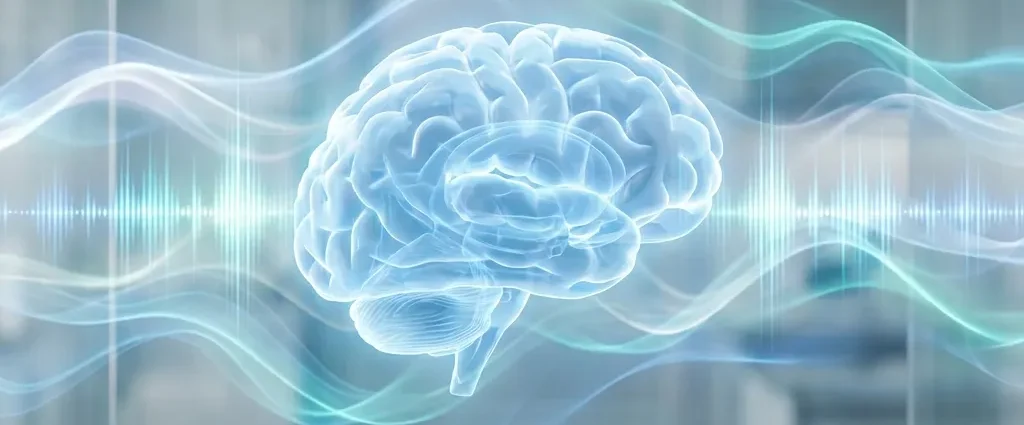
To be able to categorize Solfeggio frequencies, we must first talk about brain frequencies. The brain works electrically. Nerve cells communicate via impulses. These impulses can be measured. The results are so-called brain waves.
These brain waves originate in the brain itself. They are not sound. They are not music. They are patterns of electrical activity. These patterns change depending on the state. During deep sleep, a different activity dominates than during concentrated work or stress.
Neuroscientists distinguish between several main areas. This categorization has been well researched and is considered a reliable consensus. It is important to understand that these categories are not rigid pigeonholes. In everyday life, we constantly switch between different frequency patterns. Even when reading this text, alpha and beta activity can occur in parallel.
| Brainwave | Frequency range | Typical condition |
|---|---|---|
| Delta | 1, 4 Hz | Deep sleep, regeneration |
| Theta | 4, 8 Hz | Meditation, trance, memory |
| Alpha | 8, 13 Hz | Relaxation, calm focus |
| Beta | 13, 30 Hz | Thinking, stress, activity |
| Gamma | >30 Hz | Integration, learning |
There is one important point that is often misunderstood. These frequencies are not external stimuli. They are the result of internal processes. The brain does not vibrate because a sound comes from outside. It reacts to stimuli, emotions, attention and regulation. Studies with EEG clearly show that inner attitude, expectation and context have an enormous influence on the measured frequency patterns.
This is where the confusion surrounding solfeggio frequencies arises. An audio frequency of 528 hertz is completely different from an alpha wave of 10 hertz. Both are measured in hertz. But they belong to different levels. Understanding this difference avoids many wrong conclusions.
Solfeggio frequencies: Origin, attributions and reality
Solfeggio frequencies originally come from a musical system that was used in medieval church music. It is only in recent decades that specific therapeutic effects have been attributed to them. These attributions have grown culturally and have been strongly influenced by alternative healing movements.
These frequencies are in the audible range. They act via the auditory system. They therefore have an indirect effect on the nervous system. Similar to music, rhythm or natural sounds. It is also crucial that not only the pure frequency, but also the volume, timbre, repetition and personal preferences have an influence.
In practice, many people report relaxation, inner images or emotional processes. That is real. But it does not automatically mean that a certain frequency specifically repairs a cell or heals an organ. Subjective experience is important, but it is not the only proof of a specific biological effect.
The research situation here is differentiated. There is experimental evidence for some effects, such as stress reduction or heart rate variability. However, there is no evidence for many far-reaching claims.
| Solfeggio frequency | Frequent attribution | Classification |
|---|---|---|
| 174 Hz | Pain relief | Limited evidence |
| 396 Hz | Stress reduction | Indirect effects |
| 417 Hz | Emotional regulation | Indirect effects |
| 528 Hz | Stress, hormones | Experimental |
| 639, 963 Hz | Awareness | No neuro-evidence |
A common mistake is to equate sound frequency with brain frequency. The brain does not take a tone and convert it directly into an alpha wave. Instead, it responds to meaning, structure, repetition and emotional evaluation. This is exactly why context is so important. The same frequency can have completely different effects on two people, depending on experience, expectation and current stress.
How Solfeggio frequencies influence the nervous system
If solfeggio frequencies do not directly control brain waves, how do they work? The key lies in the autonomic nervous system, particularly in the balance between the sympathetic and parasympathetic nervous systems.
Acoustic stimuli reach deep areas of the brain such as the limbic system very quickly via the auditory system. This is where they are evaluated emotionally. Pleasant sounds can activate the parasympathetic nervous system. This is the part of the nervous system responsible for rest, digestion and regeneration. This can be measured by improved heart rate variability, among other things.
Slow, steady sounds often lower the heart rate. Breathing becomes calmer. Muscle tension decreases. These are measurable effects that are also well known from music therapy. They explain why many people experience Solfeggio frequencies as relaxing.
A pattern often emerges in practice. People with chronic stress, pain or autoimmune diseases react particularly sensitively. Not because the frequency heals, but because the nervous system finally receives a signal to relax. This relief can secondarily alleviate symptoms.
If you are interested in this context, it is also worth taking a look at the article Solfeggio frequencies effect in the nervous system. This mechanism is explained in more detail there. You can also find more background information in the article Solfeggio frequencies and the autonomic nervous system: measurable effects on HRV, sleep and stress regulation.
The video helps to visually understand the connection between hearing, emotion and regulation. This is particularly helpful for beginners.
Practical examples from frequency therapy
In therapeutic practice, Solfeggio frequencies are often used as an adjunct. Not as the sole therapy. Rather as a tool for regulation, similar to breathing exercises or guided imagination.
An example from pain therapy. People with chronic pain are often in a permanent state of stress. The nervous system is overactive. Calm frequencies can help to interrupt this state and allow the body to experience a new sense of security.
Before the treatment, many patients report inner restlessness, shallow breathing and brooding. After several sessions with accompanying frequency work, perception often changes. The pain is not gone. But it dominates less. This is consistent with findings from pain research on central processing.
Another example concerns sleep problems. Here, Solfeggio frequencies are often used in the evening, in a quiet environment without distractions. In combination with breathing exercises, falling asleep can be made easier. The aim is not to force sleep. The aim is safety for the nervous system.
For specific dosage and typical errors, see the article Solfeggio frequencies Application: Dosage, duration, errors a useful addition. The article is also worth reading Long-term effect of Solfeggio frequencies: Experiences after 6-24 months, to better understand long-term changes.
Clarification is important in all cases. Unrealistic expectations almost always lead to disappointment. Clear communication creates trust and improves the therapeutic relationship.
Limitations and common misunderstandings
A major problem in the field of frequency work is the confusion of terms. Scientific terms are used to support unsubstantiated promises. This damages the credibility of serious work in the long term.
A classic example is the claim that 528 Hertz repairs DNA. There is no reliable evidence for this. Neither in molecular biology nor in neuroscience. Such statements are often the result of misinterpretations of individual laboratory studies.
This does not mean that people cannot feel better with this frequency. But the feeling is not proof of a specific biological mechanism. Differentiation is crucial here.
Another misunderstanding concerns brain frequencies. The brain cannot simply be forced into a certain state by a sound. Regulation is always an interplay of stimulus, meaning, experience and safety.
Serious frequency therapy recognizes these limits. It does not work with promises of healing. It works with processes that can take different individual courses.
Combination with modern neuroscience
Things get exciting where frequency work and neuroscience meet. For example, in transcranial alternating current stimulation or neurofeedback. These methods have been well researched and are used clinically.
Frequencies are modulated directly in the brain. Electrically. Controlled. Limited in time. Studies show that certain brain rhythms can be influenced in the short term, for example in cases of depression or ADHD.
The difference to solfeggio frequencies is fundamental. Here, the work is not done via the ear, but via neuronal coupling. The effects are measurable, but also not permanent without accompanying therapy.
In practice, both approaches can be usefully combined. Acoustic frequencies for emotional regulation. Neurotechnological procedures for targeted modulation. The prerequisite is a clear indication.
However, this combination requires training and experience. It is not a self-experiment and belongs in expert hands.
Classification for chronically ill people
People with autoimmune diseases or chronic complaints are often looking for gentle methods. Solfeggio frequencies can have a supportive effect here, especially in the areas of stress reduction and self-regulation.
Stress is a known amplifier of many symptoms. Any method that calms the nervous system can help indirectly. This is also shown by studies on mind-body methods.
However, it is important not to see frequency work as a substitute for medical care. Rather as a supplement to existing therapies.
The article Autoimmune diseases Frequency therapy: balance instead of suppression deals with this balance in great detail.
This shows just how important realistic goals are. More regulation. More self-awareness. Less excessive demands. After all, small changes can make a big difference in the long term.
Future trends and responsible handling
The demand for frequency therapy is growing. At the same time, the desire for scientific classification is increasing. This is a good development because it promotes quality.
More research can be expected in the coming years. Especially on the combination of sound, vagus nerve stimulation and biofeedback. Initial studies show promising approaches.
For therapists, this means positioning themselves clearly. Transparency creates trust. Clear demarcation protects against disappointment and legal problems.
Solfeggio frequencies are not a miracle cure. But they can be a valuable tool. Used correctly. Communicated honestly. Embedded in a holistic concept.
The essentials for your practice and everyday life
Solfeggio frequencies and brain frequencies belong to different levels. One is acoustic. The other is neuronal. Both can influence each other. But not directly and not automatically.
The effect of Solfeggio frequencies runs via emotion, attention and the vegetative nervous system. This is precisely where their strength lies. They often create access to inner peace.
In practice, this means
- Use frequencies for regulation, not for the promise of healing
- Combine it with breathing, mindfulness and education
- Observe individually instead of dogmatically
If you want to delve deeper, you can find in-depth training courses, practical guides and in-depth articles on Herbert Eder's website, such as Solfeggio Frequencies - Frequency Therapist the platform for frequency therapy. Knowledge creates security. And security is the basis of every sustainable cure.
Comments are closed, but trackbacks and pingbacks are open.