




TLDR; The article explains clearly what spirochetes are and why they are medically relevant, especially in Lyme disease, and at the same time classifies what is meant by frequency or resonance therapy. He describes how these complementary methods are used in practice to treat chronic stress, for example to support regulation and well-being, without making any guaranteed promises of a cure. Current research is critically examined: There are theoretical approaches and reports of experience, but no clear scientific evidence that frequencies kill spirochetes. The important conclusion is to clearly state the opportunities and limitations, to use frequency therapy only as a supplement and not to replace conventional medical diagnosis and treatment. Readers are thus provided with factual guidance in order to make informed decisions about the possible, responsible use of such procedures.
Many people come across the term spirochetes sooner or later. Often in connection with Lyme disease. At the same time, interest in frequency therapy, resonance therapy and other complementary methods is growing. Especially when complaints become chronic or traditional treatments do not bring the hoped-for success.
In this article, we take a calm and clear look at both topics. Without promises of salvation. Without polemics. But with respect for science and openness to holistic approaches. Spirochetes are real microorganisms. They belong to the spiral bacteria and can cause serious illnesses. Lyme disease is the best-known example. At the same time, many sufferers are looking for complementary ways to support their biological regulation.
Frequency therapy is often mentioned in this context. Some speak of vibration therapy or information medicine. Others use terms such as energetic balance or vital field analysis. What is important is that we make a clear distinction between proven knowledge and complementary accompanying methods.
This article is aimed at people who want to understand more deeply. Alternative practitioners. Therapists. The chronically ill. And anyone interested in holistic health. We explain the basics, categorize the study situation and show where frequency applications can be realistically classified.
We also address current developments. From research into Lyme disease to trends in complementary medicine. The aim is orientation. So that you can make informed decisions. For yourself or for your practice.
Understanding spirochetes: Structure, behavior and significance
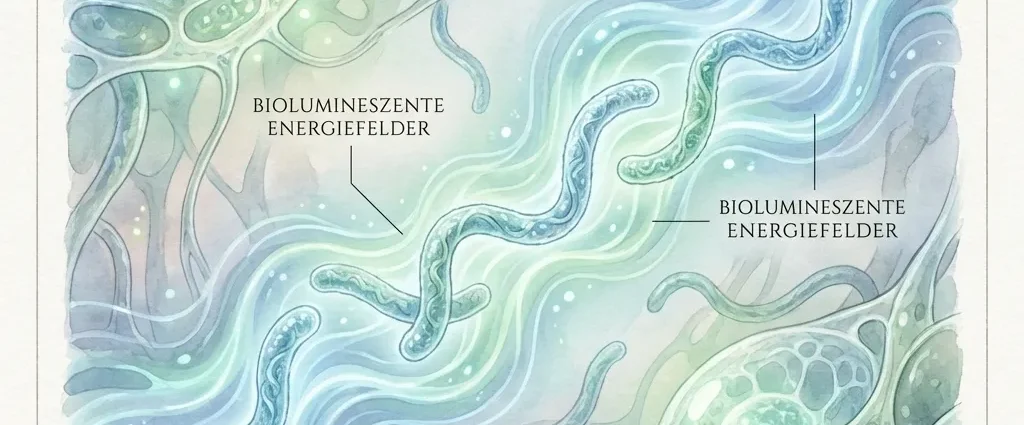
Spirochetes are spiral-shaped bacteria. This spiral shape is not just an optical feature. It enables the bacteria to be particularly mobile. With the help of so-called axial filaments, they can move in a spiral shape and penetrate through layers of mucus, connective tissue and even blood vessels. This characteristic clearly distinguishes them from many other bacterial pathogens.
Of particular medical relevance are Borrelia burgdorferi in Lyme disease, Treponema pallidum in syphilis and Leptospira species. Borrelia in particular are known for their adaptability. They divide slowly, can change their external protein structures (antigenic variation) and take on different forms. These so-called pleomorphic forms, such as round bodies or biofilm-like aggregates, are the subject of intensive research as they can have an influence on the course of the disease.
This explains why Lyme disease is chronic in some cases. Not because it is mysterious. It is because the biology of these microorganisms is complex and the body's immune response varies greatly from person to person. Guideline-based medicine relies on antibiotics here. Especially in the early stages, with very good success rates of over 90 percent with timely treatment.
Current figures show how relevant the topic is:
| Key figure | Value | Year |
|---|---|---|
| Estimated annual Lyme disease cases in Germany | approx. 214,000 | current |
| Inpatient treatments | approx. 5,400 | 2023 |
| Deaths from Lyme disease | 10 | 2023 |
These figures make it clear that Lyme disease is not a marginal phenomenon, but a relevant public health issue. At the same time:
Lyme borreliosis is the most common tick-borne disease in Germany. There is currently no vaccination against it, but it is easily treatable with antibiotics if detected early enough.
This statement is important. It provides clarity. Frequency therapy does not replace medical treatment and should not be seen as an alternative to evidence-based therapy.
Frequency therapy and spirochetes: What is meant by this
Frequency therapy is not a uniformly defined procedure. Rather, the term serves as a collective term for different technical and therapeutic approaches that work with electrical, electromagnetic or magnetic oscillations. What they have in common is the assumption that biological systems react to stimuli that are mediated via the electrical properties of cells and tissues.
Every cell in the body has a membrane potential. Nerve and muscle cells communicate via electrical impulses. This is why proponents of frequency therapy derive the hypothesis that external frequencies could influence regulatory processes. It is important to note that these assumptions originate mainly from biophysics and systems theory, not from classical infectiology.
Various methods are used in practice. These include bioresonance systems, microcurrent or TENS-like devices, high-frequency applications such as d'Arsonvalization and computer-assisted vital field or regulation analyses. The technical implementation varies greatly, as do the underlying models.
Furthermore, the scientific classification is crucial. There are no recognized clinical studies that show that frequency therapy can kill spirochetes or cure Lyme disease. It is not a causal procedure and is not part of medical guidelines.
Why do people use it anyway? Because it is not primarily aimed at pathogens, but at regulation: at the cellular environment, the autonomic nervous system, stress axes and subjective well-being. Many therapists report improvements such as less exhaustion, more stable sleep or better resilience. These are empirical values, not promises of a cure.
Frequency therapy for chronic stress
Chronic complaints are rarely caused by a single factor. They often develop over years and are the result of a complex interplay of infections, inflammation, stress, hormonal changes and psychological strain. Particularly in the case of such multifactorial conditions, many sufferers do not feel that purely symptom-oriented approaches are sufficient.
This is where many naturopathic and complementary concepts come in. Frequency applications are used to support regulatory processes. The aim is not to combat, but to stabilize. The focus is also on the body's internal environment, i.e. factors such as blood circulation, vegetative balance, stress management and the ability to regenerate.
Typical accompanying goals are:
- Support for the nervous system, especially in cases of exhaustion and sensory overload
- Harmonization of stress reactions via parasympathetic activation
- Promoting the ability to regenerate after long periods of illness
This approach is particularly important for people with autoimmune diseases or post-infection syndromes. They often report changing symptoms that worsen under stress. You can find out more in the article Autoimmune diseases Frequency therapy: balance instead of suppression.
It is also worth taking a look at related topics such as Breast cancer and frequency therapy or Cervical cancer and frequency therapy, to better understand the wide range of applications.
From a scientific point of view, it is important to note that regulation is no substitute for therapy. However, it can influence quality of life and help people to cope better with chronic stress.
Energetic test procedures and vital field analysis
Energetic test procedures are intended to provide indications of functional stress. They do not measure pathogens, antibodies or inflammation levels. Instead, they record the body's reactions to defined stimuli, such as electrical impulses or frequency patterns. These reactions are interpreted as an expression of regulatory capacity.
Vital field analysis is a well-known example. It is based on biophysical models that assume that the human organism is permeated by electromagnetic fields. The aim is to recognize patterns: Stress states, energetic imbalances or indications of regulatory weaknesses in individual organ systems.
Critics complain about the lack of standardization, reproducibility and comparability of the results. Advocates see added value in the individual approach and the ability to visualize changes over time. As a result, vital field analysis is usually used in practice as a supplementary instrument, not as the sole basis for decision-making.
A responsible approach means always seeing results in context, communicating them transparently and always combining them with conventional medical diagnostics. In this way, it can serve as a discussion and progression tool without providing false security.
Frequency therapy in therapeutic practice
For alternative practitioners and therapists, the question arises: How can frequency therapy be meaningfully integrated? Successful concepts are usually multimodal and individually adapted. They take into account medical findings as well as the patient's lifestyle, stress level and personal resources.
Typical components of such concepts are
- Conventional medical clarification and diagnostics
- Nutritional therapy and targeted micronutrient supply
- Stress management, breathing or relaxation techniques
- Frequency therapy as an accompanying regulatory measure
This approach is used particularly for chronic pain, functional complaints or fatigue syndromes. Patients often report that they feel more holistically aware. An in-depth overview can be found in the article Frequency therapy for chronic pain, mechanisms of action & applications. In addition, supplementary sources such as Practical guide for frequency therapy beginners - step by step helpful to better understand the methodological approach.
Information is key. Patients need to know what is realistic and what is not. Transparency creates trust and is the basis of all responsible therapeutic work.
Current research and new perspectives
Research into Lyme disease is constantly evolving. International working groups are investigating new biochemical targets, such as metabolic pathways of borrelia or mechanisms of immune modulation. At the Medical University of Vienna, innovative approaches are being researched that should enable more targeted therapies in the long term.
According to researchers such as Dr. Michiel Wijnveld, it is becoming increasingly clear how complex the survival mechanisms of Borrelia are (MedUni Vienna). This explains why simple solutions do not exist and why individualized therapeutic approaches are becoming increasingly important.
At the same time, there is growing interest in complementary medicine, particularly for post-infection syndromes, long-term COVID and chronic fatigue. As a result, there is increasing research into how regulatory and mind-body approaches can support subjective well-being. Even if the evidence base is heterogeneous, new perspectives for integrative care concepts are opening up.
Clearly identify opportunities and limits
Frequency therapy is not a miracle cure. It is no substitute for antibiotics, no treatment for infections and no guarantee of freedom from symptoms. Its strength lies in accompanying and supporting regulatory processes and in taking a holistic view of the individual.
At the same time, it has clear boundaries. Stating these is not a sign of weakness, but of professionalism. Communicating openly avoids false expectations and strengthens patients' personal responsibility.
Finally, the clear separation of opportunities and limits creates trust. And it is precisely this trust that is crucial in therapeutic work, especially in the case of chronic illnesses, where patience and realistic goals play a central role.
Frequently asked questions
Can frequencies kill spirochetes?
No. There is no scientific evidence for this. Frequency therapy is not a causal treatment for bacteria and does not replace antibiotic therapy.
Is frequency therapy permitted for Lyme disease?
Yes, as an accompanying method within the scope of therapeutic freedom. However, it must not replace or delay any medically necessary treatment.
What do therapists mean by energetic balance?
This refers to the regulated interaction of the nervous system, metabolism, stress reactions and regeneration. It is a functional, not an infectiological concept.
Are there risks with frequency applications?
When used properly, they are considered to be well tolerated. Contraindications such as pregnancy, pacemakers or epilepsy should be taken into account.
For whom is frequency therapy useful?
Especially for people with chronic stress who are looking for additional support and are prepared to take responsibility for a holistic approach to therapy.
The essentials at a glance
Spirochetes are real pathogens with complex biology. Lyme disease should be taken seriously, is well researched and can be treated according to guidelines. Frequency therapy is not part of evidence-based guideline medicine.
However, it can be used as a complementary method to support regulatory processes, stress management and quality of life. A holistic approach combines knowledge, responsibility and openness.
It is also worth taking a look at current research such as Scientific study situation Frequency therapy 2026 - current research & evidence, to monitor developments further.
This is precisely where the strength of modern integrative concepts lies. Knowledge creates certainty. And certainty is the basis of every good decision, for patients and therapists alike.

Comments are closed, but trackbacks and pingbacks are open.