





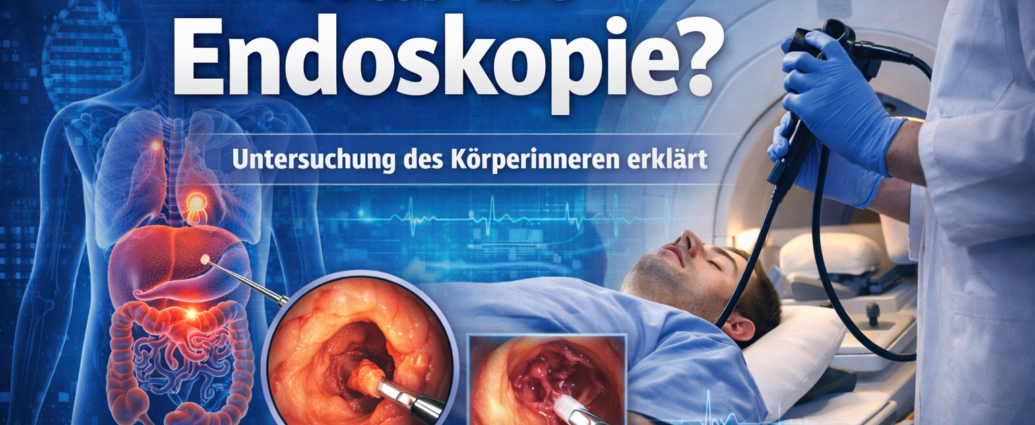
The Endoscopy is an important medical examination procedure that allows doctors to look inside the body without the need for major surgery in many cases. It is used to look directly at organs, body cavities and mucous membranes, to detect changes and, if necessary, to take tissue samples. For many people, the term is associated with uncertainty, but endoscopy is now one of the most frequently used diagnostic procedures in modern medicine.
Endoscopy plays a particularly important role in cases of unclear gastrointestinal complaints, respiratory problems or suspected inflammatory or tumorous changes. Also in connection with Cancer diseases it is often a central component of the clarification.
What does endoscopy mean?
The term Endoscopy is made up of Greek word components and means „to look inside“. A special medical instrument, the Endoscope, is used. This usually consists of a thin, flexible or rigid tube with a light source and camera. This allows internal areas of the body to be visualized directly and viewed on a monitor.
In contrast to purely imaging procedures such as CT or MRI endoscopy provides a direct view of mucous membranes and internal surfaces. This means that even small changes such as inflammation, polyps, bleeding or tissue abnormalities can often be detected very precisely.
How does an endoscopy work?
During an endoscopy, the endoscope is inserted into the body via natural orifices or - more rarely - via small access points. The camera at the tip transmits images in real time. This allows the examined region to be viewed in detail.
Depending on the examination, additional instruments can also be inserted via the endoscope. This makes it possible to
- Take tissue samples
- make small interventions
- Removing polyps
- Stop bleeding
- Assess bottlenecks
- Remove foreign bodies
Endoscopy is therefore not only a diagnostic procedure, but in many cases also a therapeutic one.
What types of endoscopy are there?
There are different forms of endoscopy, depending on which part of the body is being examined.
Gastroscopy
The Gastroscopy is used to examine the oesophagus, stomach and duodenum. It is often used for heartburn, upper abdominal pain, nausea, bleeding or unclear complaints.
Colonoscopy
The Colonoscopy examines the large intestine and sometimes also the last section of the small intestine. It plays an important role in chronic intestinal complaints, blood in the stool, preventive examinations and the detection of bowel cancer.
Bronchoscopy
This involves examining the airways and bronchi. This examination can be carried out in cases of chronic coughing, unclear lung findings or suspicion of Tumors of the airways may be necessary.
Cystoscopy
The Cystoscopy enables the bladder and urethra to be examined, for example in the case of blood in the urine or recurring urinary tract problems.
Arthroscopy
The Arthroscopy is used to examine joints, for example the knee or shoulder. It is used for both diagnostic and therapeutic purposes.
laparoscopy
The Laparoscopy allows a view into the abdominal cavity. It is often used for unclear complaints, gynecological issues or to support surgery.
When is an endoscopy performed?
An endoscopy is recommended if symptoms or abnormal findings need to be clarified in more detail. It is often used for
- persistent gastrointestinal complaints
- Difficulty swallowing
- Heartburn
- Blood in the stool or urine
- Chronic cough
- Suspected inflammation
- Polyps or mucosal changes
- unclear pain
- Suspected tumors
- Follow-up checks for known illnesses
Particularly in connection with Cancer diseases endoscopy can be very important. It helps to detect suspicious changes at an early stage, take tissue samples and better assess the spread of abnormal structures.
How does an endoscopy work?
The procedure depends on the type of examination. In many cases, the examination is performed on an outpatient basis. We will explain in advance how the examination will be carried out and what to look out for. For some endoscopies, you will need to fast or undergo special preparation, for example before a colonoscopy.
During the examination, the endoscope is carefully inserted. Many examinations can be carried out with a local anaesthetic, light sedation or a short twilight sleep. This makes the examination much more comfortable for many people.
You can usually recover quickly after the endoscopy. However, if sedatives have been administered, you should not drive for the rest of the day.
Does an endoscopy hurt?
Many people are afraid that an endoscopy is painful. In fact, it is often described as unpleasant rather than really painful. Modern devices are very fine and the examinations are carried out as gently as possible. In addition, anesthesia or sedation help to reduce the stress.
How unpleasant an endoscopy is perceived depends heavily on the body region examined, the duration of the examination and individual sensitivity.
What are the risks?
Endoscopy is generally regarded as a safe routine procedure. Nevertheless, as with any medical examination, there are certain risks. These include
- Temporary complaints
- Circulatory reactions
- Bleeding
- Infections
- Rare injuries to the examined structures
- Possible reactions to sedatives or anesthetics
Serious complications are rare, but are always taken into account and discussed with the patient before the examination.
Why is endoscopy so important?
Endoscopy is so important because it allows a direct view of internal structures. It can often reveal conspicuous changes earlier and more precisely than purely external examinations. It also allows tissue samples to be taken, which is particularly important in the case of unclear findings.
Particularly in the early detection and clarification of Cancer diseases endoscopy is often indispensable. Changes in the stomach, intestines, bronchi or bladder can be seen directly and examined in a targeted manner. As a result, diagnoses can often be confirmed more quickly and treatments can be better planned.
Endoscopy and biopsy
Very often an endoscopy is performed with a Biopsy combined. If abnormal tissue is discovered during the examination, a small sample can be taken directly. This is then examined histologically in the laboratory.
This is particularly important because not every visible change is automatically benign or malignant. Only the examination of the tissue often provides the exact answer.
Holistic approach: diagnostics and information medicine
From the perspective of Information medicine endoscopy is a classic conventional medical procedure that makes structural changes in the body visible. It shows directly whether mucous membranes are irritated, inflamed, altered or affected by conspicuous growths. It therefore provides a very concrete basis for medical assessment.
In the area of Frequency therapy the organism is often also viewed from a regulatory and energetic perspective. While endoscopy documents visible physical changes, complementary approaches are more concerned with questions of regulatory capacity, Resonance and functional stress on the entire organism. Many people therefore wish to receive holistic support in addition to precise conventional medical diagnostics.
Particularly in the case of chronic complaints or in connection with serious illnesses such as cancer, this gives some people a more comprehensive understanding of their own situation. However, it is important to make a clear distinction: Endoscopy is a recognized medical diagnostic procedure; supplementary methods belong in the area of complementary support.
Conclusion
Endoscopy is a modern and very important procedure that allows internal areas of the body to be viewed directly. It helps to detect inflammation, polyps, bleeding, mucosal changes and tumors at an early stage. At the same time, tissue samples can often be taken or small interventions carried out during the examination.
Anyone who understands what an endoscopy is and how it works can usually look forward to such an examination much more calmly. In many cases, it is a crucial step in precisely clarifying complaints and initiating the appropriate further treatment.
Comments are closed, but trackbacks and pingbacks are open.