





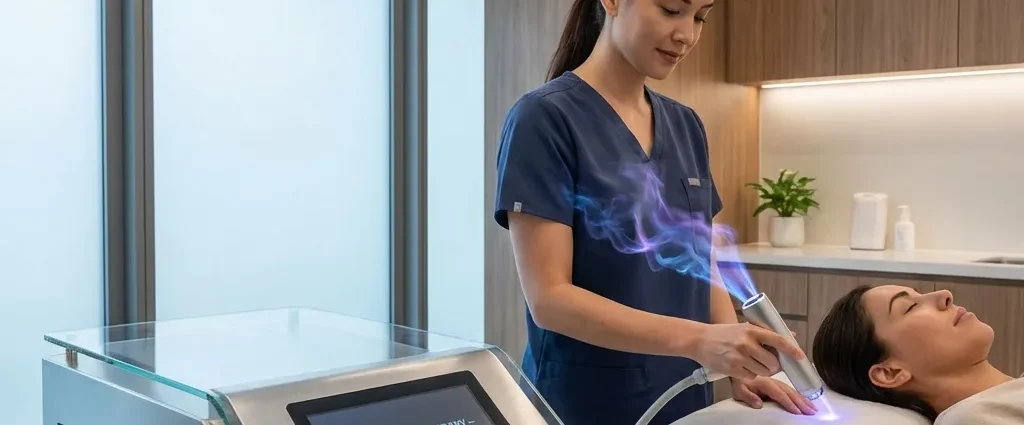
In recent years, plasma therapy has developed from an experimental fringe topic to a seriously discussed component of complementary medicine concepts. In 2026 in particular, many therapists, alternative practitioners and chronically affected patients are faced with the question of which device is actually practical, safe and useful. The comparison of plasma devices in 2026 focuses on two names in particular: RPZ 16 vs M.O.P.A. Both names are circulating in specialist circles, training courses and online forums, often associated with high expectations, but also with uncertainty.
This is exactly where this article comes in. The aim is to provide a scientifically clean, practical and honest plasma therapy device test that is not based on marketing promises, but on verifiable criteria, current market data and realistic application scenarios. At the same time, it transparently shows where the data ends and empirical knowledge begins, a crucial point for responsible therapeutic work.
In the course of the article, we first examine the basics of modern plasma technology, categorize the terms RPZ 16 and M.O.P.A. and explain why a direct comparison of devices is currently only possible indirectly. We then analyze performance, application, safety and practical suitability based on neutral criteria, show typical fields of application in chronic inflammation and Autoimmune diseases and take a look at future developments. This is supplemented by market data, expert assessments and specific recommendations for action for the Practice.
Plasma therapy 2026: Technological basics and medical context
Plasma is often referred to as the fourth state of matter and is created when sufficient energy is supplied to a gas so that electrons are separated from atoms or molecules. In medicine and complementary therapy, so-called cold atmospheric plasma is predominantly used, which works at low temperatures and therefore does not cause thermal damage to biological tissue. This property distinguishes it fundamentally from high-temperature plasma, as known from industrial processes.
The effect of reactive oxygen and nitrogen species is central to understanding modern plasma devices. These highly reactive molecules influence cell membranes, microorganisms and inflammatory processes. According to the Hannover Medical School, they have antimicrobial and inflammation-modulating effects that are particularly relevant for chronic wounds and persistent inflammation. In addition, it is being discussed that plasma can also influence signaling pathways of the Cell communication for example by modulating calcium channels or redox processes.
Cold atmospheric plasma generates reactive oxygen and nitrogen species that exhibit antimicrobial and inflammation-modulating effects.
For the 2026 plasma device comparison, this means that the type of plasma generated, the energy characteristics, the pulsation and the safe application on humans are more important than the name of the device. Only if these factors are documented in a comprehensible manner can a serious therapeutic assessment be made.
Comparison of market and development data for plasma devices 2026
A look at current market data shows that plasma technology is no longer a niche topic. The global market for cold plasma applications is growing rapidly, particularly in the medical and therapeutic fields. In addition to wound treatment, dermatological, dental and experimental oncological applications are also gaining in importance. This development is additionally fueled by the desire for non-invasive therapies and shorter healing times.
| Key figure | Value | Period |
|---|---|---|
| Global cold plasma market | USD 4.03 billion | 2024 |
| Forecast market volume | USD 37.43 billion | 2037 |
| Average growth rate | 18,7 % | 2025, 2037 |
These figures illustrate why the plasma therapy device test 2026 has not only a technical, but also a regulatory and ethical dimension. As the market grows, so does the number of devices that promise therapeutic effects without sufficient evidence to back them up. Particularly in German-speaking countries, their use is often positioned as a medical device, regulatory procedure or complementary measure, which makes a critical classification imperative.
RPZ 16 and M.O.P.A. in comparison Plasma devices 2026: Conceptual classification and scientific reality
A central point of this article is transparency. Despite intensive research, there are currently no publicly accessible, peer-reviewed studies or official manufacturer white papers that clearly describe RPZ 16 or M.O.P.A. as standardized medical plasma therapy devices. The abbreviations appear in other technical contexts, for example in laser technology or in the field of industrial applications, which leads to conceptual confusion.
For the 2026 plasma appliance comparison, this means that a direct performance comparison in the traditional sense is not scientifically possible. Instead, an indirect evaluation based on comprehensible criteria makes sense. These include plasma type, energy output, safety mechanisms, user-friendliness and practical experience from therapeutic work. This method protects against premature conclusions and unrealistic expectations.
This approach also corresponds to the assessment of many physicians who point to regulatory hurdles. New or not clearly classified devices in particular are often subject to gray areas that make it difficult to conduct a proper study.
The studies that we would need in order to better assess the clinical areas of application are hardly feasible at the moment due to the regulations.
Indirect comparison of performance parameters
When therapists talk about performance, they rarely mean wattage or technical maximum values. In practice, they are talking about biological effectiveness combined with a high level of safety. In an indirect comparison of RPZ 16 vs M.O.P.A., the following performance parameters can therefore be used: Stability of plasma discharge, reproducibility of application, fine adjustment of intensity and electromagnetic compatibility. Equally relevant is the question of whether the device delivers consistent results over longer periods of time.
Particularly for sensitive patient groups such as people with autoimmune diseases or chronic pain, a finely dosed application is crucial. Too high intensities can have a counterproductive effect, while too low doses have no therapeutic relevance. Experience has shown that devices with modular settings and clearly defined protocols offer advantages here. In this context, the combination with other procedures is also relevant, such as Frequency therapy for chronic pain or the Frequency therapy for autoimmune diseases, which are often used synergistically.
Application in therapeutic practice
Practical suitability is often more important for alternative practitioners and therapists than theoretical performance data. The decisive factors are handling, training requirements, maintenance and integration into existing treatment concepts. The Plasma Therapy Device Test 2026 shows that devices that define clear areas of application and do not make unrealistic promises of healing are preferred. Transparent documentation and simple operating concepts make everyday practice considerably easier.
Typical areas of application are chronic wounds, inflammatory skin changes, accompanying measures for autoimmune diseases and the regulation of the autonomic nervous system. Plasma is also increasingly being used as a complementary treatment in the field of pain therapy. Here in particular, the combination with frequency and regulation procedures has proven its worth, as is also the case in the context of Solfeggio frequencies is discussed. Individual adaptation to the patient is always important.
Security, regulation and responsibility
One aspect that is often underestimated when comparing plasma devices 2026 is safety. Electromagnetic fields, ozone formation and interactions with implants must be taken into account. Reputable suppliers provide transparent safety data and train users comprehensively. Regular maintenance and device checks are also part of responsible use.
In Germany, plasma therapy is not automatically evidence-based medicine. It is often in the area of complementary or experimental procedures. This makes responsible communication with patients all the more important. Devices such as RPZ 16 or M.O.P.A. should therefore always be used as part of a holistic therapy concept, not as the sole solution. Informed consent and documented consent are essential.
Future trends and technological perspectives
The coming years will be characterized by mobile, more precisely controllable plasma devices and greater integration into multimodal therapy concepts. Digital interfaces, AI-supported dosing aids and personalized treatment protocols are already under development. The combination with bioelectrical stimulation is particularly exciting, Epigenetics and personalized frequency protocols.
For plasma therapy device testing, this means that flexibility and update capability are becoming increasingly important. Devices that can be adapted to new scientific findings will have a long-term advantage. At the same time, there is a growing need for sound training to keep pace with technological developments.
Practical recommendations for therapists
If you want to use a plasma device in practice in 2026, you should pay less attention to names and more to concepts. Ask about training offers, safety concepts and realistic indications. Check whether the manufacturer offers clinical experience, support and transparent communication. A step-by-step introduction with clearly defined use cases minimizes risks.
Discuss with colleagues and carefully integrate the device into existing treatment plans. Supplementary reading on the High-frequency therapy and darsonvalization can provide valuable impetus and help to better understand synergistic effects.
Frequently asked questions
Is a direct comparison of RPZ 16 vs M.O.P.A. scientifically possible?
Currently not. There is a lack of publicly accessible, peer-reviewed studies that clearly describe both devices as medical plasma therapy devices. Therefore, only an indirect, criteria-based comparison is meaningful.
For which patient groups is plasma therapy suitable?
It is often used for chronic wounds, inflammation and as an accompanying measure for autoimmune diseases. There is also experience in pain therapy. Individual clarification is always necessary.
Are there any risks associated with the application?
Yes, especially in the case of implants, pregnancy or improper use. Overdosing can also be problematic. Sound training is essential.
Can plasma therapy be combined with frequency therapy?
In practice, this combination has proven successful, as both methods target regulatory processes and can complement each other.
What should you look out for when buying an appliance?
On proof of safety, user training, transparent communication, support structures and realistic indications without promises of a cure.
Your next step in practice
The 2026 plasma appliance comparison shows one thing above all: responsibility and expertise are more important than product names. RPZ 16 vs M.O.P.A. is not so much a question of either-or, but a reason to sharpen your own criteria. Use this comparison to reflect on your therapeutic approach and make informed decisions.
If you want to use plasma therapy sensibly, you should continuously educate yourself, follow the latest market data and seek an exchange with experienced frequency therapists. This will turn technical innovation into real added value for patients and practices.


Comments are closed, but trackbacks and pingbacks are open.