





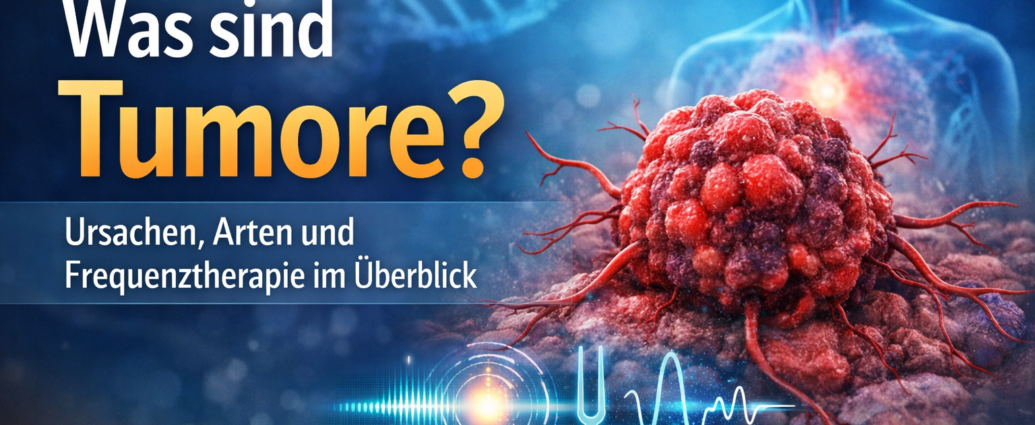
The term Tumor immediately triggers concern in many people. It is often automatically equated with cancer. Medically, however, this is not entirely correct. First of all, a tumor is generally a abnormal tissue mass, tumor, which occurs when cells multiply more than they should or do not die when they should normally die. Tumors can Benign (benign) or malignant (malignant) be. Only malignant tumors are referred to as cancer.
Many people benefit from a better understanding of the differences. Not every tumor is life-threatening, but every conspicuous change in the body should be taken seriously and clarified medically. Early diagnosis is particularly important in the case of cancer because malignant tumors can grow into surrounding tissue and spread throughout the body via blood or lymph channels.
What exactly does the term tumor mean?
The word „tumor“ comes from Latin and initially simply means Swelling or Lump. In modern medicine, this term is used to describe an abnormal cell or tissue formation. This can be small and harmless, but it can also grow aggressively and displace or destroy healthy tissue.
So the important thing is:
Tumor does not automatically mean cancer.
There are:
- benign tumors - benign
- malignant tumors - malignant
- Precursors or unclear cell changes that require further investigation
How do tumors develop?
Our body consists of billions of cells. These grow, divide and die according to a precisely regulated biological plan. If this regulation is disrupted, cells can multiply uncontrollably. This results in a change in tissue that can develop into a tumor.
The causes can be very different. These include genetic changes, environmental stress, chronic inflammation, certain lifestyle factors or long-term stress on the body. In the case of cancer in particular, several factors often play a role at the same time.
Benign and malignant tumors - what's the difference?
The most important difference lies in the Growth behavior.
Benign tumors
Benign tumors usually grow slowly and remain confined to their place of origin. They do not normally invade neighboring tissue and do not form Metastases. Nevertheless, they are not always insignificant. If they press on nerves, blood vessels or organs, benign tumors can also cause discomfort.
Malignant tumors
Malignant tumors grow more aggressively. They can grow into surrounding tissue, destroy it and form metastases in other organs. These metastases are called Metastases. This is precisely what makes cancer so serious and in need of treatment.
What symptoms can tumors cause?
Tumors can cause very different symptoms. Some go unnoticed for a long time, others lead to noticeable symptoms at an early stage. This depends heavily on where the tumor is located, how quickly it grows and whether it affects surrounding structures.
Possible warning signs are
- palpable lumps or indurations
- unexplained swellings
- persistent pain
- Unexplained weight loss
- Chronic fatigue
- Night sweats
- Bleeding
- Changes to the skin or moles
- persistent cough or hoarseness
- Digestive problems
- Neurological complaints such as dizziness, paralysis or headaches
It is important to note that no single symptom automatically indicates a tumor. Many of these symptoms can also have harmless causes. Nevertheless, new, persistent or unclear changes should be medically clarified.
How are tumors diagnosed?
The diagnosis is usually made in several steps. It starts with a detailed discussion and a physical examination. This may be followed by imaging procedures or laboratory tests.
These include, for example:
The examination of a tissue sample is often decisive for a reliable classification. This is usually the only way to determine whether the tumor is benign or malignant.
Tumors and cancers
When a tumor is malignant, it is called cancer. Cancer is not just a local change, but can affect the entire organism. It becomes particularly problematic when cancer cells spread throughout the body and form metastases.
This is why early detection, targeted medical therapy and close monitoring are particularly important. The earlier changes are detected, the better the treatment options in many cases.
Frequency therapy as an accompanying approach
In the context of chronic illnesses and also in cases of severe stress such as cancer, many people are interested in supplementary options to support their well-being. In this context, the Frequency therapy frequently discussed.
From the perspective of Information medicine The human organism can be viewed not only biochemically, but also biophysically. The body is understood as a complex system in which communication, regulation and adaptation processes play an important role. Frequency therapy approaches attempt to address precisely these regulatory levels.
People with tumor diseases often report not only physical, but also emotional and energetic stress. In addition to anxiety, exhaustion and sleep problems, many sufferers experience a deep need for stabilization and inner order. This is precisely where frequency therapy is seen by some practitioners as an accompanying way of supporting general well-being and taking a holistic view of the individual.
In practical application, frequency therapy is often not understood in isolation, but embedded in a more comprehensive concept. This can also include topics such as stress reduction, sleep quality, nutrition, relaxation, mental focus and a conscious lifestyle. Particularly in the case of cancer, many patients not only want treatment for the diagnosis, but also greater attention to their overall well-being.
Frequency therapy and holistic approach to cancer
Especially when it comes to cancer, many people are looking for ways to strengthen themselves. Conventional medical oncology focuses on diagnosis, tumor classification and treatment using established procedures such as surgery, chemotherapy, radiotherapy, immunotherapy or targeted drugs.
Alongside this, some people are interested in holistic concepts that consider the organism as a whole. In this context, frequency therapy is often mentioned as a complementary method when it comes to regulation, relief and supporting subjective well-being.
For many of those affected, the focus is not on the idea of simply „treating away“ a tumor, but on providing additional support for the body in a challenging phase of life. Particularly in the case of cancer, there is a great desire to do something for inner stability, energy levels and quality of life in addition to the medical measures.
Why education is so important
The subject of tumors has strong emotional connotations. Many people immediately associate it with fear, loss of control and worst fears. This makes it all the more important to classify the terms correctly.
Because:
- A tumor is not automatically cancer
- Benign tumors can still cause symptoms
- Malignant tumors must be detected early
- Cancer requires careful medical care
- Complementary holistic approaches can be subjectively supportive for many people
Education provides orientation. Those who take warning signs seriously and have changes clarified at an early stage are acting responsibly.
Conclusion: What are tumors?
Tumors are abnormal tissue neoplasms, which occur when cells multiply uncontrollably or do not die as intended. They can benign or malignant be. Benign tumors do not metastasize, whereas malignant tumors can grow into tissue and spread throughout the body. It is precisely these malignant tumors that are referred to as cancer.
Early diagnosis is particularly important when it comes to cancer. At the same time, many people are looking for additional ways to support their body holistically. In this context, frequency therapy is seen by some as an accompanying approach to promote general well-being, regulation and inner stability.
However, it always remains important: If a tumor is suspected or if cancer is already present, medical clarification and treatment should be the first priority.
Disclaimer: Frequency therapy is not recognized by conventional medicine and cannot replace therapy by trained doctors or alternative practitioners. This article is for general Information and does not replace a medical diagnosis or treatment.

Comments are closed, but trackbacks and pingbacks are open.