






What Frequency Therapy Is and How It Works at Home
Frequency therapy is the application of electromagnetic frequencies to the body to stimulate regulatory processes. Anyone who wants to safely use frequency therapy at home should first understand what actually happens during the process—and what doesn’t. (Source: Medical Devices Registry of the Austrian authorities)
The basic idea: The body functions using its own electrical and biophotonic signals. If you expose it to specific vibrations, the cells, tissues, and nervous system respond. This sounds plausible and can, to some extent, be described in physical terms. However, the conclusions drawn from this are often exaggerated.
The Austrian authorities’ medical device registry makes a clear distinction between devices. It separates devices intended for medical use from others. This distinction determines whether a device is considered a form of therapy. For the Practice Therefore, the classification made by the authorities is important. This classification affects counseling, billing, and licensing. Doctors, long-term care facilities, and consumers must take it into account.
Herbert Eder has been working on Information medicine. It fits perfectly here: identifying possibilities without glossing over limitations. In this context, at-home frequency therapy serves as an example. This clarifies how information about treatment options is evaluated. Detailed criteria are reserved for the registry.
Biophotons, Electromagnetic Frequencies, and Body Fields
Biophotons are extremely faint light emissions produced by living cells. They can be measured, but their biological significance is the subject of ongoing research.
Electromagnetic Frequencies affect the body through electrical impulses, Magnetic fields or high-frequency technology. Body Fields can be measured using appropriate measurement techniques, but interpreting them is challenging.
The practical point is this: There’s a long way between „measurable“ and „therapeutically effective.“.
What Frequency Therapy Can and Cannot Do
Many users report improved recovery, more restful sleep, and higher subjective energy levels. Such feedback should be taken seriously, but it is no substitute for clinical studies.
What frequency therapy does not do: It does not cure diagnosed illnesses and is not a substitute for medical treatment. Anyone who expects it to do so will be disappointed. Anyone who views it as a complementary measure to promote health has realistic expectations.
What You Need for Safe Use at Home
Before you begin, you'll need three things: a device with a verifiable source, a quiet place, and a clear rule for when to stop.
The device should come with clear operating instructions in German, include information on the frequency spectrum and duration of use, and bear a CE mark as a medical device if it is marketed as such. If this information is missing, the device is more likely to be a lifestyle device.
- Device with a documented intended use
- Instructions with clear time specifications for each application
- A quiet room where you can sit undisturbed
- Drinking Water Within Reach
- Written note regarding your current situation (symptoms, medications)
- Phone number of a trusted person
- Termination criteria noted in advance
Something many people underestimate: documentation. If you write down when and for how long you used something, and how you felt afterward, you’ll start to recognize patterns. Without notes, all you’re left with is a vague feeling.
Step by Step: How to Safely Use Frequency Therapy at Home
Here's what to do if you Frequency therapy want to use it safely at home. The order is intentional: first assess, then measure out the dose, then monitor.
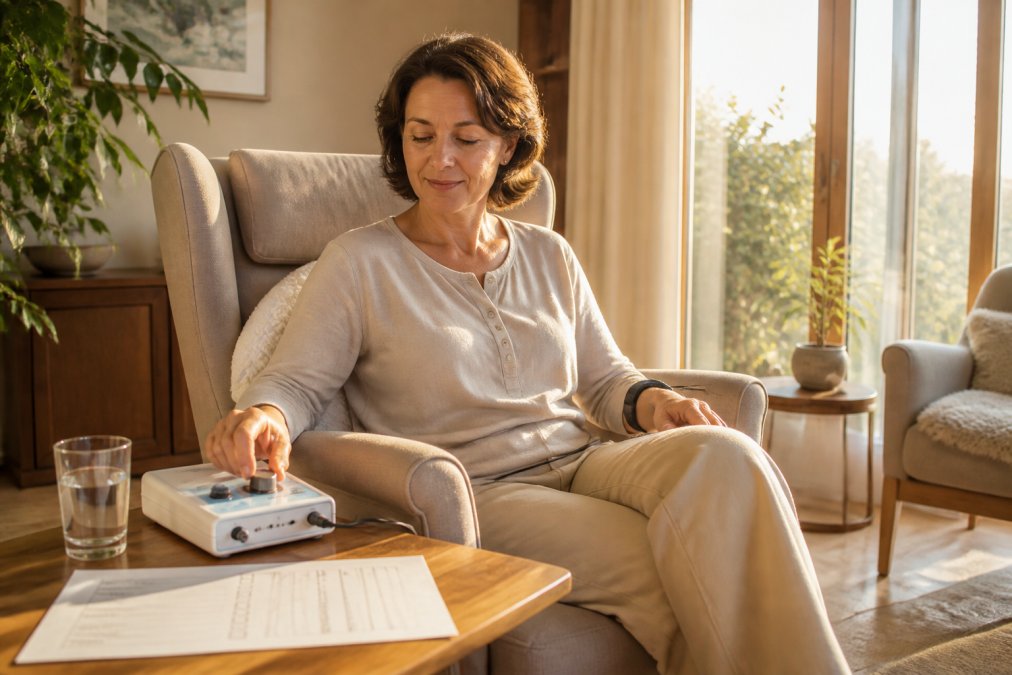
- Record the initial situation. Before your first session, write down how you're feeling, what symptoms you're experiencing, and what medications you're taking. Also note your baseline measurements, if you have any (blood pressure, pulse, sleep quality from the previous night).
- Classify the device type. Not all frequency therapies work the same way. A microcurrent device operates with currents in the microampere range, a PEMF device with low-frequency magnetic fields (typically below 100 Hz), and a TENS device with pulsed currents in the range of about 1 to 150 Hz. The duration of use and the safe starting dose vary considerably depending on the type, so be sure to read the intended use for your specific device first—not that of another device.
- Plan for a short testing phase. Start with a significantly shorter application time than specified. A good rule of thumb is to begin with about one-third of the time recommended by the manufacturer; for a recommended session of 20 minutes, that means about 6 to 7 minutes.
- Create a quiet environment. No phone, no rush, no multitasking on the computer. Sit or lie down comfortably, without straining your posture.
- Choose a body position. Make sure that electrodes or applicators are in full contact with the skin and that there are no areas of skin with wounds, rashes, or metal implants directly underneath them.
- Check how it feels after use. Wait a few minutes before getting up and going about your day. Drink a glass of water.
- Document the reaction. Make a note of any changes, including unexpected ones, as well as the time of administration.
- Take days off. Do not use it every day; give your body time to process it. A typical schedule is every other day.
- Stop if you notice anything unusual. Dizziness, headache, restlessness, heart palpitations, or skin reactions are reasons to discontinue treatment.
Safety Checklist Before Each Use
- Did I eat and drink enough today?
- Do I feel acutely ill or feverish? If so, take the day off.
- Do I have a pacemaker, an implant, or am I pregnant? If so, consult a doctor beforehand.
- Is the device undamaged, and do you have the instructions handy?
- Did I set a specific time limit?
- Does anyone else know that I'm using it right now?
The most common mistake is starting with a full-length session right away. If you start at the maximum duration right away, you risk circulatory reactions and will end up putting yourself off. Start with about one-third of the recommended duration and increase it only after you’ve comfortably completed at least three sessions.
What to Do After the Meeting
Allow for five to ten minutes of rest after each session. Afterward, wait before driving, exercising, or making an important decision. This promotes the safe use of frequency therapy at home and helps ensure clear associations between stimuli and responses. This will help you recognize any unexpected reactions.
If you are using a device with multiple programs, do not switch between them during the same session. This ensures that any reaction can be clearly attributed to a specific program. If you do not notice any changes after two weeks, that is not a reason to increase the duration. Instead, consult a doctor or a qualified user.
Accurately Assessing the Risks and Side Effects of Frequency Therapy
Frequency Therapy: Risks and Side Effects are usually mild but real: temporary fatigue, headache, restlessness, skin irritation at contact points, or a brief intensification of symptoms. These reactions are often a sign of an elongation response and usually subside within a few hours to a few days. They are not proof of effectiveness, but they are also no cause for panic.
What Is Harmless and What Isn't
Mild and common: fatigue on the evening of application, a slight sensation of warmth, temporary tingling at the application sites, and more vivid dreams on the first night.
Requires further evaluation: persistent headache lasting more than one day, dizziness accompanied by a sensation of lightheadedness, palpitations or changes in heart rhythm, skin redness that does not subside within a few hours, as well as a significant worsening of the initial symptoms over the course of more than two sessions.
Risks vary by device type
Not all frequency therapies carry the same risks. A microcurrent device that uses very low currents has a different risk profile than a PEMF device with strong magnetic fields or a high-frequency device. For devices that deliver current via electrodes, the primary concerns are skin irritation and electrical accidents caused by damaged cables. For magnetic field devices, the key concern is interaction with active implants. For high-frequency applications, heat generation in the tissue must be taken into account. Therefore, the Contraindications The specifications for your specific device model are what matter, not a general list. (Source: Biophoton Research)
Scientific contraindications and who should take a break
You should take a break when:
- Pacemakers or other active implants (e.g., insulin pumps, neurostimulators)
- Pregnancy
- Epilepsy or increased susceptibility to seizures
- Acute febrile infections
- Open wounds in the area of application
- Ongoing cancer treatment without consultation
- Metal implants in the immediate vicinity of live electrical equipment
The situation becomes more serious if you have underlying medical conditions. Anyone suffering from cardiac arrhythmia, a bleeding disorder, or an acute infection should consult their doctor beforehand.
Submit a request via our contact form →
If something goes wrong: specific steps
- Quit the application immediately and turn off the device.
- Sit down or lie down, Drink some water, and breathe calmly for a few minutes.
- Write down your symptoms, what, when, how long, and at what intensity.
- If symptoms persist or are severe (Chest pain, loss of consciousness, severe skin reaction) Call 144 or go to the nearest emergency room.
- For mild but recurring reactions Stop using the product and consult a doctor.
Regardless of this, you can report adverse events related to a medical device to the Federal Office for Health Safety. You can find the relevant information on the Federal Office for Health Safety’s website.
Safety does not come from technology alone, but from deciding when not to use it and from being willing to consistently take a break when warning signs appear and seek medical advice.
Certified Medical Devices or Lifestyle Devices: How to Tell the Difference
The difference lies in the intended use, not in the price.
A medical device has a documented intended medical use, a conformity assessment, and labeling that you can review. A lifestyle device may promise wellness benefits, but not therapeutic effects.
| Characteristic | Medical device | Lifestyle device |
|---|---|---|
| Intended Use | Medically documented | Wellness, Well-Being |
| Labeling | CE as a Medical Device | CE as an electrical appliance |
| Instructions | Information on Frequency and Duration | General Information |
| Risk Disclosures | Listed systematically | Often missing |
| Contact Person | Manufacturers Subject to Compliance Requirements | Often anonymous |
Check the classification in the information provided by the Federal Office for Health Security. If there is no clear indication, treat the device as a lifestyle product.
Radionics Software for Alternative Practitioners: Professional Use in the Clinic
Radionics Software for Alternative Practitioners It differs from home applications in one key respect: It is used in a therapeutic setting, involving a medical history, documentation of progress, and professional oversight.
In practice, this means: a structured assessment of the client’s initial situation, a transparent measurement method, documented sessions, and clear communication with the client that this is a supportive approach.
Something many practices underestimate: setting clear boundaries. Anyone who offers radionics or frequency therapy must make it clear where their own practice ends and medical diagnosis begins. This protects both clients and the practice.
Frequency Therapy Training: Structured Learning Instead of Figuring It Out on Your Own
One Frequency Therapy Training It is useful when it covers theory, practice, and limitations—not just how to operate the equipment.
The difference becomes apparent in everyday life. Those who piece together knowledge from individual online sources are familiar with the tools, but not with the decision-making logic behind them: When should I use them, and when shouldn’t I? How do I interpret reactions? When should I refer the person to another source?
It is not possible to give a general estimate of the cost and scope of a training program. These factors depend on the program’s format, duration, and level of support. If you need specific details, contact the provider directly instead of relying on hearsay.
Avoiding Common Mistakes When Using It at Home
The following errors occur repeatedly:
- First meeting lasted too long
- Use without prior medical evaluation in cases of pre-existing conditions
- Devices from an unknown source with no documented intended use
- No record of the reactions
- The expectation that a single method will resolve multiple health issues at the same time
- Discontinuation of medical treatment in favor of self-treatment
After each session, make a note of three things: duration of use, immediate reaction, and how you feel the next morning. After two weeks, you’ll start to recognize patterns that no instruction manual can provide.
Conclusion
Safety when using this therapy at home comes from knowledge, not from technology. Anyone who understands the intended use, contraindications, and criteria for discontinuing treatment can use frequency therapy responsibly, without deluding themselves.
That is precisely Herbert Eder’s approach: clear explanations of complex concepts, personalized guidance for users and therapists, and in-depth knowledge gained from seminars and specialized articles. The combination of practical support, structured training, and a professional understanding of the limitations sets this approach apart from mere advertising for devices.
If you want to use frequency therapy safely at home or professionally in your practice, Herbert Eder offers the right support: personalized practice guidance, structured training programs, and expert articles that clearly outline the possibilities and limitations.
Frequently asked questions
Is frequency therapy approved for home use?
That depends on the device. In the EU, only products with a valid CE marking may be marketed as medical devices. Lifestyle devices without a medical intended use are freely available, but they are not approved as therapeutic devices. Before purchasing, check the intended use in the manufacturer’s documentation, and if you are unsure, consult a doctor before using frequency therapy at home.
What safety precautions should be taken when using frequency therapy?
Start with short, low-intensity sessions; keep a record of each session and pay attention to your body’s signals, such as dizziness, headaches, or restlessness. Use only devices that come with clear instructions for use, and follow the recommended safety distances. If you have a pacemaker, are pregnant, have epilepsy, or have an acute infection, consult a doctor beforehand. Stop using the device if symptoms worsen, and have the cause investigated.
How does professional radionics software for alternative practitioners differ from home devices?
Professional radionics software for alternative practitioners works with a broader frequency spectrum, documents progress, and can be integrated into a treatment plan. Home devices are usually limited to just a few programs and are intended for self-use without diagnostic capabilities. Those who practice professionally also need training in frequency therapy to correctly understand measurement methods, limitations, and contraindications. For home use, a certified device with clear instructions is sufficient.
Can frequency therapy replace medical treatment?
No. Frequency therapy is classified as a complementary approach in complementary medicine and does not replace either the diagnosis or treatment provided by a medical professional. In cases of chronic symptoms, sleep disorders, or following an illness, the cause should be medically evaluated. Use frequency therapy at home only as a complementary measure, and inform your treating physician about which devices and frequencies you are using.



Comments are closed, but trackbacks and pingbacks are open.