





Frequency Therapy Device Tests and Reviews: What Matters When Making a Purchase Decision
A Frequency therapy A product test is only meaningful if it discloses the measurement methodology and honestly states the available evidence. It also takes into account the results of independent studies, verifies the calibration of the measuring instruments, and critically evaluates the manufacturers’ claims as a central focus of the assessment.
In the Practice It is also important to consider the total cost over the useful life, because inexpensive devices can result in higher ongoing costs. This guide from Herbert Eder summarizes what users should actually look for when evaluating a frequency device. These tips help users identify exaggerated or misleading claims.
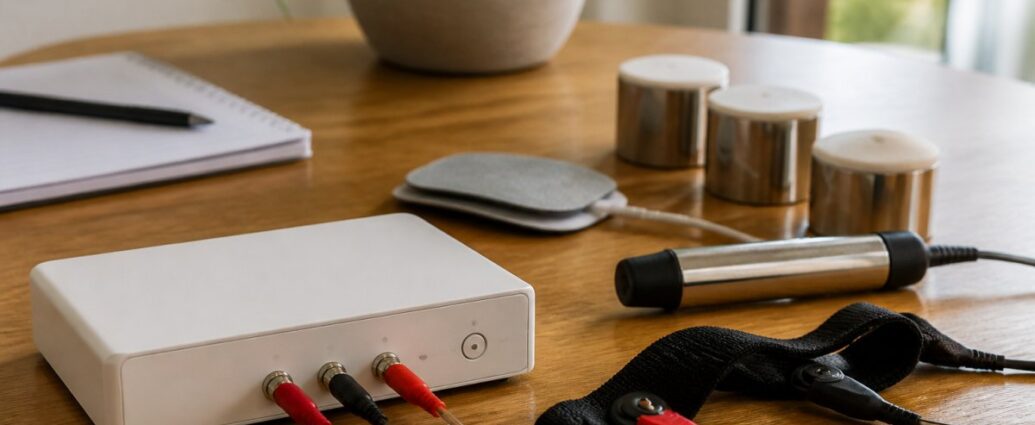
The frequency therapy device test describes electromagnetic or electrical oscillations within defined frequency ranges. These ranges typically extend from hertz to the terahertz range. The devices generate frequency patterns that are transmitted to the body via contact devices, measurement electrodes, or portable devices.
What many providers fail to mention: There is also a gap that users must fill themselves.
Herbert Eder has been working in the fields of frequency therapy and information medicine since 1994. During this time, it was observed that the choice of device is less decisive for the success of treatment than whether the method of operation, duration of use, and patient expectations are well-aligned.
Below, we’ll show you how a structured review of frequency therapy devices should be organized, which evaluation criteria really matter, and where you need to look more closely.
Why Choosing the Right Device Is Key to Success
The most common mistake is choosing a device based on its frequency range rather than its intended use. A device with hundreds of frequency programs is of little use if it’s too complicated to operate in everyday life and therefore ends up in a drawer. Conversely, a simple contact device with a few clearly documented frequency ranges is perfectly sufficient for many users.
Three criteria distinguish useful devices from expensive mistakes:
- Traceability of Frequency Data: Are the frequency range, measurement frequency, and programs documented, or are they merely mentioned as marketing terms?
- Suitability for everyday use: Can the device be turned on in just a few minutes without reading the manual?
- Transparency at Borders: Does the provider list contraindications and the typical duration of use, or does it merely promise results?
A frequency generator that meets these three criteria is almost always a better choice than a device with a longer list of features.
The success of the application depends more on regular use and proper operation than on the number of frequency programs. First, check whether a device fits into your daily routine.
Frequency Therapy Device Reviews: What Users Say and What It's Worth
Testimonials are the hardest part to evaluate in any comparison of frequency therapy devices. The problem is that positive reviews often come from sales websites, while negative ones come from forums where the users’ backgrounds are unknown. Neither extreme says much about the device’s actual effectiveness.
Reports are useful if they include three elements: the specific complaint, the duration of use until the first change occurred, and the circumstances under which the product was used. If any of these elements is missing, the evaluation is usually inconclusive.
Look for recurring patterns rather than individual opinions:
| Patterns in Reports | Significance | How to Tell |
|---|---|---|
| Complaint, duration, and circumstances specified | High | Specific time references and connections to everyday life |
| Just „works great“ or „doesn’t work“ | Low | No details; often in the context of a store or forum |
| Multiple users with the same workflow | Moderate to high | Similar application, similar observation |
| Report after a few days | Low | Too short for a well-founded assessment |
What most reviews overlook: A testimonial always describes a single individual. You can’t draw conclusions about a general effect from ten positive reviews. They’re useful as a guide for your own purchasing decision, but not as proof of effectiveness.
Frequency Therapy Device Operation: Setup, What's Included, and Suitability for Everyday Use
Ease of use determines whether a therapeutic device is used regularly. A device that is ready for use in less than ten minutes after unpacking has a practical advantage over a complex system that requires extensive training, and this advantage is reflected in how often the device is used.
From Unboxing to First Use
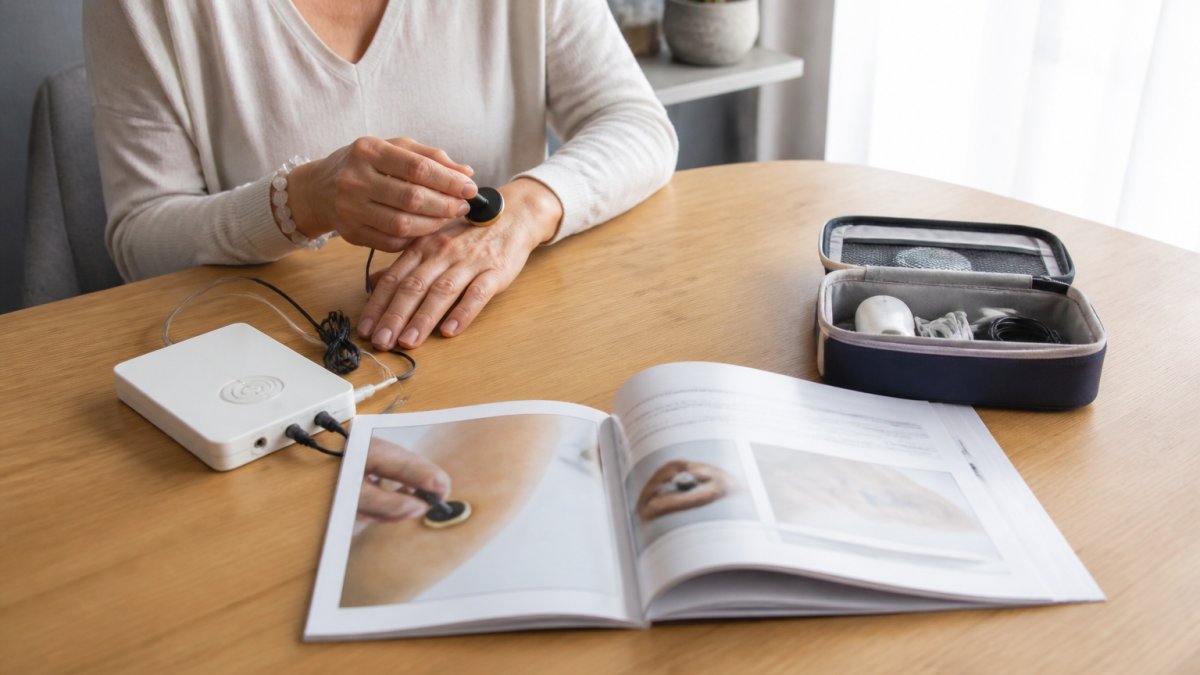
A logical sequence would look like this:
- Check the contents of the package: Device, measuring electrode or contact surfaces, power cord or rechargeable battery, instruction manual. If any accessories are missing, the device cannot be used for the first time.
- Select installation location: Having a designated seat at a quiet table significantly increases the frequency of use.
- Charge or connect the device: For portable devices, fully charge them before using them for the first time.
- Select a program: Start with the lowest documented frequency range and a short application.
- Document the first meeting: Write down the date, duration, and your observations. Without these notes, you won't have anything to compare your findings to later.
It is often observed that users who document their initial sessions in writing recognize changes sooner and tailor the application more effectively.
Standardized evaluation criteria for operation
What is missing from most overviews is a comparable benchmark. In addition, usability can be evaluated based on six reproducible criteria that every user can measure for themselves.
| Criterion | Measured quantity | Why It Matters |
|---|---|---|
| Time until first use | Minutes from unboxing to your first session | Distinguishes everyday devices from training projects |
| Steps per session | Number of button presses required to start | Fewer steps = greater consistency |
| Readability | Display size, contrast, font size | Crucial for older users |
| Program Selection | Number of documented frequency ranges | Transparency Instead of Marketing Jargon |
| Runtime per charge | Hours of moderate-intensity exercise | Determines usability on the go |
| Cleaning | Cost of contact surfaces and electrodes | Hygiene and Material Wear |
These criteria turn a subjective assessment of usability into a quantifiable evaluation. If you place two devices side by side and evaluate them based on the same six criteria, you’ll get a reliable result rather than just a gut feeling.
Package Contents and Accessories in Detail
What's included in the package often determines whether there are hidden follow-up costs. Before purchasing, check whether the following items are included or must be purchased separately:
- Measuring electrode or contact surfaces: Included only in the base model on some devices; additional attachments cost extra.
- Power cord and battery: Not every device comes with both.
- Instructions in easy-to-understand language: A brief instruction manual with no contraindications is a warning sign.
- Storage bag or box: Convenient for regular use; often sold as an add-on item.
- Replacement contact surfaces: They wear out over time and should be available for replacement.
Practical Suitability in a Real-World Test
A device is only suitable for everyday use if it fits into your daily routine without requiring any changes to your schedule. A three-step test conducted over two weeks has proven effective:
- Week 1: Set up the device in a fixed location, conduct a short session at the same time every day, and record the duration and your observations.
- Week 2: Check whether the sessions are taking place without reminders. Anyone who forgets to use the app has a problem with how to use it, not a problem with motivation.
- Analysis: Count the number of sessions that were actually conducted. A rate of fewer than five out of seven days indicates that the administrative burden is too high.
If you skip the instructions and start at the highest intensity right away, you risk feeling unwell and often end up stopping the treatment altogether. Always start at the lowest setting and for a short duration.
Usability is measurable: Time to first use, steps per session, runtime, and cleaning effort are what distinguish devices that are used daily from those that end up in a drawer. Check these six criteria before you buy.
Duration of Frequency Therapy: How Long and How Often a Frequency Device Is Used
There is no one-size-fits-all rule for the duration of frequency therapy sessions. It depends on the type of device, the treatment goal, and the individual’s response. Typical recommendations range from a few minutes per session to longer sessions spread out over several days a week.
A step-by-step approach has proven effective for getting started: (Source: Information from the Federal Ministry of Social Affairs, Health, Long-Term Care, and Consumer Protection)
- Week 1: Short sessions, low intensity, with a focus on observation
- Weeks 2 through 4: Gradually increase the duration, provided that the exercise feels comfortable
- Starting in Week 5: Finding a rhythm that becomes a permanent part of your daily life
Consistency is more important than the exact number of minutes. In practice, a short daily session is usually more effective than a long session that is skipped once a week. For symptoms that persist or worsen, treatment should be supervised by a doctor, not self-administered.
Bioresonance Device Review: How It Differs from Frequency Therapy Devices and What Sets the Two Apart
A bioresonance device review evaluates a different type of device than a frequency therapy device, even though the two are often lumped together. The terms describe different approaches and should be considered separately when making a purchase decision.
Bioresonance is based on the idea that the body emits electromagnetic vibrations that can be measured and modified. Biofeedback In contrast, it refers to providing the user with feedback on measurable bodily functions, for example via sensors. Frequency therapy In turn, it works with specifically applied frequency patterns without the need for a prior measurement.
Submit a request via our contact form →
When it comes to evaluation, this means: Ask each supplier what principle the device is based on. A device that combines resonance analysis and a measuring electrode requires different test criteria than a pure frequency generator. If you don’t distinguish between the two, you’re comparing apples to oranges.
Evidence Base: Distinguishing Between Marketing Claims and Proven Effects
The evidence regarding frequency therapy is mixed, and reputable providers are open about this. Many devices are advertised with claims of healing for which there is no solid evidence. Other applications have been studied more thoroughly, but not as extensively as the advertising suggests.
Three questions can help distinguish marketing claims from proven effects:
- Is a specific effect mentioned, or just „well-being“? The more precise the claim, the more verifiable it must be.
- Is there a verifiable source? If no information is provided, skepticism is warranted.
- Is a distinction made between supportive care and treatment? Frequency therapy is not a substitute for medical diagnosis or treatment.
The World Health Organization on Complementary Health Practices emphasizes that complementary approaches supplement, rather than replace, conventional medical care. For users, this means that frequency therapy can be one component of a treatment plan, but is not a substitute for a medical evaluation.
Ask providers directly which effects are proven and which are plausible but unproven. Providers who clearly distinguish between these two categories generally have nothing to hide when it comes to how their products work.
Safety, Side Effects, and Contraindications Before Use
Safety is what sets reputable providers apart from websites that are purely sales-oriented. When used properly, frequency therapy is generally considered well-tolerated, but it is not suitable for everyone. Typical contraindications include pacemakers and other implanted electronic devices, pregnancy, as well as acute infections or open wounds in the treatment area.
Possible side effects are usually mild and temporary: mild fatigue, headaches, or a sensation of warmth at the contact points. If any symptoms occur, discontinue use and consult a doctor.
Important for evaluating a device: A good user manual explicitly lists these points. If contraindications and safety precautions are completely missing, that is a red flag, regardless of the device's features.
Total Costs and Long-Term Costs: What a Frequency Therapy Device Means in the Long Run
The purchase price is only part of the total cost. Additional costs arise from accessories, replacement parts, wear and tear on electrodes and contact surfaces, as well as training or support. Anyone who compares only the purchase price overlooks the larger expenses.
An Overview of Cost Items
A comprehensive cost analysis consists of five components:
| Cost item | One-time or recurring | A Typical Seizure |
|---|---|---|
| Purchase price of the device | One-time | When purchasing |
| Accessories (electrodes, attachments, cables) | One-time and recurring | When Purchasing and Due to Wear and Tear |
| Consumables (contact surfaces, pads) | Ongoing | Depending on how often it is used |
| Orientation or Support | One-time or recurring | Seminars, Consulting, Courses |
| Maintenance and Replacement Parts | Ongoing | In case of a defect or wear and tear |
Calculate Total Annual Costs
When it comes to cost planning, it's worth doing a simple calculation:
Annual cost = (purchase price ÷ expected useful life in years) + annual operating costs
Here’s an example to illustrate this: A device with a purchase price of 1,200 EUR and an expected useful life of six years amounts to 200 EUR per year. If you add 80 EUR annually for consumables and a one-time setup cost of 150 EUR, the average annual cost in the first few years is around 280 EUR. A less expensive device with a purchase price of 600 EUR, but 200 EUR in consumables per year and a useful life of only three years, costs 400 EUR per year. The lower purchase price ends up being more expensive over the useful life.
This calculation is intentionally kept simple. It forces you to take consumables and useful life just as seriously as the purchase price.
What to Look for Before Making a Purchase
- Warranty and Liability: How long is the warranty valid, and what is excluded? In Austria, there is a statutory warranty of at least two years; voluntary manufacturer warranties may extend beyond that.
- Return Policy: Is there a right of return, and under what conditions? In Austria, a 14-day right of withdrawal generally applies to distance sales.
- Spare Parts Availability: Will contact surfaces and electrodes still be available for purchase in two or three years?
- Subscriptions: Some providers charge recurring fees for software, programs, or support. This item is missing from almost every overview.
- Shipping and customs fees: For suppliers outside the European Union, additional import duties apply.
Decision-Making Guide by User Profile
The appropriate cost structure depends on the application's objective. Three typical profiles:
- Beginners: A few, clearly documented frequency ranges; low purchase price; minimal consumables. The goal is regular, short-term use, not the widest possible range of functions.
- Experienced user: A device with documented frequency programs, available accessories, and a reliable supply of replacement parts. The higher purchase price pays for itself over the device's useful life.
- Therapeutic support: A device with measuring electrodes, a data-logging function, and connectivity to professional support services. The main costs here are ongoing expenses for consumables and continuing education.
If you know your own needs, you can make targeted comparisons instead of letting the list of features guide you.
Ask vendors about annual consumables and the guaranteed availability of replacement parts. Any vendor that discloses these figures has nothing to hide when it comes to other costs either.
Conclusion: How Users Can Make an Informed Decision
An informed purchasing decision is based on evaluation criteria, not on promises of a miracle cure. Those who disclose the frequency range, operation, safety instructions, and total cost provide users with a solid foundation. Those who advertise solely based on effectiveness provide none.
This is exactly where our work at Herbert Eder comes in: We assess possibilities and limitations frequency therapy They take a responsible approach, impart structured knowledge through seminars and specialized articles, and provide individualized support to users and therapists in clinical practice. Those who are familiar with the evidence base can realistically assess devices, treatment duration, and expectations.
Choosing a frequency device remains difficult as long as vendors promise results instead of specifying evaluation criteria.
In addition, we have been providing clear explanations of complex issues since 1994.
In addition, we offer structured learning through seminars and personalized practical guidance to reinforce this foundation.
Visit Herbert Eder for a review of frequency therapy devices.
There, you'll find which device and usage duration are right for your situation.
Frequently asked questions
How do frequency therapy devices differ in how they work?
Frequency therapy devices use different technical approaches. Some generate defined frequency patterns via a frequency generator, while others measure the body’s own signals using a sensing electrode and provide them as biofeedback. Contact devices are applied directly to the skin, while portable devices feature smaller designs for everyday use. Key factors for comparison include which frequency ranges are covered, whether fixed frequency programs are preset or if custom measurement frequencies are possible, and how transparently the manufacturer discloses the technical specifications.
What should I look for when buying a frequency therapy device?
First, look for clear technical specifications: frequency range in hertz, type of electrodes, what’s included, and accessories. Check whether the supplier provides information on quality certifications and the device’s regulatory status. Ease of use and setup are also important: A device with a menu system you don’t understand will rarely be used in everyday life. Clarify in advance whether training, hands-on support, or a briefing is included in the offer. Inquire about prices directly with the provider, as they vary depending on features and scope.
How long and how often is a frequency therapy device used?
The duration of use depends on the type of device, the selected frequency program, and the individual’s goals. Many users start with short sessions and observe how they respond. General time recommendations are not very helpful because they do not take personal circumstances into account. Have a qualified professional explain how to use the device, document the duration and your observations in writing, and discuss any adjustments. By keeping a structured record of the duration and frequency of use, you’ll be able to tell more quickly whether the approach is right for you.
Are the effects of frequency therapy devices scientifically proven?
An honest assessment is needed here: For many devices, there is a gap between the advertised claims of effectiveness and the documented evidence. For some areas of application, studies exist; for others, there is a lack of reliable studies with reproducible results. This does not mean that users notice no effects, but subjective testimonials are no substitute for controlled testing methods. A reputable provider openly acknowledges these limitations rather than guaranteeing results. Consider frequency therapy as a complementary approach and discuss it with your treating physician.



Comments are closed, but trackbacks and pingbacks are open.