




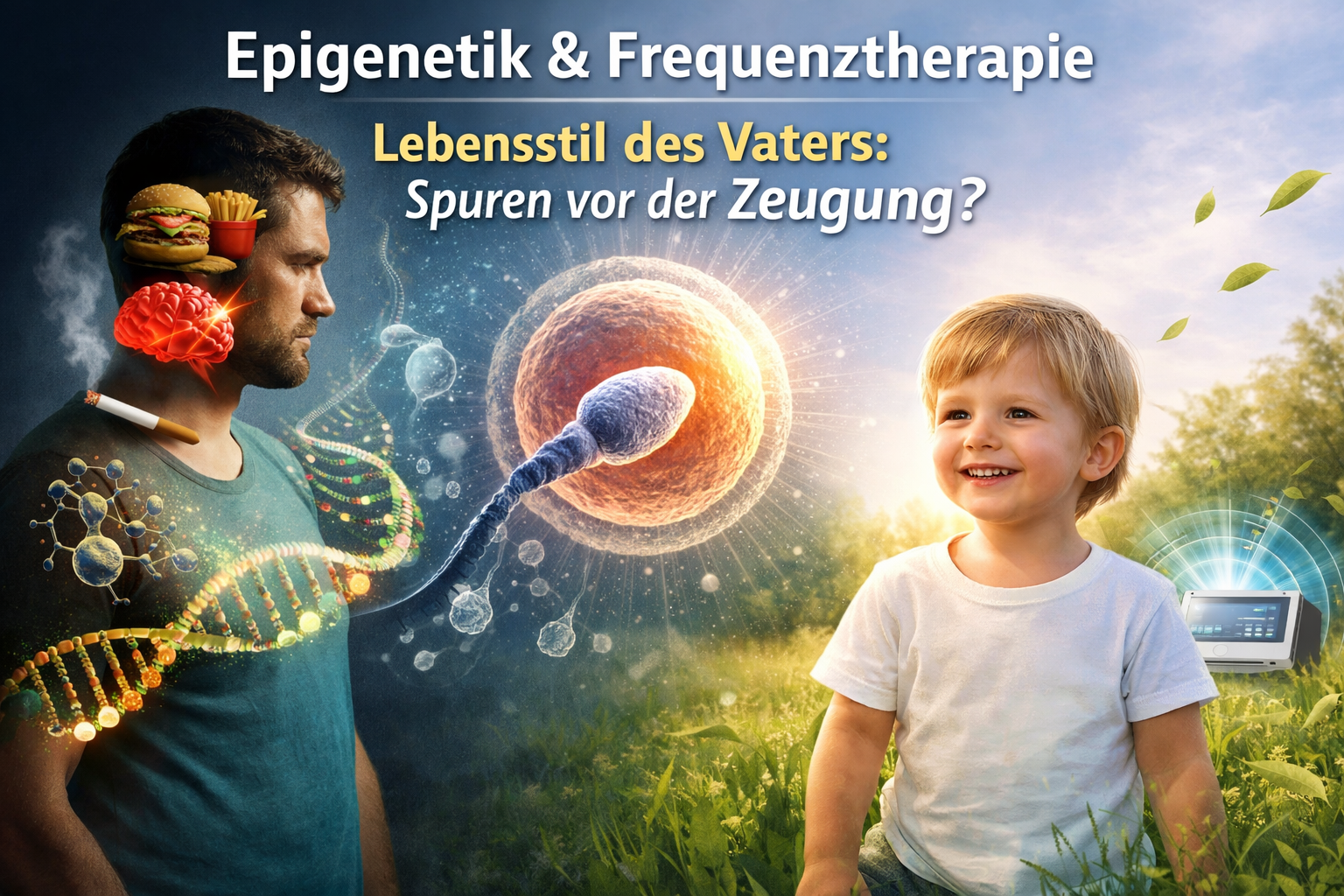
Can the father's lifestyle before conception leave its mark on the child?
Introduction: Genes are not everything
When we talk about heredity, many people first think of genes - the „blueprint“ of our body. However, epigenetics has significantly broadened our understanding: Epigenetic markers decide with, which genes are read and which tend to remain „silent“. This regulation can be influenced by environmental factors, such as Nutrition, stress, sleep, exercise, inflammatory processes and general health.
The question is particularly exciting (and often misunderstood): Can a father's lifestyle before conception leave epigenetic traces in the sperm - and thus influence the development of the child?
What animal studies suggest: Diet & stress can change signals in sperm
In research - especially in Mouse models - there are indications that the father's lifestyle Epigenetic information in sperm can change. This is less about changes to the DNA sequence and more about „regulators“ such as:
- DNA methylation
- Histone modifications / histone retention
- small non-coding RNAs (sncRNAs)
These mechanisms are described in reviews as central candidates when it comes to paternal influences on offspring.
An example that was also taken up in scientific reporting: High-fat diet In male mice, the RNA profile in semen change; in the case of male offspring, such models have shown, among other things. Metabolic abnormalities observed (e.g. poorer glucose tolerance).
Important: These are Evidence from animal models. They are biologically interesting - but not automatically transferable 1:1 to humans.
What applies to humans so far: plausible, but not yet „proven“
In humans, there is also research on the links between paternal factors and the epigenetic profile of sperm cells - for example with regard to:
- Overweight / metabolic stress
- Smoking
- Stress
- Environmental pollution
However, the data situation is heterogeneous and often observing (associative). Many reviews emphasize: Mechanisms are plausible, but clear proof of cause and effect for long-term health consequences in children has been difficult to date.
Why „change everything at short notice“ is not a magic programming button
Another point is often overlooked: Spermatogenesis lasts - i.e. the maturation of new sperm. In the literature, around ~74 days (plus transportation time, roughly around 3 months in total), with individual scattering.
This means:
- A healthier lifestyle can improve reproductive health support.
- But current science shows No guarantee, that a child's state of health can be specifically „programmed“ through short-term changes.
Conclusion: It's more about Probabilities and risk factors, not promises.
Epigenetics & cancer: Why this topic is particularly relevant
Epigenetic regulation plays a major role in medicine - also in cancer research, because tumor development and tumor progression are not only associated with genetic mutations, but also with epigenetic dysregulation can be connected. (This is one of the reasons why epigenetics is being researched so intensively).
For the Practice This means that a lifestyle that reduces inflammation, oxidative stress and chronic stress is being discussed in many contexts as a sensible preventive component - without any therapeutic conclusions being drawn from this.
Where frequency therapy fits into this picture (accompanying, not replacing)
Epigenetics is at its core RegulationThe organism reacts to signals - biochemically, neurovegetatively, hormonally. In the complementary Information medicine The question is often asked how to Regulatory capacity, stress balance and recovery processes can support.
Frequency therapy in this context is often referred to by users as Accompanying approach used - for example to support:
- subjective stress management and relaxation
- vegetative balance
- Regeneration and sleep quality (as a target image, not as a promise of a cure)
If epigenetics shows that environmental and lifestyle stimuli „co-control“, then the logical bridge is: Which stimuli promote stability and regulation - and which ones disrupt them? This is where many start in a very practical way: Sleep rhythm, diet, exercise, stress hygiene - and complementary methods from information medicine.
Practical takeaways: What a „preconceptual reset“ can realistically accomplish
If there is a desire to have children, these points are pragmatic and sensible - without over-promising:
- Allow 3 months lead time (spermatogenesis time horizon)
- Stabilize weight & metabolism (not extreme, but constant)
- Quit smoking / reduce nicotine (if relevant)
- Reduce stress (sleep, routines, exercise, breaks)
- Reduce inflammation (nutrition, alcohol measurement, micronutrient check with specialist staff)
- Accompanying measures (e.g. relaxation, breathing training, frequency therapy as complementary support)
Contact us
Author: NLS Informationsmedizin GmbH, Herbert Eder
Babenbergerstraße 21, 3180 Lilienfeld
Phone: +43 2762 52481
E-Mail: h.****@**********ut.com
Web: www.frequenz-therapie.com
Important disclaimer
Frequency therapy is conventional medicine not recognized and replaces none Diagnosis or treatment by doctors or alternative practitioners. In the event of complaints, clarification of the desire to have children or serious illnesses (especially suspected cancer), please contact appropriately trained medical professionals.