




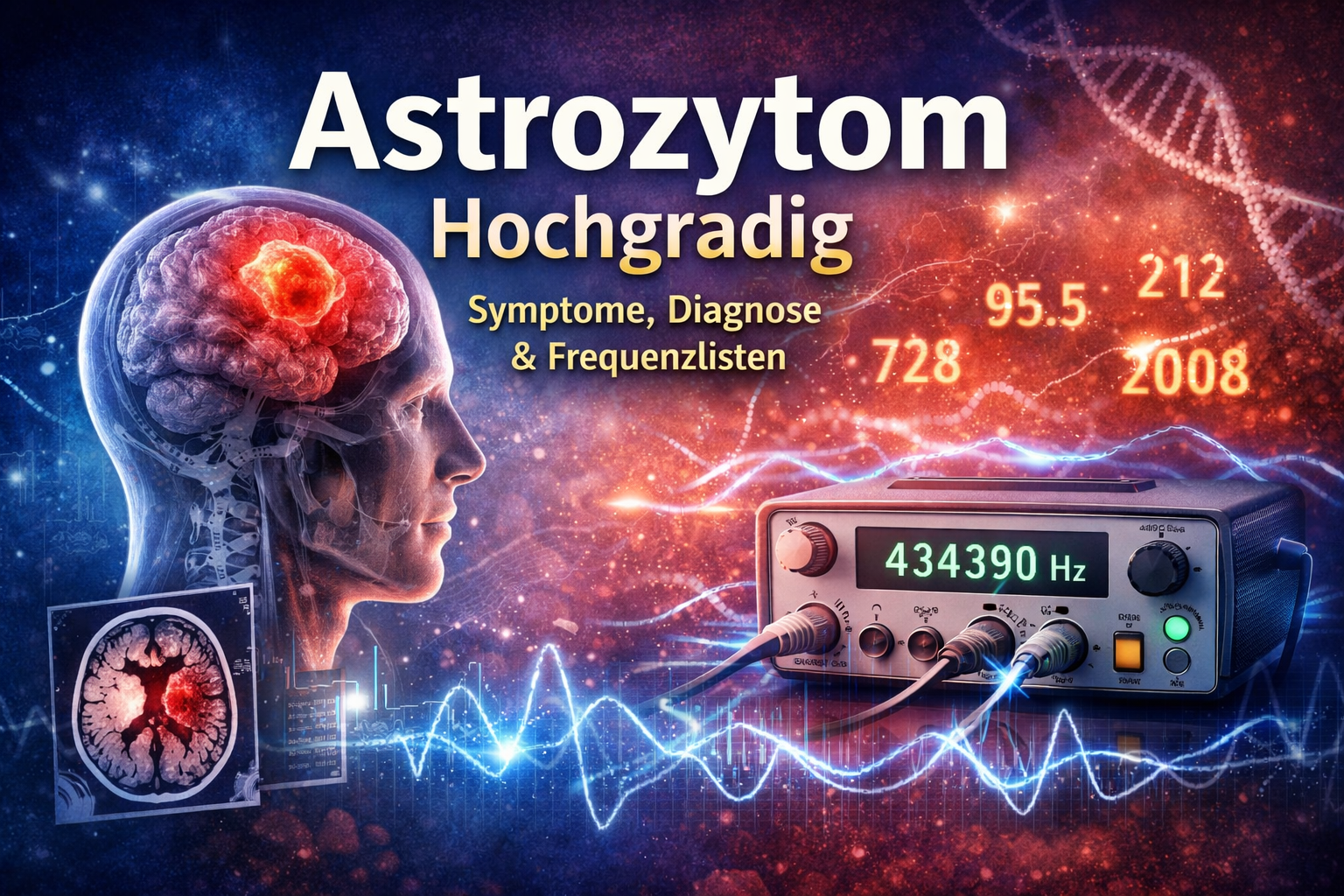
Causes, symptoms, diagnosis, therapy - plus frequency lists (EDTFL/CAFL)
What is a high-grade astrocytoma?
Astrocytomas belong to the Gliomas (brain tumors from glial cells). „High-grade“ means in the Practice mostly WHO grade 3 (formerly „anaplastic astrocytoma“) or WHO grade 4 (in the current WHO classification this often corresponds to what used to be called secondary Glioblastoma or higher grade astrocytomas). The modern classification today strongly considers molecular markers (e.g. IDH status).
Common symptoms
The symptoms depend heavily on the tumor location. Typical symptoms include
- Headache, often with nausea/vomiting (indication of increased intracranial pressure)
- Epileptic seizures (always clarify newly occurring seizures in adulthood)
- Focal failuresParalysis, speech disorders, visual disorders, sensory disorders
- Cognitive/psychological changes (concentration, personality, memory)
Causes and risk factors
In most cases No single cause can be determined. Genetic factors are discussed (depending on the context) and rarely pre-treatment/exposure - in everyday clinical practice, however, the cause often remains unclear.
Diagnosis: how it is clarified
- Imaging (MRI with contrast medium)Standard for displaying position, extent and typical signal changes.
- Tissue sample (biopsy/surgery): histological confirmation.
- Molecular diagnosticse.g. IDH mutation, other markers (important for prognosis and treatment planning).
Standard therapy (conventional medicine)
Treatment is planned in an interdisciplinary tumor board and typically includes
- Operation (maximum safe resection, if possible)
- Radiotherapy
- Chemotherapy (often temozolomide; depending on grade/markers/protocol)
- With RecurrenceRe-operation, re-radiation in selected cases, systemic therapies/studies, supportive measures
Forecast
The prognosis depends, among other things, on Tumor grade, IDH status, Extent of resection, Age/general condition and other markers. Modern WHO classification and markers help to better differentiate progressions.
Frequency lists (EDTFL / CAFL) - if available
Note on the unit: ETDFL/EDTFL is often used in kHz indicated; the conversion to Hz takes place with × 1000.
EDTFL (ETDFL 2023) - matching entries for Astrocytoma/Glioma
The following programs from the ETDFL PDF (2023) are directly relevant:
1) Cancer: Brain Tumor, Cerebellar Astrocytoma (Program #459)
Frequencies: 2.75, 5.03, 15.61, 17.5, 37, 95.5, 350, 434.39, 739.1, 905.31
2) Cancer: Brain Tumor, Cerebral Astrocytoma (Program #460)
Frequencies: 2.75, 5.03, 15.61, 17.5, 37, 95.5, 350, 434.39, 739.1, 905.31
3) Glial Cell Tumors [Astrocytoma] (Program #1409)
Frequencies: 2.75, 5.03, 15.61, 17.5, 37, 95.5, 350, 434.39, 739.1, 905.31
4) Glioblastoma (Program #1410) (as a high-level reference, grade 4 context)
Frequencies: 0.08, 0.35, 0.6, 0.8, 212.03, 305.21, 434.24, 565.61, 690, 826.32
5) Glioblastoma Multiforme (Program #1411)
Frequencies: 0.08, 0.35, 0.6, 0.8, 212.03, 305.21, 434.24, 475.16, 527, 541.22
Conversion to Hz (if your system expects Hz):
Example: 434.39 kHz → 434 390 Hz (× 1000).
CAFL (Consolidated Annotated Frequency List) - „Astrocytoma“ not as a separate entry
In the CAFL PDF version I checked (v2007-05-16) Astrocytoma only mentioned as a reference in the context of „Brain tumor / Tumor brain“, but not as an independent frequency set listed.
CAFL-related alternatives (high-level context):
- Cancer_glioblastoma: 720, 2008, 2128, 2180, 2182, 728, 832, 800, 664, 20, 855, 543, 641, 857
- Cancer_gliomas: 543, 641, 857
- Cancer_droglioma: 853
- Cancer_general_1: 10000, 5000, 3176, 2720, 2489, 2189, 2184, 2128, 2084, 2050, 2008, 880, 854, 800, 784, 728, 666, 524, 464, 333, 304, 120
- Cancer_general_2: 10000, 3176, 3040, 2720, 2489, 2182, 2127, 2048, 2008, 1862, 1552, 880, 802, 786, 727, 665, 664, 465, 304, 125, 96, 72, 64, 20
Practical note on classification (important)
If you mean „high-grade astrocytoma“, the EDTFL splint (Astrocytoma/Glioma/Glioblastoma) mostly the More direct allocation (Program #459/460/1409 plus 1410/1411 if necessary). In CAFL is more about Glioma/Glioblastoma/Cancer sets because „Astrocytoma“ does not appear there as a separate data set.
Disclaimer
Frequency therapy is not recognized by conventional medicine and replaces none diagnosis or treatment by doctors or therapists. It can - if at all - only accompanying and on your own responsibility. In the event of symptoms or suspected Brain tumor is a Immediate medical clarification required.