






Table of contents
- What Frequency Therapy Means and How It Is Supposed to Work
- The Effects of Frequency Therapy: What the Evidence Shows and Where the Limits Lie
- Frequency Therapy: A Step-by-Step Guide for Beginners
- A Comparison of Methods: Microcurrent, Bioresonance, Sound Therapy, High Frequency
- Areas of Application: Pain, Musculoskeletal System, Sleep, and Recovery
- Frequency Therapy Experiences: What Users Report and How to Interpret These Reports
- Frequency Therapy Devices: Selection, Evaluation, and Costs
- Safety, Risks, and Contraindications
- Distinguishing Medical Treatment from Other Approaches and Setting Realistic Expectations
- Conclusion: Putting Frequency Therapy into Perspective for Health-Conscious Individuals
- Frequently asked questions
Last updated: October 5, 2026
What Frequency Therapy Means and How It Is Supposed to Work
For health-conscious individuals, frequency therapy is an umbrella term for methods in which electrical currents, vibrations, or sounds within defined frequency ranges are intended to affect the body. The claim is modestly phrased: to support, not to cure. It is precisely this distinction that lies at the heart of this guide by Herbert Eder, as it determines whether you will use frequency therapy wisely or be led astray by promises that the method cannot deliver. (Source: Scientific Studies on Bioresonance)
Frequency therapy is the controlled application of electrical impulses, electromagnetic oscillations, or acoustic frequencies to specific areas of the body with the aim of stimulating physiological processes. The term encompasses a wide range of methods, from microcurrent therapy to bioresonance and sound therapy. The mechanisms of action, body of evidence, and legal frameworks vary accordingly.
Many users mistake this method for a substitute for medical treatment. That is the most common—and most costly—mistake.
Frequency therapy is a complementary approach. It is not a substitute for a diagnosis or medical treatment, but can be used to complement them.
Those who understand the basics are better able to evaluate offers. This is exactly where a structured introduction—such as the one Herbert Eder has been teaching in training and practice since 1994—comes in handy.
The Effects of Frequency Therapy: What the Evidence Shows and Where the Limits Lie
The effectiveness of frequency therapy cannot be assessed in general terms because the term encompasses a wide variety of methods with varying levels of supporting data. For some methods, there is evidence of effectiveness, while for others, there is a lack of robust research. An honest answer, therefore, is: It depends on which method, which frequency, and which area of application is being referred to.
Cells, Tissues, and ATP: The Proposed Mechanism
It is often argued that electrical impulses can influence the production of ATP—that is, adenosine triphosphate—in cells and thereby support energy production and regeneration. Adenosine triphosphate is the primary energy source of every cell; this is well-established basic knowledge in biology. However, it has not yet been proven whether—or to what extent—the application of an external frequency measurably alters this process in the human body. The proposed mechanism is plausibly formulated, but this does not equate to a proven effect.
What Studies Actually Show and What Remains Unclear
Studies exist on microcurrent therapy and certain electrotherapeutic procedures that suggest benefits for specific conditions. However, these studies are often small, methodologically heterogeneous, and difficult to compare. The evidence base for bioresonance and sound therapy is even more limited. Who Experiences with Frequency Therapy Anyone gathering information should therefore distinguish between three things: what has been researched, what sounds plausible, and what is simply claimed.
Anyone who markets frequency therapy as a proven cure for chronic diseases is crossing the line between reliable information and unsubstantiated claims of healing. Such offers should serve as a warning sign.
Frequency Therapy: A Step-by-Step Guide for Beginners
Frequency Therapy With reputable providers, the application process follows a clear procedure. It is not the technology alone that is crucial, but rather the preparation and follow-up monitoring.
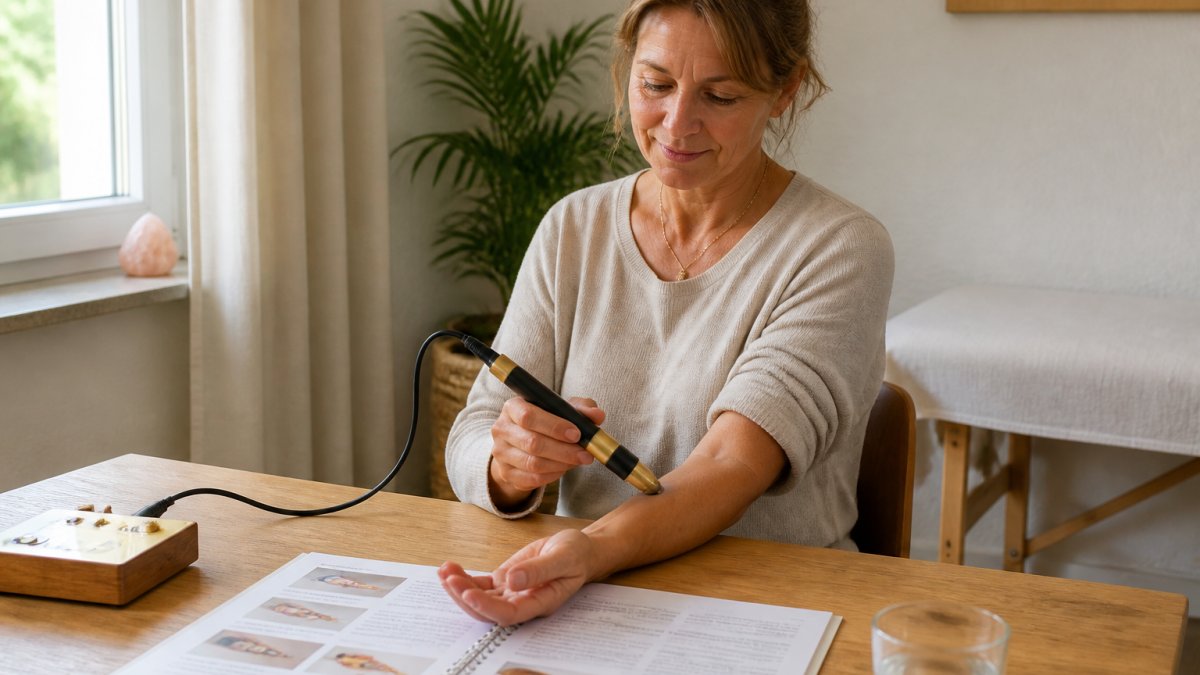
- Check this in advance: Discuss any existing medical conditions, implants, and medications with a doctor.
- Set a goal: Define a specific goal, such as sleep quality or recovery after exercise.
- Select device and frequency range: Ask someone to show you how to use it instead of trying to figure it out on your own.
- Limit the duration of use: Start briefly and observe the reaction.
- Check the skin area: Apply electrodes only to intact skin.
- Document the aftereffects: Write down the date, duration, frequency, and how you feel.
- Evaluate after two to four weeks: Without written notes, it's almost impossible to evaluate something.
A realistic expectation regarding the timeframe: Users often report initial subjective changes within a few weeks, but a reliable trend only becomes apparent over longer periods of time. No definitive timeframes can be derived from this.
A Comparison of Methods: Microcurrent, Bioresonance, Sound Therapy, High Frequency
The differences between the methods outweigh their similarities. Those familiar with them can more quickly determine which treatment is appropriate for which condition—and which treatment conflates concepts that do not belong together. The following overview categorizes the four most common groups based on mechanism of action, typical use, form of administration, available data, and legal classification.
| Procedure | Mechanism of action | Typical Application | Form of Use | Data Availability | Legal Framework |
|---|---|---|---|---|---|
| Microcurrent | Very small electrical pulses in the microampere range | Pain, Regeneration, Wound Healing | Electrodes on the skin, usually for 20–60 minutes | A few controlled studies, but with small sample sizes | Medical device, if its intended use is medical |
| Bioresonance | Electromagnetic oscillations designed to measure and influence the body's own signals | Vitality, Food Intolerances, Allergies | Electrodes or hand-held electrodes, sessions lasting 30–60 minutes | Weak; central assumption is scientifically disputed | Often marketed as a wellness product with no medical purpose |
| Sound Therapy / Sound Healing | Acoustic vibrations, often from singing bowls or monochords | Relaxation, Sleep, Stress Relief | Passive listening or physical contact, 30–90 minutes | Limited; effects primarily through relaxation | Not a medical device; purely a wellness treatment |
| High-Frequency / Electrotherapy | High-frequency electromagnetic fields or alternating currents | Heat, muscle relaxation, tissue | Devices with applicators, 10–30 minutes | Depends on the procedure; some aspects have been well studied | Medical device intended for medical use |
Microcurrent operates with currents in the microampere range—that is, millionths of an ampere. This order of magnitude is why microcurrent therapy is among the most thoroughly studied approaches: It deliberately remains below the stimulation threshold of nerves and muscles, ensuring that no painful stimulation occurs. In the scientific literature, microcurrent is discussed in the context of wound healing and pain modulation, among other topics. However, the body of research is characterized by small sample sizes and varying treatment protocols—there is no robust consensus on frequencies, duration, and areas of application.
Bioresonance is based on the assumption that the body’s own vibrations are measurable and can be influenced by electromagnetic signals. This assumption is scientifically controversial because a reproducible correlation between measured frequency patterns and clinical pictures has not yet been proven. In practice, bioresonance devices are often marketed without a specified medical purpose. Anyone purchasing such a device should verify whether it is a medical device or a wellness product—this distinction determines liability, labeling requirements, and advertising claims.
Sound Therapy and Sound Healing They work primarily through relaxation. This is a real effect, but not a specific frequency effect: A singing bowl tuned to 432 Hz has no different effect than one tuned to 440 Hz, provided the volume and tone are comparable. The benefit lies in the regulation of the nervous system, not in a specific frequency. Anyone who combines sound therapy with Solfeggio frequencies or binaural beats should be aware that the claimed specific effects of these frequencies have not been proven.
High-Frequency and Conventional Electrotherapy These devices operate at significantly higher frequencies and, in some cases, with detectable currents. The available data depends on the specific procedure: For some applications, such as heat therapy, there are established medical uses, while for others, evidence is lacking. The key factors are the intended use of the device and the qualifications of the person operating it.
The four methods are not interchangeable. Microcurrent and high-frequency therapy are electrotherapeutic methods, some of which are intended for medical purposes; bioresonance is scientifically controversial; and sound therapy works primarily through relaxation. When comparing treatment options, you should first ask: Which method, what is its intended purpose, and what are the practitioner’s qualifications?
For health-conscious people, the most important takeaway is this: The frequency range alone says nothing about the effect. What always matters is the interplay of the method, the objective, the form of application, and the qualifications of the person administering the treatment. (Source: Regulation of Medical Devices in the European Union)
Areas of Application: Pain, Musculoskeletal System, Sleep, and Recovery
The most common areas of application relate to the musculoskeletal system and subjective well-being. These include pain in the joints, shoulders, elbows, knees, and spine, as well as sleep disorders and recovery.
In sports, frequency therapy is used to support recovery after endurance exercise. There is no evidence that it improves performance; however, it may alter the perception of recovery.
Keep a simple log of your usage, noting the date, duration, frequency range, and a rating on a scale of 1 to 10 for how you feel. After four weeks, you'll notice patterns that you might otherwise overlook.
For chronic conditions, the following applies: Frequency therapy can be used as a complementary treatment, but it is no substitute for a medical evaluation. Anyone suffering from persistent pain should first have the cause determined.
Submit a request via our contact form →
Frequency Therapy Experiences: What Users Report and How to Interpret These Reports
Experiences with frequency therapy are often described in positive terms, but their significance is limited. Reports usually come from people who have already chosen this method and are therefore subject to selection bias. It is difficult to distinguish between placebo effects, expectations, and accompanying measures such as increased physical activity or better sleep.
Evaluate reports based on three criteria: Is a specific issue mentioned? Is a time frame specified? Is any deterioration or lack of effect honestly acknowledged? Those who only present success stories do not provide a reliable basis.
Frequency Therapy Devices: Selection, Evaluation, and Costs
Frequency therapy devices vary considerably in terms of quality, intended use, and documentation. The following criteria can help you systematically evaluate products rather than relying on marketing claims.
Equipment Selection Checklist
- Intended Use: Is the device classified as a medical device or a wellness product? Its intended use determines which advertising claims are permitted and who is liable.
- Manufacturer and Distributor: Are the company's headquarters and the person in charge clearly identified? For foreign providers, the warranty terms should be clarified.
- Technical Specifications: Are frequency ranges, current levels, pulse shapes, and duration of use clearly documented?
- Contraindications: Are pacemakers, implants, pregnancy, and epilepsy specifically mentioned?
- Instructions: Is training or instruction provided, or is the device sold without instructions?
- Price Transparency: Are the device price, accessories, consumables, and ongoing costs listed in writing?
- Return Policy: Is there a return period if the device doesn't fit?
Costs and Realistic Expectations
It is not possible to provide a flat-rate estimate of costs, as they depend on the type of device, features, and provider. Training programs also involve additional course fees, which vary widely depending on the scope of the program and the provider. Ask the provider for current prices and have them provide a written list of services—verbal promises are difficult to prove in the event of a dispute.
A realistic expectation: A device is no substitute for a diagnosis or medical treatment. Anyone who purchases a device should define a specific goal and, after four to eight weeks, use a usage log to check whether anything has changed. Without written notes, it is virtually impossible to evaluate the results.
Check advertising claims
Be on the lookout for claims that promise a cure without having a medical indication. Such statements are a red flag. Reputable providers outline possibilities and limitations, list contraindications, and refer patients to doctors for health-related questions.
Rate Providers and Training Programs
The same principle applies when choosing a provider or a training program: transparency over promises. Make sure that the content, scope, support, and costs are clearly communicated before you sign up. A training program that showcases only success stories and fails to acknowledge any limitations does not provide a solid foundation for responsible practice.
Safety, Risks, and Contraindications
Safety is no minor issue when it comes to electrical applications. Pacemakers and other active implants are considered contraindications. Medical consultation is also recommended prior to use in cases of pregnancy, epilepsy, open wounds, and acute infections.
Possible side effects include skin irritation, temporary tingling, and localized redness. These symptoms usually subside, but should be documented. Stop using the product and seek medical advice if symptoms worsen.
Never use devices near the heart or above the head unless the instructions expressly permit it. Improper use may cause unpleasant reactions.
Distinguishing Medical Treatment from Other Approaches and Setting Realistic Expectations
Frequency therapy is not a medical treatment and must not be presented as such. It falls within the realm of complementary health promotion. Diagnoses, medications, and medically prescribed therapies remain the responsibility of qualified professionals.
Realistic expectations mean: support, yes; a cure, no. Anyone looking for a method that reliably eliminates chronic symptoms will be disappointed. Those who incorporate it as a complementary component of a healthy daily routine can make good use of it.
Conclusion: Putting Frequency Therapy into Perspective for Health-Conscious Individuals
The main challenge remains classification: the effectiveness of frequency therapy depends on the specific method used, the available data is inconsistent, and the boundaries between it and medical treatment are blurred. Anyone comparing treatment options needs criteria, not promises.
This is exactly where Herbert Eder comes in. Since 1994, his practice has combined personalized guidance with structured training programs and expert articles that clearly outline possibilities and limitations. Anyone looking for reliable guidance—rather than wading through contradictory online sources—will find clear explanations and practical advice there.
Anyone trying to decide whether frequency therapy is a good fit for their daily life doesn’t need spectacular promises—they need reliable information. Herbert Eder offers a combination of personalized practical guidance, structured training programs, and scientifically grounded articles that explain complex concepts in an accessible way. If you want to use frequency therapy responsibly, Herbert Eder provides you with the foundation you need to make an informed decision on your own.
Frequently asked questions
What frequencies are used in frequency therapy, and for what purposes?
In frequency therapy, different frequency ranges are used depending on the method. Microcurrent devices typically operate in the low hertz range; bioresonance methods utilize electromagnetic oscillations; while sound therapy and Solfeggio frequencies fall within the audible sound range. Which frequency is chosen for which condition depends on the method and the individual’s specific goal. A blanket assignment of frequencies to specific conditions is not scientifically substantiated; consult with qualified practitioners to guide your selection.
How can the effects of frequency therapy be scientifically classified?
The effectiveness of frequency therapy is evaluated differently in research. For some methods, such as microcurrent therapy for certain types of pain, there is evidence of benefits; for other areas, the body of research is limited or contradictory. Many studies have small sample sizes or methodological flaws. This does not mean that frequency therapy is ineffective, but it also does not justify making sweeping claims about its healing properties. Consider it a complementary approach, not a substitute for medical diagnosis and treatment.
How does a frequency therapy session work, and how long does it take to see the first changes?
A typical session lasts between 10 and 45 minutes, depending on the method. With microcurrent therapy, electrodes are placed on specific areas of the skin; with sound-based methods, singing bowls or headphones are used. How quickly changes occur varies greatly from person to person and depends on the specific symptoms, the method used, and the frequency of treatment. Some users report noticing initial effects after just a few sessions, while others need more time. Realistic expectations and regular use are more important than quick results.
What should I look for when choosing a frequency therapy device or provider?
When selecting frequency therapy devices, look for transparent technical specifications, an easy-to-understand user manual, and clear information on frequency ranges and duration of use. Reputable providers acknowledge the limitations of the method and do not promise a cure. When selecting a provider or training program, it helps to look for structured instruction, practical guidance, and an honest assessment of the evidence base. Inquire about prices and terms directly with the provider, as these vary depending on the scope of the service.


Comments are closed, but trackbacks and pingbacks are open.