

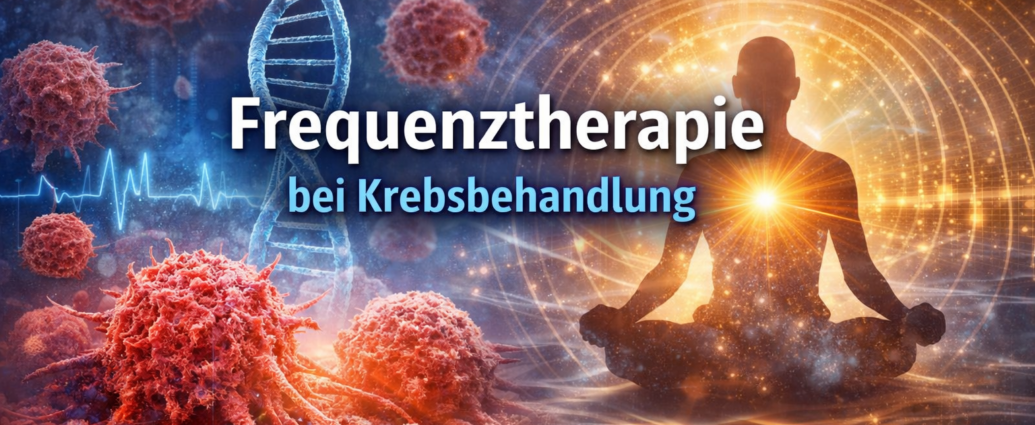
Conventional medical treatment methods, immune regulation and complementary frequency information
Why cancer treatment involves several levels
The treatment of cancer is one of the greatest challenges of modern medicine. Cancer does not just affect a single organ or a conspicuous area of tissue, but the entire organism with its immune system, metabolism, regenerative capacity and physical and mental resilience. This is precisely why it makes sense to view cancer treatment not just in technical terms, but as a multi-layered process in which conventional medical therapy, stabilization of the organism and complementary support have their place alongside each other.
Tumors develop from cells that have lost their normal control over growth, division and natural limitation. In a healthy organism, finely tuned regulatory mechanisms ensure that cell formation, repair and degradation remain in balance. If this balance is disrupted, a pathological process can develop. This is precisely where conventional cancer therapy comes in and attempts to remove pathologically altered cells, slow down their growth or treat them in a targeted manner.
In the complementary area, many people are also interested in the Frequency therapy. It is often understood there as an accompanying approach to support regulation, inner balance and general stability of the organism. Before the Frequency info it is therefore worthwhile to understand the most important conventional medical treatment methods in more detail.
Surgery as a classic component of cancer therapy
Surgery is one of the oldest and most important forms of treatment in oncology. The aim of a surgical procedure is to remove tumor tissue as completely as possible if this is possible due to its location, size and spread. Surgery can play a key role, particularly in the early stages. The earlier a Tumor the greater the chance in many cases that it will be localized and easily treatable by surgery.
Whether an operation makes sense depends on several factors. These include the type of tumor, its extent, the involvement of neighboring structures and the general condition of the person affected. An accurate assessment of these factors is crucial in determining which treatment promises the greatest benefit and in what order.
However, an operation is never just a technical procedure. It always places a strain on the organism. Wound healing, inflammation regulation, immune function and regeneration depend closely on how stable the entire organism is. That is why good therapy does not just begin in the operating theater, but also in the preparation and conscious support afterwards.
Radiotherapy and its importance in the oncological concept
Radiotherapy is another important pillar of cancer treatment. It works with high-energy radiation, which primarily damages rapidly dividing cells. As cancer cells in many cases exhibit increased division activity, they are particularly sensitive to this form of therapy. At the same time, however, it has also been shown that radiation does not only affect diseased tissue. Healthy tissue can also be affected, especially where cells naturally renew themselves quickly.
This is why radiotherapy is now planned very precisely. The aim is to target the tumor tissue as precisely as possible and to spare surrounding structures as much as possible. In many cases, radiotherapy is used in addition to surgery, for example to treat remaining tumor cells or to reduce the risk of recurrence. In other situations, it is used to alleviate symptoms, for example when Metastases cause pressure, pain or functional limitations.
Radiotherapy in particular clearly shows that cancer treatment never consists of just one single procedure. Rather, therapeutic success often results from the interaction of various measures that are specifically coordinated with one another.
Chemotherapy between effect and burden
Chemotherapy is one of the best-known systemic treatments in cancer medicine. It uses drugs that directly damage cancer cells or inhibit their division. As cancer cells usually multiply particularly quickly, many of these substances preferentially interfere with such cell processes. However, this effect does not only affect tumor cells. Healthy cells with a high division rate can also be affected, for example in hair roots, mucous membranes or the haematopoietic system.
For this reason, chemotherapy is often experienced as effective, but also stressful. It can be used before an operation to shrink a tumor or after an operation to treat any remaining pathological cells. Depending on the type of tumor, different groups of active substances are used. These include anti-metabolic substances, plant-derived cell division inhibitors, hormonally active drugs and other anti-tumor agents.
Modern oncology often combines chemotherapy with other procedures. The aim is to achieve the greatest possible benefit without unnecessarily overtaxing the body. This is where the importance of good general resilience, a stable supply of nutrients and conscious support for the body becomes clear.
Immunotherapy to strengthen the body's own defense processes
Immunotherapy is a particularly exciting area of modern cancer medicine. It aims to improve the body's own immune system's ability to recognize and fight tumour cells. Biological response modifiers, signaling substances and targeted activation of certain immune cells play an important role in this. Modern oncology uses different approaches here, which can be used in a very targeted manner depending on the type of tumor and individual situation.
In this context, interleukins and other immunologically active messenger substances are often regarded as important components of immune regulation. Other methods designed to improve the interaction of immune cells have also become increasingly important in cancer medicine. Immunotherapy thus demonstrates very impressively that the body is not only treated passively, but can itself be an active part of the defense.
This perspective is also important for a holistic understanding. It illustrates how strongly the body's internal defenses, regulatory power and overall stability are integrated into every therapeutic process.
Antibody therapy and biological reaction pathways
In addition to cell-based immune approaches, there are also therapeutic methods that work with antibodies and other biological reaction mechanisms. These methods are designed to specifically influence certain structures and thus limit pathological processes. They are among the modern developments that show how differentiated and individualized cancer treatment is understood today.
The key point here is that the body has several levels of defense. There is not just a single form of defense, but an entire network of cells, messenger substances, signaling pathways and immunological coordination. It is precisely this network that is of great importance in cancer. The stability of this system can determine how well a person copes with illness, therapy and regeneration.
Apoptosis and programmed cell death
Apoptosis is an important biological mechanism in connection with cancer. This refers to programmed cell death, i.e. an orderly process by which the body breaks down damaged, degenerated or no longer needed cells. In a healthy organism, this ability is essential so that tissue can renew itself and pathological developments can be limited.
If apoptosis is out of balance, cells can survive even though they should actually be degraded. This is a key aspect of many tumor processes. This explains why the restoration of regulatory order is also of such great importance in cancer medicine.
Hormone therapies and growth-dependent tumors
Not all tumors behave in the same way. Some forms of cancer grow faster under the influence of certain hormones, while others can be slowed down by hormonal changes. For this reason, hormone therapies play an important role in some types of cancer. In the area of hormone-dependent breast tumors, for example, attempts are made to block estrogen-dependent growth stimuli. Hormonal influences can also be used therapeutically for prostate tumors.
This form of treatment shows how individualized cancer medicine has become today. It is no longer just about treating tumor tissue in general, but also about understanding the biological characteristics of a tumor and reacting to them in a targeted manner. This also increases the importance of holistic support that takes the person as a whole into account.
Why the immune system remains important for any cancer treatment
Regardless of which specific form of therapy is used, the immune system remains a key factor. It influences how the body reacts to surgery, chemotherapy, radiation or immunotherapy. It is involved in inflammation regulation, healing, defense and tissue renewal. This is precisely why the stability of the immune system is so important not only for prevention, but also for accompanying cancer treatment.
A good diet, sufficient sleep, a balanced supply of micronutrients, regeneration, exercise and mental stability can help to support general resilience. This is precisely where the space for complementary concepts opens up, in which not only the illness but the whole person is considered.
Frequency therapy as complementary support during stressful therapy phases
Why frequency therapy is gaining importance in the complementary field
Frequency therapy is seen by many people as a complementary approach to regulate the body during stressful phases. It does not replace conventional medical diagnostics, surgery, radiotherapy, chemotherapy or immunotherapy. Rather, its complementary value is seen where inner balance, vegetative stabilization, regeneration and general support for order are required.
From this perspective, the human being is viewed not only as a biochemical system, but also as a biophysical and information-processing system. Cells, tissues and regulatory systems are in a constant state of exchange. If this exchange is disrupted by stress, illness or exhaustion, many people feel the need for an additional form of support that is not aimed at attacking but at harmonizing and supporting.
The inner environment as a central bridge between conventional and complementary medicine
A key concept in holistic support is the inner environment. This refers to the biological environment in which cells live and work. This includes metabolic quality, oxygen supply, vegetative balance, sleep, stress regulation, intestinal function, micronutrient status and general regenerative capacity. A stable internal environment improves the conditions for the organism to better compensate for stress.
In the complementary field, frequency therapy is often used when people want to strengthen their inner order. Particularly during stressful phases of therapy, many sufferers experience the desire for calm, concentration and a method that not only looks at symptoms, but at the whole organism. In this context, frequency therapy is understood as regulative support.
Always consider frequency lists in a complementary context
Frequency lists play an important role in frequency therapy and are assigned to thematic areas. However, it is crucial that they are not considered in isolation or as rigid individual details. Their significance always arises in connection with the constitution of the person, their stress situation, their regulatory status and the overall therapeutic objective.
This is precisely why frequency lists in the complementary field are not understood in isolation. They are part of a larger concept that focuses on order, regeneration, inner balance and holistic support. This classification is important because it gives frequency therapy its true character: not as an isolated technique, but as part of a comprehensive regulative view.
Frequency info
In the complementary field, frequency therapy is often understood as an accompanying method to support the organism in its regulation, inner balance and vegetative stability. Frequency information is not considered in isolation, but is always embedded in a larger holistic context. From a complementary point of view, the focus is not on individual details, but on the question of how frequency patterns are understood within a comprehensive concept of regeneration, harmonization and order support.
Especially during stressful phases of therapy, many people seek a form of support that does not create additional pressure, but rather promotes calm, composure, and stability. In this context, frequency therapy complementary is often linked to the internal environment, autonomic balance, functional order, and overall resilience. This gives frequency information its place within a holistic approach that respects conventional medical treatment methods while also making room for complementary regulatory support.
The special significance of frequency information in the complementary understanding lies in the fact that it is not seen as an isolated measure. Instead, it is considered together with other health-promoting factors. These include sleep, nutrition, exercise, regeneration, stress reduction, conscious relaxation and mental stability. For many users, it is precisely this combination that creates a path on which frequency therapy is experienced as a supportive accompaniment.
Conclusion
Cancer treatment is a complex process that involves many levels. Surgery, radiotherapy, chemotherapy, immunotherapy and hormonal approaches are among the most important conventional medical procedures. Which therapy is used depends on the type of tumor, the stage and the individual situation of the person affected. At the same time, it is becoming increasingly clear how important regeneration, immune balance and a stable overall organism are to accompany such treatments.
Frequency therapy supplements this understanding in a complementary sense with a perspective on order, balance and regulatory support. Frequency information is not considered in isolation, but is embedded in a holistic concept. The result is an approach in which conventional medical therapies and complementary support have a place alongside each other and together enable an expanded view of stability, regeneration and health care.
Comments are closed, but trackbacks and pingbacks are open.