





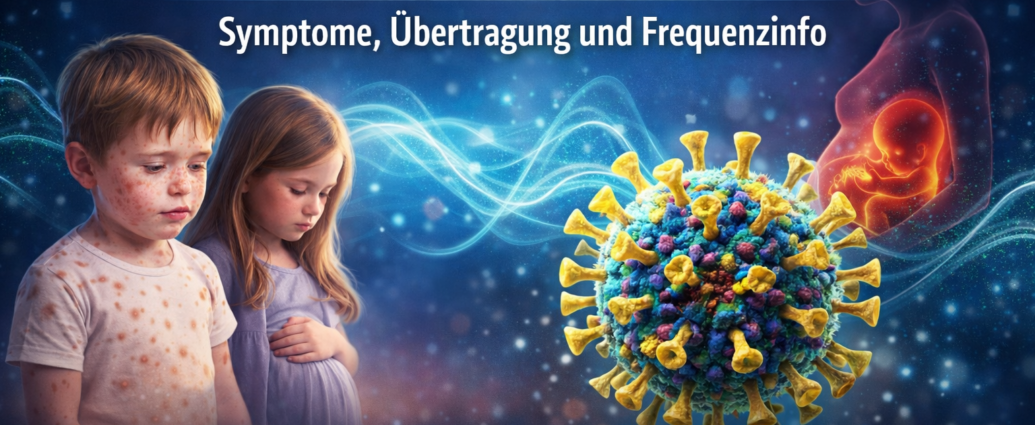
Symptoms, progression and frequency information
Rubella, also known as rubella or colloquially as German Measles are a viral infection of humans that occurs worldwide. The rubella virus has a special position within the togavirus-like pathogens and is described in the literature as a separate representative with special biological properties. The virus is transmitted Virus mainly via the respiratory tract through droplets containing the virus that are released into the environment when coughing or speaking. As humans are the only known reservoir, the containment of this infection has long been the focus of public health measures.
What is rubella?
Rubella is a viral infection that is usually comparatively mild, but can have considerable medical significance in certain situations. The disease is particularly relevant during pregnancy because the virus can pass through the placenta and damage the unborn child. This is precisely why rubella is not only regarded as a classic childhood disease in conventional medicine, but also as a serious infection with particular significance for maternity protection.
Compared to measles, rubella is considered less contagious. Many children are not infected or only show mild signs of the disease. Nevertheless, the disease remains important from a medical point of view because it can have serious consequences during sensitive phases of life.
How is the rubella virus transmitted?
Transmission occurs primarily via the respiratory tract. Virus-containing droplets enter the environment through coughing, sneezing or close contact and can be inhaled by other people. This respiratory transmission route distinguishes the rubella virus from many other related pathogens.
As humans are the only reservoir, the infection is closely linked to human transmission chains. This was also an important reason why international health programs are striving to contain and suppress the virus as far as possible.
Typical symptoms in children
In children, the disease often begins with a short phase of slight discomfort that can last one to five days. During this time, enlarged lymph nodes in the area behind the head and behind the ears are often noticeable. These swellings are one of the characteristic early signs of the infection.
As the disease progresses, mild reddening of the skin often occurs. Fine pink spots initially appear on the face. Reddish patches may also appear on the palate. Later, these skin changes can merge and combine to form a more extensive reddening. The rash typically spreads to the trunk and limbs within about two days. In some cases, however, there is no clear rash at all.
Skin rash and other complaints
The rash in rubella often appears more subtle and discreet than in other virus-related exanthema. It is precisely this rather mild manifestation that contributes to the fact that rubella is not always recognized immediately in the early stages. Mild joint involvement may also occur. This usually manifests itself in the form of mild arthropathic complaints.
The overall picture remains rather moderate in many children. This is precisely why rubella is sometimes underestimated. From a conventional medical point of view, however, it is important to consider not only the rash, but also the entire clinical picture with lymph node reaction, general condition and possible exposure.
Rare neurological involvement
A very rare progressive brain disease known as rubella panencephalitis is also described in the literature. This form affects children and is one of the rare but serious neurological complications. Even if such courses are extremely unusual overall, they make it clear that the rubella virus should not be seen exclusively as a harmless exanthema.
These rare severe manifestations in particular make it clear that even mild viral infections can affect deeper organ systems in individual cases. Classification by conventional medicine therefore remains essential.
Rubella during pregnancy
Rubella has the greatest medical significance during pregnancy. The virus can cross the placenta and multiply in the fetus. An infection in early pregnancy is particularly critical. The literature describes that an infection in the first trimester can be associated with a high risk of severe congenital damage.
The consequences described include low birth weight, hearing impairment, involvement of the central nervous system and pregnancy loss. The earlier the infection occurs in pregnancy, the more serious the consequences can be. This is precisely why prevention in this area is one of the most important conventional medical measures.
Congenital rubella syndrome
If the unborn child is infected during pregnancy, a congenital rubella syndrome can develop. This includes various maldevelopments and functional impairments that can affect different organ systems. Particularly feared are damage to hearing, the nervous system and other developmental disorders.
Congenital rubella syndrome is one of the main reasons why rubella plays such an important role in public health and preventive medicine. It shows very clearly that an infection that is often mild in the child can have a completely different clinical impact during pregnancy.
Prevention and vaccination
The MMR vaccination is mentioned in the literature as a preventative measure. It plays a central role in the prevention of rubella and is particularly important for reducing transmission in the population and protecting pregnancies from infection. As humans are the only reservoir, prevention of rubella is particularly important.
The conventional medical perspective is therefore strongly focused on vaccination status, population immunity and the protection of vulnerable groups. This aspect is particularly important in connection with pregnancy and the desire to have children.
Treatment from a conventional medical perspective
The treatment is described in the literature as symptomatic. This means that the focus is not on a specific standard therapy against the virus, but on supporting the organism according to the symptoms. The focus is on monitoring the course of the disease, general rest and the assessment of special risk situations.
In the case of rubella in particular, conventional medical classification is more important than the mere treatment of symptoms, because the clinical consequences can depend greatly on age, general condition and pregnancy.
Holistic view of the organism
From a holistic perspective, rubella shows that even an often mild viral infection can affect the body on several levels. The lymphatic system, skin, general condition and, in rare cases, the nervous system react to the infection. Added to this is the special significance during pregnancy, where not only the mother but also the development of the child can be affected.
For this very reason, a supplementary examination focuses not only on the rash or lymph nodes, but also on the constitution, regenerative capacity, resilience and the individual reaction situation. This creates a more comprehensive picture of the infection and its biological significance.
Complementary perspective on frequency therapy
Around the Frequency therapy is often associated with terms such as oscillation, Resonance and regulation. In a complementary understanding, the aim is to consider biological stress not only in material terms, but also in the context of functional and systemic patterns. The organism is understood as a dynamic system that reacts individually to stress.
Particularly in the case of viral infections with systemic and developmental significance, such models attempt to take into account not only the visible symptom, but also the entire reaction pattern of the body. In this context, frequency therapy and frequencies are seen as supplementary literature references within a larger understanding of resonance and system dynamics.
Frequency info
The following frequency ranges are mentioned in the literature for the rubella virus:
372, 402, 440, 450-451, 468, 520-530 kHz
In the complementary context of frequency therapy and frequencies, these frequency data are understood as supplementary literature references. Within complementary approaches, they are placed in a larger context of resonance, system dynamics and individual reactions.
Conclusion
Rubella is a common viral infection worldwide, which is usually mild, but has considerable medical significance, especially during pregnancy. Typical symptoms are mild malaise, enlarged lymph nodes, fine pink skin lesions and, in some cases, mild joint complaints. Conventional medicine is therefore in the foreground because it clearly describes the transmission route, pregnancy risk, prevention and possible complications.
In the complementary environment, the view of frequency therapy and frequencies can also be understood as a thematic extension. The frequency ranges mentioned in the literature are referred to as Frequency info into a larger context.



Comments are closed, but trackbacks and pingbacks are open.