






Table of contents
- What Frequency Therapy Can Do for Vitality and Quality of Life
- Requirements: What You Need Before Your First Use
- Step 1: Assess the Initial Situation and Set a Treatment Goal
- Step 2: Plan frequency application for more energy
- Step 3: Using Radionics Software Safely as a Naturopath
- Step 4: Combine frequency therapy with evidence-based medicine
- Step 5: Be aware of safety considerations, contraindications, and limitations
- Step 6: Measure the Effect and Adjust the Application
- Avoiding Common Mistakes in Frequency Therapy
- Conclusion: Realistic Expectations and Next Steps
- Frequently asked questions
Last updated: September 30, 2026
What Frequency Therapy Can Do for Vitality and Quality of Life
Frequency Therapy Vitality is a complementary medical procedure in which electromagnetic vibrations or frequency patterns are applied to the body to stimulate regenerative processes and self-regulation. This procedure falls under the umbrella of information medicine and is used to complement evidence-based medicine, not as a substitute for it. Herbert Eder has been working with this method since 1994 and emphasizes the importance of responsibly assessing its potential and limitations. (Source: Guidelines of the German Society for Sleep Research and Sleep Medicine)
Many users report improved sleep quality and more energy in their daily lives. It is crucial to have realistic expectations: Frequency therapy is not a substitute for medical diagnosis or first-line treatment.
Distinction from Sleep Medication and Cognitive Behavioral Therapy
For difficulties falling asleep and staying asleep, cognitive behavioral therapy is considered the treatment of choice, supported by Guidelines of the German Society for Sleep Research and Sleep Medicine. Sleep medications such as benzodiazepines take effect quickly but carry a significant risk of side effects and dependence with long-term use.
Frequency therapy takes a different approach: It does not directly target neurotransmitter balance, but rather works with the concept of self-regulation of physiological processes. This makes it an attractive option for people who do not want to take medication.
Frequency therapy is not a substitute for a medical evaluation. Anyone suffering from persistent sleep disturbances or chronic symptoms should first have a doctor rule out any medical causes.
Fundamentals of Information Medicine: Terminology and Models of Action
The fundamentals of information medicine are based on the assumption that biological systems communicate through frequency patterns and vibrations. Terms such as biophotons, radionics, and frequency application describe different models of how this communication can be influenced.
These concepts should not be equated with evidence-based medicine. They offer a complementary explanatory model, the clinical relevance of which is assessed in varying ways.
Requirements: What You Need Before Your First Use
Before you begin using frequency therapy to boost your energy, three things should be clarified: an initial medical evaluation, a realistic treatment goal, and a basic understanding of the method.
- Medical Evaluation of Symptoms
- List of Current Medications and Implants
- Documentation of the Initial Situation (Sleep, Energy, Symptoms)
- Appropriate frequency device or software
- Instruction or training provided by experienced users
Anyone working as a naturopath needs additional knowledge on how to use the relevant software safely. Herbert Eder imparts this knowledge through structured training programs and personalized practical guidance.
Step 1: Assess the Initial Situation and Set a Treatment Goal
The first step is to take an honest look at your situation. Over the course of two weeks, keep track of when you have trouble falling asleep or staying asleep, when your energy is at its lowest, and which symptoms recur.
A specific goal makes it easier to evaluate your progress later on. Instead of „more energy,“ try: „I want to fall asleep faster at night and feel less tired during the day.“ Goals like these can be measured.
Step 2: Plan frequency application for more energy
Frequency therapy for increased energy follows a rhythm, not chance. Schedule specific times—usually once or twice a day—and keep the sessions short at first.
A common mistake is trying to do too much at once. Start with just a few minutes and gradually increase the duration so you can better gauge your body's reactions.
Step 3: Using Radionics Software Safely as a Naturopath
Radionics Software for alternative practitioners helps users select specific frequency patterns and document their applications. Safe use means: only with a clear indication, a documented application, and without making any claims of a cure to patients.
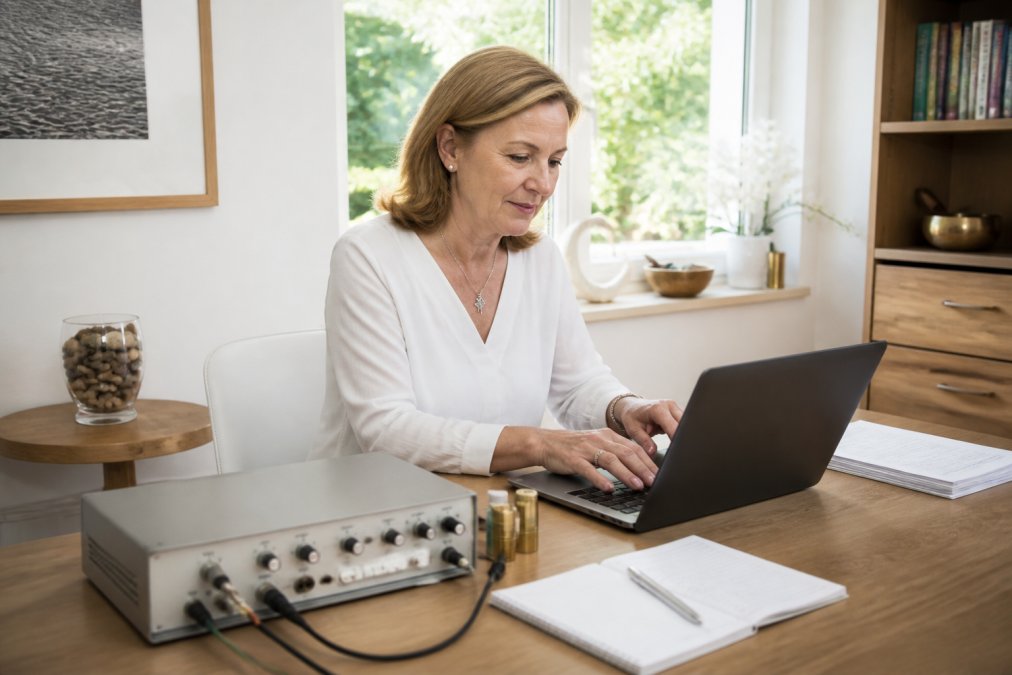
Make sure you have a quiet environment and enough time for each session. Recording the date, duration, and observed reactions is the foundation of any serious application. (Source: Information from the Federal Ministry of Social Affairs, Health, Long-Term Care, and Consumer Protection)
Step 4: Combine frequency therapy with evidence-based medicine
The most effective results come from combining these approaches, not from pitting them against each other. Vitality Frequency Therapy should complement medical treatment, not replace it.
Submit a request via our contact form →
Combination with Cognitive Behavioral Therapy and Sleep Hygiene
For Sleep Disorders Frequency therapy can be effectively combined with behavioral therapy interventions and sleep hygiene. Consistent bedtime routines, a dark bedroom, and avoiding screens before bedtime remain the foundation.
Overview of Sleep Hygiene and the Sleep-Wake Cycle
Step 5: Be aware of safety considerations, contraindications, and limitations
Safety takes precedence over the patient's wishes. In practice, frequency therapy is considered to have few side effects, but that does not mean it is equally suitable for everyone. Therefore, before the first treatment, it is important to determine whether there are any contraindications.
People for whom frequency therapy is not suitable or is suitable only after consulting a doctor
- Pacemakers and Implantable Defibrillators: Electromagnetic exposure may potentially affect the functioning of implanted devices. Consult a doctor before each use.
- Other active implants: Insulin pumps, neurostimulators, cochlear implants, and similar systems should generally be considered a precautionary measure.
- Epilepsy and Other Seizure Disorders: Caution is advised in cases of increased cerebral excitability; use without a doctor's approval is not recommended.
- Pregnancy: As a precaution, use without consulting a doctor is not recommended, even though no specific harm has been documented.
- Acute febrile infections, severe cardiovascular diseases, and acute psychiatric crises: In these situations, medical treatment is the top priority.
- Children and Adolescents: Use only under supervision and after a medical evaluation.
Electromagnetic exposure can pose a problem for implanted devices such as pacemakers. Consult a doctor before each use to confirm it is safe, and document the approval.
Openly acknowledge the limitations of the method
Frequency therapy is not a substitute for oncological, cardiological, or psychiatric treatment. It does not replace diagnostic procedures or first-line therapy and must not be presented as the sole treatment for serious illnesses. It is particularly important to make this distinction clear to patients: promises of a cure are impermissible and undermine trust in the method.
Practical Safety Guidelines for Use
- Start with short sessions and low intensity.
- Monitor for any reactions and stop if you feel unwell.
- Document each session, including the date, duration, and response.
- Discuss any unusual reactions with a healthcare professional.
- If you're unsure, take breaks instead of increasing the intensity.
When Medical Advice Is Absolutely Necessary
In cases of persistent sleep disturbances lasting several weeks, unexplained symptoms, sudden changes in general health, or existing underlying medical conditions, a medical evaluation should be the first step—not the last—of treatment. Frequency therapy can then be used as a complementary treatment once the underlying medical condition has been clarified.
Step 6: Measure the Effect and Adjust the Application
Measure your progress based on your initial notes, not just on how you feel. Compare your sleep quality, energy levels, and frequency of symptoms after four to six weeks.
| Observation Area | Data Collection | Adjustment During Standstill |
|---|---|---|
| Sleep quality | Time to fall asleep, waking up at night | Change the application date |
| Energy level | Daily Routine, Fatigue | Adjust Duration or Frequency |
| Complaints | Frequency, Intensity | Discuss use with a healthcare professional |
| Compatibility | Reactions After Use | Take a break; consult a doctor |
Avoiding Common Mistakes in Frequency Therapy
The most common mistake is expecting quick miracles. For many users, frequency therapy works slowly and subtly.
Other common mistakes:
- Too high an intensity at the start
- No documentation of the initial situation
- Gave up after a few days because I didn't have the patience
- Waiver of Medical Evaluation
- Promises of a cure to patients
Conclusion: Realistic Expectations and Next Steps
Frequency therapy for vitality and quality of life can be a valuable complementary approach when used responsibly and with realistic expectations. Its effectiveness depends on a combination of sound medical principles, clear documentation, and patience.
Anyone who wants to do more than just try frequency therapy—but rather gain a thorough understanding of it and apply it safely—needs structured guidance rather than a collection of scattered bits of information. Herbert Eder has been offering his expertise in this field since 1994 frequency therapy, responsible assessment of possibilities and limitations, as well as a combination of personalized practical guidance, structured training, and scientifically grounded expert articles. This provides users and therapists with clear explanations of complex relationships and individualized guidance for their practice. Get started with Herbert Eder and expand your knowledge for responsible application.
Frequently asked questions
What frequency can help with sleep disorders?
Research does not provide a general recommendation for frequency. Studies on the use of frequency therapy for insomnia employ a wide variety of protocols, measurement methods, and endpoints, which limits the comparability of results. In practice, the frequency is therefore adjusted individually based on symptoms, daily condition, and comorbidities. Anyone suffering from difficulty falling asleep or staying asleep should combine this treatment with a medical evaluation and behavioral therapy measures, rather than relying on a single Hz specification.
How does frequency therapy for vitality support daily life?
Users often report improved recovery, a more stable sleep-wake cycle, and a greater subjective sense of energy. Objective evidence for these effects is limited, and a placebo effect can hardly be ruled out in studies of complementary therapies. Therefore, using frequency therapy to boost energy is best approached as a complementary measure alongside good sleep hygiene, exercise, and medical evaluation. To assess its effectiveness, keep track of changes in sleep quality, daytime sleepiness, and resilience over several weeks.
How can radionics software be used safely in a naturopath's practice?
It is important to establish a clear indication, maintain a documented medical history, and provide clear information about the limitations of the method. The software is not a substitute for diagnosis or first-line therapy. Alternative practitioners should use it only within the scope of their professional authority; in cases of oncological or psychiatric conditions, it should be used exclusively as a complementary measure and in consultation with the treating physicians. Structured training with practical supervision helps prevent misuse and exaggerated claims of healing.
How does frequency therapy differ from conventional methods?
Conventional medicine is based on guidelines, randomized studies, and objective measurement methods such as polysomnography in a sleep laboratory. Frequency therapy uses weak electromagnetic or information-based stimuli, the clinical relevance of which has not yet been demonstrated at the same level of evidence. It is therefore not a substitute for, but rather a complement to, evidence-based medicine. Anyone with chronic symptoms should first take advantage of the diagnostic options offered by sleep medicine and only then consider complementary approaches as an additional component.



Comments are closed, but trackbacks and pingbacks are open.