



Table of contents
- Which Frequency for Which Effect: An Overview
- Effects of Solfeggio Frequencies: What Is Attributed to the Nine Tones
- 432 Hz Effects: Relaxation, Heart Rate, and the Research Literature
- The Effects of 528 Hz: Fact-Checking the „Love Frequency“ Claim
- Frequencies for Falling Asleep: Selection, Listening Time, and Measurement
- Evidence and Limitations: What Studies on Sound Frequencies Show
- Safe Use and Hearing Health: The Most Important Rules
- Selection Guide by Objective: Frequency, Listening Duration, and Performance Measurement
- Common Mistakes and What You're Better Off Ignoring
- Conclusion: Frequencies as a tool, not as a promise
- Frequently asked questions
Last updated: October 17, 2026
Which Frequency for Which Effect: An Overview
The question „Which frequency for which effect?“ cannot be answered with a single table. Anyone looking for a clear correlation will quickly come across conflicting lists. Sometimes 528 Hz is said to heal, sometimes 432 Hz is said to calm, and then again 963 Hz is said to „open the connection to the source.“ At Herbert Eder, we have been working with frequency therapy and information medicine since 1994. Our most important insight: There is no fixed formula. However, there is a reliable framework.
Sound frequency refers to the number of oscillations per second, measured in hertz (Hz). A tone at 432 Hz oscillates 432 times per second. That's physics, not esotericism.
The difference between claimed and proven effects is the focus of this guide. Below, we explain what lies behind the commonly cited frequencies, where the evidence ends, and how to make practical choices. You can find an official classification of music therapy at the German Music Therapy Federation.
Pitch, Tuning, and Tuning Standard: The Difference
Three terms are constantly confused. This leads to most misunderstandings.
- Pitch: How high or low a single note sounds. Measured in hertz.
- Mood: The system used to tune instruments. Concert tuning determines which note corresponds to A.
- Voting Standard: The reference value itself. Today, A = 440 Hz is standard; 432 Hz is an alternative.
When someone says „432 Hz music,“ they usually mean music that has been tuned to A = 432 Hz. This is a different tuning system, not a different effect for each note. This distinction is important because many providers blur the lines between the two.
Effects of Solfeggio Frequencies: What Is Attributed to the Nine Tones
Nine different effects are attributed to the Solfeggio frequencies. These associations are traditional and have not been clinically proven.
| Frequency | Attributed Effect |
|---|---|
| 174 Hz | Pain Relief, Grounding |
| 285 Hz | Tissue Regeneration |
| 396 Hz | Overcoming Fear and Guilt |
| 417 Hz | Change, Letting Go |
| 528 Hz | Love, „DNA Repair“ |
| 639 Hz | Relationships, Harmony |
| 741 Hz | Cleaning, Printing |
| 852 Hz | Intuition, inner order |
| 963 Hz | Connection, Spiritual Clarity |
What the table does not show: None of these associations are based on controlled studies. They stem from medieval vocal traditions and modern reinterpretations. The Cochrane Library on Music Interventions shows that music in general can reduce stress. However, there is no evidence that 396 Hz specifically relieves anxiety or that 417 Hz brings about change.
Anyone who markets 528 Hz as a „DNA repair“ treatment is making a medical claim that doesn’t hold up to scrutiny. Such promises are a red flag, not a selling point.
432 Hz Effects: Relaxation, Heart Rate, and the Research Literature
The 432-Hz tuning is said to have a calming effect. Some users report better sleep and less tension. The body of research on this topic is limited and contradictory.
What is actually measurable: Music in general affects heart rate and blood pressure. Slow, calm music lowers the heart rate in many people. This is true regardless of mood. Whether 432 Hz has an additional effect compared to 440 Hz remains unclear. Small studies suggest differences in subjective perception. Large, independent confirmations are lacking.
Our practical take: The 432 Hz tuning is not an active ingredient. It is a timbre that many find more pleasant. Those who find it relaxing benefit from the ritual and the calming music.
The Effects of 528 Hz: Fact-Checking the „Love Frequency“ Claim
528 Hz is considered the „frequency of love“ and is associated with opening the heart and healing. The claims are grand. The evidence is not.
This frequency is often associated with a study that allegedly demonstrates DNA repair. This study has been heavily criticized by experts in the field. It has not been independently verified. What remains is the subjective experience of many listeners: 528 Hz is described as warm and pleasant.
That's not nothing. Well-being is a real factor. But it's not proof of cellular healing. Anyone who uses 528 Hz should view it as a sound tool, not as a substitute for therapy.
Frequencies for Falling Asleep: Selection, Listening Time, and Measurement
Deep, calm frequencies are best for falling asleep. Frequencies of 174 Hz, 285 Hz, and the 432-Hz tuning have proven effective. The exact number is less important than the sound quality.
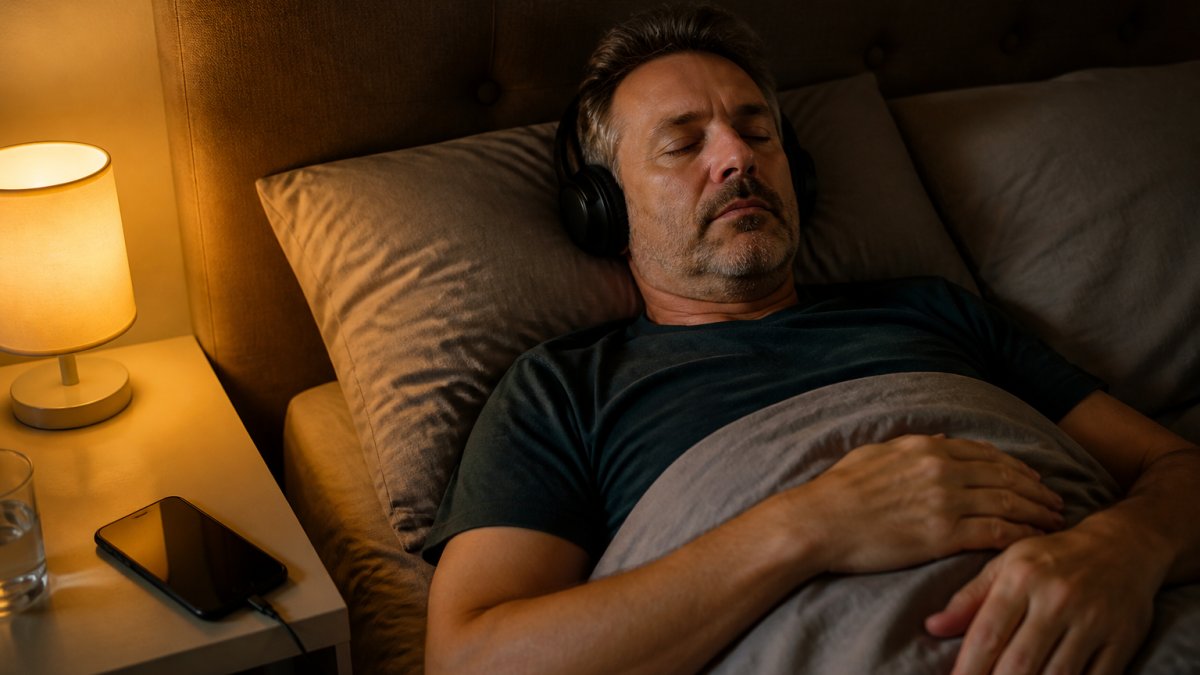
Here's how you can proceed in practice:
- Volume: quiet, pleasant, never louder than room volume
- Duration: 15 to 30 minutes to fall asleep, then off
- Timing: as a regular bedtime ritual
- Measurement: A personal sleep diary spanning two weeks
What you can measure here is primarily your own perception. Keep track of how long it takes you to fall asleep and the quality of your sleep. It takes two weeks before you start to see a pattern. A single good night doesn't mean anything.
Use a timer. For many people, music that plays all night long disrupts deep sleep more than it helps.
Evidence and Limitations: What Studies on Sound Frequencies Show
Research on specific frequencies is limited—and anyone who fails to mention this is selling a promise rather than providing information. This section distinguishes credible study results from spiritual or unsubstantiated claims of healing and explains how to recognize the quality of a study.
What Music Can Do in General—and What It Cannot
The influence of music on stress, mood, and relaxation has been well studied. Review articles and guidelines consistently conclude that calm, self-selected music can reduce subjective tension and promote well-being. These effects are robust because they have been confirmed across many studies using a variety of methods.
However, there is no evidence that a specific frequency in hertz triggers a specific biological effect. Anyone who promotes 528 Hz as a „DNA repair“ frequency or 396 Hz as an „anxiety reliever“ is making a medical claim for which there is no reliable basis. The Cochrane Library on Music Interventions shows that music can serve as a supportive measure—but its effect depends on the music, the context, and the individual, not on a single frequency.
Why There Is Little Research on 432 Hz and 528 Hz
There are only a few studies on specific frequencies. A recurring pattern stands out:
- Small samples: Many studies involve only a small number of participants. The results from such studies are statistically unreliable and cannot be generalized.
- Short-term measurements: Measurements are often taken only over a period of minutes or during a single session. It is therefore not possible to draw conclusions about long-term effects.
- Lack of blinding: If participants know which frequency they are hearing, that expectation influences the result. Placebo effects cannot be ruled out in this way.
- Subjective endpoints: Often, only the individual’s own perception is recorded („feels more relaxed“). Objective measures such as heart rate variability or cortisol levels are rarely and inconsistently recorded.
- No independent replication: Key findings—such as those regarding the alleged DNA repair effects of 528 Hz—have not been independently confirmed and have been heavily criticized by the scientific community.
That does not mean that listeners' experiences are worthless. It means that a subjective experience does not constitute proof of effectiveness.
Submit a request via our contact form →
The 432 Hz Debate: What Was Actually Measured
There are a few small studies on 432-Hz tuning that report differences in subjective perception and in certain cardiovascular parameters. However, the results are contradictory and methodologically limited. What remains measurable is that slow, calm music lowers the heart rate in many people—regardless of whether it is tuned to 432 Hz or 440 Hz. Whether the tuning has an additional effect remains an open question.
How to Tell if a Statement Is Reliable
A source is useful if it provides the following:
- Study Design: Randomized, controlled, blinded?
- Sample size: How many participants, and over what period of time?
- Endpoints: Subjective, objective, or both?
- Restrictions: which the study itself cannot demonstrate.
- Independence: who funded the study and whether it was replicated.
If this information is missing, it is an assertion, not evidence.
A promise of a cure is not a study result. Anyone who advertises „immediate healing“ or „cellular repair“ is crossing the line into making impermissible medical claims—regardless of how convincing the frequency figure may sound.
Clearly Define Boundaries
Frequency therapy is a complementary tool. It is not a substitute for a medical evaluation or treatment. For chronic conditions, sleep disorders, anxiety, or tinnitus, a medical evaluation should come first—not the frequency list. Those who accept this limitation can use sound consciously and responsibly.
Safe Use and Hearing Health: The Most Important Rules
Sound frequencies are safe as long as you follow a few basic rules. The most important one concerns volume.
- Listen quietly: Constantly listening to loud music can damage your hearing. Keep the volume low.
- Taking breaks: Don't listen to music with headphones for hours on end.
- Not while performing activities that require attention: for example, in traffic.
- Stop use if you experience any symptoms: Dizziness or ringing in the ears are warning signs.
- Seek medical evaluation: for chronic symptoms, sleep disturbances, or anxiety.
Frequency therapy is not a substitute for a medical evaluation. It complements it. Anyone suffering from severe tinnitus, depression, or unexplained symptoms should seek medical advice first.
In this context, safety means: quiet, brief, and mindful. The number on the display is less important than protecting your hearing.
Selection Guide by Objective: Frequency, Listening Duration, and Performance Measurement
This decision-making guide answers your question directly—but with a column that most guides omit: the level of evidence. This allows you to see at a glance which classifications are supported by research and which are based primarily on experience and tradition.
Legend: Level of Evidence:
- Well-documented: supported by several independent studies (music in general, not a specific hertz frequency).
- Limited: isolated small studies or conflicting findings.
- Traditional: No reliable scientific evidence; the association is based on tradition or clinical practice.
| Goal | Frequency (Orientation) | Listening time | Level of Evidence | Measuring Success |
|---|---|---|---|---|
| Falling Asleep | 174 / 285 Hz or 432-Hz tuning | 15–30 min. | Well-documented (music in general), limited (specific frequency) | Sleep Diary Over 2 Weeks |
| Relaxation | 432 Hz | 20 min. | Limited | Heart rate, subjective tension (scale of 1–10) |
| Overcoming Fear | 396 Hz | 15 min. | Traditionally | Summary of the discussion; no promises of a cure |
| Focus | 741 Hz | 20 min. | Traditionally | Study Notes |
| Evening Routine | 528 Hz | 15 min. | Traditional („frequency of love“ not substantiated) | Sleep Quality, Mood |
How to Vote in Practice
The table is a guide, not a set of instructions. Follow these steps in this order:
- Set a goal: Choose one goal, not five. If you try to tackle falling asleep and staying focused at the same time, you won't be able to attribute any specific results to either.
- Select frequency: Choose a frequency from the table—or, if you're unsure, start with calm music that doesn't specify a particular frequency. The effects of music in general are better documented than those of a single frequency.
- Limit playback time: 15 to 30 minutes per session is enough. A timer helps ensure that the music doesn't play all night.
- Designing the Surroundings: Quiet, comfortable, with as few external distractions as possible. Use headphones only at a low volume.
- Trade Shows: Write down a brief assessment each day (e.g., time fallen asleep, tension level 1–10, mood).
- Evaluate after two weeks: Only then does a pattern emerge. A single good evening doesn't mean anything.
- Wait until then to switch: Stick with a frequency until you see a change or consciously decide that it isn't working for you.
What You Can Realistically Expect
The “Level of Evidence” column makes it clear: The well-documented effects stem from music in general—not from a specific hertz frequency. Anyone who listens to 432 Hz and feels relaxed is likely benefiting from calming music, ritual, and anticipation. That is a real benefit, but it is not proof of any special biological effect of that frequency.
You can try traditional frequency pairings, such as 396 Hz for anxiety or 741 Hz for focus—as long as you view them as an experience rather than a treatment. Anyone suffering from anxiety disorders, sleep disorders, or tinnitus should consult a doctor and use sound as a complementary therapy, not as a substitute.
Keep a simple log: date, frequency, duration, stress level before and after (1–10), and time it takes to fall asleep. After two weeks, you’ll see if anything has changed—and whether it’s due to the frequency, the music, or the routine.
The honest answer to „Which frequency for which effect?“ is: Music in general can promote relaxation and sleep—and this is well documented. The specific effects of individual frequencies are limited or based on traditional beliefs. Choose based on your goal, listen at a low volume and for short periods, track your progress for two weeks—and expect this to be a supportive practice.
Common Mistakes and What You're Better Off Ignoring
The biggest mistake is looking for that one "magic" frequency. It doesn't exist. Frequency therapy works through repetition and perception, not through some magic number.
Other common mistakes:
- Listening at too high a volume. It damages your hearing and offers no added value.
- It's all too much at once. Five frequencies used in parallel show no discernible effect.
- Believing in promises of a cure. It's best to steer clear of anyone who promises an „instant cure.“.
- Working without taking measurements. Without notes, it's all just a feeling.
- Replace medical treatment. That is the most dangerous mistake.
What you can ignore: made-up frequency lists with no source, „secret“ tones, and products with dramatic claims.
A list of frequencies without a source is not information—it's marketing. Always check who created the list and what it is based on.
Conclusion: Frequencies as a tool, not as a promise
Frequencies are a tool. They can help you relax, be part of your evening routine, and promote well-being. They are not a substitute for medical treatment.
The honest answer to „Which frequency for which effect?“ is: It depends on your goal, your perception, and your method of measurement. Anyone who understands this uses frequency therapy responsibly.
This is precisely the perspective we convey at Herbert Eder. Since 1994, we have been combining practice, research, and education. Our seminars and technical articles clearly explain what frequency therapy can do and where its limitations lie. Those who wish to delve deeper will find structured training programs and personalized practical guidance at Herbert Eder. Start with a thorough introduction and learn how to use frequencies consciously and safely.
Frequently asked questions
Which frequency helps with what?
There is no scientific evidence supporting a fixed correlation between frequency and effect. In practice, 432 Hz is often associated with relaxation and a calmer heart rate, 528 Hz with well-being, 396 Hz and 417 Hz with coping with stressful emotions, 639 Hz with relationships, and 852 Hz and 963 Hz with meditation. Treat these associations as based on experience, not as established medical facts. Test a frequency for two to three weeks and observe your sleep, tension, and mood before forming an opinion.
How long should you listen to 528 Hz?
There is no set listening duration. Sessions typically last 15 to 30 minutes, once or twice a day, at a comfortable, relatively low volume. Start with 10 minutes and increase the duration only if you feel comfortable doing so. If you use 528 Hz to help you fall asleep, you should set an automatic shut-off so the sound doesn’t play all night. If you experience ringing in the ears, dizziness, or discomfort, stop the session and have your ears examined by a doctor.
What effect does 432 Hz have on the body?
Studies with small sample sizes suggest that some listeners find music tuned to 432 Hz more pleasant than music tuned to 440 Hz, and individual measurements show a lower heart rate while listening. These are preliminary indications, not proof of an independent effect of the frequency. A large part of the effect can be attributed to expectation, music selection, and relaxation. Anyone trying 432 Hz should measure their heart rate or blood pressure before and after the session, rather than relying on how they feel.
Is there scientific evidence supporting the effects of certain frequencies?
The body of research is limited. Existing studies on 432 Hz and 528 Hz typically involve few participants, short listening periods, and lack a blinded control group. This is not sufficient to draw reliable conclusions about anxiety levels, blood pressure, or sleep quality. Overall, sound therapy and music therapy show moderate effects on stress and relaxation in systematic reviews, with the music and the situation being the decisive factors, not a single frequency. Therefore, read promotional claims that make specific healing promises with a critical eye and ask for the underlying sources.


Comments are closed, but trackbacks and pingbacks are open.