




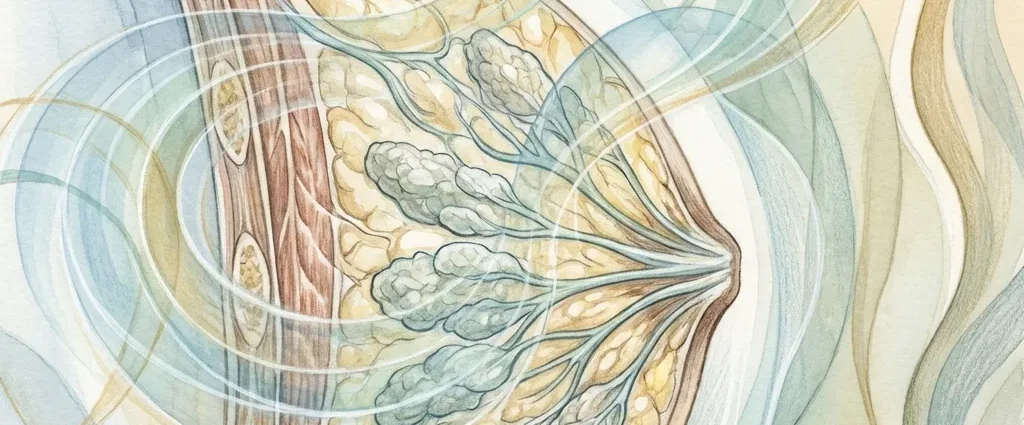
Breast cancer is one of the most common forms of cancer worldwide and poses complex challenges for those affected, those treating them and the healthcare system. In addition to established conventional medical therapies such as surgery, chemotherapy, radiotherapy, hormone therapy and immunotherapy, many people are looking for complementary approaches to alleviate side effects, strengthen self-regulation and improve their quality of life. In this context, the Frequency therapy, also known as bioenergetic or vibration-based therapy, is attracting increasing attention. The following article is aimed at those interested in alternative and complementary medicine, alternative practitioners, therapists and advanced users of frequency therapy who are looking for scientifically sound and practical information.
Breast cancer and frequency therapy: medical principles and biological complexity
Breast cancer (breast carcinoma) is not a uniform disease, but comprises a large number of biologically different tumor forms. These differ in terms of their growth behavior, their molecular characteristics and their response to therapies. The most important distinguishing features include the hormone receptor status (oestrogen and progesterone receptors), the HER2 status and the so-called triple-negative status.
From a biological point of view, cancer is a disorder of cell regulation. Cells lose the ability to divide in a controlled manner, to undergo apoptosis (programmed cell death) and to communicate with their environment in an orderly manner. These processes are closely linked to biochemical signaling cascades, epigenetic changes and electromagnetic properties of the cell. This is precisely where many frequency therapy concepts come in.
Basic principles of frequency therapy
Frequency therapy is based on the assumption that biological systems are not only organized biochemically, but also bioelectrically and electromagnetically. Every cell, every tissue and every organ has characteristic electrical potentials and oscillation patterns. Changes in these patterns are interpreted as an expression of stress, dysregulation or illness.
In frequency therapy, defined electromagnetic oscillations are used to:
- harmonize disturbed regulatory processes
- support cellular communication
- To promote the powers of adaptation and self-healing
Depending on the method, very different frequency ranges are used, from low-frequency oscillations in the Hertz range to high-frequency signals in the kilohertz or megahertz spectrum.
Theoretical effect models for breast cancer and frequency therapy
The use of frequency therapy for breast cancer is based on several theoretical models, some of which overlap.
Bioelectrical cell regulation
Cells have membrane potentials that significantly control their division activity. Bioelectrical studies show that degenerated cells often exhibit altered electrical properties. Frequency therapeutic impulses are intended to help normalize these potentials and thus promote regulatory signals.
Resonance and coherence models
According to the resonance principle, biological systems react particularly strongly to frequencies that correspond to their natural frequencies. The aim is to promote coherent vibrational states that are associated with orderly, healthy functions. It is also assumed that coherent states enable better communication between cells.
Influence on the tumor environment
Cancer cells are embedded in a complex microenvironment consisting of immune cells, connective tissue, blood vessels and signaling substances. Frequency therapy is used to positively influence blood circulation, oxygen supply and immunological processes. In addition, as some studies suggest, it can improve microcirculation.
Differentiation from conventional cancer therapy
A central point in the discussion about frequency therapy is its role in the overall concept of Cancer treatment. From a responsible therapeutic point of view:
- Frequency therapy does not replace standard oncological therapy.
- She can complementary can be used, particularly to support overall well-being.
- Decisions should be made on an interdisciplinary and individual basis.
Especially for alternative practitioners and therapists, clear communication with patients is essential in order to avoid false expectations.
Application forms of breast cancer and frequency therapy
In the Practice there is a wide range of devices and methods. These include, among others:
- Bioresonance method
- Pulsed electromagnetic fields (PEMF)
- Microcurrents and low-frequency electrotherapy
- Information-based frequency systems
The selection is often based on the energetic findings, the symptoms and the therapeutic objective. For example, PEMF is often used for patients with fatigue.
Practical goals in complementary use
The following goals are typically pursued with frequency therapy in breast cancer patients:
- Reduction of therapy-related side effects (e.g. fatigue, pain, neuropathies)
- Support for the immune system
- Promotes sleep, regeneration and stress reduction
- Support in phases after completion of primary therapy
An individualized approach with regular evaluation is important here. Therapists should also document progress.
Scientific data situation: opportunities and limitations
The scientific evidence on frequency therapy for cancer is heterogeneous. While there are experimental studies on electromagnetic fields and cell behavior, there is a lack of large randomized clinical studies for many specific frequency procedures.
Nevertheless, there are preclinical studies that show that certain frequencies:
- Can influence cell proliferation
- Modulate apoptosis signals
- change inflammatory processes
However, these results are not readily transferable to everyday clinical practice. Nevertheless, they provide a basis for further research.
Comparison of conventional medical and frequency therapy approaches
| Aspect | Conventional medical therapy | Frequency therapy (complementary) |
|---|---|---|
| Objective | Tumor destruction, remission | Regulation, support |
| Mechanism of action | Biochemical, cytotoxic | Bioelectric, vibration-based |
| Evidence base | High, guideline-based | Limited, heterogeneous |
| Side effects | Frequent, sometimes severe | Mostly low |
| Role in the therapy plan | Primary | Supplementary |
This comparison makes it clear that both approaches address different levels and do not have to be mutually exclusive. It also shows that combinations can be useful.
Safety and ethical responsibility
The use of frequency therapy in oncology patients requires special care. The most important safety aspects include
- No interruption or delay of conventional medical therapies
- Transparent explanation of the experimental nature
- Documentation of progression and effects
Therapists have a high ethical responsibility, especially towards vulnerable patient groups. They should therefore attend regular supervision sessions.
Integration into a holistic therapy concept
Frequency therapy unfolds its potential above all when it is embedded in a comprehensive concept. This includes
- Nutritional medicine and micronutrient therapy
- Psycho-oncological support
- Movement and breathing therapy
- Stress regulation and sleep hygiene
The combination of different complementary measures can produce synergistic effects, provided they are expertly coordinated. In addition, an exchange with other therapists can be helpful. Further information can be found in the Practical guide for frequency therapy beginners - step by step.
Perspectives for research and practice
The following developments are particularly relevant for the future:
- Standardization of frequency protocols
- Combination with imaging and bioelectrical measurement methods
- Clinical studies with clearly defined endpoints
For advanced users in particular, this opens up an exciting field between basic research and practical application. Further studies can be found in the Scientific study situation Frequency therapy 2026 - current research & evidence.
Critical reflection and realistic expectations
As fascinating as the concepts of frequency therapy are, they require critical reflection. Not every theoretically plausible effect is clinically relevant. At the same time, empirical knowledge should not be devalued across the board, but should be translated into structured observation.
A realistic approach to possibilities and limitations protects both patients and therapists from disappointment and wrong decisions. After all, a balanced view is the basis of any serious discussion.
Frequently Asked Questions
Can frequency therapy cure breast cancer?
No. Frequency therapy is not considered a cure for breast cancer. It is used in a complementary way to support regulatory processes and improve quality of life, not to eliminate tumors.
Is its use permitted during chemotherapy?
In many cases, frequency therapy is used as an adjunct, particularly to alleviate side effects. However, this should always be done in consultation with the treating oncologist.
Are there any known risks or side effects?
When used properly, side effects are rare and usually mild, such as short-term tiredness or regulatory reactions. Contraindications must be examined individually.
Which patients benefit the most?
Patients with chronic fatigue, pain or stress often report subjective improvements. However, the effect varies from person to person.
How many sessions make sense?
There is no universally valid recommendation. In practice, series of 6 or 12 sessions are often carried out, with regular evaluation and adjustment of the procedure.
In conclusion, frequency therapy for breast cancer is a challenging but potentially valuable field of complementary medicine. For experienced therapists and informed patients, it can, if used responsibly, contribute to a holistic approach to a complex disease. Further parallels can be found in the article Cervical cancer and frequency therapy, which highlights similar therapeutic principles.
In addition, external information from the German Cancer Society or the WHO Cancer Program be helpful to find out about current international guidelines.


Comments are closed, but trackbacks and pingbacks are open.