






Table of contents
- Frequency Therapy in Naturopathy: Fundamentals and Approach
- How Frequency Therapy Works: Self-Regulation Through Vibrations
- Frequency Therapy for Stress and Nervous Tension
- Use for chronic conditions and symptoms
- Frequency Therapy Process: Measurement, Diagnosis, and Treatment
- Frequency Therapy: Duration and Course of Treatment
- Scientific Evidence and Current Research
- Limitations, Contraindications, and When Medical Advice Is Necessary
- Professional Guidance and Responsible Use
- Conclusion: Frequency Therapy as a Holistic Approach in Naturopathy
- Frequently asked questions
Last updated: October 10, 2026
Frequency Therapy in Naturopathy: Fundamentals and Approach
The Benefits of Frequency Therapy in Naturopathy lie in their holistic approach to supporting the body’s natural self-regulation. Frequency therapy is understood as a method based on the assumption that the human body can be stimulated to restore balance through specific vibration patterns. This approach combines traditional naturopathic principles with modern findings in information medicine. (Source: Scientific Studies on Bioresonance)
Frequency therapy differs from other complementary methods in that it does not rely primarily on biochemical substances, but rather on the stimulation of bioelectrical and energetic processes. Therapists and practitioners work with individually determined frequency patterns to specifically balance disturbances in the body’s energy flow. This precise individualization is a key feature of responsible practice.
Frequency therapy uses specific vibration patterns to support the body's natural self-regulation, which distinguishes it from purely biochemical approaches.
How Frequency Therapy Works: Self-Regulation Through Vibrations
Frequency therapy is based on several different theoretical models, which are often conflated in practice. To understand how it works, it is important to distinguish between these variants and realistically assess the evidence supporting each.
Bioelectrical Models and Field Stimulation
One explanatory model posits that living cells continuously generate electromagnetic fields. According to this theory, these bioelectric activities arise from ion flows across cell membranes and form a body-wide network that coordinates cellular function. Devices based on this model—such as vital field systems or bioelectric stimulators—are said to harmonize these endogenous fields through external frequencies.
The mechanism is plausible: Cells do indeed respond to electrical stimuli, and weak electromagnetic fields have been shown to influence biological processes in vitro. However, it remains unclear whether external frequencies can specifically correct disturbances in the bioelectrical system in clinical practice or whether the effects are primarily due to the placebo effect or general relaxation. Studies on specific frequencies and measurable clinical outcomes are limited.
Bioresonance and Resonance Principles
Bioresonance devices operate on a different principle: They measure the body’s own electromagnetic signals (often from acupuncture points or meridian points) and are designed to analyze these signals to identify patterns of imbalance. Modified or inverted frequencies are then fed back into the body to correct imbalances.
This approach combines concepts from traditional Chinese medicine (meridians, the flow of qi) with modern device technologies. The assumption is that resonance—that is, attuning to the body’s own frequencies—has a more healing effect than arbitrary stimulation. Practitioners often report improvements in chronic conditions. However, to date, there have been no large-scale, independent clinical studies validating bioresonance against placebo devices. The measurement of output signals and their interpretation remain controversial.
Biophoton Theory and Cell Communication
A third model is based on the biophoton hypothesis: cells are said to emit and receive light particles (photons) in the ultraviolet and visible spectrums to exchange information. Some frequency therapy systems use light or frequencies in the optical spectrum to stimulate this cellular communication.
Biophoton research has yielded interesting findings—such as the fact that cell cultures do indeed emit faint light. However, research is still ongoing to determine whether these photons constitute a functional communication system or are merely a byproduct of metabolism. There are currently no clinical studies showing that biophoton therapy cures specific diseases.
Differences in Devices and Forms of Application
The various models use different devices and application methods:
- Vital Field Systems: Measure acupuncture points, calculate frequency patterns, and stimulate them using electrodes or coils
- Bioresonance Devices: Use measurement points (often the finger or ear), analyze signals, and output modified frequencies
- Biophoton Therapies: Do light sources or specific frequencies in the optical range
- Magnetic Field Stimulation: Generates external magnetic fields to influence bioelectrical processes
Each variant has different costs, treatment durations, and claimed indications. A responsible therapist should be transparent about the model on which their approach is based and the evidence supporting it.
When a therapist explains their method, ask: What theoretical model does it rely on? What independent studies support this mechanism? How does their approach differ from other frequency therapies?
A Realistic Assessment of the Mechanisms of Action
In summary: All of these models have plausible biological foundations, but none has yet been validated in large, controlled studies as a specific mechanism of action for clinical outcomes. This does not mean that frequency therapy is ineffective—it means that the exact mechanism by which it works has not yet been clarified. Possible effects could result from direct frequency stimulation, the placebo effect, therapeutic attention, or general relaxation effects. Responsible use acknowledges this uncertainty and sets realistic expectations.
Frequency Therapy for Stress and Nervous Tension
Stress and nervous tension are common indications for frequency therapy. The theory is that chronic stress disrupts the bioelectrical balance of the nervous system and that specific frequency patterns can restore this balance.
When using frequency therapy for stress, the focus is on calming and harmonizing. Many users report feeling relaxed during and after sessions. Whether these effects result primarily from the frequencies themselves or from the therapeutic context is still a topic of debate in research. Responsible use in this context means setting realistic expectations and viewing frequency therapy as a complement to proven stress-reduction methods.
Use for chronic conditions and symptoms
Chronic conditions such as headaches, joint pain, and fatigue are classic indications for which frequency therapy is used. The idea behind it is that if chronic symptoms are caused by persistent fields of disturbance, the right frequency stimulation could resolve them.
Clinical experience shows that some patients report improvements, while others experience no measurable changes. This underscores the need to evaluate frequency therapy on an individual basis and not to treat it as a one-size-fits-all solution. When working with frequency therapy, it is emphasized that accurate diagnosis and the selection of appropriate frequency patterns are crucial.
Frequency Therapy Process: Measurement, Diagnosis, and Treatment
The typical course of frequency therapy follows a structured process that includes measurement, analysis, and stimulation.
Vital Field Measurement and Personalized Analysis
The first step is a vital field measurement—an analysis designed to detect bioelectrical patterns and identify imbalances. During this process, measurements are taken at various points on the body to create a profile of the body’s energetic state. This measurement forms the basis for the subsequent treatment.
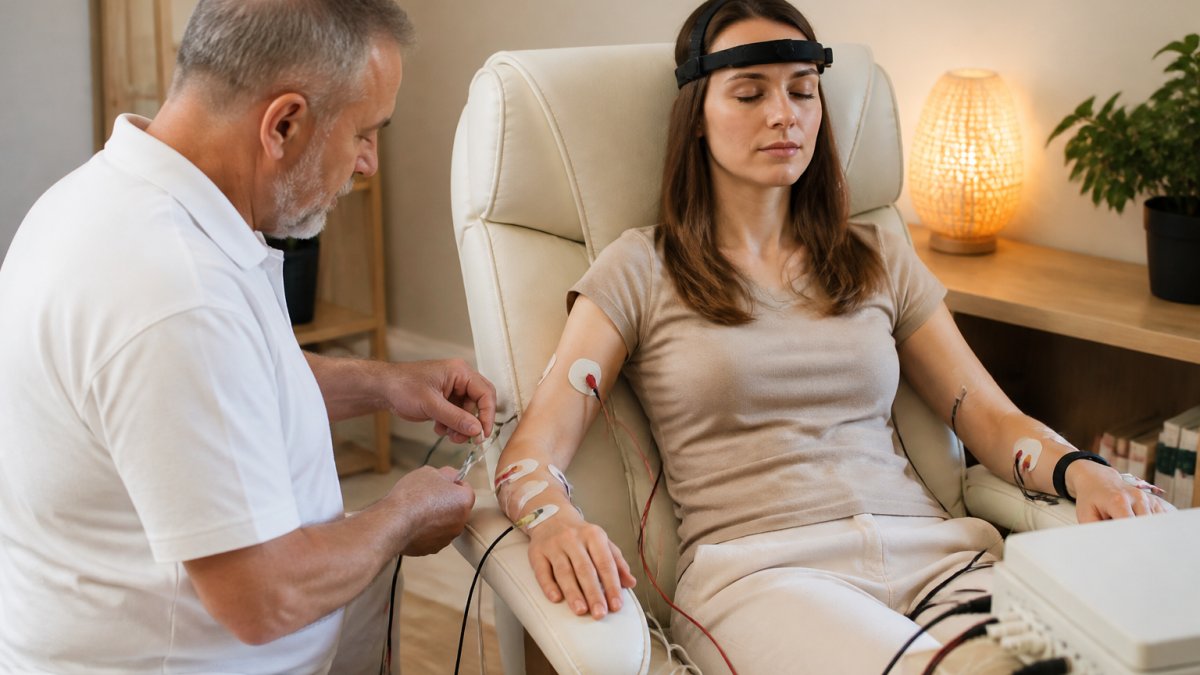
The analysis of the measurement data is intended to identify which frequency ranges are disrupted and where interference fields or sources are present. This individualized diagnosis is central to frequency therapy, as it allows for personalized treatment.
Stimulation and Therapeutic Methods
After the diagnostic evaluation, stimulation is administered using the determined frequencies. This can be done using various devices and methods—ranging from electromagnetic fields to other forms of stimulation. Sessions typically last between 30 and 60 minutes, depending on the procedure and the individual’s condition.
During stimulation, the frequencies are intended to act on the affected areas and promote self-regulation. Many patients report feeling relaxed or energized during treatment.
Frequency Therapy: Duration and Course of Treatment
The duration of a frequency therapy treatment varies depending on the symptoms and the individual’s response. Typically, several sessions are recommended—often weekly or at longer intervals.
A course of treatment can last anywhere from weeks to months. Some users report improvements after just a few sessions, while others require a longer period of time. It is important to have realistic expectations: Frequency therapy is not a quick fix, but rather a gradual process that supports the body’s own regulatory mechanisms.
Anyone expecting quick or dramatic results is likely to be disappointed. Frequency therapy works in subtle ways and requires patience and regular use.
::: (Source: Guidelines on Complementary Medicine)
Scientific Evidence and Current Research
The scientific recognition of frequency therapy is limited. While there are individual studies examining specific effects, there is as yet no broad scientific consensus on its mechanisms of action and clinical efficacy.
This is not a reason to reject frequency therapy outright, but rather a reason for transparency: Users should be aware that they are operating in a field where empirical knowledge and theoretical models predominate. Recent research reviews on complementary therapies show that many naturopathic methods still require more intensive study.
The question „Does frequency therapy really work?“ cannot currently be answered with absolute certainty. There is evidence of physiological effects, but there is also room for placebo effects and psychological factors. Responsible use acknowledges this uncertainty.
Limitations, Contraindications, and When Medical Advice Is Necessary
Frequency therapy has clear limitations and is not suitable for all situations. It is particularly important not to treat acute or serious medical conditions with frequency therapy alone.
Submit a request via our contact form →
People with pacemakers or other implanted electronic devices should definitely consult a doctor before undergoing frequency therapy. Pregnant women should also exercise caution and seek professional advice. Frequency therapy should also only be considered under medical supervision and as a supplement to conventional treatments in cases of acute infections, severe mental illnesses, or oncological conditions.
Safety guidelines for complementary therapies provide guidance for responsible practice. As a general rule, if symptoms are new, severe, or worsening, a medical evaluation is necessary before undergoing frequency therapy.
Professional Guidance and Responsible Use
The quality and safety of frequency therapy depend heavily on the practitioner’s competence, integrity, and transparency. It is important for patients and aspiring therapists to know what to look for and what questions to ask.
Qualifications and Training Standards
There is currently no standardized, state-recognized training program for frequency therapy in German-speaking countries. This means that therapists can come from a wide variety of backgrounds—ranging from alternative practitioners with extensive training in naturopathy to individuals with minimal training.
Important Questions to Consider When Choosing a Therapist:
- What formal training has the therapist completed? (Diploma in alternative medicine, specialized training in naturopathy, specialized courses in frequency therapy?)
- How long has he been practicing frequency therapy?
- Is he a member of a professional association or a specialized organization? (Such as the Austrian Society for Energy Medicine or similar associations?)
- Can he provide references or case studies?
- Does he regularly attend continuing education courses?
A responsible therapist will answer these questions openly and not react defensively. Caution is advised if a therapist is vague about his or her qualifications or refuses to discuss his or her training.
Costs and Insurance Coverage
The cost of frequency therapy sessions varies considerably depending on the therapist, region, and treatment method.
Important to know:
- Statutory Health Insurance: Frequency therapy is generally not covered by public health insurance because it is not considered a scientifically recognized method.
- Private Health Insurance: Some private insurers reimburse services provided by alternative practitioners or naturopaths, including frequency therapy. This should be clarified before beginning treatment.
- Supplemental Insurance: There are specialized supplemental insurance plans for naturopathy and complementary medicine that provide partial coverage for frequency therapy.
Before starting treatment, patients should ask: How many sessions are recommended? How much will the entire treatment cost? Is there a money-back guarantee if there is no improvement?
Warning Signs: How to Spot Dubious Claims
When evaluating frequency therapy services, the following red flags should raise concerns:
Promises of Salvation and Guarantees: Claims such as „cures cancer,“ „is effective against all infections,“ or „guaranteed cure“ are not only unscrupulous but, in many cases, illegal. Responsible therapists speak of „support,“ „stimulating self-regulation,“ or „facilitating the healing process“—not of a cure.
Lack of Boundaries with Conventional Medicine: A therapist who claims that frequency therapy can replace surgery or medication, or who advises patients to discontinue conventional medical treatments, is acting negligently and may be breaking the law.
Unclear or pseudoscientific explanations: If a therapist cannot explain their method in a way that is easy to understand or relies solely on jargon („energy blockages,“ „frequency harmonization“ without a concrete explanation), skepticism is warranted.
Aggressive or emotional sales tactics: Pressure to book a series of treatments right away, or emotional manipulation („If you don’t act now, it will get worse“) are signs of an unprofessional practice.
Lack of Transparency Regarding Evidence: A good therapist will say, „There are indications of benefits, but the scientific evidence is limited.“ Anyone who claims that frequency therapy has been fully proven scientifically is lying.
If a therapist advises you to delay or avoid conventional medical diagnosis or treatment, seek medical advice immediately. Frequency therapy is not a substitute for necessary medical care.
Questions to Ask Before Treatment
A structured discussion with the therapist should address the following points:
- Diagnosis and Measurement: How is my condition diagnosed? What tests are performed? Can I understand the test results and take them with me?
- Treatment Plan: How many sessions are recommended? Over what period of time? How is success measured?
- Realistic Expectations: What can frequency therapy realistically achieve? What can't it do? How long will it take before I notice any effects?
- Side Effects and Risks: What are the possible side effects? For whom is this method not suitable?
- Conventional Medical Coordination: Will my primary care physician or specialist be notified? Can frequency therapy be combined with my current medications?
- Costs and Insurance: How much does the treatment cost? Will my insurance cover the costs? Are there any alternatives or more affordable options?
A therapist who answers these questions patiently and honestly demonstrates professionalism and a sense of responsibility.
Responsible Use in Practice
A responsible therapist will:
- Communicate clear distinctions between frequency therapy and conventional medical treatments
- Set realistic expectations and don't use promises of a cure in your advertising
- Seek medical advice if you have medical questions or if your symptoms are new or severe
- Maintain transparency regarding the scientific evidence and acknowledge what has not yet been clarified
- Continuously deepen one's knowledge and engage with the latest findings
- Maintain documentation and ensure the treatment process is traceable
- Show respect for the patient's autonomy and avoid coming across as manipulative
Anyone interested in frequency therapy—whether as a patient or a prospective therapist—will find guidance from reputable providers who respect both the possibilities and the limitations of this approach. The best guarantee of responsible use is a therapist who is willing to answer questions, acknowledge uncertainties, and support—rather than replace—conventional medical care.
Conclusion: Frequency Therapy as a Holistic Approach in Naturopathy
The benefits of frequency therapy in naturopathy lie in its holistic understanding of the body as an energetic system and in its individualized approach. It offers a way to support patients in self-regulation without relying on chemical substances. At the same time, it is crucial to recognize its limitations and to view it as a complement—not a substitute—to established medical procedures.
Anyone who wants to seriously explore frequency therapy needs a solid understanding of its theoretical foundations, practical application, and scientific evidence. Information on training in information medicine helps those interested build this knowledge in a structured and responsible manner.
Frequently asked questions
How does frequency therapy work in naturopathy?
Frequency therapy uses specific frequencies and vibrations to support the body’s natural self-regulatory processes. The treatment is based on the understanding that the body possesses bioelectrical systems and energy pathways. Through the targeted application of frequencies, disruptive fields are identified and impulses are delivered to stimulate the body’s self-healing processes. This holistic approach takes individual health concerns into account and focuses on restoring balance rather than merely treating symptoms.
For which conditions is frequency therapy used?
Frequency therapy is used in naturopathy to treat various conditions, including chronic pain, sleep disorders, stress, and nervous tension. It is also used for knee osteoarthritis and other degenerative conditions. Therapists also use it to support patients with long-COVID symptoms and to boost overall vitality. Frequency therapy is always tailored individually to the patient’s specific situation.
How long does frequency therapy take, and when do the first results become apparent?
The duration of frequency therapy varies from person to person and depends on the nature of the symptoms, their chronicity, and the individual’s response. Some people report initial improvements after just a few sessions, while in other cases a longer course of treatment is necessary. Regular sessions over several weeks allow the body to gradually support its own self-regulation. A responsible therapist will discuss realistic expectations and the scope of treatment during the initial consultation.
Is the effectiveness of frequency therapy scientifically proven?
Scientific research on frequency therapy is not yet conclusive. Studies exist on individual procedures and indications, but the evidence is mixed and, in some cases, limited. It is important to make this distinction: While the body’s bioelectrical processes are scientifically recognized, the therapeutic effects of specific frequencies on certain conditions are still the subject of research. Responsible practitioners present frequency therapy as a complementary approach and not as a proven standard procedure.
Frequency therapy is not a cure-all, but for many people it is a valuable tool for supporting their health. When used correctly—combined with conventional medical care and realistic expectations—it opens the door to a holistic approach. Herbert Eder guides you through this process with over 30 years of experience and a clear focus on sound, responsible practice. Discover how frequency therapy can support your individual health.



Comments are closed, but trackbacks and pingbacks are open.