






Table of contents
- The Effects of Frequency Therapy on Chronic Pain: What This Method Can Achieve
- Definition and Mechanism of Frequency Therapy
- Overview of Applications and Indications
- Step-by-Step Guide to a Treatment Session
- Cost of a Frequency Therapy Session: What You Should Expect
- Experiences with Frequency Therapy: Reports and Case Studies
- Home or Clinic: Where the Treatment Should Take Place
- Radionics Software for Alternative Practitioners: A Supplement or a Replacement?
- Side Effects, Contraindications, and Limitations of the Method
- Conclusion: Frequency Therapy as a Component of Pain Management
- Frequently asked questions
Last updated: September 27, 2026
The Effects of Frequency Therapy on Chronic Pain: What This Method Can Achieve
Chronic pain is one of the most common reasons people seek complementary treatment approaches. The The Effects of Frequency Therapy on Chronic Pain This is often misunderstood because providers and users apply the same term to very different procedures. This is precisely where this article by Herbert Eder comes in: a sober assessment of what electromagnetic and electrical stimuli can actually do to the nervous system—and where the limits lie.
Frequency therapy effect Put simply, this means that strategically applied electrical or electromagnetic pulses influence the transmission of stimuli along nerve fibers and, consequently, the perception of pain signals. Herbert Eder has been working in the fields of frequency therapy and information medicine since 1994, and in his professional articles, he makes a point of clearly distinguishing between the possibilities and limitations of these approaches.
If you want to determine whether this method is suitable for your specific symptoms, you need to distinguish between three things: the physical effect on nerve cells, your individual circumstances, and whether it makes more sense to use a device at home or undergo treatment at a clinic. The following sections go through these points in detail.
How Electromagnetic Pulses Affect Pain Signals
Pain does not originate in the tissue, but in the nervous system. Even before an injury has healed, the transmission of stimuli can change in such a way that signals are transmitted to the brain at a permanently heightened level. Experts refer to this as chronic pain and “pain memory.”.
Frequency-based methods target this process of nerve impulse transmission. Electrodes deliver specific pulses that travel through the skin to reach nerve fibers. The goal is not to eliminate the underlying cause, but to influence the excitability of the involved nerve pathways.
Two mechanisms are being discussed in practice:
- Gate Control Principle: Additional tactile or electrical stimuli can reduce the transmission of pain signals in the spinal cord.
- Effects on the cell membrane potential: Electric fields cause short-term changes in the voltage across the cell membrane and, consequently, in the cell's readiness to transmit signals.
It is important to note the time limitation: The effect generally lasts only during and shortly after the session. For this reason, the method is usually used as a component of a treatment plan, not as a standalone solution.
Definition and Mechanism of Frequency Therapy
Frequency therapy is The application of defined electrical or electromagnetic oscillations to the body in order to influence physiological processes such as nerve impulse transmission, blood circulation, and regeneration. The term encompasses several methods that differ in terms of frequency range, waveform, and type of application.
In everyday language, this term is often used to refer to three groups:
- Stimulation Current and Electrotherapy: Electrical pulses delivered via adhesive electrodes, often in the low-frequency range.
- Electromagnetic pulses: Magnetic fields that act without direct skin contact.
- Information-based methods: Frequency patterns that, according to the manufacturers, are intended to influence regulatory processes. This group has the least scientific evidence to support it.
The common factor is frequency. It determines which nerve fibers are primarily stimulated and whether the stimulus has a more activating or calming effect. High frequencies are sometimes used for pain relief, while low frequencies are used more to stimulate muscles and blood circulation.
What many descriptions fail to mention: Frequency therapy is not a one-size-fits-all product. Two devices with similar names can work in completely different ways.
Overview of Applications and Indications
This method is most commonly used to treat musculoskeletal conditions. These include chronic back pain, lower back pain, neck and shoulder tension, and joint pain. Another focus is on promoting blood circulation and aiding recovery after physical exertion.
A third area is the adjunctive use in Sleep disorders and states of exhaustion.
An overview of the range of indications:
| Symptoms | Typical Approach | Realistic Expectations |
|---|---|---|
| Chronic Back Pain | Stimulation current, low frequency | Relief During and After the Session |
| Neck and Shoulder Tension | Electrotherapy, local | Improved mobility, reduced muscle tone |
| Joint Pain | Electromagnetic pulses | Support, not a substitute for treatment |
| Sleep disorders | Soothing Frequency Patterns | Varies greatly from person to person |
| Recovery After Exercise | Promotion of blood circulation | Faster subjective recovery |
Anyone suffering from acute, unexplained, or radiating pain should first consult a doctor to determine the cause. Frequency therapy is not a substitute for a diagnosis.
Step-by-Step Guide to a Treatment Session
A typical session lasts between 20 and 45 minutes and follows a set procedure. The exact structure depends on the device, the patient's symptoms, and the experience of the practitioner.
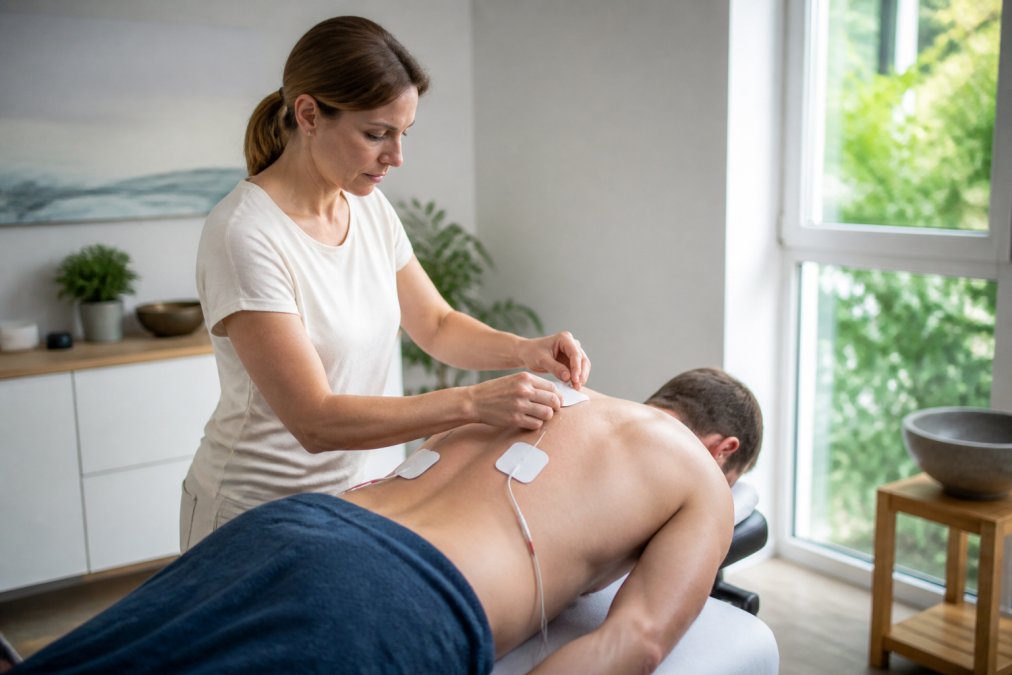
- Brief preliminary discussion: Discuss current symptoms, how you're feeling today, and any changes since the last session.
- Positioning: A comfortable position on the examination table, with the affected area fully accessible.
- Electrode placement: Apply the electrodes by sticking or placing them along the affected nerve or muscle region.
- Setting the parameters: The frequency, intensity, and duration are gradually increased until a distinct but pleasant tingling sensation is felt.
- Treatment phase: The intensity is adjusted during the session if the sensation begins to fade.
- Rest in peace: Take five to ten minutes to relax so the sensation can settle in.
- Quick response: What has changed, and what hasn't. That will determine the agenda for the next meeting.
Typically, you’ll start with two to three sessions per week over several weeks. After the first few sessions, it’s usually easier to assess whether the method is right for your situation.
Preparing for the First Meeting
- Choose comfortable clothing that allows access to the affected area
- Please bring any test results, doctor's notes, or imaging reports, if available
- Make a note of any medications you are currently taking, especially pain relievers and blood thinners
- Be sure to mention any pacemakers, implants, or metal in your body beforehand
- Don't come on an empty stomach, but don't come right after a big meal either
- Have realistic expectations: relief, not a cure, in a single session
Anyone with a pacemaker, an implantable defibrillator, or other active implants must not use electrical stimulation therapy without explicit medical approval. The electrical impulses may interfere with the device's function.
Cost of a Frequency Therapy Session: What You Should Expect
The Cost of a Frequency Therapy Session It’s impossible to put a general figure on them—but they can be narrowed down. Anyone who wants to know what they’re getting into before their first treatment should distinguish between three things: the type of service, the billing method, and the issue of reimbursement.
Price Ranges by Service Type
The following price ranges are typical guidelines based on practical experience. They vary depending on the region, type of practice, and session duration, and are not binding prices:
| Type of Service | Typical duration | Order of magnitude per session |
|---|---|---|
| Alternative Practitioner / Complementary Medicine Practice | 30–60 min. | mid-two-digit to low-three-digit euro range |
| Physical Therapy (billed privately) | 20–30 min. | the low to mid double-digit range in euros |
| Medical Services (Private) | 15–30 min. | mid-two-digit to low-three-digit euro range |
| Initial Consultation / Medical History | 30–60 min. | often billed separately, sometimes at a higher rate than a follow-up session |
In addition, package deals are often available: 10-session passes or treatment series are usually less expensive per session than individual appointments. If you’re planning a series of treatments, you should compare the package price directly with the individual price.
Who Bears the Costs
This is generally a private service. Whether and to what extent a health insurance provider will cover the costs depends on the specific insurance policy and can only be determined on a case-by-case basis by contacting the provider. It would be irresponsible to make a blanket statement about eligibility for reimbursement.
In practice, two approaches are commonly used:
- Private Health Insurance: It often covers services if they are prescribed by a doctor and medically justified. The exact conditions are specified in the plan.
- Statutory Health Insurance: Frequency therapy is generally not covered as a standalone service. In certain cases, it may be part of a medically prescribed treatment plan—in which case billing is handled through the prescription, not through the practice.
- Supplemental Insurance: Some insurance plans for naturopathic treatments or complementary medicine cover a portion of the costs. It’s worth reviewing the terms and conditions before your first session.
If you want to clarify the reimbursement, it's best to check with your health insurance provider in advance and ask for a written response. This will help you avoid any surprises.
What Determines the Total Cost
The cost per session is only part of the picture. The total cost depends primarily on the recommended number of sessions—and that varies greatly depending on the specific symptoms. For recent muscle tension, a few sessions may be sufficient; for long-standing chronic pain, treatment is often planned over several weeks with two to three appointments per week.
Submit a request via our contact form →
If you want to estimate the costs in advance, it's best to ask specific questions, such as:
- Price per individual session and price for a package of ten sessions
- Recommended number of sessions for your specific symptoms
- Whether an initial consultation is billed separately
- Whether a doctor's prescription is required
- Whether the practice offers payment in installments or a cost cap
Before your first session, ask for a written treatment plan that includes an estimated number of sessions and the total cost range. This makes the costs predictable and shows whether the practice operates in an organized manner.
When the Investment Pays Off—and When It Doesn't
An honest cost-benefit analysis is part of the process. The approach is worthwhile if, after a defined period—say, four to six sessions—a noticeable change occurs that is relevant to daily life. If no effect is observed, it is not a failure of the method, but rather an indication that it is not suitable for this person and this set of symptoms.
If you're concerned about the cost, you can start with just a few sessions at the practice and only then consider getting a home device. This is usually more affordable than a long series of sessions without a clear goal.
Experiences with Frequency Therapy: Reports and Case Studies
Experiences with Frequency Therapy In practice, results vary widely. This is due less to the method itself than to the patient’s initial condition: Someone who has suffered from chronic back pain for years and has already undergone several treatments perceives small changes differently than someone with a recent episode of muscle tension.
A common pattern in reports: Little changes during the first few sessions. After several sessions, some users report sleeping better or that their pain is less noticeable in their daily lives. Others feel no change and stop the treatment. Both are normal and do not prove or disprove the effectiveness of the method.
A second pattern relates to the combination of treatments. People who combine frequency therapy with exercise, heat, and tailored physical activity are more likely to report lasting effects than those who receive only passive treatment.
There are no reliable predictions regarding the results of frequency therapy. It is advisable to test the method over a defined period of time and then use clear criteria to evaluate whether it is worthwhile.
Home or Clinic: Where the Treatment Should Take Place
Home devices are significantly less expensive and don’t require scheduling appointments. However, they have one major drawback: the effectiveness of the treatment depends on the correct placement of the electrodes and the selection of the right settings. Without proper guidance, users often treat the wrong area with the wrong frequency.
In contrast, practical experience offers a controlled approach, immediate feedback, and the opportunity to adjust the plan. This is the more sensible way to get started.
| Criterion | Home appliance | Practice |
|---|---|---|
| Start-up costs | Lower | Per session |
| Proper Electrode Placement | Assess for yourself | Set in technical type |
| Adjusting the Parameters | Limited | Available at any time |
| Monitoring Progress | On one's own initiative | By Practitioner |
| Suitable for | Experienced Users | Beginners, complex cases |
A sensible approach: attend a few sessions at the practice, closely observe the placement and settings, and only then consider getting a home device.
Radionics Software for Alternative Practitioners: A Supplement or a Replacement?
Radionics Software for Alternative Practitioners It is often mentioned in the same breath as frequency therapy, but it works on a different principle. It does not generate electrical stimuli in the body; rather, it assigns frequency patterns to specific issues and serves as a tool for treatment and documentation.
For alternative practitioners who want to expand their range of services, the key question is not which software is the best, but whether the application fits seamlessly into an existing treatment plan. Software is no substitute for a medical evaluation and does not override the limits of a diagnosis.
In his seminars and articles, Herbert Eder provides precisely this context: which approaches complement each other effectively, where they conflict, and where responsibility remains with the treating professional. Anyone seeking a structured Seeking an Apprenticeship, will receive practical guidance there.
Frequency therapy and radionics software are not competitors. One acts on the body, while the other supports the organization of work. If you mix the two, you lose sight of the actual effect.
Side Effects, Contraindications, and Limitations of the Method
Side effects are usually mild and temporary: temporary redness of the skin, a slight tingling sensation, and occasionally muscle soreness or fatigue after the session. If the intensity is too high, a burning sensation may occur.
True contraindications primarily include active implants such as pacemakers or defibrillators, pregnancy in the treatment area, open wounds, thrombosis, and acute infections accompanied by fever. Anyone who suffers from epilepsy or is taking blood thinners should consult a doctor beforehand.
The most important limitation is a different one: frequency therapy does not treat the underlying cause. It can influence pain signals, but it cannot resolve structural damage such as a herniated disc, cure inflammation, or treat tumors. In cases of unclear, newly occurring, or radiating symptoms, diagnosis should be left to a doctor.
Reputable providers openly state these limits. That’s exactly how you can tell them apart.
Conclusion: Frequency Therapy as a Component of Pain Management
The The Effects of Frequency Therapy on Chronic Pain is real, but limited: It can influence the transmission of stimuli and reduce pain perception during and after a session. It is not a substitute for diagnosis, exercise, or medical treatment, but rather one component of a multimodal plan.
Anyone who tries this method should set a clear time frame, clarify the costs in advance, and—after a few sessions—honestly assess whether anything has changed. This is precisely the down-to-earth approach Herbert Eder has been promoting since 1994: clear explanations of complex concepts, a precise definition of limitations, and practical guidance for both users and therapists. Anyone who wants to use or learn frequency therapy responsibly will find seminars, specialized articles, and personalized practice guidance with Herbert Eder.
Chronic pain requires patience and an honest assessment of one’s situation. Since 1994, Herbert Eder has offered in-depth expertise in frequency therapy and information medicine, combined with structured training programs and personalized practical guidance. Anyone who wants to learn or apply the method responsibly will find a clear overview of its possibilities and limitations, as well as practical knowledge to guide them individually. Get started with Herbert Eder and make your decision based on a solid foundation.
Frequently asked questions
How does frequency therapy work for chronic pain?
Frequency therapy uses electromagnetic pulses and stimulation current, which are delivered to specific areas of the body via electrodes. It is believed that these pulses can influence pain signals as they travel to the brain and break the cycle of pain. In addition, the therapy is intended to stimulate regenerative processes and the body’s natural healing abilities. The effects vary from person to person, and this method is not a substitute for a medical evaluation. Before your first treatment, have the cause of your symptoms evaluated.
How much does a frequency therapy session cost?
The cost of a frequency therapy session depends on the practice, the duration, and the number of appointments scheduled. For exact pricing information, you should contact the provider directly. You should check with your health insurance provider directly to determine whether and to what extent reimbursement is possible, as complementary therapies are often not covered under standard care.
Is frequency therapy a recognized treatment method?
Frequency therapy is considered a complementary treatment and is not established as a standard therapy for chronic pain in conventional medicine. Individual elements, such as electrical stimulation, are used in physical therapy and pain management, while other approaches have been less thoroughly studied scientifically. This does not mean that the method is ineffective, but rather that the body of research remains limited. Those who use it should view it as a supplement to a medically approved treatment and not as a substitute.
Are there any contraindications to the use of frequency therapy?
Yes, caution is advised under certain circumstances. These include, for example, an implanted pacemaker or other active implants, pregnancy, as well as acute infections or open wounds in the treatment area. In cases of epilepsy and ongoing cancer treatments, the treatment should only be administered after consulting with your treating physician. Discuss your personal situation openly with a qualified practitioner before your first session.



Comments are closed, but trackbacks and pingbacks are open.