






What is frequency therapy?
Frequency therapy is a complementary medicine method that uses electromagnetic pulses to stimulate the body’s self-healing processes. Furthermore, frequency therapy—explained simply for beginners—is based on the principle that every cell vibrates in a specific frequency pattern. Targeted frequency patterns are used to release blockages and restore the body’s balance.
Frequency therapy, simply explained for beginners, means that the body functions not only through chemical processes but also through energetic regulatory mechanisms. This method is based on the idea that diseased or dysfunctional cells can be restored to their natural vibration. Unlike many conventional medical approaches, frequency therapy focuses on treating the root cause rather than merely alleviating symptoms.
With Herbert Eder Here you will find a thorough introduction to this complex subject.
In addition, drawing on over 30 years of experience in frequency therapy, he explains in an easy-to-understand way how electromagnetic vibrations and Cell communication are related.
His approach is characterized by a precise assessment of the possibilities and limitations.
Furthermore, he avoids making promises of healing and focuses on what is scientifically verifiable.
Frequency therapy does not work on the principle that „one frequency cures everything.“ It requires an individualized diagnosis to identify the appropriate frequency patterns for the specific situation.
Fundamentals of Information Medicine: Understanding the Principle of Resonance
The principle of resonance is at the heart of frequency therapy—explained simply for beginners. It states that matter and energy are in constant interaction and that every biological structure responds to specific frequencies. When you strike a tuning fork, a second, identically tuned tuning fork begins to Resonance, even without direct contact. The nervous system and cell communication in your body work in a similar way.
Information medicine Basic principles show that the body does not function in isolation. Every cell sends and receives electromagnetic signals. These signals coordinate healing processes, regenerative potential, and the maintenance of internal balance. When disruptive fields—such as those caused by chronic stress, environmental stressors, or old injuries—interrupt this communication, blockages arise.
The resonance principle makes it possible to specifically target these blockages. By applying harmonic frequencies, you can calm the nervous system, improve cellular communication, and activate the body’s regenerative potential. This is not mystical, but rather based on well-known biophysical mechanisms such as biophotons and electromagnetic impulses that are at work in every cell.
The principle of resonance explains why a certain frequency works for one person but not for another; the body must be „receptive“ to the Information be.
How Frequency Therapy Works: Electromagnetic Pulses and Cell Communication
Electromagnetic pulses are the tool of frequency therapy. The human body is not just chemistry; it is also an electromagnetic system. The heart generates an electromagnetic field, the brain emits frequencies, and every cell communicates via electrical potentials.
Frequency therapy, simply explained for beginners, means that by introducing specific electromagnetic patterns into the body, you can support cellular communication. The device emits specific frequency patterns that influence the nervous system and the body’s natural frequencies. This form of vibrational medicine is based on the principle that healing occurs through resonance—not through chemical substances, but through information.
A common misconception is that frequency therapy „pumps energy“ into the body. In fact, it’s about information. The electromagnetic pulses are so weak that they have no thermal effect. Instead, they act on the informational level; they „remind“ the body of its natural vibrational patterns. This has a profound effect because it works at the cellular level.
These frequency patterns optimize cellular communication. Cells that have become disrupted and lost their natural rhythm can resynchronize. The body’s energy balance is rebalanced, leading to improved physiological activity. This explains why some people notice improvements after just a few sessions, while others need more time—the body first has to relearn how to respond to this information.
Frequency Therapy: Areas of Application—From Chronic Conditions to Sleep Disorders
The applications of frequency therapy are diverse, but not unlimited. The method has proven particularly effective for functional disorders—that is, problems in which conventional medicine finds no structural damage, but the patient experiences distinct symptoms.
Chronic conditions such as headaches, back pain, and joint problems are among the most common areas of application. Many people report that traditional therapies provide only temporary relief, whereas frequency therapy enables more lasting regulation. Sleep disorders often respond well to this method because it calms the nervous system and supports natural sleep rhythms.
Other areas of application include pain management, inflammatory responses, and recovery from injuries. Frequency therapy can also be helpful for psychosomatic conditions, where the body and mind are closely intertwined. Some therapists also use it to boost vitality and enhance general well-being, not just to treat illnesses.
Important: Frequency therapy is not a substitute for a medical diagnosis. In cases of serious illness, a conventional medical evaluation is necessary. This method works best as a complementary approach within an integrative medical strategy.
Radionics Software for Alternative Practitioners: Diagnosis and Treatment Planning
For naturopaths and therapists, the Radionics Software for Naturopaths is an essential tool. This software enables precise diagnostics to determine which frequency patterns are optimal for each individual patient. It works according to the biofeedback principle: The patient’s body „responds“ to various frequency patterns, and the software records this feedback.
Using radionics software correctly as a naturopath means first identifying blockages and interference fields. This is done through testing procedures in which various frequency patterns are presented. The software then shows which frequencies the body responds to and which it does not. This results in a personalized therapy profile.
One major advantage is objectivity. Instead of relying on intuition, therapists can make data-driven decisions. This makes therapy planning reproducible and transparent. For patients, this means greater assurance that their treatment is tailored to their specific situation.
A common beginner's mistake: viewing the software as a „magical diagnostic tool.“ It is a tool that is only as effective as the therapist who uses it. Thorough training is essential.
How a Frequency Therapy Session Works: Step by Step
A typical session follows a structured process. First, there is an in-depth discussion in which your symptoms, medical history, and goals are addressed. This is important for understanding the context and choosing the right treatment strategy.
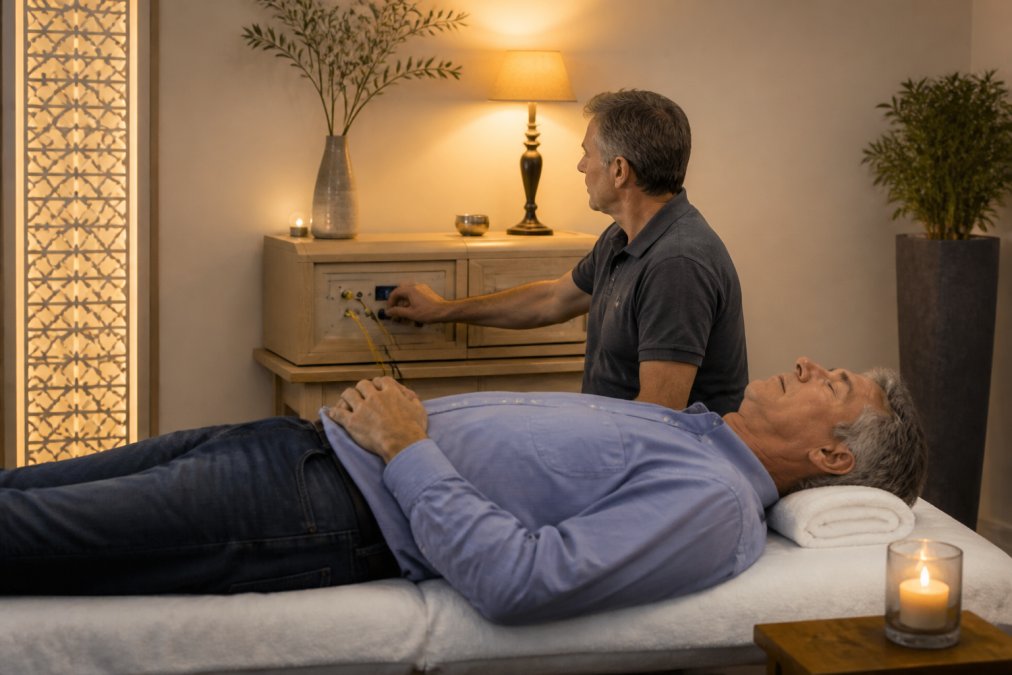
This is followed by a diagnostic assessment using biofeedback or radionics software. The therapist tests various frequency patterns to determine which ones are relevant to your body. This typically takes 15 to 30 minutes. During this time, you sit or lie down in a relaxed position; there is no pain or discomfort.
The actual treatment involves transmitting the identified frequency patterns to your body using a therapeutic device. The device is completely painless and non-invasive. Some people report a slight tingling sensation or a feeling of warmth, while others feel nothing at all. The session usually lasts 30 to 60 minutes.
It's important to rest after the session. Your body needs time to process the information and activate its self-healing processes. Many therapists recommend drinking plenty of fluids and avoiding strenuous physical activity for the next 24 hours.
Home Use vs. Clinic Visit: Which Is Right for You?
"Frequency Therapy for Beginners: Explained Simply" also addresses the question: Where and how should the therapy take place? There are two fundamentally different approaches here, each of which has its merits.
Clinic Visit: Professional Diagnosis and Support
A visit to a therapist’s office has several key advantages, especially for beginners. An experienced therapist can thoroughly analyze your specific situation—not just your symptoms, but also your medical history, life circumstances, and individual response patterns. This is essential because frequency therapy does not operate on a „one-size-fits-all“ basis.
The therapist conducts an assessment, usually using biofeedback or radionics software, to determine which frequency patterns are relevant to your body. This is particularly important in complex cases, for chronic conditions, or if you’re unsure whether the method is right for you. The therapist can also observe your reactions during and after treatment and adjust the therapy accordingly.
In addition, you’ll receive professional support: questions will be answered, side effects or unexpected reactions can be discussed immediately, and the therapist can adjust the frequency and duration of treatment based on your progress. This significantly reduces the risk of improper treatment.
Home Use: Continuity, but with Certain Conditions
Home devices offer flexibility and allow for regular treatments without the need for travel or scheduling appointments. However, home use is not suitable for every beginner and requires several prerequisites:
Device Types and Their Differences: There are various categories of home devices. Simple devices (often marketed as „frequency patches“ or „resonance devices“) are inexpensive, but they do not offer personalized diagnostics; you must already know which frequencies are effective for you. More professional home devices with biofeedback capabilities can test your body and determine the appropriate frequencies on their own, but they are significantly more expensive and require training to use.
Important: Not all devices are equally safe or effective. Make sure the device comes from a reputable manufacturer, bears the CE mark (European safety standard), and—ideally—is recommended by a therapist you know and trust. Cheap devices from unreliable sources may be ineffective or even harmful.
Safety Considerations for Home Use: Although frequency therapy devices are noninvasive and considered safe, there are Contraindications. People with pacemakers, implanted metal devices, or certain neurological conditions should not use home devices without consulting a doctor. Caution is also recommended during pregnancy. When using these devices at home, there is no professional supervision, so you must determine for yourself whether a reaction is normal or problematic.
Practical criteria for making a decision:
Recommended for beginners: Start by visiting the practice. Have at least 2–3 sessions with a qualified therapist to find out if the method works for you and which frequency patterns are best for you. This is the safest and most informative approach.
Hybrid form (most common method): After successful in-office sessions, you may want to consider a home device. Your therapist can tell you specifically which frequencies were effective and recommend a suitable home device. This allows you to combine professional diagnosis with the flexibility of home treatment.
For home use only if you have experience: If you are already familiar with frequency therapy or have a device with biofeedback diagnostics, using it exclusively at home may be a good option. This is not recommended for absolute beginners.
Costs and Payback Period: The cost of a clinic visit varies depending on the therapist. Check with your therapist directly to find out the current fees. A home device requires a one-time investment. In the long run, a home device can pay for itself if you plan to undergo treatment regularly.
The best strategy for beginners: Start with 2–3 visits to a professional clinic for diagnosis and validation. After that, you can decide whether home use makes sense for you and which device is right for you.
Costs and Health Insurance Coverage: What You Need to Know
Cost is often a key factor for beginners. Here is a realistic overview to help you plan your investment.
Costs for Doctor's Office Visits
The fees for frequency therapy sessions at a Practice vary depending on the therapist, experience, and region. The fees for frequency therapy sessions at a practice vary depending on the therapist, experience, and region. Some therapists offer package deals (e.g., 5 sessions at a discounted price), which can be more cost-effective if you plan to come regularly.
Submit a request via our contact form →
A course of treatment typically consists of 5–10 sessions, depending on the condition and the patient’s response. Some people need only a few sessions, while others benefit from longer-term care. Ask your therapist for a realistic prognosis based on your specific situation.
Costs for Home Appliances
If you'd like to buy your own device, the cost depends heavily on the type of device:
Simple frequency devices or resonance patches: 200–500 euros. These are inexpensive, but they require that you already know which frequencies are effective for you.
Professional home devices with biofeedback diagnostics: 1,000–3,000 euros. These devices allow you to test your own body and determine the appropriate frequencies, similar to what is done in a doctor’s office. They are more expensive, but they allow for true customization.
Premium systems or multi-user licenses: 3,000–10,000 euros and up. These are intended primarily for therapists or very dedicated users.
Important: Price is not always an indicator of quality. An expensive device is not automatically better. Look for the CE mark, the manufacturer's reputation, and, ideally, a recommendation from a therapist you trust.
Payback Period and Long-Term Cost Analysis
If you visit a therapy practice regularly (e.g., 1–2 times a week), a home device often pays for itself within 6–12 months. After that, you’ll save money and have more flexibility. If you only need therapy occasionally, a home device may not be worth the investment.
Health Insurance Coverage: The Reality
The honest answer: Frequency therapy is not covered by most state health insurance plans. It is considered a complementary or alternative therapy and is not included in standard insurance coverage.
However, there are exceptions and possibilities:
Statutory Health Insurance: In rare cases, costs may be reimbursed if a doctor prescribes the therapy and it is deemed medically necessary. However, this is the exception. Ask your doctor or your insurance provider whether this is possible in your case. Some insurance providers also reimburse costs if the therapy is performed by a doctor (not just by alternative practitioners).
Private Health Insurance: Private insurers are often more open to complementary therapies. Many private insurance plans cover frequency therapy if it is performed by a qualified therapist. Check your insurance policy or contact your insurance provider directly. Some private insurers reimburse up to 50–80 % of the costs, while others cover the full amount.
Supplemental Insurance: There are special supplemental insurance plans for naturopathy and complementary medicine. These often cover frequency therapy. Such a supplemental insurance plan may be worthwhile if you regularly use complementary therapies.
Deductibles and Limits: Even if your insurance covers frequency therapy, there are often limits (e.g., a maximum of 500 euros per year) or deductibles (e.g., you pay 20 % out of pocket). Read your insurance policy carefully.
Practical Steps for Clarifying Costs
Ask your therapist: Experienced therapists often know which insurance plans cover these costs and can help you file a claim for reimbursement.
Contact your insurance company directly: Ask about the exact terms and conditions. Some insurance companies will only cover the cost if the therapist has certain qualifications.
Collect receipts: Keep your receipts and treatment reports. You'll need them when you submit a claim for reimbursement.
Check out supplemental insurance plans: If you regularly use complementary therapies, supplemental insurance may make financial sense.
Realistic Budget Planning for Beginners
If you would like to start frequency therapy and do not expect to be reimbursed by your insurance, please plan for the following costs:
- Getting Started: 2–3 office visits for diagnosis: 120–450 euros
- Treatment Series: 5–10 additional sessions: 300–1,500 euros
- Total budget to start with: 400–2,000 euros
After that, you can decide whether you want to buy a home device or continue to visit the doctor's office.
Frequency therapy is usually a personal investment. But that also means you get to decide the intensity and frequency yourself, without dealing with insurance red tape. Plan realistically and ask your therapist about ways to keep costs down.
Scientific Status and Critical Assessment
A simple explanation of frequency therapy for beginners must also address the critical question: Is this scientifically proven?
The honest answer is nuanced. There is research showing that electromagnetic fields affect biological systems; this is well established. Biophotons and the role of frequencies in cellular communication are also the subject of scientific research (pubmed.ncbi.nlm.nih.gov). However, there are fewer high-quality clinical studies on frequency therapy itself than on established methods.
That does not mean the method is ineffective. It means that scientific evidence has not yet been fully established—partly because the research is difficult, and partly because large pharmaceutical companies have less interest in this method. Integrative medicine and complementary medicine are working to provide better evidence.
What you should know as a beginner: Don't put your faith in promises of a cure. Frequency therapy is a way to support your health—it's not a miracle cure. It works best when you have realistic expectations and view it as part of a comprehensive approach to health, along with good nutrition, exercise, and mental health.
Your First Steps with Frequency Therapy
If you'd like to get started with frequency therapy for beginners—explained simply—follow this practical guide:
Step 1: Do your research thoroughly. Read professional literature, watch videos, and talk to people who have experience with the method. Make sure you understand the basics before you invest.
Step 2: Find a qualified therapist. This is the most important step. A good therapist has training and experience and can help you set realistic expectations. Ask about their qualifications and experience.
Step 3: Visit the practice. Get a thorough evaluation. An experienced therapist can determine whether frequency therapy is appropriate for your specific situation.
Step 4: Decide whether to use it at home. If your visits to the clinic prove beneficial, you might want to consider getting your own device. Your therapist can advise you on which device is right for you.
At Herbert Eder, you’ll find structured training programs and personalized practical guidance to help you take these steps with confidence. With over 30 years of experience in frequency therapy and information medicine, he imparts not only the knowledge but also the critical perspective needed so that you can work with this method safely and responsibly. His combination of practical experience, research, and training provides you with the guidance you need as a beginner.
Explaining frequency therapy to beginners in simple terms is possible, but only with a solid foundation of knowledge and realistic expectations. The method offers real opportunities for health and recovery, but it’s not a miracle cure. With the right guidance and a qualified therapist, you can find out whether frequency therapy is the right path for you, too. Get started with Herbert Eder and receive the structured support you need to apply this complex method responsibly.
Frequently asked questions
How does frequency therapy differ from other complementary medicine methods?
Frequency therapy is based on the principle of resonance and uses electromagnetic pulses to support cellular communication. Unlike purely mechanical methods, it aims to regulate the body’s energy. It combines aspects of information medicine with holistic approaches and thus differs from acupuncture, homeopathy, or osteopathy due to its technological basis and its focus on the body’s frequencies.
What role does information medicine play in frequency therapy?
Information medicine forms the theoretical foundation of frequency therapy. It is based on the assumption that the body communicates through electromagnetic patterns and vibrations. Frequency therapy uses this knowledge to apply specific harmonic frequencies and identify disruptive fields. As a result, information medicine enables more precise diagnostics and individualized treatment planning for each patient.
Is frequency therapy a recognized treatment method?
Frequency therapy is not yet recognized as a standard treatment in conventional medicine, but it is considered a form of complementary medicine and is used by many naturopaths and holistically oriented therapists. Its scientific status is still evolving. It is important for beginners to understand that frequency therapy should be viewed as a complementary approach to conventional medical treatment, not as a substitute.
What should beginners look for when choosing a therapist?
Choose a therapist with solid training in frequency therapy and information medicine. Make sure there is transparent communication about the method’s possibilities and limitations—reputable therapists do not make promises of a cure. Ask about their experience with your specific set of symptoms, the techniques and radionics software they use, and whether they follow a structured approach. Personal guidance in practice or training from experienced professionals offers additional assurance.



Comments are closed, but trackbacks and pingbacks are open.