





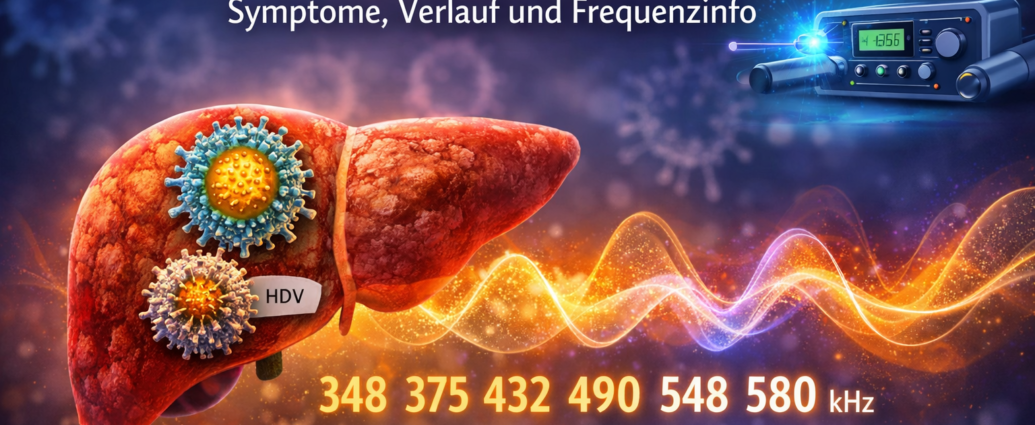
Symptoms, progression and frequency information
Hepatitis D, also known as delta virus infection, occupies a special position among the liver viruses. The literature describes that the hepatitis D virus can only trigger an infection if a hepatitis B infection is present at the same time. This means that hepatitis D is closely linked to the presence of hepatitis B and cannot occur independently of it. It is precisely this peculiarity that makes the clinical picture particularly medically relevant.
What is hepatitis D?
Hepatitis D is a viral liver disease caused by the hepatitis D virus. Unlike other forms of hepatitis, however, this virus cannot infect the organism on its own. The literature emphasizes that a simultaneous or pre-existing hepatitis B infection is a prerequisite for hepatitis D to be effective at all.
This close link to hepatitis B makes hepatitis D a special form of viral hepatitis. The clinical picture should therefore not be viewed in isolation, but always in conjunction with the HBV infection. It is precisely this connection that determines the severity, course and therapeutic classification.
Why hepatitis D only occurs together with hepatitis B
The delta virus is dependent on hepatitis B. The literature describes that an infection can be acquired either as a co-infection together with hepatitis B or as a superinfection with an existing chronic HBV infection. This distinction is particularly important in conventional medicine because it can influence the course of the disease.
In the case of co-infection, both Viruses into the organism at the same time. In the case of superinfection, hepatitis D is added to an existing chronic hepatitis B infection. This second form is often regarded as particularly significant clinically because it can put additional strain on the liver.
Coinfection and superinfection
Co-infection describes the simultaneous acquisition of hepatitis B and hepatitis D. The literature indicates that this form can be more severe than a hepatitis B infection alone. This is due to the fact that two viral strains affect the liver at the same time.
Superinfection, on the other hand, affects people who already suffer from chronic hepatitis B. If hepatitis D is added in this situation, the delta virus hits an organ that is already damaged or chronically affected. This can significantly exacerbate the overall situation.
Why hepatitis D is so medically relevant
Hepatitis D is of particular medical importance because the combination of HBV and HDV can cause more severe courses than hepatitis B alone. The literature describes that the joint infection can be associated with a higher risk of acute liver failure. This makes hepatitis D one of those viral infections that place a particularly heavy burden on the liver.
The possibility of severe acute courses in particular makes it clear that hepatitis D should not be regarded as a mere concomitant infection. Rather, it increases the clinical relevance of a pre-existing or concurrent hepatitis B infection.
Acute course and risk of liver failure
If hepatitis D occurs together with hepatitis B, the acute clinical picture can be more severe than with HBV infection alone. The literature explicitly refers to the increased risk of acute liver failure. This possible escalation illustrates the severity that an HBV/HDV combination can develop.
The liver is a central organ for metabolism, detoxification and internal regulation. If it is burdened by several viral processes at the same time, this can have far-reaching consequences for the entire organism. This is precisely why the conventional medical classification of hepatitis D is particularly careful.
Chronic courses and cirrhosis
The literature also describes that chronic infections with hepatitis B and hepatitis D can lead to more frequent progression to liver cirrhosis. This means that prolonged double exposure can increase the likelihood of scarring remodeling processes of the liver tissue.
It is precisely this connection that is crucial from a conventional medical perspective. This is because cirrhosis is not just a structural change in the liver, but a profound functional impairment of a vital organ. The long-term significance of chronic HBV/HDV infections therefore lies not only in the acute inflammation, but above all in the possible long-term consequences of progressive tissue damage.
The liver as a central regulatory organ
The particular severity of hepatitis D is also explained by the fact that the liver is one of the body's most important regulatory organs. It controls metabolic processes, processes nutrients, stores energy, forms important proteins and is involved in numerous detoxification processes. If this organ is burdened by a combined viral infection, this often manifests itself not only locally, but systemically.
This is precisely why many sufferers experience liver disease not just as an organ problem, but as a comprehensive restriction of resilience, energy balance and regeneration. This holistic dimension is particularly pronounced in hepatitis D, because an existing hepatitis B burden coincides with an additional viral challenge.
Conventional medical treatment
In the literature, treatment is mainly described as therapy for hepatitis B infection. This once again illustrates the close dependence of the delta virus on HBV. The conventional medical perspective is therefore primarily focused on the control and treatment of the underlying hepatitis B and on monitoring liver function.
Medical care is particularly important for combined viral hepatitis. It is not only used for acute treatment, but also for monitoring the course of the disease, early detection of complications and long-term assessment of the risk of cirrhosis.
Holistic view of the organism
From a holistic perspective, hepatitis D is a particularly impressive example of the extent to which a combined viral load can challenge the body's regulatory system. If the liver is already stressed by hepatitis B and the delta virus is added to this, the strain on the entire organism increases significantly. This can manifest itself not only in organ findings, but also in reduced resilience, reduced ability to regenerate and general weakening.
This is precisely why a complementary approach focuses not only on the virus or the diagnosis, but also on the overall reaction of the body. The constitution, system stability and regenerative capacity thus become part of a more comprehensive understanding of the disease.
Complementary perspective on frequency therapy
Around the Frequency therapy is often associated with terms such as oscillation, Resonance and regulation. In a complementary understanding, the aim is to consider biological stress not only in terms of substances, but also functionally and systemically. The focus is not on a single numerical value, but on the classification of the organism as a dynamic system.
Particularly in the case of combined liver stresses, such models attempt to consider not only the pathogen in isolation, but also the entire reaction situation, stress processing and the inner order of the body. In this context, frequency therapy and frequencies are seen as supplementary literature references within a larger understanding of resonance and system dynamics.
Frequency info
The following frequency ranges are mentioned in the literature for the hepatitis D virus:
348, 375, 386, 410, 432, 450, 468, 471, 490, 532, 535-548, 550-563, 580 kHz
In the complementary context of frequency therapy and frequencies, these frequency data are understood as supplementary literature references. Within complementary approaches, they are placed in a larger context of resonance, system dynamics and individual reactions.
Conclusion
Hepatitis D is a special form of viral hepatitis because it can only occur in conjunction with hepatitis B. Both as a co-infection and as a superinfection, it can place a significantly greater burden on the liver and increase the risk of severe acute courses and subsequent cirrhosis. Conventional medicine is therefore clearly in the foreground because it highlights the close connection to hepatitis B, the severity of the course and the significance of liver involvement.
In the complementary environment, the view of frequency therapy and frequencies can also be understood as a thematic extension. The frequency ranges mentioned in the literature are referred to as Frequency info into a larger context.


Comments are closed, but trackbacks and pingbacks are open.