





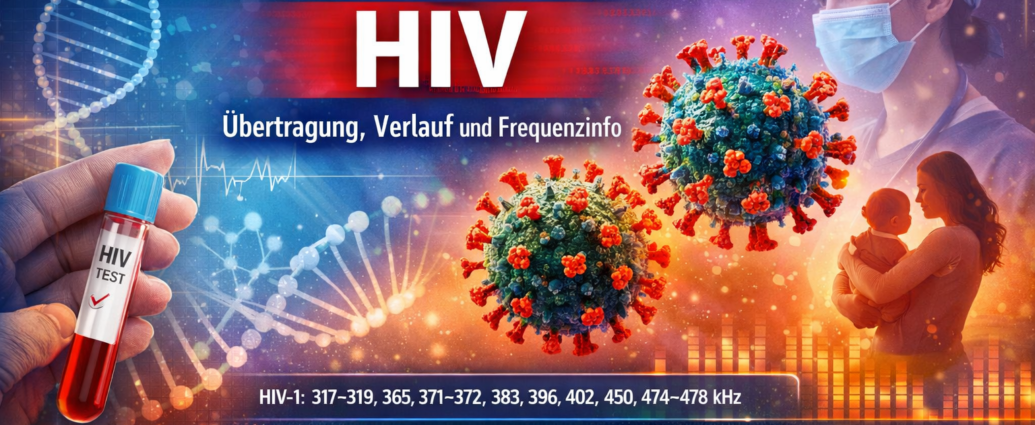
Transmission, progression and complementary observation
The human immunodeficiency virus is one of the most medically significant Retroviruses, because it can gradually impair the immune system. The literature describes that HIV primarily attacks lymphocytes, which can lead to acquired immunodeficiency. In advanced stages, this can lead to serious secondary diseases, opportunistic infections and certain tumor diseases. It is precisely this close connection between Virus and the immune system makes HIV a central topic in modern medicine.
What is HIV?
HIV is a retrovirus that has lost its genetic Information as RNA. After entering a host cell, this RNA is transcribed into DNA using reverse transcriptase. This viral DNA can then be integrated into the genetic material of the host cell. It is precisely this mechanism that explains why HIV not only causes a short-term infection, but can persist in the organism in the long term.
In the literature, HIV is described as a virus that primarily infects cells of the immune system. CD4-positive T lymphocytes are particularly affected, as are macrophages and microglial cells. HIV therefore affects not only the defense against infections, but also central control functions of the immune response.
How is HIV transmitted?
Transmission occurs primarily through sexual contact when infectious body fluids come into contact with genital, oral or rectal mucous membranes. In addition, transmission can occur via contaminated blood, for example through blood transfusions or shared contaminated needles. Transmission from mother to child is also possible, both during pregnancy and during birth and breastfeeding.
These transmission routes in particular make it clear that HIV is not spread through everyday contact, but is linked to clearly defined biological exposures. Conventional medical prevention is therefore particularly focused on education, protective measures and safe medical standards.
HIV-1 and HIV-2
In the literature, HIV-1 and HIV-2 are described as the two main known human types. HIV-1 is the most widespread worldwide. Within HIV-1, a distinction is made between various groups and subtypes that occur in different regions. The M, N and O groups are mentioned particularly frequently, with the M group being the most important.
HIV-2 has only a partial genetic match with HIV-1 and is more similar to simian immunodeficiency viruses in certain areas. In the literature, HIV-2 is described as less transmissible and is primarily associated with West Africa. This distinction is medically significant because it shows that HIV is not just a single pathogen, but comprises different types with their own epidemiological and biological characteristics.
How HIV affects the body
In order to establish an infection, HIV penetrates certain immune cells. The virus first binds to CD4 receptors on the cell surface. Helper T lymphocytes, which are crucial for the activation and coordination of other immune cells, are particularly affected. These include B lymphocytes, which produce antibodies, and CD8-positive cytotoxic T cells, which fight infected cells.
When HIV infects these immune cells, a process begins that can weaken the body's defenses in the long term. The infected cell produces new virus particles, which in turn infect other cells. This results in a chronic process that deeply affects the structure of the immune defense.
Acute HIV infection
The literature describes that an acute HIV infection can often develop in the first few weeks after infection. This phase often shows a flu-like or mononucleosis-like picture. Typical symptoms include fever, swelling of the lymph nodes, pharyngitis, skin rash, muscle pain, a general feeling of illness, headaches, nausea, weight loss and changes to the mucous membranes in the mouth and oesophagus.
Not all infected people show these symptoms in the same way. Some experience many symptoms, others only a few or none at all. Nevertheless, this early phase is biologically significant because it is associated with strong viremia and an intensive reaction of the immune system.
Seroconversion and first immune response
During the acute phase, the body reacts by activating CD8-positive T cells, which attack HIV-infected cells. In addition, antibody formation begins, which is known as seroconversion. A good CD8 response is associated in the literature with slower progression and a better prognosis. Nevertheless, the virus cannot be completely eliminated.
This initial immune response in particular shows that the organism attempts to control the infection at an early stage. At the same time, the literature makes it clear that HIV can remain in the body and continue to establish itself despite this reaction.
Clinical latency and chronic course
After the acute phase, the number of virus particles in the blood often decreases and the infection enters a stage of clinical latency. This phase can last for very different lengths of time, from a few weeks to many years. During this time, the virus remains active in lymphatic organs. There, large amounts of virus can accumulate in certain cellular networks.
Even in this phase, those affected remain infectious. At the same time, the damage to the immune system continues to progress in the background. It is precisely this often silent, chronic dynamic that makes HIV so important in terms of conventional medicine.
When the immune system is weakened
With the progressive decrease in CD4 T cells, the body's ability to effectively recognize and control new pathogens decreases. When the number of these cells falls below a critical level, cell-mediated immunity is increasingly lost. In this situation, opportunistic infections and certain tumor diseases occur more frequently.
It is precisely this transition that marks the point at which a chronic viral infection becomes a profound immunodeficiency with systemic consequences. From a conventional medical perspective, this is the decisive turning point in the course of the disease.
AIDS and opportunistic infections
The advanced immunodeficiency that enables rare serious infections and the growth of certain tumors is known as AIDS. Severe yeast infections in the mouth, esophagus and genital area are described in the literature. Recurrent pneumonia caused by Pneumocystis, chronic Toxoplasma and Mycoplasma infections, diarrheal diseases caused by Cryptosporidium and infections caused by cytomegalovirus, Epstein-Barr virus and herpes simplex viruses are also typical.
Certain tumor diseases such as Kaposi's sarcoma are also associated with the breakdown of immune surveillance. These opportunistic diseases show that AIDS is no longer solely about the virus itself, but about the profound weakening of the body's entire immune system.
Diagnosis and conventional medical treatment
The literature mentions HIV tests such as ELISA, immunofluorescence, Western blot and PCR as important diagnostic procedures. These methods are used to detect the infection and classify the course of the disease more precisely. Conventional medical diagnostics are therefore of central importance because HIV cannot be reliably identified on the basis of symptoms alone.
In terms of treatment, it is described that antiretroviral drugs can slow down the disease process. The focus is therefore on long-term control of viral replication and stabilization of the immune system. Symptoms and accompanying illnesses are also treated. This structured medical approach is particularly important for the prognosis.
Holistic view of the organism
From a holistic perspective, HIV shows particularly clearly how closely the immune system, neurological stability, metabolism, regenerative capacity and general well-being are linked. A chronic viral load with progressive impairment of the immune system affects not only individual laboratory values, but the entire systemic stability of the organism.
This is precisely why a complementary approach focuses not only on the pathogen, but also on resilience, regenerative capacity, internal regulation and the individual response. This provides a more comprehensive understanding of how profoundly chronic viral processes can influence the biological balance.
Complementary perspective on frequency therapy and frequencies
Around the Frequency therapy is often associated with terms such as oscillation, Resonance and regulation. In a complementary understanding, the aim is to consider biological stress not only in terms of substances, but also functionally and systemically. The focus is not on the idea of direct virus elimination, but on an expanded view of the reaction situation, regulatory capacity and stress processing.
Particularly in the case of chronic and complex illnesses, such models attempt to consider not only the diagnosis but also the entire system of the organism. In this context, frequency therapy and frequencies are seen as part of a complementary approach.
Frequency info
The following frequency ranges are mentioned in the literature for HIV viruses:
The frequency range of HIV-1 is: 317-319, 365, 371-372, 383, 396, 402, 450, 474-478 kHz
The frequency range of HIV-2 is: 318, 365, 372, 383, 396, 402, 426-430, 450, 508-516 kHz
The frequency range of HIV-3 and HIV-4 is: 349, 365, 424, 460, 544-556, 569 kHz
The literature also describes that the normal pathological resonance range of primitive retroviruses and further information on retroviruses are considered in a broader context. In addition, it is pointed out that the retrovirus constructed by human DNA can have a higher resonance range.
The following area is mentioned:
365-368, 383-384, 389-390, 393, 396 kHz
In the complementary context of frequency therapy and frequencies, these frequency data are understood as supplementary literature references. Within complementary approaches, they are not isolated, but are placed in a larger context of resonance, system dynamics and individual reactions.
Conclusion
HIV is a human lentivirus with a profound impact on the immune system. The infection often begins with an acute phase, can then be clinically relatively silent for a long time and, as it progresses, can lead to severe immunodeficiency with opportunistic infections and tumor diseases. Conventional medical classification is therefore clearly in the foreground because it describes the transmission routes, virus mechanism, course, diagnosis and treatment in a structured manner.
In the complementary environment, the view of frequency therapy and frequencies can also be understood as a thematic extension. The frequency ranges mentioned in the literature are referred to as Frequency info into a larger context.

Comments are closed, but trackbacks and pingbacks are open.