





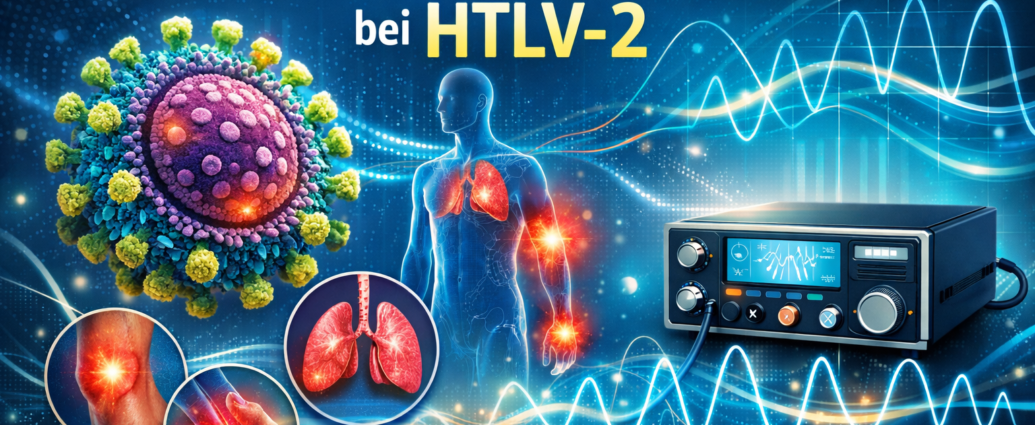
Basics, progression and frequency information
HTLV-2, the human T-cell lymphotropic virus type 2, belongs to the group of Retroviruses and shows a close genetic relationship to HTLV-1 on. The literature describes a pronounced homology of the nucleic acids, but HTLV-2 must still be distinguished from HTLV-1 as an independent virus type. It is precisely this proximity, combined with a clear distinction, that makes HTLV-2 of particular medical interest.
What is HTLV-2?
HTLV-2 is a lymphotropic retrovirus that can transform normal T lymphocytes. The literature also describes that the virus can replicate in both T-cell and B-cell lines. HTLV-2 thus affects central areas of the immune system and is functionally linked to regulatory and inflammatory processes in the body.
Precisely because HTLV-2 has a similar biological structure to HTLV-1, it was suspected early on that this type of virus could also be associated with more severe human diseases. However, conventional medical analysis shows that HTLV-2 must be classified differently in several respects.
Differentiation from HTLV-1
The literature emphasizes that HTLV-2 should not be equated with HTLV-1 despite their close genetic relationship. While HTLV-1 is described as a true human leukemia virus, no confirmed causative role in human lymphoproliferative diseases has been established for HTLV-2.
This distinction is medically important. It shows that genetic similarity does not automatically mean the same clinical significance. HTLV-2 must therefore be understood as a separate virus type with its own biological and clinical profile.
First discovery and early classification
The literature describes that HTLV-2 was first isolated from a patient with hairy cell leukemia. Despite this early connection, no clearly assignable specific pathology was attributed to the virus. This means that although the first isolation generated medical attention, it did not automatically lead to a clearly proven clinical picture.
This early observation in particular explains why HTLV-2 was discussed for a long time, especially in connection with possible lymphoproliferative diseases. However, conventional medical assessment remained cautious because a clear causal relationship could not be established.
HTLV-2 and lymphoproliferative diseases
In contrast to HTLV-1, HTLV-2 is not attributed a proven causative role in human lymphoproliferative diseases according to the literature. Nevertheless, its discovery as a lymphotropic virus has led to discussion of a connection with various forms of leukemia. This discussion is primarily based on the biological property of the virus to influence cells of the lymphatic system.
It is precisely here that the differentiated view of conventional medicine becomes apparent: There is biological plausibility and clinical associations, but no clearly confirmed causal role to the extent described for HTLV-1. This caution is important for classification.
Growing number of possible associations
The literature describes that the list of diseases associated with HTLV-2 has grown over time. This does not automatically mean that there is definitive causal evidence for every link mentioned, but it does mean that various clinical correlations have been observed. HTLV-2 therefore remains a virus with an open and still interesting clinical significance.
This development in particular shows that HTLV-2 is not regarded as irrelevant. Even if there is no clearly defined lead disease structure as with HTLV-1, the observation of possible correlations remains relevant.
HTLV-2 and the immune system
The literature describes that HTLV-2 does not cause a clear state of pronounced immunodeficiency. This distinguishes the virus from other infections that are characterized by a clear immune compromise. Instead, it is discussed that HTLV-2 could rather promote an intensified inflammatory reaction.
This consideration is particularly interesting from a conventional medical perspective. This is because it suggests that the virus does not primarily act by lowering the immune system, but rather by dysregulating inflammatory processes. This also shifts the consideration of possible disease consequences.
Inflammation and possible autoimmune processes
The literature speculates that HTLV-2 could promote autoimmune-like problems through an increased inflammatory response. This line of thought is also intended to explain possible links with pulmonary inflammation, arthritis, asthma and dermatitis. The virus is thus described more as an influencing factor on inflammatory regulation than as a classic trigger of a clearly defined individual disease.
It is precisely this possible link to inflammation and autoimmunity that makes HTLV-2 clinically relevant. Even without a clear oncological main role, a virus can be medically significant if it has a lasting effect on regulatory processes of the immune system.
Possible connections to the lungs, joints and skin
The literature mentions links between HTLV-2 and pulmonary inflammation, arthritis, asthma and dermatitis. These observations indicate that the virus is associated with inflammatory patterns in various organ systems. It is particularly striking that the respiratory tract as well as the musculoskeletal system and skin are mentioned.
This range supports the idea that HTLV-2 acts on the organism via regulatory and immunological patterns rather than via a single clearly defined clinical picture. Nevertheless, the conventional medical view remains cautious and differentiated.
Why HTLV-2 remains medically important
Even if HTLV-2 is not as clearly defined as HTLV-1, it remains medically relevant. The reasons lie in its lymphotropy, its chronic nature, its possible effect on inflammatory processes and the growing observations on clinical associations. Thus, HTLV-2 is a virus that must be considered primarily in the context of long-term immunological and inflammatory dynamics.
Especially with Viruses with a chronic course and unclear but growing clinical relevance, conventional medical attention is particularly important. The challenge here lies not only in detecting the virus, but also in classifying its biological significance.
Holistic view of the organism
From a holistic perspective, HTLV-2 shows particularly clearly how chronic viral processes can affect the organism not only directly, but also via regulatory and inflammatory patterns. When a virus affects immune cells and possibly intensifies inflammatory reactions, it is not just a question of isolated pathogen detection, but of system stability, resilience and internal regulation.
For this very reason, a complementary approach focuses not only on molecular differences to HTLV-1 or possible clinical associations, but also on the body's regenerative capacity, vegetative stability and individual response. This provides a more comprehensive picture of the biological significance of chronic viral exposure.
Complementary perspective on frequency therapy
Around the Frequency therapy is often associated with terms such as oscillation, Resonance and regulation. In a complementary understanding, the aim is to look at biological stress not only in terms of substances, but also functionally and systemically. The focus is not on the isolated number, but on the question of how the organism as a whole reacts to chronic stimuli and inflammatory patterns.
Particularly in the case of viruses with a possible connection to regulatory and inflammatory processes, such models attempt to consider not only the diagnosis but also the entire reaction pattern of the system. In this context, frequency therapy and frequencies are seen as complementary literature references within a larger understanding of resonance and system dynamics.
Frequency info
The following frequency ranges are mentioned in the literature for HTLV-2:
314, 320-324, 370-376, 493-501 kHz
In the complementary context of frequency therapy and frequencies, these frequency data are understood as supplementary literature references. Within complementary approaches, they are placed in a larger context of resonance, system dynamics and individual reactions.
Conclusion
HTLV-2 is a lymphotropic retrovirus with a close genetic relationship to HTLV-1, but with a significantly different classification in conventional medicine. A definite causal role in human lymphoproliferative diseases has not yet been confirmed, but the virus is associated with a growing number of inflammatory and immunological conditions. The conventional medical view is therefore in the foreground because it describes the differences to HTLV-1, the biological characteristics and the possible associations in a differentiated manner.
In the complementary environment, the view of frequency therapy and frequencies can also be understood as a thematic extension. The frequency ranges mentioned in the literature are referred to as Frequency info into a larger context.

Comments are closed, but trackbacks and pingbacks are open.