





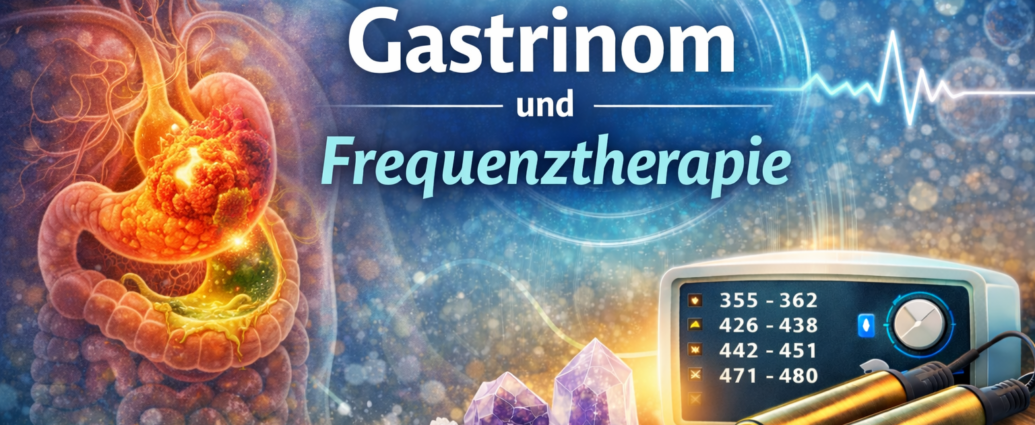
Conventional medical aspects of gastrinoma, typical symptoms and complementary frequency information
A gastrinoma is a hormone-active Tumor, which can occur primarily in the area of the pancreas or in its immediate vicinity. It is characterized by the increased production of the hormone gastrin. This hormone stimulates the stomach to produce more gastric acid and digestive enzymes. This is precisely where the main problem lies: excessive acid production can lead to severe ulcers in the upper digestive tract and put a lot of strain on the entire gastrointestinal tract.
In conventional medicine, gastrinoma is closely associated with Zollinger-Ellison syndrome. This syndrome describes a clinical situation in which a massive overproduction of gastric acid is triggered by a neuroendocrine tumor. This often results in severe, recurring ulcers, considerable irritation of the mucous membranes and persistent diarrhea. The clinical picture is often very stressful for those affected because symptoms can be felt not only locally in the stomach, but throughout the entire digestive system.
Gastrinoma and frequency therapy from a conventional medical perspective
The gastrinoma is a neuroendocrine tumor, which releases excessive amounts of gastrin. Under normal conditions, gastrin is an important hormone for regulating stomach function. However, if it is produced continuously and uncontrollably, the balance in the digestive system becomes unbalanced. The excessive acid production attacks the mucous membranes and can lead to deep ulcers.
It is particularly relevant that gastrinomas can occur both sporadically and in families. In familial cases, there is often a connection with multiple endocrine neoplasia type 1, which is a hereditary constellation in which several hormone-active organs can be affected. The literature also describes genetic factors as playing an important role in its development.
Gastrinoma and frequency therapy in Zollinger-Ellison syndrome
Zollinger-Ellison syndrome is the best-known clinical picture associated with gastrinoma. It is caused by massive hypersecretion of gastric acid, which is triggered by increased gastrin production. The stomach wall and often the duodenum are exposed to this over a long period of time. As a result, difficult-to-heal and recurring ulcers can develop.
It is typical that many patients have not just one, but several tumor foci. These are often located in or near the pancreas. As the tumours can be small and sometimes occur in groups, it is not always easy to locate them precisely. This is what makes diagnosis so challenging.
Gastrinoma and frequency therapy: typical symptoms
The symptoms of gastrinoma range from mild to severe. The decisive factor is the high acid load on the digestive system.
Abdominal pain with gastrinoma and frequency therapy
Many sufferers experience persistent or recurring pain in the upper abdomen. This pain can be burning, pressing or stabbing. It is often exacerbated in connection with the overproduction of stomach acid.
Diarrhea with gastrinoma and frequency therapy
Diarrhea is one of the classic complaints. One of the reasons for this is that excessive acid production affects normal digestion and bowel function. In some patients, it is even more prominent than stomach pain.
Ulcers and mucosal irritation with gastrinoma and frequency therapy
Ulcers in the stomach and duodenum are a central problem. These can be persistent and recur. Mucosal irritation and inflammatory changes are also common.
Complications with gastrinoma and frequency therapy
In severe cases, bleeding, perforations or constrictions in the intestinal area can occur. Such complications are considered serious and can be life-threatening. Timely diagnosis is therefore of great importance.
Gastrinoma and frequency therapy: development and background
In the literature, gastrinoma is described as a tumor with hormonal and genetic components. The familial form in particular shows a link to complex endocrine connections. In addition, the literature discusses combined stress factors that may be associated with the development of the tumor.
From a conventional medical point of view, however, the fact that the gastrinoma can trigger considerable functional consequences due to its hormonal activity remains decisive. It is therefore not only the tumor itself that is relevant, but above all its effect on the regulation of gastric acid.
Gastrinoma and frequency therapy: Diagnostics
The diagnosis of gastrinoma requires careful clarification, as the tumors are often small and can occur multiple times. Therefore, in conventional medicine Practice various imaging procedures are used.
Computed tomography for gastrinoma and frequency therapy
The Computer tomography helps to visualize possible tumor foci in the area of the pancreas and adjacent structures.
Ultrasound for gastrinoma and frequency therapy
Ultrasound can provide initial indications, especially in the abdominal cavity. Depending on the location of the tumor, however, the findings are not always clear.
Magnetic resonance imaging for gastrinoma and frequency therapy
The Magnetic resonance imaging is used to visualize suspicious areas in more detail and to better assess their extent.
Arteriography and other imaging for gastrinoma and frequency therapy
In more complicated cases, additional procedures are used. Special imaging methods can also be helpful when looking for small tumor foci.
Gastrinoma and frequency therapy: treatment options
Conventional medical treatment depends on the location, number and size of the tumors as well as the severity of the symptoms. It is particularly important to assess the malignant potential. The literature describes that tumors larger than two centimeters should be given special attention and generally removed.
Surgery for gastrinoma and frequency therapy
Surgical treatment plays a central role if removal is possible. The aim is to reduce or completely eliminate the hormone-active tumor mass.
Total removal of the stomach for gastrinoma and frequency therapy
In the literature, complete removal of the stomach is described as a therapeutic option, particularly in severe cases with pronounced acidity problems.
Accompanying therapies for gastrinoma and frequency therapy
Other forms of oncological treatment are also described, although their effect on the tumor may be limited according to the literature. The focus is therefore often on controlling functional stress and symptoms.
A holistic view of gastrinoma and frequency therapy
Particularly in the case of a hormone-active tumor such as gastrinoma, it makes sense to consider the organism not just locally, but as a functional overall system. The stomach, pancreas, intestines, mucous membranes, autonomic regulation and general metabolism are closely connected. If too much acid is permanently produced in one area, this has an impact on many other levels.
This is where the complementary view of the Frequency therapy on. The focus is on the question of how the organism can be supported in its ability to regulate itself. Not only the stomach or the tumor area are considered in isolation, but also the digestive function, the mucosal load, the general energetic situation and the vegetative nervous system.
Gastrinoma and frequency therapy in a complementary context
In frequency therapy, the frequency ranges mentioned in the literature are used in a complementary way. This means that they are placed in a complementary context and are applied within a holistic concept. Particularly in the case of complex stress situations, the complementary perspective often considers not just a single structure, but the entire regulatory process of the body.
In the case of gastrinoma, from a complementary perspective, this can include support for the gastric environment, digestive regulation, mucosal balance and general energetic stability. Vegetative stress caused by pain, diarrhea or chronic irritation can also be included in the overall picture.
Gastrinoma and frequency therapy for digestive stress
Gastrinoma not only affects the stomach, but the entire digestive system. Permanent acid overproduction can significantly disrupt mucosal regulation. Complementary attention is therefore often also paid to the following areas:
Mucosal balance for gastrinoma and frequency therapy
The stomach and intestinal mucous membranes are subject to persistent irritation. Complementary support therefore often focuses on the functional stabilization of this sensitive area.
Vegetative regulation in gastrinoma and frequency therapy
Chronic pain, diarrhea and digestive disorders often also affect the autonomic nervous system. The complementary approach therefore often includes nervous regulation.
Overall energetic condition with gastrinoma and frequency therapy
Long-lasting complaints can reduce general resilience. Frequency therapy therefore often also takes into account the overall energy situation of the organism.
Frequency info
According to the literature, the following resonance areas are mentioned particularly frequently in gastrinoma:
355-362 kHz
426-438 kHz
442-451 kHz
471-480 kHz
These frequency ranges are classified in a complementary manner and placed in a holistic context within frequency therapy. In practical application, they are not considered in isolation, but are used together with the individual regulatory situation, the digestive stress, the mucous membrane situation and the general energetic state of the organism.
Conclusion: Gastrinoma and frequency therapy in the overall picture
Gastrinoma is a hormone-active tumor with a significant effect on gastric acid production and therefore on the entire upper digestive tract. In conventional medicine, the focus is on the connection with Zollinger-Ellison syndrome, diagnosis using imaging procedures and surgical treatment. Recurrent ulcers, abdominal pain, diarrhea and possible complications make it clear how stressful this clinical picture can be.
Frequency therapy can be seen as a complementary approach to support the organism holistically. The frequency ranges described in the literature are described as Frequency info and integrated into an overarching concept of regulatory support.


Comments are closed, but trackbacks and pingbacks are open.