



Table of contents
- How Information Medicine Benefits Naturopaths in Their Daily Practice
- The Four Pillars of Information Medicine: Diagnostics, Therapy, Regulation, Prevention
- Legal Framework for Frequency Therapy in Your Own Practice
- Radionics in Naturopathic Practice: An Overview of Methods and Testing Procedures
- Making a Wise Investment in Frequency Therapy for Therapists: Time, Costs, and Benefits
- Implementation Roadmap: Six Steps to Establishing a Practice in Health Informatics
- Evidence-Based Classification: What Is Established and What Is Not
- Common Mistakes When Getting Started and How to Avoid Them
- Frequently asked questions
Last updated: September 8, 2026
Information medicine For naturopaths, it is more than just a new therapeutic method: it is a structured approach that integrates diagnosis, therapy, and prevention through subtle and energetic information. This guide by Herbert Eder, who has been since 1994 Frequency therapy and medical informatics, it outlines a responsible path from the fundamentals through the legal framework to concrete implementation. (Source: Act on the Professional Practice of Medicine Without a Medical License (Alternative Medicine Practitioners Act—HeilprG))
Learning information medicine for naturopaths in their day-to-day practice means, first and foremost, developing a new understanding of diagnostics: The body possesses energetic regulatory mechanisms that can be specifically targeted.
How Information Medicine Benefits Naturopaths in Their Daily Practice
Its greatest benefit lies in complementing traditional naturopathic methods. It enables a holistic approach to treatment that goes beyond merely treating symptoms and activates the patient's self-healing powers.
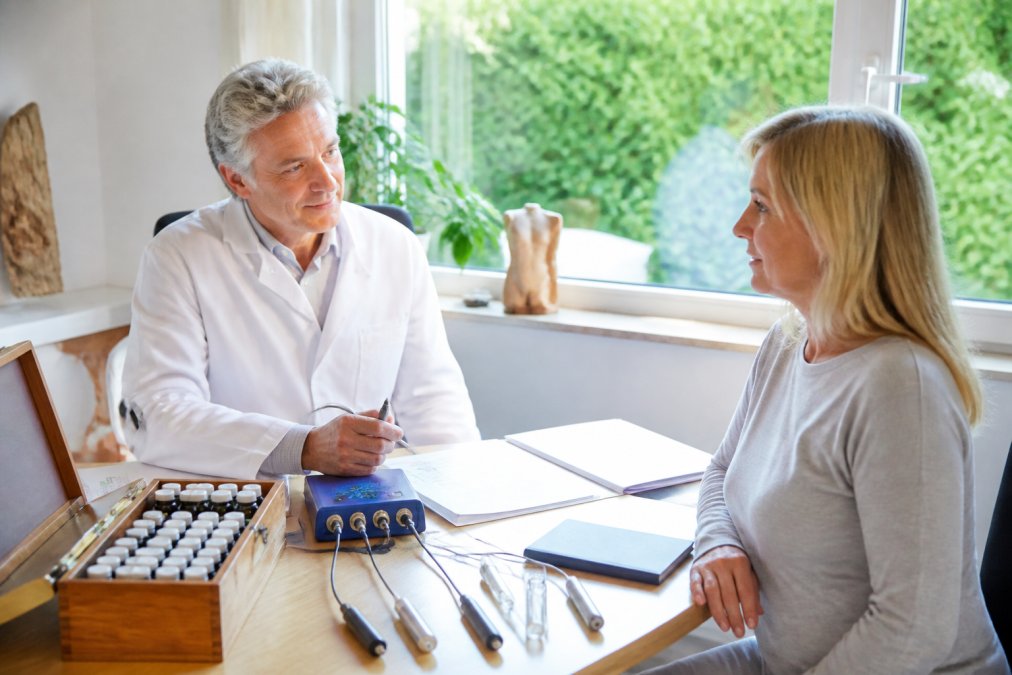
In daily Practice Expand your range of services to include energy-based testing methods that can be seamlessly integrated into the medical history. Your practice’s efficiency will increase when you use these methods specifically for chronic conditions, sleep disorders, or states of exhaustion.
Informational medicine is not a substitute for traditional naturopathy, but rather an extension of it. You gain an additional diagnostic and therapeutic tool that effectively complements your existing treatment approaches.
The Four Pillars of Information Medicine: Diagnostics, Therapy, Regulation, Prevention
A structured understanding of information medicine for alternative practitioners rests on four pillars: Diagnostics (energetic testing methods for identifying blockages), therapy (targeted frequencies to stimulate regulatory processes), regulation (reactivation of the body’s self-healing powers), and prevention (early detection of future disorders).
In practice, these pillars merge into a continuous process: They begin with a comprehensive assessment, use it to develop individualized treatment plans, and regularly monitor the course of treatment. This approach distinguishes reputable evidence-based medicine from purely esoteric practices.
Legal Framework for Frequency Therapy in Your Own Practice
The legal basis is clearly defined. The Alternative Medicine Practitioners Act provides the framework for your professional practice, and the treatment you provide falls within the scope of permitted naturopathic procedures. It is essential that you have the required license.
German Act on Alternative Practitioners and Implementing Regulation regulates the practice of the profession, and the documentation requirements naturally apply to telemedicine treatments as well. Providing patients with thorough information is not only a legal requirement but also strengthens the relationship of trust. Please note that billing is based on the fee schedule for alternative practitioners, and you should itemize your services transparently.
Avoid making absolute promises of effectiveness when communicating with patients. Informational medicine focuses on promoting regulation, not on guaranteed cures. An honest assessment protects you legally and strengthens your credibility.
Radionics in Naturopathic Practice: An Overview of Methods and Testing Procedures
Radionics is a key tool in information medicine. Its methods range from the analysis of energy fields to testing procedures for determining individual frequency patterns, and the transmission of therapeutic information. In practice, practitioners often work with devices that combine diagnostic and therapeutic functions.
Testing methods vary in complexity: Simple muscle tests or pendulum methods are suitable for beginners, while computer-assisted systems allow for a more detailed analysis. The quality of the results depends less on the device than on the user’s experience—therefore, structured training is essential.
Making a Wise Investment in Frequency Therapy for Therapists: Time, Costs, and Benefits
For therapists, the decision to use frequency therapy is also an investment decision. The time required for training should not be underestimated: In addition to the theoretical foundation, you’ll need practice sessions to learn how to operate the devices safely. Costs vary widely, which is why it makes sense to conduct a thorough comparison before making a purchase.
An overview of complementary therapies in naturopathy shows that the demand for complementary forms of treatment is steadily growing. The benefits become apparent over the long term: through expanded treatment options, higher patient satisfaction, and stronger patient loyalty. The investment will pay for itself if you use these methods regularly and integrate them into your practice model.
The key factor that hardly any course website explains: billing
Most continuing education programs conclude with the issuance of a certificate. What matters next is: How do I bill for these services correctly?
As a naturopath, you do not bill according to the GOÄ (Schedule of Fees for Physicians), but rather according to the GebüH (Schedule of Fees for Naturopaths). The two differ fundamentally in their structure and terminology. While the GOÄ uses codes with fixed euro amounts that are scaled by a factor of 2.3, the GebüH is structured differently: It also uses codes, but the valuation is often more open to interpretation and negotiable.
A common mistake is using GOÄ codes in GebüH billing. This is not permitted under the rules and can lead to problems during an audit by the Association of Alternative Practitioners or in court. Instead, determine which GebüH codes most accurately describe your service.
Specific Billing Practices for Health Information Services
The GebüH does not have a separate code for „information medicine“ or „frequency therapy.“ Common practices in clinical settings include:
- Diagnostic Procedures: For energy-based testing methods such as bioresonance analysis or radionic testing, GebüH No. 17 („Examination of the patient, including functional and stress tests“) is frequently cited. This item is intentionally broad in scope and covers additional diagnostic procedures involving medical devices.
- Therapeutic Applications: Frequency therapy or information transmission itself can often be classified under GebüH No. 38 („Other Methods of Physical Therapy“) or GebüH No. 45 („Treatment with Electrical Energy“). No. 45 is particularly relevant here, as many information medicine devices operate using electromagnetic frequencies.
- Consulting and Documentation Services: The time required to provide a detailed explanation of the procedures and to document the course of therapy is not directly covered by a GebüH code. Many practices address this by using GebüH code 30 („Detailed Consultation“) or by factoring this time into the overall treatment fee.
The Rate of Increase as a Negotiation Tool
Unlike the GOÄ, the GebüH does not impose a fixed requirement to use a specific multiplier. The GebüH allows for a range of up to 2.5 times the base rate, with the 1.0-times rate serving as the base calculation. Many alternative practitioners apply a rate of 1.8 to 2.0 times the base rate for information-based medical services to account for the greater use of equipment and the time required.
The key point is: The surcharge must be justifiable. A brief note in the patient’s medical record explaining why you’re applying the higher rate (e.g., „increased equipment costs, detailed documentation, extended treatment time“) will protect you in the event of a dispute. This transparency also serves as a mark of quality for your patients.
Two billing options: privately and through supplemental insurance
Most patients have private health insurance or supplemental insurance that covers naturopathic treatments. Private health insurance companies (PKV) reimburse services based on the GOÄ, not the GebüH. This means that they bill the patient according to the GebüH, but the patient submits the invoice to their private health insurer, which then determines whether the service can be assigned to a corresponding GOÄ code.
It has proven effective to include a corresponding GOÄ code on the invoice in addition to the GebüH code, if one exists—for example, GebüH code 45 in conjunction with GOÄ code 530 („Electrotherapy“). This facilitates reimbursement and reduces the number of follow-up inquiries. A general reference without specific codes often leads to denials.
A Look at the Actual Cost Situation
A common misconception is that the purchase of equipment is the largest cost item. The ongoing costs for maintenance, calibration, and training often exceed the initial investment. The costs for equipment and training vary widely.
The key cost factor, however, is time: Training typically takes 3 to 6 months, with several hours of practice each week. This time cannot be billed directly, but it pays off in the long run through higher-quality treatment.
Keep a simple billing log for your first 20 telemedicine treatments. Note which GebüH code you applied, what surcharge rate you used, and whether the invoice was disputed by the patient or the insurance company. After these 20 cases, you’ll quickly see which billing items are working well and where you need to make adjustments.
::: (Source: Administrative Regulation on the Interpretation of the Alternative Medicine Practitioners Act)
| Investment Area | Typical effort | Practical Benefits |
|---|---|---|
| Theoretical Training | 1,500–4,000 euros, ranging from weeks to months | Solid Foundational Knowledge |
| Equipment Procurement | 3,000–15,000 euros, one-time payment | Advanced Diagnostics |
| On-the-Job Training | 3–6 months, ongoing exercise | Safe application |
| Professional Development | 500–1,500 euros per year | Current State of Knowledge |
The combination of accurate GebüH billing, transparent documentation, and an appropriate markup rate also makes information medicine economically viable.
Implementation Roadmap: Six Steps to Establishing a Practice in Health Informatics
Integration works best when done step by step. These six steps have proven effective:
- Laying the Groundwork: Complete a structured training program that combines theory and practice.
- Select a device: Choose technology that fits your practice model.
- Launch the first applications: Start by testing the procedures on selected patients.
- Documenting treatment procedures: Systematically document diagnostic findings and the course of treatment.
- Adapting Communication with Patients: Explain the procedures clearly and honestly.
- Continue professional development on an ongoing basis: Expand your knowledge through seminars and specialized articles.
This roadmap will help you avoid common beginner mistakes and integrate evidence-based medicine into your practice as a naturopath in a structured way. The effort is worth it because you’ll develop a clear plan rather than trying out individual methods haphazardly.
Evidence-Based Classification: What Is Established and What Is Not
An honest assessment requires a nuanced view. Basic research on electromagnetic fields and their effects on biological systems is well-established, and certain applications of frequency therapy are increasingly being studied scientifically. Information from the Federal Institute for Drugs and Medical Devices provides guidance on regulated areas.
It is established that the body reacts to electromagnetic stimuli, and that certain frequencies can influence physiological processes. What is not established is the specific effectiveness of individual frequency patterns for certain diseases. Reputable providers such as Herbert Eder We therefore place great importance on responsible classification—this approach distinguishes well-founded medical information from marketing that makes curative claims.
Why This Classification Is Essential for Survival in Everyday Practice
However, for you as a naturopath, the ability to argue based on evidence is not merely an academic nicety, but a practical tool in three situations:
- During a consultation with a patient: More and more patients are coming to the office having already researched information online—often with unrealistic expectations, and sometimes with blanket skepticism. Those who can confidently address both of these attitudes will gain trust. Those who merely repeat marketing claims will lose credibility.
- In dialogue with conventional medical practitioners: Collaborating with referring physicians becomes much easier when you can explain precisely what you do and what you don’t do. A statement like, „I work with low-frequency electromagnetic pulses in the range of 0.5 to 30 Hz, which, according to current research, have been shown to influence cell membrane potentials,“ opens doors. „I harmonize the vibrational levels“ closes them.
- In the documentation: The requirement for thorough documentation under the Alternative Medicine Practitioners Act also includes providing a rationale for your choice of therapy. A factual, scientifically grounded rationale offers you far better protection in the event of a liability claim than esoteric language.
What the research actually shows: Three established mechanisms
Informational medicine brings together methods that have been studied to varying degrees of scientific rigor. Three mechanisms are well established in basic research:
1. Cellular communication via electromagnetic fields: Every cell communicates via electrical signals. The cell membrane has a resting potential of about -70 mV, which is caused by Ion channels is regulated. External electromagnetic fields can influence these ion channels—an effect that forms the basis of established electrotherapy. Information medicine utilizes this effect at lower frequencies and intensities.
2. Piezoelectric effects in connective tissue: Bone and connective tissue exhibit piezoelectric properties: mechanical stress generates an electrical voltage, and vice versa. This finding from the 1950s (Fukada & Yasuda, 1957) explains why electrical stimulation has been shown to promote bone healing.
3. Signal transduction via frequency patterns: Recent research is investigating whether frequency patterns can trigger specific cellular responses. Initial studies show frequency-dependent effects on calcium signaling pathways in cells—promising, but not yet sufficient to substantiate specific claims about the effects of frequency.
The Line Between What Is Verifiable and What Is Speculative
In information medicine, three levels are often conflated, but you should keep them separate:
- Documented: Electromagnetic fields affect biological systems. The basic research in this area is well established. Their clinical application in electrotherapy is widely recognized.
- Indexed: In initial studies, certain frequency patterns have shown promising effects on cell regulation and microcirculation. However, the evidence is limited and inconsistent.
- Speculative: The transfer of specific „information“ to the body via carrier substances or the treatment of „energetic blockages“ has so far defied scientific verification.
A responsible practice communicates these differences openly. That doesn’t mean you have to avoid speculative approaches—naturopathy has always benefited from phenomena that science was only later able to explain. But you should be aware of the level at which you’re operating.
A Pragmatic Approach to the Question of Evidence
In practice, the following strategy has proven effective for making productive use of the evidence question:
First: Use the patients' own language. Many patients use terms like „energy field“ or „vibration.“ Instead of correcting them, you translate these terms: „What you describe as an energy field, I refer to as the tissue’s ability to regulate itself electromagnetically. We know from research that cells communicate via electrical signals—and that’s exactly where my treatment comes in.“
Second: Manage expectations realistically. Frame treatment goals as goals for regulation, not as promises of a cure. Instead of saying, „This treatment will cure your migraines,“ it’s better to say: „We’ll monitor whether frequency therapy affects your autonomic regulation in a way that reduces the frequency of your migraine attacks. After three sessions, we’ll evaluate the effect.“
Third: Keep the documentation as a scientific record. Don't just write down what you did, but also what reaction you expected and what actually happened. Over time, this will build up a personalized record of your practice.
Avoid using phrases such as „cancer treatment“ or „therapy for tumor diseases“ in patient documentation and communication. Information-based medical procedures are not recognized as cancer therapies in Germany. Such phrasing may be considered a violation of the German Law on the Advertising of Medicinal Products and has already resulted in cease-and-desist letters and fines. Instead, use precise wording such as: „Complementary regulation during oncological treatment in consultation with the treating oncologist.“
Evidence-based classification is a strength of reputable medical information. Those who can substantiate what is substantiable and distinguish what remains speculative position themselves as competent points of contact—for patients as well as for conventional medicine. This intellectual integrity is also the most effective protection against legal pitfalls.
Common Mistakes When Getting Started and How to Avoid Them
The most common mistake when starting out is trying to take on too much by using too many methods at once. Many therapists begin by using several devices and techniques simultaneously, which leads to uncertainty and superficial application. A second mistake is neglecting documentation.
A third mistake concerns communication with patients: If you promise too much, you’ll quickly lose credibility. Information-based medicine for alternative practitioners is a tool, not a miracle cure. If you present it as a complementary approach and set realistic expectations, you’ll build trust over the long term.
During the first few months, focus on a procedure that you’ve truly mastered. Only once you’re consistently achieving reliable results with it should you expand your range of procedures. This cautious approach pays off in terms of treatment quality and patient satisfaction.
Learning information medicine for alternative practitioners in their day-to-day practice is a worthwhile investment that requires structure and a sense of responsibility. Since 1994, Herbert Eder has been offering precisely this combination of in-depth training, personalized practice support, and scientifically oriented articles. A precise understanding of the possibilities and limitations will help you apply these methods safely and effectively.
Frequently asked questions
What does information medicine entail in naturopathic practice?
Information medicine encompasses methods that utilize subtle signals, frequencies, or energy fields. These include Bioresonance, frequency therapy, and radionics. In practice, they are used for diagnosis, regulating the body’s self-healing abilities, and supporting individualized treatment plans. These techniques complement traditional naturopathic methods and can be integrated into holistic treatment plans. It is important to have thorough training in order to understand the limitations of these methods and to use them responsibly.
How can frequency therapy be integrated into everyday practice in a legally compliant manner?
The legal framework for frequency therapy is governed by the Alternative Medicine Practitioners Act and professional regulations. Alternative medicine practitioners may use frequency therapy as long as they act within the scope of their professional qualifications. Accurate documentation, providing patients with detailed information, and clearly distinguishing this practice from conventional medicine are mandatory. Billing must also be transparent. Before incorporating this therapy into their practice, practitioners are advised to complete continuing education that explicitly covers the legal fundamentals.
Making a Wise Investment in Frequency Therapy for Therapists: What Should You Look for?
Therapists who invest in frequency therapy should consider more than just the cost of the equipment. The quality of the training, personalized support, and the ability to apply the techniques to your daily practice are crucial. A good continuing education program covers diagnostics, treatment concepts, and emergency management. It should also demonstrate how the techniques can be integrated into existing workflows. Compare programs based on content, duration, and support before making a decision.
What are the requirements for the use of health informatics methods?
In Germany, information medicine practices are not uniformly regulated as complementary methods. As a rule, a license to practice as a non-medical practitioner or a medical license is required to apply these methods to patients. In addition, thorough training and ongoing continuing education are necessary. The diagnosis and treatment of diseases remain the exclusive domain of the medical professions. Practitioners must be aware of the limitations of these procedures and refer patients to specialized colleagues when necessary.
How does information medicine differ from other complementary medicine approaches?
Unlike methods that rely on substances or manual techniques, information medicine specifically utilizes vibrations and frequencies. It views the human being as an energetic system and seeks to support regulation and the body’s self-healing abilities. Diagnostic methods, such as energetic testing, complement the traditional medical history. It is not intended to compete with naturopathy, but rather to complement it, based on its own theoretical model.
What continuing education opportunities are available in the field of information medicine?
The offerings range from one-day courses and intensive courses to structured training programs leading to a certificate. A good learning program combines theoretical foundations—such as anatomy, physiology, and pathology—with practical exercises in diagnostics and therapeutic procedures. Look for providers that offer personalized practice support. This allows you to clarify any questions you may have directly and gain confidence in applying what you’ve learned in your own practice.
How long does it take for information medicine to pay off in everyday clinical practice?
The payback period depends on the practice’s patient volume, the investment costs, and billing practices. It is not possible to provide an accurate estimate without an individual calculation. Experience shows that new procedures can be established more quickly when they effectively complement existing treatment plans. Be sure to set aside time for training and patient communication. You should align the costs of training and equipment with your practice budget in advance.

Comments are closed, but trackbacks and pingbacks are open.