




Many people report profound experiences with Solfeggio frequencies. They talk about inner peace, better sleep, or emotional relief. At the same time, terms like EEG are cropping up more and more often, Brain waves and neuroscience in this context. That sounds exciting. But it also raises questions. How much of it is scientifically sound? And where do the misunderstandings begin?.
Especially for people with chronic illnesses, Autoimmune diseases For those who have endured a long period of suffering, this question is important. They aren’t looking for promises. They’re looking for guidance. Alternative practitioners and therapists, too, often find themselves torn between practical experience and scientific responsibility. That is exactly where this article comes in.
We take a look at what Solfeggio frequencies are. We clarify what EEG models can really measure. And we explain why musical frequencies and brain waves are two different levels. The goal is not an either/or. But rather a both-and with a clear view.
You will learn which brain waves are medically recognized. How rhythmic stimuli can affect the nervous system. And why many effects arise indirectly. About attention, emotion and meaning. Not about a single number like 528 hertz.
The article connects Practice and science. Without downplaying them. Without exaggerating them. And with respect for the experiences of many people. If you work with Solfeggio frequencies—or would like to—you’ll find an honest, well-founded assessment here. And concrete guidance on how to meaningfully integrate them into a holistic approach.
Solfeggio frequencies between tradition and modern application
Solfeggio frequencies are often described as an ancient series of sounds. Their roots are located in the sacred music of the Middle Ages, particularly in Gregorian chant. It is primarily the tone system itself that is historically proven, but not the attributions of effect that are popular today. Frequencies such as 396, 417, 528 or 639 Hertz were only explicitly named in the 20th century and linked to meanings such as „transformation“ or „DNA repair“.
In modern practice, Solfeggio frequencies are mostly used as music, tones or complex soundscapes. They run in the background of meditations, body therapies or relaxation exercises. Many people find these sounds structuring and soothing. Repetitive, harmonious sound patterns in particular can convey a sense of order and inner stability.
It is important to make a clear distinction here: Solfeggio frequencies are acoustic pitches in the audible range between around 20 and 20,000 Hertz. The EEG, on the other hand, measures electrical activity in the brain, typically between 1 and 40 Hertz. These are therefore two completely different physical phenomena.
This does not mean that solfeggio frequencies are ineffective. However, their effect does not unfold via a direct 1-to-1 resonance. It works indirectly via perception, rhythm, emotional evaluation and the autonomic nervous system.
In the practice of Herbert Eder it is precisely this differentiation that is emphasized. Frequencies are not considered in isolation, but always in interaction with individual biography, stress level and the regulatory capacity of the nervous system. You can also find further insights into this in Solfeggio frequencies studies: measurable biological changes.
What EEG models can actually measure
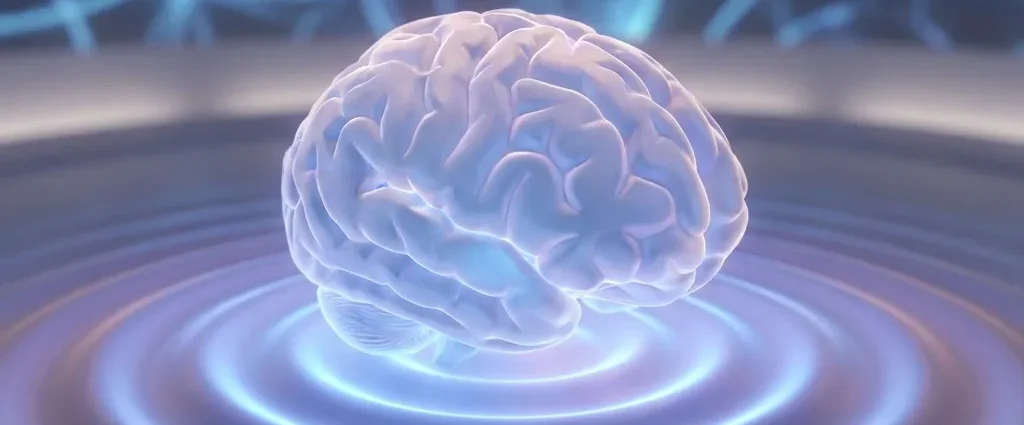
The electroencephalogram, or EEG for short, is an established procedure in medicine and research. It measures the summed electrical activity of large groups of neurons via electrodes on the surface of the head. This activity is not visible as individual thoughts or feelings, but as rhythmic patterns.
For better classification, these patterns are divided into frequency bands. Delta waves occur during deep sleep, theta waves during daydreams or deep relaxation. Alpha waves stand for relaxed alertness, beta waves for cognitive activity and gamma waves for highly integrated processing.
This classification is clinically recognized and is used in sleep medicine, epilepsy diagnostics, psychiatry and neurofeedback. It is important to note that the EEG does not measure content, music or pitch. It measures temporal patterns of neuronal activity.
Acoustic stimuli can influence these patterns. However, not through the pitch itself, but through rhythmic structure, volume, duration and the attention of the person listening.
This is exactly where many misunderstandings arise. When it is claimed that a specific Solfeggio frequency directly generates alpha or theta waves, different levels are being conflated. EEG models can demonstrate such a direct Resonance cannot be proven.
Brainwaves at a glance and their significance for practice
A clear overview of the recognized brain waves helps to make the differences tangible. This classification forms the basis of all serious work with EEG, neurofeedback and neuroscience-based therapy.
| Brainwave | Frequency range | Typical conditions |
|---|---|---|
| Delta | 1, 4 Hz | Deep sleep, regeneration |
| Theta | 4, 8 Hz | Meditation, creativity |
| Alpha | 8, 12 Hz | Relaxed alertness |
| Beta | 13, 30 Hz | Think, Focus |
| Gamma | >30 Hz | Integration, attention |
This overview is essential for therapists. It shows in which states self-regulation, learning and recovery are possible. When someone becomes more relaxed through music or sounds, an increase in alpha activity can often be observed. Not because of a certain Hertz number, but because stress is reduced.
In practice, this means that the aim is not to „create“ a specific brainwave, but to enable a state. Sounds are tools, not switches.
This perspective also relieves clients. They don't have to „do anything right“. Effect is created through relationship, safety and repeated experience, not through technical perfection or exact frequencies.
Binaural beats and entrainment as a bridge
One area in which EEG changes have been comparatively well studied is binaural beats. Two slightly different sounds are presented via headphones, one in each ear. The brain processes the difference as a rhythmic signal.
A classic example: the left ear hears 200 Hertz, the right 205 Hertz. Subjectively, there is no third tone, but a pulsating sensation at 5 hertz. This frequency is in the theta range, and studies actually show measurable EEG changes here.
The decisive factor is that it is about temporal structure and rhythm, not absolute pitch. This is why binaural beats can be explained neurophysiologically, while solfeggio frequencies are usually interpreted symbolically.
This principle is called entrainment. The nervous system tends to adapt to regular rhythms. Similar to slow breathing, monotonous drumming or steady walking.
In practice, this means that anyone working with sounds should pay less attention to mystical numbers and more to rhythm, repetition, pauses and a pleasant volume. These are the factors that actually influence the brain. See also Solfeggio frequencies in practice: what daily use can achieve biologically.
Subjective effect and meaning response
Nevertheless, many people report a clear effect from Solfeggio frequencies. This experience is real and should be taken seriously, even if it cannot be depicted as a specific EEG frequency.
A central explanatory approach is the so-called meaning response. This refers to the physical reaction to meaning. If a sound is associated with healing, safety or hope, the nervous system reacts measurably: pulse rate drops, breathing deepens, muscle tension decreases.
In the past, this was often dismissed as a placebo. Today we know that meaning influences neurobiological processes, for example via neurotransmitters and stress hormones. Studies show that expectation and context have a significant influence on therapy outcomes.
This is particularly relevant for people with chronic illnesses. Their nervous system is often in a state of permanent alert. Any stimulus that conveys a sense of security can promote regulation.
Solfeggio frequencies can be a supportive tool here. Not as an isolated healing method, but embedded in a mindful, respectful framework.
Practical relevance for therapists and alternative practitioners
Clear, honest communication is crucial in therapeutic work. Clients can sense very precisely whether promises are realistic. It is important not to claim neurophysiological effects that cannot be scientifically proven.
A sustainable attitude is: Solfeggio frequencies support certain states such as relaxation or inner concentration. They do not replace medical diagnostics, psychotherapy or evidence-based treatment.
At the same time, subjective experiences can be taken seriously. Many therapists successfully integrate sounds into breathing work, body therapy, meditation or conversations. This is where they unfold their greatest benefit.
Individual adaptation is also important. Some people react very sensitively to sounds. Shorter units and lower volumes are useful in this case.
If you want to delve deeper, you will find practical insights in the article on Solfeggio frequencies and the brain.
Application of Solfeggio frequencies for chronic and autoimmune diseases
People with chronic or autoimmune diseases often live in a state of persistent physiological stress. Pain, inflammation and uncertainty lead to a permanent activation of the stress system.
The aim of any accompanying therapy is therefore to regulate the autonomic nervous system. Sounds can help to activate the parasympathetic nervous system and support recovery processes.
The decisive factor is the type of application. Short, regular sessions of five to fifteen minutes are often more effective than long sessions. The time of day also plays a role, for example to support sleep or regeneration.
Self-observation is also important. Not every sound is helpful for every person. Some react with restlessness or emotional overload.
An in-depth look at long-term experience can be found in the article on the Long-term effect of Solfeggio frequencies and in the article Brainwave regeneration: frequencies for sleep and immune balance.
Common mistakes and realistic expectations
A common mistake is to fixate on the „right“ frequency. People constantly switch between 432, 528 or 741 hertz in the hope of achieving maximum effect. This creates pressure and uncertainty.
However, the nervous system does not respond to perfection, but to safety and predictability. A familiar sound is often more effective than constantly new stimuli.
Another mistake is overstimulation. Music that is too loud, sessions that are too long or constant sound can have the opposite effect, especially on sensitive people.
Unrealistic expectations are also problematic. Solfeggio frequencies are not a substitute for medical or psychotherapeutic treatment. They are a complementary tool.
Realistic expectations protect against disappointment and promote sustainable integration into everyday life.
Think scientifically and keep an open mind
Thinking scientifically does not mean devaluing experience. It means making a clear distinction between the measurable, interpretations and subjective experience.
EEG models explain brain waves. They do not explain musical pitches or spiritual meanings. This knowledge protects against false expectations.
At the same time, there is room for openness. Not everything that works is fully understood. But not everything that feels good needs a neurophysiological explanation.
In modern frequency and sound work, the trend is towards personalized approaches. The focus is on the person, not the method.
The essentials for your practice
Solfeggio frequencies can be part of a holistic approach. Their effect arises indirectly through rhythm, meaning, attention and relationship.
EEG models help to understand neuronal states and set realistic limits. This is precisely their strength.
If you want to work responsibly, combine experience with knowledge. Explain honestly what is possible and what is not. And observe the individual reaction of each person.
You can find further practical classifications at Herbert Eder. Frequency work is not mystified there, but explained in a differentiated and understandable way.
In the end, it's not the number on the screen that counts. It's the person who feels safer, calmer and more stable.
Comments are closed, but trackbacks and pingbacks are open.