





Table of contents
- How Frequency Therapy Helps with Chronic Conditions
- Step by Step: How a Frequency Therapy Session Works
- Mechanism of Action: Electromagnetic Frequencies and Cell Communication
- Biophoton Therapy Application: Light, Vibration, and Regeneration
- Areas of Application: Pain Management, Sleep Disorders, and Fatigue
- Radionics Software for Alternative Practitioners: Practical Applications
- Frequency Therapy Experiences: What Users Report and What Studies Show
- Risks, Contraindications, and Costs: What Needs to Be Clarified in Advance
- Home Devices vs. Clinical Applications: An Honest Comparison
- Conclusion: Frequency therapy as a supplement, not a substitute
- Frequently asked questions
Last updated: September 13, 2026
How Frequency Therapy Helps with Chronic Conditions
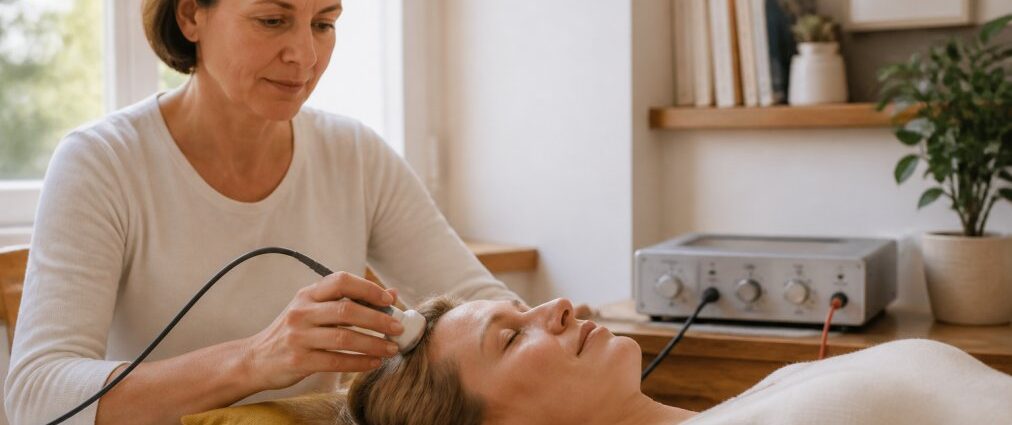
Frequency Therapy for Chronic Conditions is a complementary medical modality in which electromagnetic frequencies, light pulses, or subtle electrical stimuli are applied to the body to stimulate regeneration, cell communication, and bodily balance. It does not replace a medical diagnosis or conventional medical treatment, but rather complements them. It is precisely this perspective that lies at the heart of the work of Herbert Eder, who has been active in frequency therapy and information medicine since 1994 and emphasizes a clear distinction between possibilities and limitations.
Many people with chronic conditions are looking for complementary approaches. Frequency therapy is one such approach, and it is portrayed in very different ways in practice: sometimes as a panacea, sometimes as purely esoteric. Both views fall short.
This guide explains, step by step, how a session is conducted, the role played by electromagnetic frequencies and biophotons, where the method is best applied, and where caution is advised. The approach of regulatory medicine is based on the assumption that the body has its own regulatory mechanisms, which can be better organized under certain conditions.
Frequency therapy is a complementary treatment designed to support recovery and well-being. It does not diagnose diseases or cure chronic conditions. Those who use it should view it as a supplement to medical evaluation, not as a substitute.
Step by Step: How a Frequency Therapy Session Works
A frequency therapy session typically follows a set procedure: an initial consultation, an individual assessment, the development of a treatment plan, the actual treatment, and a follow-up discussion. The exact duration depends on the patient’s specific needs and the chosen method.
Initial Consultation and Individual Situation
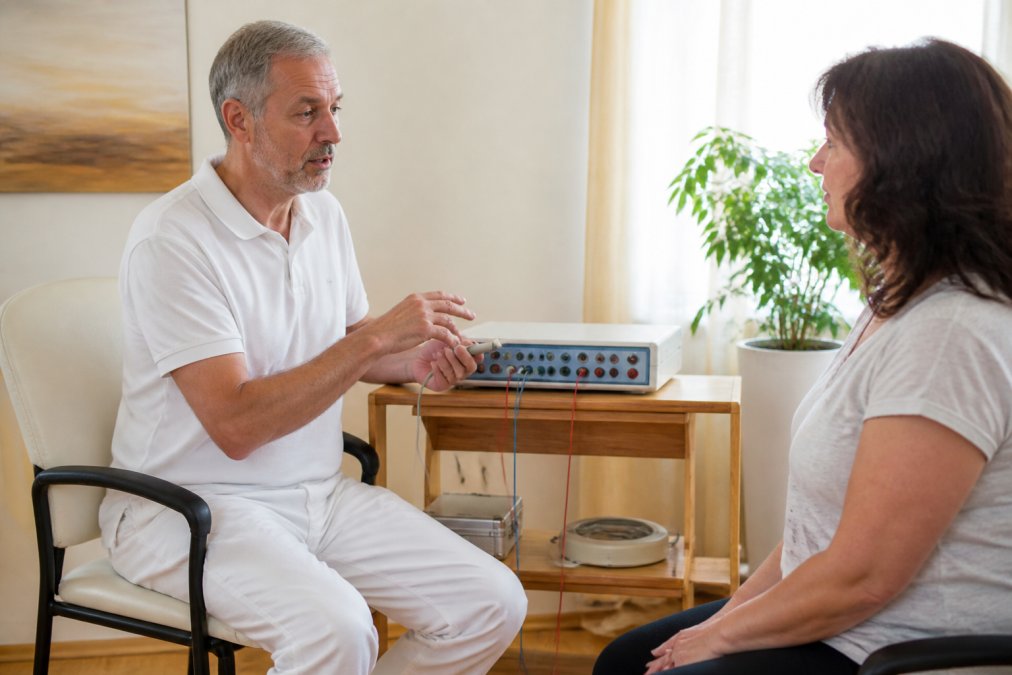
It all starts with a consultation. The therapist determines what symptoms the patient has been experiencing and for how long, what medical evaluations have already been conducted, and what medications the patient is taking. This information is not a mere formality; rather, it serves as the basis for determining whether treatment is even appropriate. If the patient has an acute infection, a pacemaker, or is pregnant, treatment is not recommended or is provided only after consulting a physician.
Vital Field Measurement and Development of a Treatment Plan
During a biofield measurement, electrical or electromagnetic readings from the body are recorded and displayed as patterns. Based on these patterns, the therapist can determine which frequency ranges to use and in what order. The treatment plan specifies how many sessions are scheduled and how often they take place.
| Phase | Contents | Typical duration |
|---|---|---|
| Preliminary Meeting | Medical History, Medications, Contraindications | 15–30 minutes |
| Vital Field Measurement | Assessment of the Current Situation | 10–20 minutes |
| Application | Frequency or light therapy while lying down | 20–45 minutes |
| Debriefing | Observations, Next Steps | 10 minutes |
Mechanism of Action: Electromagnetic Frequencies and Cell Communication
The mechanism of action of frequency therapy is based on the assumption that cells communicate with each other using electrical and electromagnetic signals and that this communication can be influenced by external frequencies. Certain frequencies are said to stimulate cellular communication, promote blood circulation, and support regulatory processes.
It is physically indisputable that the body generates electrical voltages: nerve signals, heart rhythm, and muscle control all rely on electrochemical processes. It is equally undisputed that weak electrical impulses are used in medicine, for example in pain management or wound treatment. This is precisely where the argument begins: If the nervous system responds to electrical stimuli, then regulatory processes can also be activated through targeted stimuli.
The difference from traditional electrotherapy lies in the subtlety of the stimuli. The treatment uses microcurrent and very low field strengths that fall below the stimulation threshold. A second approach is synaptic stimulation: recurring stimuli are intended to improve the coordination of neural connections. Terms such as vibration therapy, resonance phenomena, and regulatory medicine describe this approach from different perspectives.
Anyone who equates frequency therapy with a medical procedure that provides a diagnosis or cures a disease will be disappointed. The results of a vital field measurement are not laboratory findings and are no substitute for a medical evaluation. Anyone experiencing unexplained symptoms should first seek medical attention.
Biophoton Therapy Application: Light, Vibration, and Regeneration
Biophoton therapy uses light instead of electricity. According to this concept, cells emit extremely weak light signals—known as biophotons—that are believed to play a role in regulating metabolism and the immune system. In practice, light of various wavelengths and frequency patterns is directed at areas of the skin or acupuncture points.
What users may experience in this process is usually unspectacular: a soothing warmth, calmer breathing, and the feeling that the body is settling down. It is precisely this calmness that is the point. Techniques that trigger a counter-response can be applied here.
The connection to older methods is no coincidence. Traditional Chinese medicine works with the flow of energy along defined pathways, while homeopathy and herbal medicine work with subtle stimuli. Frequency therapy fits into this framework but supplements it with measurable physical quantities such as frequency, wavelength, and field strength.
Areas of Application: Pain Management, Sleep Disorders, and Fatigue
Typical areas of application include Pain Conditions of the Musculoskeletal System, sleep disorders, states of exhaustion, and supportive care for chronic conditions. It is also used during recovery phases following infections, such as in cases of persistent fatigue after COVID-19.
Pain management is not about eliminating pain, but rather about improving the conditions under which the body processes stimuli. For sleep disorders, the focus is on calming the nervous system. For exhaustion, the focus is on stimulating metabolism and regulating energy balance—in other words, helping cells function more evenly again.
- Musculoskeletal system: Muscle tension, joint pain, back pain
- Nervous system: Difficulty falling asleep, restlessness, effects of stress
- Regeneration: Exhaustion, Fatigue Following Infections
- Accompanying: Support during oncological follow-up care, only in consultation with the treating team
Caution is advised when it comes to reducing inflammation and killing germs. Anyone with an infection needs medical treatment.
Radionics Software for Alternative Practitioners: Practical Applications
Radionics software for alternative practitioners can help therapists record measurement data, manage frequency logs, and document progress over multiple sessions. The benefit lies less in the measurement itself than in the structure it provides: Those who work with clients over a period of months can lose track of things without proper documentation.
One point that is often underestimated in practice: The software does not make decisions. It provides patterns and suggestions. It is up to the therapist to assess whether a course of treatment is plausible and whether a session needs to be adjusted. Those who teach frequency therapy should therefore not only teach how to operate the equipment but also how to critically interpret the findings.
For alternative practitioners and energy therapists who want to expand their range of services, structured training is beneficial. Free online resources explain individual terms, but rarely cover the connection between measurement, treatment plans, and progress monitoring. The combination of practical guidance and expert articles, as offered by Herbert Eder, can bridge this gap.
Keep a simple progress sheet for each client: date, frequency ranges used, duration, observations after the session, and changes noted until the next session. After six sessions, it becomes clear whether an adjustment is necessary. Without these notes, you’re relying on intuition, and intuition can be particularly misleading in cases of chronic conditions.
Frequency Therapy Experiences: What Users Report and What Studies Show
Experiences with frequency therapy vary widely in practice. Users report mixed results. Both types of feedback should be taken seriously, and neither, on its own, constitutes proof of efficacy.
Why Testimonials Alone Don't Tell the Whole Story
Chronic symptoms can fluctuate. Pain, fatigue, and sleep quality can change over weeks and months even without treatment. Added to this is the placebo effect: A treatment that relaxes, involves touch, provides attention, and takes place in a quiet room can, by that alone, have an effect on tension and pain perception. This is normal physiology, but it makes evaluation more difficult.
Therefore, individual reports are an indication of tolerability and acceptance, not of effectiveness. To determine whether a treatment is effective, comparisons with control groups are necessary.
What the research actually shows
The Scientific literature on frequency therapy is inconsistent, and there are methodological reasons for this. We must distinguish between three levels:
- Established electrical methods: Controlled studies exist on transcranial direct current stimulation (tDCS), transcranial magnetic stimulation (TMS), and transcutaneous electrical nerve stimulation (TENS) for pain relief, some of which have a randomized design (PubMed). These procedures use clearly defined parameters (current in milliamperes, frequency in hertz, treatment duration).
- Complementary Frequency and Field Applications: The evidence here is limited. Many studies have small sample sizes, lack a causal link, lack a control group, or combine multiple interventions simultaneously, making it impossible to isolate the effect of frequency therapy. Publications in non-peer-reviewed journals further complicate the assessment.
- Vital field measurement and similar diagnostic procedures: There is a lack of robust validation against clinical reference standards for deriving treatment protocols from electrical skin measurements. These measurements are not laboratory test results.
A recurring problem is placebo control. Blinded frequency therapy is technically difficult to implement because users can feel the treatment, and therapists know what they are turning on. Without this connection, it is nearly impossible to distinguish the specific effect from the nonspecific one.
The lack of studies does not imply that the method is ineffective, but neither does it imply that it is effective. Anyone who evaluates the method honestly will acknowledge both points: The evidence is inconclusive, and the decision for or against trying it is a matter of individual judgment, not a question of proven certainty.
Regulatory Classification: What a Device Is and Isn't Allowed to Do in Practice
In Austria, medical device law distinguishes between products that manufacturers place on the market for medical purposes (with a conformity assessment, CE marking, and intended use) and those that are offered as wellness or lifestyle products without a medical intended use (basg.gv.at). Anyone advertising a device for the treatment of chronic conditions must adhere to its intended use. A wellness device may not make any therapeutic claims, and a therapist may not promise any effects that are not covered by the device's intended use.
For users, this means that the question is not just whether a device works, but what it is approved for. If its intended use cannot be clearly identified, caution is advised. Binding information on approval matters is provided by the relevant authorities, not the seller.
What this means in practice
-
Determine in advance what will be measured: Pain intensity on a scale of 0 to 10, time to fall asleep in minutes, number of pain-free hours per day. Without a baseline value, any change can be interpreted.
-
Set a deadline: About six to eight sessions, followed by an objective evaluation. If you keep prolonging the process indefinitely, you lose the ability to acknowledge when the treatment is not working.
-
Record other factors as well: Sleep, exercise, medication, stress. Chronic conditions rarely change for just one reason.
-
Openly Discuss Expectations: People who acknowledge the placebo effect don't lose credibility—they gain it.
-
What speaks for itself: plausible physiological basis, low burden, good compatibility with other methods, documented tolerability
-
What remains to be seen: Inconsistent study results, small sample sizes, lack of blinding, and lack of standardization of the devices and their intended use
-
The conclusion is: Individual trials with clear goals, a set deadline, and an honest evaluation, rather than blanket promises
People with chronic conditions who are continuing their medical treatment and would also like to do something to promote recovery and physical balance, as well as therapists who are looking for a structured overview rather than mere advertising for equipment.
Risks, Contraindications, and Costs: What Needs to Be Clarified in Advance
Risks and contraindications are the aspect that is often overlooked in many descriptions. Frequency therapy is not suitable for everyone, and the most important prerequisite is a preliminary consultation to assess the situation.
When Not to Use It
- Implanted pacemakers or defibrillators: Electromagnetic fields can affect the functioning of active implants. The answer here is a clear “no,” regardless of the field strength.
- Pregnancy: As a precaution, use on the abdomen and pelvic area is not recommended; use of this product should only occur after consulting a doctor.
- Acute infections with fever: The body is busy mounting an immune response; additional stimuli are counterproductive.
- Epilepsy: Special caution is required for all procedures that affect the central nervous system through stimulation.
- Open wounds in the treatment area: Electrical and lighting devices should not be used on broken skin.
- Oncological Diseases: Its use is acceptable only in consultation with the treating oncology team and should never be used as a substitute for cancer treatment.
- Blood-thinning medications: Consult with your doctor beforehand, as it is up to the treating physician to assess the risks of bleeding and potential drug interactions.
Common side effects are mild: temporary fatigue, a slight tingling sensation, and occasional headaches on the same day. These reactions usually subside within a few hours. If they occur repeatedly, the intensity should be adjusted or use should be paused.
Anyone who begins frequency therapy while simultaneously discontinuing a medically prescribed treatment risks a worsening of their condition that has nothing to do with the frequency therapy. The most common preventable complication is not the therapy itself, but the discontinuation of the accompanying treatment.
Costs: A General Guide Rather Than a Flat-Rate Statement
Prices for treatments and training programs depend on the scope, duration, region, and level of personalized support. It would be misleading to provide a single, fixed price. Those interested should contact the provider directly for specific terms and conditions.
| Performance | Typical framework | Factors That Affect the Price |
|---|---|---|
| Initial consultation with medical history and measurements | 60-120 € | Duration, scope of the assessment, therapist's training |
| Individual Treatment (Follow-up Session) | 40-90 € | Session duration, procedure used, practice location |
| Session Package (5–10 sessions) | Discount of about 5–15 % | Commitment, Upfront Payment, Practice Size |
| Home Appliance (Consumer-Grade) | 200-1.500 € | Scope of Services, Accessories, Intended Use |
| Structured Training | 1.000-4.000 € | Duration, Practical Supervision, Scope of Course Content |
These ranges are for reference only; they are not a price list. If you want to know the specific terms and conditions, you should contact the provider directly in writing, specifying the session duration, the number of sessions, and what is included in the price.
Reimbursement: What Health Insurance Providers Cover and What They Don't
Frequency therapy is not covered by statutory health insurance in Austria (socialministry.at). This means that those with public health insurance generally bear the costs themselves. Some private supplemental insurance policies may reimburse the costs of complementary medicine services if they are expressly listed in the contract, and often only if the treatment is performed by a practitioner with specific qualifications.
Practical checkpoints before the first session:
- Read the terms and conditions: Does the insurance policy mention ‚complementary medicine‘ or a specific treatment? Is there a list of eligible treatments included?
- Clarify the therapist's qualifications: Some insurers require recognized training or a specific job title.
- Request an invoice: Refunds almost always require a proper invoice that includes the date, service, and amount.
- Please inquire in advance: A quick call to your insurance provider before starting treatment can save you from disappointment. Only the insurance providers themselves can provide definitive information.
Keep a simple cost-benefit log: expenses per session, number of sessions, and the observed change. After six to eight sessions, you can assess whether the effort is reasonably proportional to the experience. Without these notes, you’ll be making decisions based on gut feeling, and gut feelings can be misleading when dealing with chronic conditions.
Home Devices vs. Clinical Applications: An Honest Comparison
Home devices and in-office treatments differ primarily in terms of control. At home, there is no feedback from an experienced therapist who can assess when a frequency is too strong and when it makes sense to take a break.
| Criterion | Home appliance | Practical Application |
|---|---|---|
| Control | Self-administration according to the instructions | The therapist makes ongoing adjustments |
| Background | No measurement | Vital Field Measurement as a Basis |
| Progress monitoring | My own notes | documented history |
| Suitable for | Mild, persistent symptoms | complex, long-term courses |
For simple, consistent issues, a home device can be a helpful addition. For long-standing, fluctuating symptoms, working with a therapist makes all the difference, because the treatment must be adapted to the course of the condition.
Conclusion: Frequency therapy as a supplement, not a substitute
Frequency therapy for chronic conditions can be a useful component if it is viewed for what it truly is: a method that supports regeneration and bodily balance, not a substitute for medical treatment. Those who start with clear goals, document their progress, and objectively evaluate the results after a set number of sessions will gain clarity. Those seeking blanket promises of a cure will be disappointed.
It is precisely this approach that characterizes Herbert Eder’s work: practical experience in frequency therapy and information medicine since 1994, a responsible assessment of possibilities and limitations, structured training programs, and personalized practice guidance that empowers therapists and practitioners to make well-informed decisions. Those who are unsure whether frequency therapy is right for their specific needs will find clear explanations of complex concepts there, rather than ready-made answers.
Frequently asked questions
What exactly is frequency therapy, and how does it affect the body?
Frequency therapy uses electromagnetic frequencies and weak electrical pulses that are said to influence cellular communication and regeneration. It is a non-invasive treatment and is classified as a form of complementary medicine. The method relies on resonance phenomena: specific vibrations are said to support the body’s energy balance and overall equilibrium. Frequency therapy for chronic conditions does not replace a medical diagnosis but rather complements it. Be sure to consult a healthcare professional beforehand to determine whether this treatment is appropriate for your situation.
For which chronic conditions is frequency therapy used?
Chronic pain, sleep disorders, fatigue, and long-COVID symptoms are frequently cited. In practice, this method is often combined with pain management, herbal medicine, or traditional Chinese medicine. An individualized treatment plan is important.
Is there scientific evidence supporting the effectiveness of frequency therapy?
The body of research is limited and methodologically inconsistent. Individual studies suggest benefits in pain relief and anti-inflammatory effects, but large-scale controlled trials are largely lacking. Anecdotal reports from clinical practice are no substitute for clinical evidence. Anyone gaining experience with frequency therapy should critically evaluate the results and not rule out placebo effects. An honest assessment of the possibilities and limitations is an essential part of any serious application.
What should you look for when choosing a therapist?
Make sure the information provided regarding training, methodology, and limitations of use is clear and transparent. Reputable providers explain how a session is conducted, identify contraindications, and do not promise a cure. Ask how the treatment plan is tailored to your individual needs. Costs and insurance coverage should be clarified transparently in advance, as this method is not part of standard medical care.
Chronic conditions require patience and an honest assessment of what works and what doesn’t. If you’d like to use or learn frequency therapy responsibly, Herbert Eder offers you in-depth knowledge through seminars and expert articles, personalized guidance in your practice, and a clear understanding of its limitations. This way, you can make your decision based on expert knowledge rather than on promises.

Comments are closed, but trackbacks and pingbacks are open.