




Last updated: September 12, 2026
What Is Frequency Therapy: Definition and Basics for Beginners
Frequency therapy "Basics" is intended for absolute beginners.
It starts with a clear definition. Frequency therapy is a complementary medical treatment. Electromagnetic vibrations, electrical pulses, or light frequencies are applied to specific areas of the body to stimulate physiological processes.
This fundamental knowledge serves as the basis for all further applications.
Many people first encounter this topic when chronic symptoms, sleep disorders, or states of exhaustion have not been satisfactorily resolved using conventional methods. Herbert Eder has been exploring this very question since 1994: How can the fundamentals of frequency therapy be taught in a way that allows users to realistically assess its possibilities and limitations?
The central idea behind frequency therapy is simple: The body regulates itself through vibrations. Cells communicate, tissues respond to stimuli, and electrical signals control numerous processes. If this vibrational field is disrupted, regulatory problems can arise.
A Brief Explanation of the Most Important Terms
Frequency therapy refers to the application of defined vibration patterns to the body. Bioelectric Therapy uses weak electrical pulses to stimulate tissue. Biophotons are extremely faint light particles emitted by cells and are considered a sign of cellular activity.
Other key terms:
- Resonance principle: The body responds particularly to frequencies that correspond to its own patterns
- Interference Fields: Areas that may hinder regulatory processes
- Frequency spectrum: The totality of the applicable frequency ranges
- Self-healing powers: The body's own regenerative mechanisms
These terms appear in almost every description. Once you understand them, you'll be much better able to evaluate relevant offers.
History and Origins of Frequency Therapy
Its roots go back further than many people realize. As early as the 18th and 19th centuries, researchers were experimenting with electrical stimuli on the human body. However, systematic research into frequencies and their effects on biological systems did not gain momentum until the 20th century.
In the 1920s and 1930s, the first devices that utilized electromagnetic fields were developed. At the same time, the concept emerged that every cell has its own vibrational pattern. Today’s vibrational medicine grew out of this idea.
After World War II, the field temporarily took a back seat, but experienced a renaissance beginning in the 1970s. A key factor in this was the growing interest in complementary medicine and reproductive medicine. Today, there is a wide range of different devices and forms of therapy, ranging from simple electrical stimulation devices to complex bioresonance systems.
What many people overlook is that historical development did not follow a linear path. Time and again, ideas were discarded, revisited, and further developed. Anyone who History ...will better understand why the field remains so fragmented to this day.
Mechanism of Action: What Happens in the Body
The physical mechanism of action is based on the fact that cells communicate via electrical and electromagnetic signals. External frequencies can influence this communication; they also alter membrane potentials, ion flows, or tissue vibrations. Three factors remain crucial to the fundamentals of frequency therapy: frequency, current intensity, and treatment duration.
Simply put: The body is an electrical system. Nerves transmit signals via action potentials that range from about 1 millivolt to 100 millivolts (peer-reviewed (Research). Cell membranes maintain a potential difference of about −70 millivolts at rest. Muscle tissue responds to electrical stimuli as low as a few milliamps. When a suitable frequency pattern is applied, stimulation therapy can trigger certain regulatory processes.
Frequency Ranges in Practice
In physical medicine, broad categories have become established that serve as a guide even for beginners:
- Low frequency (1–1,000 Hz): traditional electrical stimulation applications, muscle stimulation, pain management
- Medium frequency (1,000–100,000 Hz): Tissue penetration with lower skin resistance
- High frequency (100,000 Hz and above): Thermal effects, which are used less frequently than stimulation therapy in complementary medicine
- Light Frequencies (Terahertz Range): Biophoton models, mostly in the visible and near-infrared spectrum
These bands are not a treatment recommendation, but rather a guide. Which range is appropriate for which goal depends on the device, the indication, and the individual’s response.
Three mechanisms are frequently discussed in the literature:
- Membrane Effect: Frequencies alter the permeability of cell membranes to ions such as sodium, potassium, and calcium
- Resonance: Certain frequencies precisely match the natural frequency of a tissue—a principle known from physics but for which clear evidence exists in biology for only a few tissues
- Information transfer: Vibrations carry information that coordinates groups of cells—this point is the most controversial
What most beginners underestimate is that the effect cannot be compared to that of a medication. It is not about chemical blockade, but rather about stimulating the body’s own processes. That is why the dose is not measured in milligrams, but in frequency, current intensity, duration, and repetition.
Legal Framework in Austria
As a general rule, anyone who operates or sells frequency therapy devices in Austria is operating within a clearly regulated framework.
In addition, medical devices are subject to the Medical Devices Act (MPG) and the European MDR Regulation (EU) 2017/745, which are enforced by the Agency for Health and Food Safety (AGES) and the Federal Office for Health Safety (BASG) (basg.gv.at).
In addition, the intended use is crucial: A device that is certified as a medical device may only be advertised for its specified intended use.
For users, this means that a quick look at the CE marking and the intended use listed in the package insert says more about the credibility of a product than any advertising brochure. If the intended use is missing or is worded vaguely, caution is advised.
Biophotons and electromagnetic oscillations
Biophotons are faint light emissions originating from cellular processes. They are considered an indication of cellular activity. In vibrational medicine, they serve as a model for how cells exchange information. According to this model, electromagnetic vibrations interact with the same communication system.
This concept is vivid, but not without controversy. Critics point out that measuring biophotons is technically challenging and that their application to therapeutic uses has not yet been conclusively proven. Anyone who cites biophotons as a mechanism of action should therefore distinguish between the model and empirical evidence.
The physical mechanism of action can be divided into three levels: measurable quantities (frequency, current, duration), plausible mechanisms (membrane action, resonance), and speculative models (information transfer, biophotons). Beginners who are aware of this distinction will be able to evaluate product offerings much more effectively.
Fundamentals of Information Medicine: The Concept of Information in Practice
Information medicine The fundamentals are based on the idea that biological systems are controlled not only by substances but also by information. In this context, a frequency is not a stimulus in the classical sense, but rather a carrier of information.
The practical difference: While a medication works through concentration and duration of action, information medicine works with patterns. A vibrational pattern is intended to signal to the body which regulatory processes should be triggered. Accordingly, the dose is not measurable in milligrams, but in frequency, duration, and repetition.
A common misconception: Information medicine does not mean that physical substances play no role. It complements the physical level with an informational perspective. In the Practice This is evident in techniques such as gravity field measurement, biofeedback, or frequency patterns that are tailored to individual patterns.
Anyone who using frequency therapy Anyone studying the fundamentals cannot avoid this concept. It explains why the same frequency can have different effects on different people.
Applications and Indications for Frequency Therapy
The range of applications is broad, but not unlimited. Common examples include:
- Chronic pain conditions, such as headaches or back pain
- Sleep Disorders and States of Exhaustion
- Support for Recovery After Physical Strain or Illness
- Support for Long COVID Symptoms
- Support for Oncology Patients in a Complementary Care Setting
It is important to note: Frequency therapy is not a substitute for a medical diagnosis or conventional medical treatment. It can be used as a complementary approach once a medical evaluation has been completed.
Anyone who uses frequency therapy for acute or unexplained symptoms without first consulting a doctor risks overlooking a serious illness. The result is not only an ineffective treatment but also a lost window of opportunity for treatment.
The evidence base varies considerably depending on the area of application. For some areas, controlled studies exist; for others, clinical practice relies primarily on anecdotal reports.
Activating the Body's Self-Healing Abilities and Holistic Health
Self-healing powers are the body’s own mechanisms for regenerating tissue, regulating inflammation, and restoring balance. Frequency therapy focuses precisely on these processes: it is designed to stimulate them, not replace them.
The term “holistic health” refers to the approach of considering physical, energetic, and regulatory levels together. In practice, this means that a therapist looks not only at the symptom, but also at regulatory patterns, energy balance, and possible energetic blockages.
Three principles have proven effective in practice:
- Pacing Stimulation: Stimuli that are too strong are blocked, while those that are too weak have no effect
- Regularity: Short, frequent sessions are usually more effective than infrequent, long sessions
- Observe: The healing process provides indications as to whether the selected frequency is appropriate
As experienced users know, everyone's body reacts differently. What works quickly for one person may have no effect at all on another.
Frequency Therapy Device Comparison: Types of Therapy Available
A comparison of frequency therapy devices shows one thing above all: the market is confusing. Broadly speaking, there are four categories.
| Type of therapy | Mechanism of action | Typical Application | Suitable for |
|---|---|---|---|
| Electrostimulation Devices | Weak electrical pulses | Muscle Stimulation, Pain | Beginners with a clear indication |
| Bioresonance devices | Electromagnetic Oscillations | Proposed Regulation | Certified Therapists |
| Light and Biophoton Devices | Frequency spectrum in the visible light range | Cell Stimulation, Regeneration | Experienced users |
| Radionics Software | Digital Frequency Patterns | Analysis and Pattern Matching | Alternative practitioners with specialized knowledge |
The differences lie less in the mechanism of action than in operation, data analysis, and the extent to which frequency patterns can be customized.
Essential Checklist for Buying Electronics
Before purchasing a device, you should check the following points:
- Is the mechanism of action explained in a way that’s easy to understand, without any promises of a cure?
- Is there an easy-to-understand guide for beginners?
- Are Contraindications Clearly stated?
- Is it possible to receive personal instruction or guidance?
- Can the device be integrated into existing treatment plans?
- Are maintenance, replacement parts, and support covered?
- Are there any testimonials from users or therapists?
- Do the frequency spectrum and scope of application align with your goals?
Before making a purchase, ask for a training session. A device you can’t operate safely will just sit in the closet. Hands-on training often determines its usefulness more than its technical features.
How to Use Radionics Software Correctly for Alternative Practitioners
How to Use Radionics Software Correctly for Alternative Practitioners In other words: The software is a tool for structuring frequency patterns and comparing them; it is not a substitute for diagnostic reasoning.
Submit a request via our contact form →
In practice, the process typically consists of three steps. First, a unique frequency pattern is recorded or selected. Next, it is compared with stored patterns. Finally, suitable frequencies are compiled for the application.
The key point is interpretation. The software provides patterns, but no diagnosis. Anyone who accepts the results without verifying them is no longer acting responsibly.
Radionics software supports the diagnostic process but does not replace either professional judgment or a medical evaluation. Its value lies in the combination of the tool and experience.
For alternative practitioners, this means that structured training is beneficial because the software alone does not provide the necessary context. This is precisely where Herbert Eder comes in, combining practical guidance with expert articles.
Scientific Analysis and Criticism: What Studies Show
The scientific classification The results are mixed. For certain physical medicine treatments—such as electrical stimulation for specific types of pain—there is an accepted use. For other areas of vibrational medicine, however, the body of research is limited. The crucial step for newcomers is therefore not to ask, „Does it work?“ but rather, „Which claim is currently being tested?“.
Three Categories Instead of a Verdict
Anyone following the debate will encounter three very distinct levels of evidence. This distinction is the most important contribution this article can make—most competitors confuse them.
1. Proven Applications
These include physical medicine procedures that are well-established in conventional medicine: transcutaneous electrical nerve stimulation (TENS) for certain types of pain, electrostimulation in rehabilitation, and pulsed electromagnetic fields for delayed bone healing. These applications are not „frequency therapy“ in the esoteric sense, but rather physical medicine with measurable parameters.
2. Plausible but not conclusively substantiated applications
These include many bioresonance and frequency pattern applications. The mechanism is theoretically plausible, but the body of research is heterogeneous: small sample sizes, rarely control groups, and often no blinding. This does not mean that nothing happens—it means that the effect cannot be clearly distinguished from expectation, attention, and the natural course of the condition.
3. Speculative Applications
These include methods based on non-measurable factors or that make claims of curing serious illnesses. This includes claims that frequency therapy can cure cancer or replace diagnostic procedures. Such statements are not permitted in Austria under the Medical Devices Act and the Law on the Advertising of Medicines and should be regarded as a warning sign.
What critics rightly point out
Three points of criticism are regularly raised and are objectively valid:
- Study design: Many studies have small sample sizes and no control group. An effect observed in an open-label study with 20 participants does not yet constitute proof.
- Placebo effect: Subjective improvements cannot always be distinguished from the effects of expectation. The placebo effect is particularly strong when it comes to pain and sleep.
- Mechanism: The assumed transmission of information via frequency patterns has not been consistently substantiated. Anyone who presents this as fact is misrepresenting the evidence.
What Critics Cannot Resolve
At the same time, there are unanswered questions that critics cannot resolve. Why do users consistently report changes in sleep or pain perception? Why do patterns emerge in gravity field measurements that correlate with subjective well-being? These observations are not proof, but they are a reason not to dismiss the field outright.
The Cochrane Library on Electrical Stimulation Techniques provides an overview of the evidence regarding electrical stimulation techniques. To put this into context, it is helpful to distinguish between evidence-based, plausible, and speculative applications.
Research Findings Versus Testimonials
Research studies and personal accounts answer different questions. Studies examine whether an effect can be demonstrated across a group. Personal accounts show what happens to individual people.
Both sources have limitations. A study may overlook individual benefits because it focuses on average values. A testimonial may misinterpret a placebo effect as a therapeutic effect because the person does not know whether they received the treatment or a sham procedure.
The sensible approach lies somewhere in between: take personal accounts seriously, but don’t treat them as proof; respect studies, but don’t view them as the sole source of truth. Anyone who adopts this approach is immune to both naive enthusiasm and blanket rejection.
Pay attention to the language used. Phrases such as „may help,“ „is often reported,“ or „is observed in practice“ are credible. Phrases such as „cures,“ „guarantees,“ or „replaces medication“ are legally problematic in Austria and are not scientifically sound.
Scientific classification isn’t a simple yes-or-no question. It involves three categories: substantiated, plausible, and speculative. Anyone who masters this distinction can clearly distinguish between advertising claims, studies, and anecdotal reports—and that is the real benefit for beginners.
Step by Step: First-Time Home Use for Beginners
The first time you use a device at home, it works best to follow a clear, simple procedure. If you're using a frequency therapy device at home for the first time, you should stick to a set sequence.
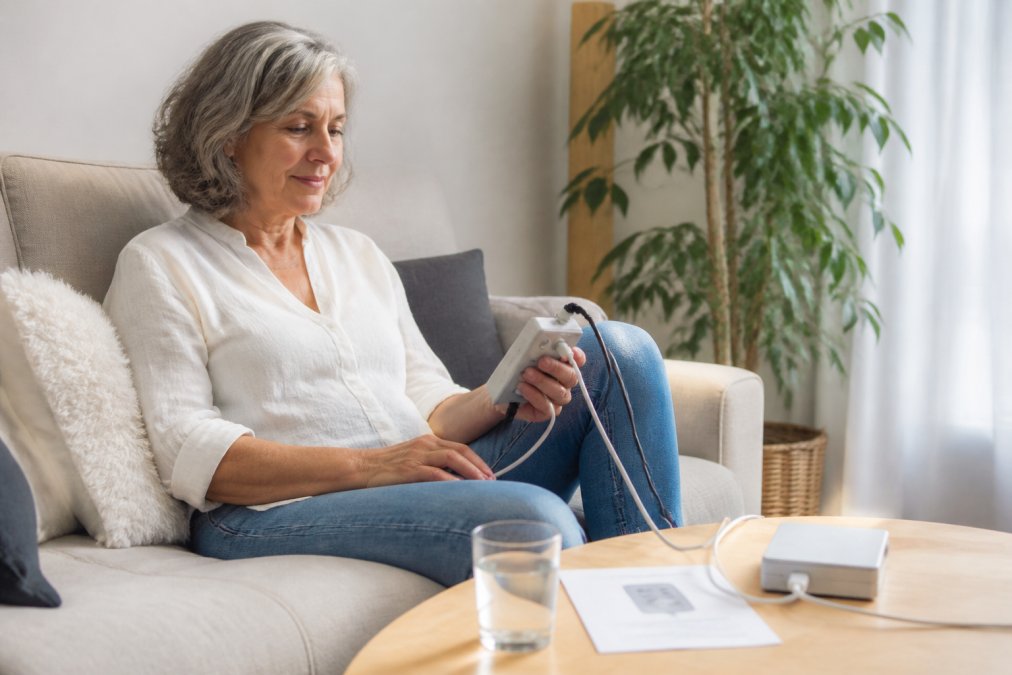
Preparation
- Choose a quiet room; turn off sources of noise, such as running appliances
- Get into a comfortable sitting or lying position
- Read the device manual thoroughly once
Implementation
- Turn on the device and select the lowest intensity setting
- Select a single frequency or a single program
- Start with a short duration of use, such as a few minutes
- Pay attention to physical reactions: warmth, tingling, relaxation
- Rest for a few minutes after application
Follow-up
- Record the reaction in a simple log
- After a few days, decide whether to adjust the intensity or duration
- If you experience any unusual reactions, stop using the product and consult a healthcare professional.
Never start at the highest intensity. Excessive stimulation often leads to restlessness, headaches, or trouble sleeping at night and may cause beginners to reject the method too quickly.
A common mistake is expecting quick results. The healing process takes time, and the first few treatments are primarily intended to assess tolerance.
Contraindications and Limitations of Frequency Therapy
Contraindications are situations in which a treatment should not be used, or should only be used after consulting a doctor. These generally include:
- Pacemakers or implanted electronic devices
- Pregnancy
- Epilepsy or other seizure disorders
- Acute Infections with Fever
- Open wounds in the area of application
- Cancer Cases Without Consultation with an Oncologist
Furthermore, there are limitations to what it can achieve. Frequency therapy is not a substitute for medical diagnosis, is not an emergency treatment, and is not a means of self-treatment for unclear symptoms.
Anyone suffering from chronic symptoms should first seek a medical evaluation. Complementary treatments can then be used as a supplement.
Incorporating Frequency Therapy into Your Daily Life: Practical Tips
Whether a practice is adopted on a long-term basis depends on how well it integrates into daily life. Set times work better than spontaneous use.
The following have proven effective:
- A specific time of day, such as early evening
- Short sessions instead of long meetings
- A quiet environment free of distractions
- A Simple Observation Protocol
For working adults, a combination of short sessions during the week and a longer session on the weekend is recommended. Those who suffer from sleep disturbances should not begin the treatment immediately before bedtime, but rather a few hours beforehand.
Prevention also plays a role. Regular, low-dose treatments can help stabilize energy balance before symptoms arise.
Conclusion: The Basics of Frequency Therapy Summarized in an Easy-to-Understand Way
The basics of frequency therapy can be summarized in a few sentences: It is a complementary medicine technique that uses vibrations, electrical pulses, and frequency patterns to stimulate the body’s own regulatory processes. The mechanism of action has been plausibly described but has not been proven in all areas. Its use is not a substitute for medical evaluation.
Anyone who is seriously interested in frequency therapy needs three things: a solid theoretical foundation, a responsible understanding of its limitations, and structured guidance as they get started. It is precisely this combination that lies at the heart of Herbert Eder’s work.
Through personalized practical guidance, structured training programs, and scientifically grounded articles, users and therapists gain the in-depth knowledge needed to apply frequency therapy safely and in a personalized manner. Herbert Eder provides the foundation necessary to responsibly apply the fundamentals of frequency therapy in clinical practice.
Frequently asked questions
What is the scientific basis for frequency therapy?
Frequency therapy is based on the assumption that cells communicate via electromagnetic vibrations. It has been scientifically proven that the body generates electrical signals, for example in the heart and nerves. Whether frequencies administered for therapeutic purposes have a targeted effect beyond this is a matter of debate in the research community. Some studies suggest benefits for certain conditions, but the available data is limited overall. Therefore, consider this method as a complementary approach, not as a substitute for a medical evaluation.
What should beginners look for when choosing frequency measurement devices?
First, make sure the product comes with clear documentation of the frequency ranges offered and an easy-to-understand user manual in German. Check whether the provider offers training or personalized support so that you can learn how to use the device correctly. Reputable providers clearly state the limitations of the method and do not promise a cure. Take your time, compare several devices, and speak with an experienced user or therapist before making a purchase.
How does frequency therapy differ from other complementary medicine approaches?
Unlike methods that use substances, heat, or manual techniques, frequency therapy relies on electromagnetic vibrations and signal pulses. Some devices use electrical pulses, while others use information patterns without a direct flow of electricity. In complementary medicine, it is often used in conjunction with regulatory medicine and Bioresonance associated with. The difference lies in the starting point: not the symptom, but the vibrational field and the Cell communication are the focus.
Are there any regulatory frameworks governing the use of frequency therapy?
In Austria, medical devices and their placement on the market are subject to the Medical Devices Act and the provisions of the EU Medical Devices Regulation. Whether a frequency device is classified as a medical device depends on its intended use. When making a purchase, check to see if the product bears a CE marking and comes with a declaration of conformity. The relevant professional regulations also apply to the practice of therapeutic activities. If in doubt, clarify the specific legal situation with the competent authority or your professional association.
How can frequency therapy be effectively integrated into everyday life?
Set aside specific times, such as in the morning after waking up or in the evening before going to bed, so that the practice becomes a routine. Short, regular sessions are usually more effective than infrequent, long ones. Keep a simple journal to note when you’ve practiced and how you feel afterward. This will help you identify patterns and adjust your practice in consultation with a professional. Combine this method with adequate sleep, exercise, and a balanced diet.
How much does frequency therapy cost?
The cost depends on whether you receive treatment at a clinic or purchase a device for home use. For in-clinic sessions, fees vary depending on the provider, region, and duration of treatment. When it comes to devices, the range extends from simple entry-level models to professional systems with comprehensive software. It’s not possible to provide reliable, blanket figures. Ask the provider directly about current pricing and compare what’s included in each package.

Comments are closed, but trackbacks and pingbacks are open.