





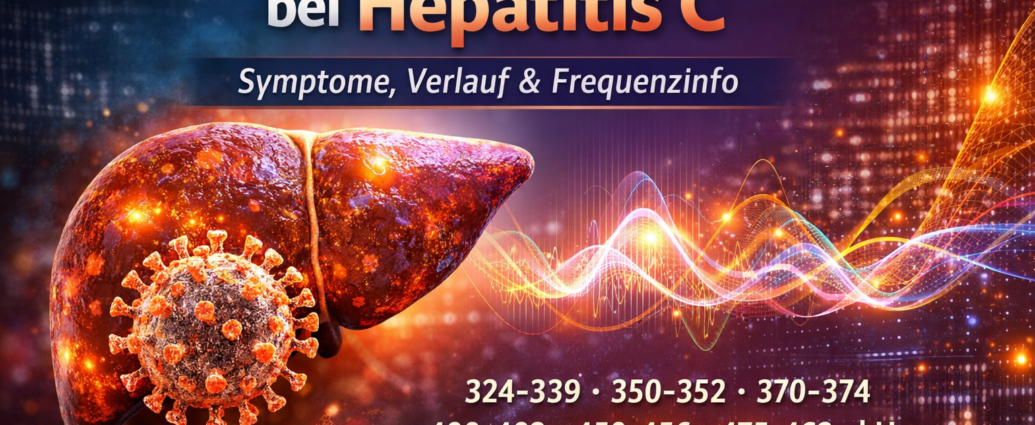
Symptoms, progression and frequency information
Hepatitis C is one of the most important virus-related liver diseases and is caused by the hepatitis C virus, which belongs to the Flaviviridae family. The literature describes that the Virus primarily in the liver cells, thereby placing a specific burden on this organ, which plays a central role in metabolism, storage, detoxification and numerous regulatory processes. It is precisely this pronounced liver-relatedness that makes hepatitis C particularly medically relevant.
What is hepatitis C?
Hepatitis C is a viral infection that primarily affects the liver. The literature describes it as an important cause of acute, but above all chronic liver inflammation. It is particularly significant that the infection can develop unnoticed over a long period of time. As a result, in many cases it initially remains undetected, although there is already a persistent burden on the liver tissue in the background.
From a conventional medical perspective, hepatitis C is not only significant because of the acute infection, but above all because of its potential to become chronic. While some cases remain mild, others can develop progressive liver damage over a period of years.
How the virus behaves in the body
The literature describes that the hepatitis C virus mainly multiplies in hepatocytes, i.e. in the liver cells. This places the liver at the center of the disease process. As this organ fulfills numerous vital functions, persistent inflammation can have far-reaching consequences for the entire organism.
Liver diseases in particular show that symptoms do not always have to be pronounced immediately. Many processes initially take place in the background. This explains why hepatitis C is often underestimated for a long time, even though the infection is already biologically active.
Typical symptoms of hepatitis C
The literature describes that around 80 percent of infected people do not initially develop any noticeable symptoms. It is precisely this frequent lack of symptoms that is a central feature of the disease. Other sufferers report fatigue, jaundice with dark urine, abdominal pain and nausea. These symptoms may indicate a burden on the liver, but are not always severe.
Some of those infected show only minimal or clinically unremarkable changes without immediately developing more serious complications. Others develop clearly recognizable chronic hepatitis. It is precisely this wide range that makes conventional medical classification so important.
Why hepatitis C often goes unnoticed for a long time
The lack of clear symptoms in a large proportion of cases is one of the main reasons why hepatitis C is often only recognized late. Tiredness, reduced performance or non-specific upper abdominal complaints are not always immediately associated with a chronic viral infection. This means that the virus can remain in the body for a long time and continue to put a strain on the liver.
It is precisely this silent development that makes hepatitis C so important from a medical point of view. The focus is not on the severity of the initial symptoms, but on the possibility of long-term, progressive liver damage.
Chronic hepatitis and liver stress
Some of those affected develop clinically recognizable chronic hepatitis. In this phase, the liver remains inflamed for a longer period of time. The literature describes that this can lead to structural changes in the tissue over time.
This progressive development is crucial from the point of view of conventional medicine. This is because chronic inflammation not only means persistent viral activity, but also an increasing risk of permanent organ damage. The liver is an organ capable of regeneration, but chronic stress can overtax its ability to recover in the long term.
Possible late effects: Cirrhosis and end-stage liver disease
The literature describes that liver cirrhosis can develop in some chronically ill patients. In this case, healthy liver tissue is gradually replaced by scarring remodeling processes. These changes significantly impair the function of the organ.
As the disease progresses, it can develop into advanced liver disease. It is precisely these late effects that show why hepatitis C is far more than a temporary liver irritation. It is a disease with the potential to cause profound long-term changes in the body.
Risk of liver cancer
The literature also indicates that hepatitis C increases the risk of hepatocellular carcinoma in people with liver cirrhosis. This makes it clear that the disease has not only functional but also oncological relevance.
From a conventional medical point of view, this connection is one of the most important reasons for careful diagnosis, follow-up and therapeutic support. The longer the liver remains chronically inflamed, the greater the risk of serious secondary diseases.
Conventional medical treatment
Treatment approaches mentioned in the literature include ribavirin, interferon and, in advanced situations, liver transplantation. The conventional medical perspective focuses on containing the viral load, stabilizing liver function and preventing progressive damage.
Medical care is particularly important for chronic liver diseases. It not only serves to treat current complaints, but also to monitor long-term developments, detect complications at an early stage and protect a central metabolic organ.
Why the liver takes center stage
The liver is one of the body's most important regulatory organs. It processes nutrients, stores energy reserves, forms central proteins and is involved in numerous metabolic and detoxification processes. If this organ is burdened by a viral infection over a long period of time, the effects are not only local but often systemic.
For this very reason, many sufferers experience hepatitis C not only as an isolated liver disease, but also as a general weakening with fatigue, limited resilience and reduced ability to regenerate. This overall view is also important for a holistic view of the organism.
Holistic view of the organism
From a holistic perspective, hepatitis C shows particularly clearly how closely liver function, energy balance, metabolism and general well-being are linked. Chronic stress on the liver can affect different levels of the organism and result not only in physical, but also functional and vegetative changes.
This is precisely why a complementary perspective focuses not only on laboratory values or organ findings, but also on the body's ability to regenerate, resilience, system stability and individual response. This creates a broader understanding of the significance of chronic liver stress.
Complementary perspective on frequency therapy
Around the Frequency therapy is often associated with terms such as oscillation, Resonance and regulation. In a complementary understanding, the aim is to consider biological stress not only in terms of substances, but also functionally and systemically. The focus is not on a single value, but on the overall picture of the organism.
Particularly in the case of chronic stress, such models attempt not only to view the pathogen or the affected organ in isolation, but also to consider the overall reaction of the system. In this context, frequency therapy is understood as a complementary perspective that places regulation, stress processing and inner order in a larger context.
Frequency info
The following frequency ranges are mentioned in the literature for the hepatitis C virus:
324-339, 350-352, 370-374, 396, 400-402, 450-456, 475-482, 540-541, 559-563 kHz
In the complementary context of frequency therapy and frequencies, these frequency data are understood as supplementary literature references. Within complementary approaches, they are not isolated, but are placed in a larger context of resonance, system dynamics and individual reactions.
Conclusion
Hepatitis C is a viral liver disease that often goes undetected for a long time and has a significant impact on long-term health. While many infected people initially develop no symptoms, others can develop chronic hepatitis with cirrhosis, advanced liver disease and an increased risk of liver cancer. Liver cancer develop. The conventional medical view is therefore clearly in the foreground because it makes the course, organ involvement and therapeutic relevance clear.
In the complementary environment, the view of frequency therapy and frequencies can also be understood as a thematic extension. The frequency ranges mentioned in the literature are referred to as Frequency info into a larger context.



Comments are closed, but trackbacks and pingbacks are open.