





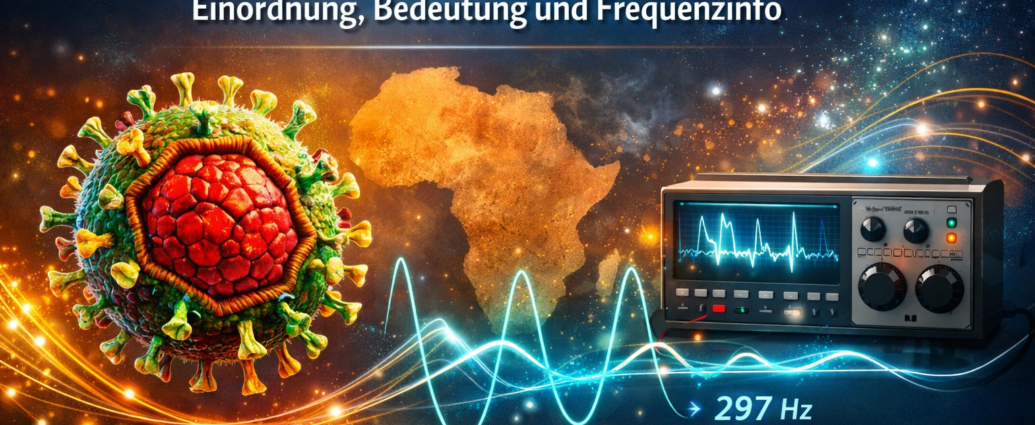
Classification, meaning and frequency information
HTLV-4, the human T-cell lymphotropic virus type 4, is one of the less frequently described representatives of the human lymphotropic viruses. Retroviruses. The literature emphasizes that a fourth HTLV type has been described in African bushmeat hunters. It is precisely this observation that makes HTLV-4 virologically interesting, because it shows that other, rarer representatives have also been identified within the known HTLV group. The significance for conventional medicine lies primarily in the virological classification and differentiation from other retroviruses.
What is HTLV-4?
HTLV-4 is a human T-cell lymphotropic virus and thus part of the retrovirus group that is primarily associated with lymphotropic properties. The literature describes HTLV-4 as an additional, later recognized representative within the HTLV group. In contrast to the better-known types, the focus with HTLV-4 has so far been less on a clearly defined clinical picture and more on virological identification and classification.
This situation is particularly important for rarer Viruses typical. Not every pathogen is immediately discovered with a broadly described disease pattern. The scientific debate often begins with its identification, its genetic relationship and its differentiation from other known virus groups.
Discovery of HTLV-4
The literature describes that HTLV-4 has been detected in African bushmeat hunters. This observation is particularly interesting from a virological point of view because it points to a specific epidemiological context. The detection in a limited group of people suggests that HTLV-4 is not one of the widely known, frequently discussed human retroviruses, but rather one of the rarely identified representatives.
Such findings play a particularly important role in virology. They broaden our understanding of which viruses can occur in humans and in which ecological or epidemiological contexts new or little-known pathogens are discovered.
HTLV-4 and the question of demarcation
The significance of HTLV-4 in conventional medicine lies primarily in its clear distinction from other retroviruses. The literature describes that HTLV-4, as it was formerly known, was initially associated with HIV-2. This early assumption shows how closely certain retroviruses were initially compared with each other in research and how important a later precise differentiation became.
This differentiation is particularly crucial for retroviruses. Small genetic or biological differences can have a major impact on medical classification. This is why the precise differentiation between HTLV types and other retroviruses is an essential part of conventional medical virology.
No similar simian counterpart
Another striking point in the literature is the indication that no similar simian counterpart is described for HTLV-4. This distinguishes HTLV-4 from other viruses for which comparable simian variants serve as a reference point. It is precisely this lack of a direct counterpart that makes HTLV-4 particularly interesting from a scientific point of view.
From a virological point of view, this means that classification cannot simply be based on known parallels to simian viruses. Instead, the independent description of the virus takes center stage. This is precisely what underlines the special nature of HTLV-4 within the HTLV family.
Virological significance of HTLV-4
Even though the literature on HTLV-4 is scarce, it is already clear that the virus is primarily important for the scientific classification and expansion of the understanding of human retroviruses. HTLV-4 thus represents the ongoing differentiation of virological knowledge rather than a fully defined clinical picture.
Such viruses in particular show that medical research not only concerns known and common pathogens, but also rare or newly described representatives whose biological significance is only gradually becoming better understood. HTLV-4 belongs precisely in this area.
Conventional medical perspective on rare retroviruses
The conventional medical examination of rare retroviruses begins with their exact identification. This includes genetic differentiation, epidemiological observation and the question of the biological context in which a virus occurs. In the case of HTLV-4, the virological classification is therefore particularly important.
Caution is particularly important when interpreting rarely described viruses. Not every discovery automatically means that there is already a comprehensively known clinical picture or a clearly defined clinical scope. Rather, understanding often grows step by step.
Why precise classification is important
The literature makes it clear that early classifications in the field of retroviruses often had to be corrected or clarified in the course of time. This is precisely why precise classification is so important. Only when a virus is clearly described and differentiated from other retroviruses can its actual biological and medical role be correctly understood.
HTLV-4 shows this particularly clearly. The focus here is less on a broad clinical description than on a clear virological classification. It is precisely this classification that forms the basis for any further medical assessment.
Holistic view of the organism
From a holistic perspective, HTLV-4 is particularly interesting because it shows how diverse and differentiated virus families can be. Even if a complete clinical picture is not immediately available for every rare virus, its existence nevertheless points to the complex biological relationships between the organism, immune system and infectious influences.
A complementary approach focuses not only on manifest diseases, but also on larger patterns of biological regulation, stress and adaptation. Rare retroviruses such as HTLV-4 are thus seen not only as individual findings, but also as part of a more comprehensive understanding of system dynamics.
Complementary perspective on frequency therapy
Around the Frequency therapy is often associated with terms such as oscillation, Resonance and regulation. Complementary understanding is about looking at biological issues not only in terms of substances, but also functionally and systemically. The focus is not only on the clinical definition, but also on the classification in an extended model of the reaction situation and internal order.
Particularly in the case of rare virus groups such as HTLV-4, such models attempt not only to look at the scarce virological data, but also to consider the bigger picture of biological relationships. In this context, frequency therapy and frequencies are seen as supplementary literature references within a larger understanding of resonance and system dynamics.
Frequency info
The following frequency ranges are mentioned in the literature for HTLV-4:
297, 454, 540-545 kHz
In the complementary context of frequency therapy and frequencies, these frequency data are understood as supplementary literature references. Within complementary approaches, they are placed in a larger context of resonance, system dynamics and individual reactions.
Conclusion
HTLV-4 is a rarely described representative of the human T-cell lymphotropic viruses and is particularly important from a virological point of view. The literature describes the detection in African bushmeat hunters and at the same time emphasizes the special position of the virus, as no similar simian counterpart is mentioned. The conventional medical perspective is therefore in the foreground because it clarifies identification, differentiation and the importance of precise virus classification.
In the complementary environment, the view of frequency therapy and frequencies can also be understood as a thematic extension. The frequency ranges mentioned in the literature are referred to as Frequency info into a larger context.


Comments are closed, but trackbacks and pingbacks are open.