






Table of contents
- What Frequency Therapy Can Do for Chronic Headaches
- Fundamentals of Information Medicine: Frequencies, Brain Waves, and Pain Processing
- Preparation: What You Should Clarify Before Your First Use
- Step 1: Select frequency ranges and treatment protocols for different types of headaches
- Step 2: Perform frequency therapy for migraines and tension headaches
- Step 3: How to Use Radionics Software Correctly as a Naturopath
- Step 4: Combine frequency therapy with sleep hygiene and relaxation techniques
- Scientific Evidence: What the Research Shows About Frequency Therapy for Headaches
- Common Mistakes and When to Seek Medical Advice
- Conclusion: Frequency therapy as a building block, not a substitute
- Frequently asked questions
Last updated: September 25, 2026
What Frequency Therapy Can Do for Chronic Headaches
Frequency Therapy for Chronic Treating Headaches This involves the targeted use of specific frequency ranges to influence pain processing in the nervous system. Chronic headaches are conditions that occur on more than 15 days a month and permanently limit daily life. This is precisely where frequency therapy comes in: not as a substitute for medical evaluation, but as a complementary component. Herbert Eder has been working with frequency therapy and information medicine since 1994 and deliberately positions the method somewhere between possibility and limitation.
People who suffer from migraines or tension headaches have usually gone through a long series of unsuccessful treatments. That’s when many of them feel at a loss. Frequency therapy offers a different approach because it focuses not only on the symptom but also on the nervous system’s ability to regulate itself.
Frequency therapy acts as a complementary treatment for chronic headaches, not as an acute medication. The first signs of improvement often do not appear until after several weeks of regular use.
Fundamentals of Information Medicine: Frequencies, Brain Waves, and Pain Processing
Information medicine is an approach based on the premise that biological regulatory processes can be influenced by frequency and vibration patterns. At the heart of this approach are natural brain waves, which oscillate in different frequency bands depending on the level of wakefulness. Delta waves occur during deep sleep, while alpha and theta waves are relevant to relaxation and pain processing.
The circadian rhythm controls which frequency patterns dominate in the body at any given time. For chronic headaches This rhythm is often disrupted, which manifests as difficulty falling asleep and staying asleep. Frequency therapy aims to stimulate resynchronization through targeted frequency stimulation. As the German Society for General Practice and Family Medicine As emphasized in its guidelines on headache treatment, a holistic approach to sleep, stress, and pain is essential.
Preparation: What You Should Clarify Before Your First Use
Before You Begin Frequency Therapy for chronic headaches To apply it, you need a clear starting point. Without one, you'll quickly lose track of whether the method is actually making a difference.
Medical evaluation and ruling out secondary causes of headaches
A medical evaluation is always the first step. Chronic headaches can be a symptom of a treatable underlying condition, such as a blood pressure disorder or an inflammatory disease. These secondary causes must be ruled out before complementary treatments can be effective. Have a doctor perform and document this step.
The Sleep and Pain Log as a Starting Point
A sleep and pain log is a structured record in which you track your pain intensity, sleep duration, and sleep quality daily over several weeks. Also note any triggers and measures you have observed. This log will later serve as a baseline against which you can realistically measure changes.
Step 1: Select frequency ranges and treatment protocols for different types of headaches
The choice of frequency range depends on the type of headache and the desired therapeutic effect. There is no single protocol that applies to all types of headaches. Instead, a distinction is made between calming and stimulating frequency ranges.
- With Difficulty falling asleep and evening stress: deep, soothing frequency ranges
- With Tension-type headache with a muscular component: mid-frequency ranges with a focus on relaxation
- With Migraine In the preliminary phase: gentle, rhythmic sequences of frequencies
- To the Stress reduction During the day: short sessions with a steady frequency pattern
It is important that you consistently stick with the selected range for several weeks before switching. Frequent changes make it impossible to evaluate anything.
Step 2: Perform frequency therapy for migraines and tension headaches
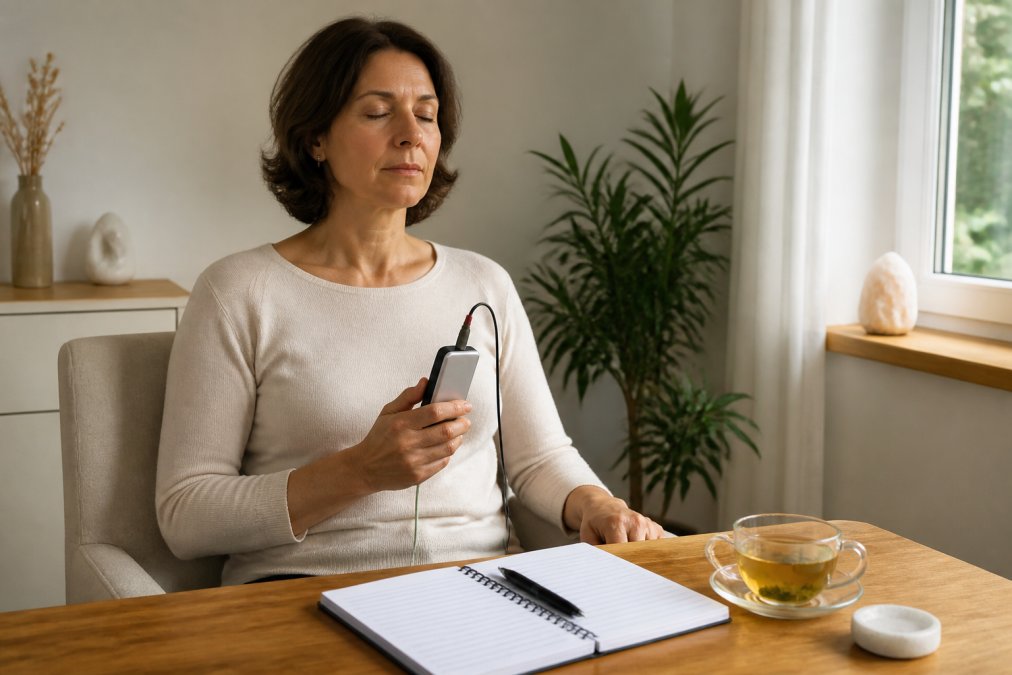
Frequency therapy for migraines and tension headaches follows a clear routine that you can adapt to your daily schedule. Consistency is key, not intensity. What’s missing from most guidebooks is, is a A specific protocol—that is, details on which carrier frequency, volume level, and session structure have proven effective in practice.
Session Structure: Duration, Intensity, Frequency
A typical session lasts between 15 and 30 minutes. During the session, you sit upright and relaxed in a quiet room with dim lighting. Choose an intensity level that feels comfortable—never uncomfortable or painful. Start with one session per day, ideally at the same time each day, and stick with this routine for at least four weeks before adjusting your regimen.
Specific Application Protocol with Frequency Ranges
The following frequency bands are based on natural brainwave patterns. They are intended as a starting point, not as a rigid rule; individual response is the deciding factor.
| Headache Type / Goal | Carrier frequency | Session duration | Time of day | Volume |
|---|---|---|---|---|
| Difficulty falling asleep, evening tension | 2–4 Hz (delta band) | 20–30 min. | 30 minutes before bedtime | Very quiet, barely audible |
| Tension-type headache, muscular | 8–10 Hz (alpha range) | 15–20 min. | In the afternoon or early evening | Quiet, pleasant |
| Migraine in the prodromal phase | 6–8 Hz (theta range) | 15 min. | At the first signs | Quiet, pleasant |
| Reducing Stress During the Day | 10 Hz (alpha range) | 10–15 min. | At lunchtime or during a break | Quiet, pleasant |
Volume: As a rule of thumb, the frequency should be just barely audible, similar to a soft background noise. If you turn up the volume to achieve „more of an effect,“ you’ll achieve the opposite: the nervous system will be activated rather than calmed.
Session Structure: Start with a 5-minute warm-up phase in the selected frequency band, followed by 10–20 minutes of main treatment and a 3–5-minute cool-down. The cool-down is important so that the body can complete the regulatory process.
Frequency: Doing this at the same time every day is more effective than irregular, longer sessions. After four weeks, review your log to determine whether an adjustment is necessary.
The most common mistake is exercising at too high an intensity in the first few days. If you start out too intensely, you risk making your headaches worse and may end up stopping the treatment out of frustration. Start low and increase gradually.
What to Look for During the Session
After each session, note down three things: your perceived level of relaxation (on a scale of 1–10), any changes in headache intensity, and the actual duration. These observations are more meaningful than the subjective feeling that „it helps“ or „it doesn’t help.“.
A common pattern: Little changes in the first two weeks, but by weeks three and four, people report falling asleep more easily and feeling less tense in the morning. Anyone who stops after two weeks misses out on exactly the period when regulation sets in.
Step 3: How to Use Radionics Software Correctly as a Naturopath
To use radionics software correctly as a naturopath, it is essential to understand that the software is a documentation and management tool, not an automated diagnostic tool. The software helps manage frequency logs, document treatment histories, and repeat treatments.
For alternative practitioners, the structured Recording is the key. Without accurate documentation, it is impossible to assess either the course or the benefits of a treatment. Be sure to record the date, frequency range, duration, and observed response for each session. This database forms the basis for any reliable assessment provided to clients.
Step 4: Combine frequency therapy with sleep hygiene and relaxation techniques
The combination of frequency therapy, sleep hygiene, and relaxation techniques is more effective than any single measure on its own. This is because chronic headaches rarely have a single cause. The sleep environment, daily rhythm, and stress management are all interconnected.
Submit a request via our contact form →
Specifically, this means: consistent bedtimes, a darkened and cool bedroom, and no screens in the hour before bedtime. It also includes relaxation techniques such as autogenic training or mindfulness exercises, which help calm the sympathetic nervous system. Frequency therapy fits into this routine as a clearly time-limited component.
Phytotherapy, aromatherapy, and acupressure as complementary therapies
Herbal remedies from phytotherapy have a long tradition of use in managing chronic headaches. Valerian, passionflower, lemon balm, lavender, and hops are traditionally used to treat difficulty falling asleep and inner restlessness. When taken as tea or added to a bath in the evening, they can be easily combined with frequency therapy.
Aromatherapy with lavender scent and acupressure on points such as between the thumb and index finger complement these measures. These techniques are not a substitute for medical treatment; they help promote relaxation.
| Action | When to Use | Frequency | Role |
|---|---|---|---|
| Frequency therapy | In the evening, at a set time | Daily, 15–30 min. | Regulatory Module |
| Herbal Medicine | Before going to bed | Daily as tea | Reassuring Support |
| Aromatherapy | While Relaxing | As needed | Sensual Support |
| Acupressure | In cases of acute stress | Several times a day | Emergency Aid |
| Sleep Log | In the morning, after waking up | Every day | Progress monitoring |
Scientific Evidence: What the Research Shows About Frequency Therapy for Headaches
The scientific evidence regarding frequency therapy for headaches is limited and is interpreted in various ways. Anyone who uses this method should be aware of this. The key point, however, is this: there is a difference between „insufficiently proven“ and „disproven.“ The research on frequency therapy is more incomplete than negative, and it is precisely this gap that makes an honest assessment more important than any promise.
A Well-Researched Topic: Brain Waves and Pain Processing
The scientific basis for frequency therapy has been well researched, even if its application itself has not. What is certain is:
- Brain wave patterns can be measured and vary depending on the level of wakefulness. Delta (0.5–4 Hz) occurs during deep sleep, theta (4–8 Hz) during relaxed wakefulness, and alpha (8–12 Hz) during calm attention.
- Chronic headaches are often accompanied by sleep disturbances. The relationship between sleep quality and pain perception is well documented in sleep research.
- Relaxation techniques can influence the perception of pain. This has been demonstrated for techniques such as autogenic training and progressive muscle relaxation, and frequency therapy is often used in this context in clinical practice.
Conclusion: Frequency therapy is based on a plausible mechanism (regulation via frequency patterns), but direct causal evidence for headache reduction through the use of frequency therapy is still lacking.
What is not sufficiently substantiated
There is a lack of large-scale controlled studies on the specific effects of frequency therapy on chronic headaches. Specifically, this means:
- There are no reliable figures on the average reduction in pain.
- There are no standardized protocols that have been compared in studies.
- Most reports come from real-world practice, not from clinical research.
Reputable providers make a clear distinction between proven effects and anecdotal evidence. This distinction is the most important measure of quality in a field where many promises are made. The Cochrane Library on Complementary Therapies for Headaches points out that complementary treatments for migraine show some positive, but weak, effects. Individual monitoring based on a well-maintained protocol remains crucial.
How to Evaluate Evidence for Yourself
Since there is little research available on this topic, personal observation becomes the most important measure. Three rules can help with this:
- Measure first. Without baseline values from the pain log (see Step 1), it is not possible to demonstrate any change.
- Watch it for long enough. Eight to twelve weeks is a realistic timeframe. Short-term fluctuations are not very meaningful.
- Do a cross-check. If possible, alternate between using the product and taking a break, and compare the readings. This will help you determine whether the change is related to the product's use.
Don't evaluate your results until eight to twelve weeks have passed. Short-term fluctuations aren't very meaningful; the trend over several weeks is what matters.
Context: What This Means for Practical Application
The limited evidence is not a reason to reject the method, but rather a reason to assess it honestly. Frequency therapy is not a substitute for a medical evaluation or necessary medication. It is a complementary approach whose benefits can only be assessed on an individual basis and over an extended period of time. Those who accept this can use the method responsibly. Those who expect quick, guaranteed results will be disappointed.
Common Mistakes and When to Seek Medical Advice
Common mistakes usually stem from impatience. Five points come up time and time again:
- Too much intensity right from the start
- Irregular use without a set schedule
- No pain assessment protocol, so there is no basis for comparison
- Discontinued after a few days due to lack of effect
- Decision not to seek a medical evaluation of the causes
You should seek medical advice if you experience a sudden, severe new headache; a headache following an accident; accompanying neurological symptoms such as vision problems or signs of paralysis; or a fever accompanied by neck stiffness. Even if your headache pattern changes for no apparent reason, this should be investigated. The Austrian Headache Society provides information on where to find specialists.
Conclusion: Frequency therapy as a building block, not a substitute
Using frequency therapy for chronic headaches means understanding it as part of a broader plan. It is not a substitute for medical evaluation or medication when necessary. However, it can support the nervous system’s ability to regulate itself when administered regularly, at low doses, and with proper documentation.
This is precisely the approach Herbert Eder conveys in his seminars and professional articles: clear explanations of complex concepts, a clear identification of possibilities and limitations, and personalized guidance for users and therapists. Anyone who wants to use frequency therapy responsibly will find a structured foundation for doing so there.
Chronic headaches require patience and a method that can be objectively evaluated. Since 1994, Herbert Eder has been supporting users and professionals by providing practical knowledge, personalized guidance, and a clear understanding of what frequency therapy can and cannot achieve. Those who wish to learn the method thoroughly and apply it responsibly will find seminars and expert articles by Herbert Eder that combine theory and practice. Get started with Herbert Eder and gain a solid foundation for your own practice.
Frequently asked questions
How does frequency therapy work for chronic headaches?
Frequency therapy uses electromagnetic or acoustic vibrations within specific ranges to affect the body. It is used to treat chronic headaches by influencing pain processing and the circadian rhythm. The frequency range, duration, and regularity of treatment are crucial. A session usually lasts 20 to 40 minutes. Initial improvements often become apparent after two to four weeks of regular treatment. Frequency therapy does not replace a medical evaluation; rather, it complements it.
Is there scientific evidence supporting the use of frequencies to treat headaches?
The body of research is limited. Individual studies on electromagnetic fields and sound therapy suggest effects on pain perception and relaxation; however, there is a lack of large, controlled studies specifically on chronic headaches. Frequency therapy is therefore classified as a complementary approach, not as a proven monotherapy. Those who use it should document their progress using a pain diary and discuss it with their treating physicians.
How does frequency therapy differ from conventional pain treatments?
Conventional pain treatments typically rely on medications, physical therapy, or injections that have a directly measurable effect on inflammation and pain pathways. Frequency therapy works with vibrations and focuses on regulation rather than blocking. It is used as a complementary treatment, for example, when medications cause side effects or are not effective enough. A combination therapy consisting of medical treatment, sleep hygiene, and frequency therapy is more effective than an “either/or” approach.
Can frequency therapy be used in conjunction with medical treatments?
Yes, it can be used as a complementary treatment, provided the treating physician is informed. It is important to note that frequency therapy should not be considered a substitute for prescribed medications. If you have an implanted device such as a pacemaker, are pregnant, or are experiencing acute neurological symptoms, consult your doctor beforehand. Keep a sleep log to objectively track any changes so you can discuss them during your appointment.


Comments are closed, but trackbacks and pingbacks are open.