







Last updated: October 30, 2026
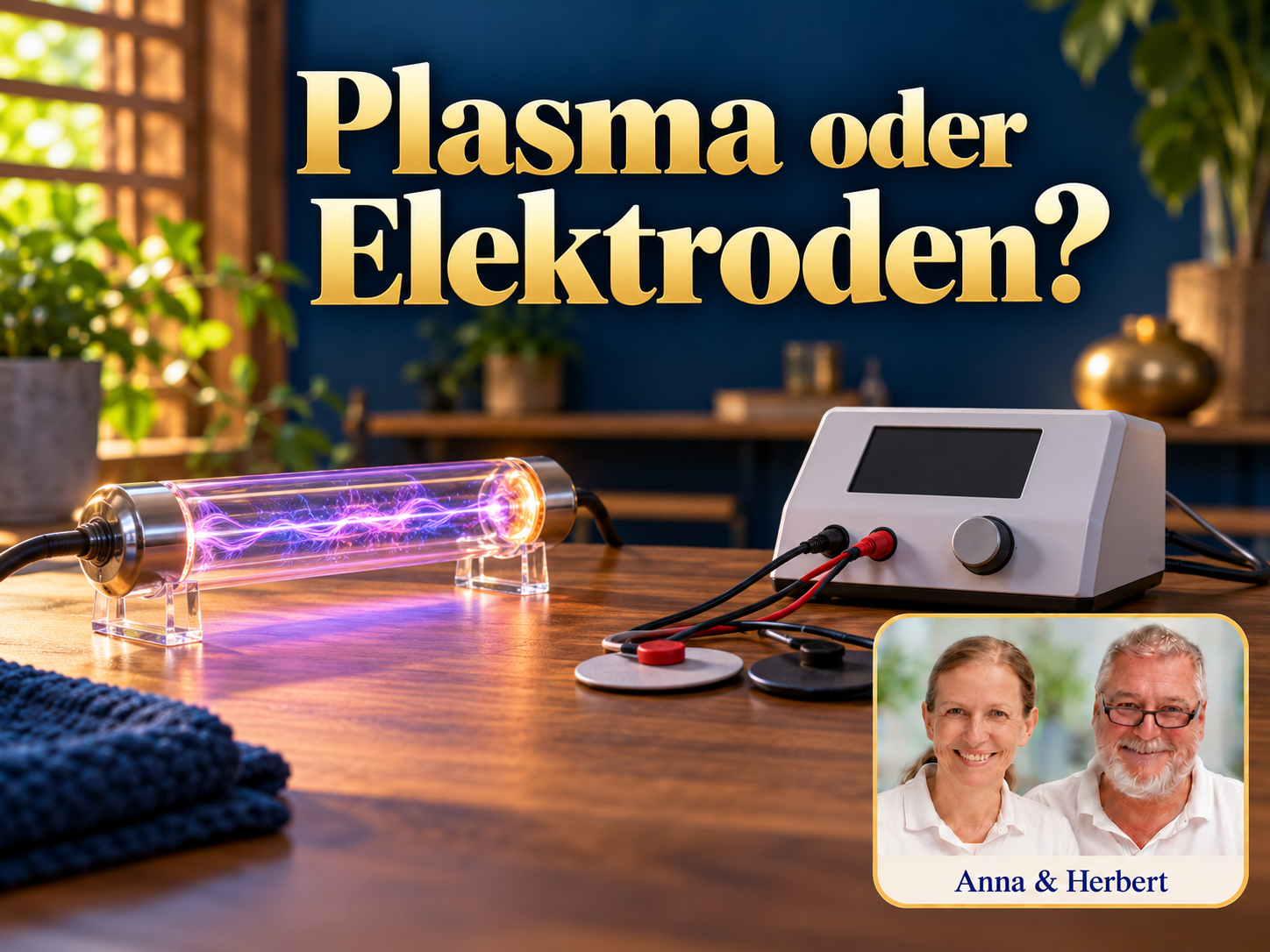
Plasma generators and zappers often differ in how they emit signals. A contact device uses skin contacts; a plasma system can excite a gas discharge tube. No general conclusion can be drawn from this—that one device reaches only superficial areas and the other heals more deeply. A valid comparison must start with the specific model and distinguish between technical function, exposure to the body, and clinical benefit.
Device names are not yet a complete description
The Spooky Central manufacturer's manual provides examples of separate connections for plasma, contact, coil, and ultrasound. A system can thus include several physically distinct operating modes. The technical description confirms the intended design of the system, not the medical effects claimed in the same document. [1]
To facilitate comparison, be sure to note the manufacturer, model, accessories, and the actual output used. A program name or frequency value does not necessarily reveal what physical stimulus is produced. Technical specifications for a product with a similar name should not be assumed to apply here either.
A glowing tube displays a gas plasma
According to the description provided by the Max Planck Institute for Plasma Physics, a plasma consists of free electrons and ions. It can be electrically conductive; a fluorescent tube is a clear example of a gas discharge. [2] However, visible brightness does not indicate any effect on an organ or a pathogen.
A distinction must be made between electrical power consumption, output signals, and the actual exposure to the body. For contact applications, electrodes, skin contact, and signal shape must also be considered; for field applications, factors such as geometry and distance come into play. Current distributes itself according to the available electrical paths. The simplified statement that it flows exclusively along a single, shortest path does not adequately describe this distribution.
Which figures are truly comparable
| Question | Required Information |
|---|---|
| What does the device produce? | Signal shape, frequency, current or field strength, and operating mode |
| What does the goal achieve? | Measurement or a reproducible model under specific application conditions |
| What will improve? | Clinical data on the appropriate patient population and target variable |
| What are the disadvantages? | Contraindications, adverse effects, costs, and follow-up expenses |
Carrier frequency, modulation frequency, and pulse repetition are different specifications. A higher number therefore does not automatically mean greater penetration depth or greater benefit. Similarly, a long list of programs does not guarantee an appropriate treatment.
Medical cold plasma is a separate procedure
In 2020, Stratmann and colleagues investigated the use of a localized argon plasma jet for diabetic foot ulcers. They analyzed 62 ulcers from 43 patients. Both groups received standard care; in addition, patients received eight treatments with plasma or a sham treatment. The wound area decreased more significantly with the specific plasma treatment. No statistically significant difference between the groups was observed in terms of reduction in infection or microbial load. [3]
The study thus confirms a specific finding regarding a specific wound treatment method. It does not examine the remote effects of a closed tube on internal organs, nor does it examine the general elimination of pathogens. A provider who cites this study in connection with another product must explain how the two are comparable.
Conduct a thorough review of safety and labeling
For example, the FDA has reported cases of skin irritation, burns, and malfunctions of implanted devices associated with electrical muscle stimulators. This is a different class of devices and does not allow for a blanket risk assessment for “zappers.” However, it illustrates why the design and instructions for use must be taken into account. [4]
A CE marking indicates compliance with the relevant product requirements. Depending on the product, a notified body may be involved. This does not constitute confirmation of any advertising claim regarding any disease. [5] The intended use and appropriate documentation remain crucial.
A fact-based decision may therefore leave open the question of whether one of the devices being compared offers a medical benefit. In addition, the articles explain Electroporation and alleged spike removal, why technical analogies cannot replace clinical evidence.
The Comparison of Specific Plasma Devices provides a more in-depth examination of model specifications and accessories. It also explains how a technical comparison can be combined with an evaluation of studies based on indications. A Comparison of TENS and PEMF.
Sources and Further Information
- Spooky2: Spooky Central User’s Guide, referred to in the document as July 2020. Verified on October 30, 2026.
- Max Planck Institute for Plasma Physics: Plasma. Verified on October 30, 2026.
- Stratmann et al. 2020: Cold Atmospheric Plasma for Diabetic Foot Ulcers—A Randomized Trial, PubMed Abstract. Verified on October 30, 2026.
- FDA: Electronic Muscle Stimulators. Verified on October 30, 2026.
- European Union: CE Marking. Verified on October 30, 2026.
Topic Overview: Devices and technology.



Comments are closed, but trackbacks and pingbacks are open.