






Table of contents
- What Sets Classical Frequency Therapy Apart from Alternative Approaches
- Bioresonance Therapy: Gentle Vibrations to Get You Started
- Sound Therapy: Healing Frequencies Through Hearing and Feeling
- Light Therapy: Frequency Applications Using Visible Light
- Experiences with Frequency Healing: What Users Report
- Comparison Chart: An Overview of Frequency Therapy and Alternatives
- Vagus nerve stimulation and neurofeedback as noninvasive options
- Decision-Making Guide: Which Method Is Right for Your Goal?
- Safety, Contraindications, and Realistic Expectations
- Costs, Access, and Practical Implementation for Beginners
- Step by Step: How to Explore Alternatives to Frequency Therapy
- Conclusion: Sound guidance instead of promises of salvation
- Frequently asked questions
Last updated: October 12, 2026
What Sets Classical Frequency Therapy Apart from Alternative Approaches
Anyone who is new to Alternatives to Traditional Frequency Therapy for Beginners Anyone who looks into this topic quickly encounters a fundamental problem: the terms are thrown around haphazardly. Frequency therapy, Bioresonance, Sound therapy, light therapy—many of these terms sound similar but refer to completely different things. This overview by Herbert Eder is intended to provide clarity before you invest your money or time.
Conventional Frequency Therapy is the application of electromagnetic frequencies, electrical pulses, or frequency fields to the body, usually via electrodes or specialized devices. It is a form of complementary medicine and is often combined in practice with bioresonance, vital field measurement techniques, or information medicine.
The alternatives differ primarily in that, like the appeal comes across:
- About Electrical Signals (classical frequency therapy, bioresonance, vagus nerve stimulation)
- About Sound and Vibration (Sound therapy, breathing therapy with sound)
- About Light (Light therapy, colored light treatments)
- About Feedback from the Brain (Neurofeedback)
The key point for beginners: Not every method is suitable for every goal. Someone who wants to relieve pain needs a different approach than someone who wants to improve the quality of their sleep. And not every gentle method is automatically effective just because it feels good.
The most important difference lies not in the „frequency,“ but in the transmission path. Anyone who understands this can evaluate offers much more effectively.
Bioresonance Therapy: Gentle Vibrations to Get You Started
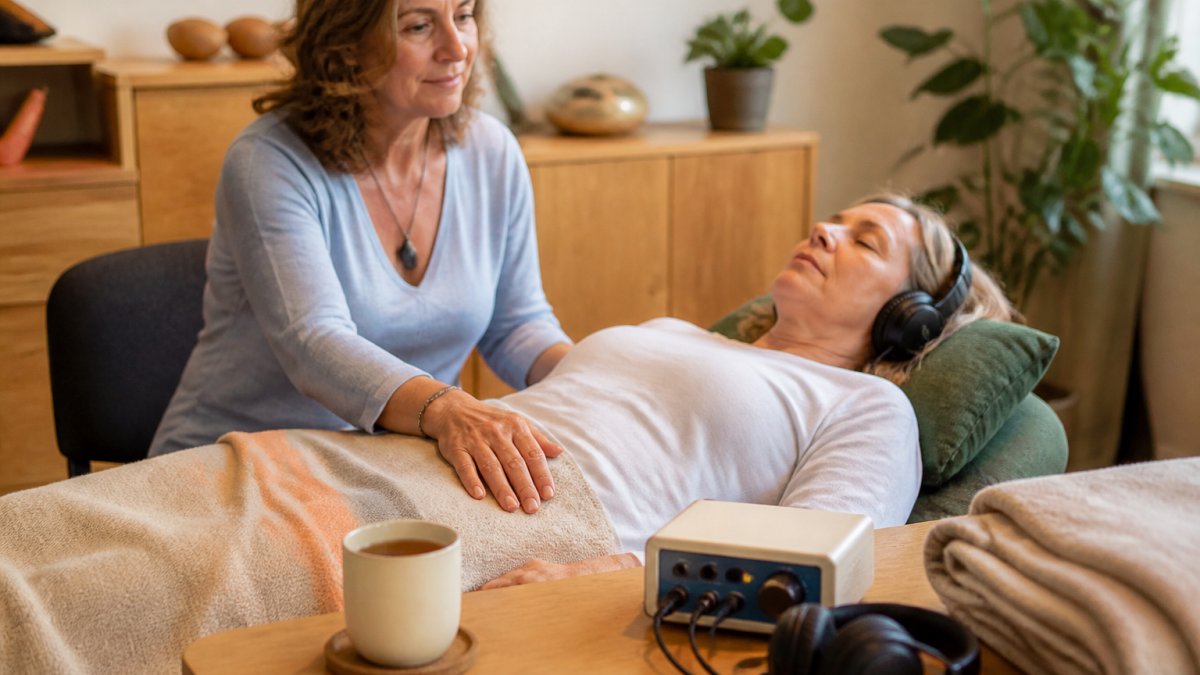
The Bioresonance Therapy This is probably the best-known introduction to the world of frequency applications. It is based on the assumption that the body emits its own electromagnetic vibrations, which can be measured and influenced. In practice, this is done using hand-held electrodes or contact pads.
Bioresonance is appealing to beginners because it is considered particularly gentle and does not require needles or medication. A typical session lasts between 30 and 60 minutes, during which the client sits or lies down in a relaxed position.
What you can realistically expect: Many users report a general sense of relaxation after the treatment. However, this does not guarantee relief from specific symptoms. The scientific evidence for bioresonance is limited, and reputable providers are open about this.
A common mistake made by beginners: treating bioresonance as a substitute for a medical evaluation. Chronic pain, persistent sleep disturbances, or unexplained symptoms should first be addressed by a medical professional.
Anyone who uses bioresonance to treat unclear or new symptoms without first consulting a doctor risks delaying the diagnosis of a serious illness. “Complementary” means supplementary, not a substitute.
Sound Therapy: Healing Frequencies Through Hearing and Feeling
Sound therapy uses audible frequencies—from singing bowls, tuning forks, or special sound devices. The stimulation is transmitted through the ear and via vibrations that the body absorbs. This makes it one of the most accessible Alternatives to Traditional Frequency Therapy For beginners.
There are two main approaches:
- Receptive Sound Therapy: The client listens and lets the sounds sink in.
- Active Sound Work: The client produces the sounds themselves, for example by humming or playing instruments.
Sound therapy is often associated with stress relief and relaxation. It can be easily combined with breathing therapy, which makes it appealing to people who experience inner restlessness. The treatment is non-invasive and does not require the purchase of any equipment if you try it with a practitioner.
One caveat: If you have tinnitus or existing hearing problems, you should consult a specialist first. Loud or unfamiliar frequencies may be unpleasant.
Light Therapy: Frequency Applications Using Visible Light
Light Therapy It works with light of specific wavelengths—that is, with electromagnetic frequencies in the visible spectrum. It is best known for its use in treating seasonal lethargy during the darker months.
There are two forms that are relevant for beginners:
- Daylight Lamps with high illuminance, usually used in the morning for 20 to 30 minutes
- Colored Light Applications in naturopathy, often combined with massage or lymphatic drainage
The treatment is simple and easy to incorporate into your daily routine. If you have a quiet quarter of an hour in the morning anyway, you can fit in a light therapy session then. If you have certain eye conditions or light-sensitive skin, it’s a good idea to consult a doctor first.
Light therapy is one of the more thoroughly studied treatments in this field, particularly for treating seasonal mood disorders (pubmed.ncbi.nlm.nih.gov). This makes it one of the more reliable options for beginners who are looking to get a sense of the general atmosphere and daily rhythm.
Experiences with Frequency Healing: What Users Report
Testimonials are the most sensitive aspect of this topic. Anyone looking for Experiences with Frequency Healing If you search online, you'll find everything from euphoric enthusiasm to sharp criticism. Neither is very helpful to beginners.
What can be gleaned from many reports:
- Frequently mentioned: better relaxation, more restful sleep, a general sense of well-being
- Rarely documented: Effective treatment of chronic diseases
- Important to know: Testimonials are individual cases, not evidence
The placebo effect plays a major role in this field (pubmed.ncbi.nlm.nih.gov). That is no reason to dismiss these methods—the placebo effect is real and can influence well-being. However, it is a reason to be cautious about claims of a cure. (Source: Guidelines for Pain Management)
An honest approach to experiences with frequency healing means viewing reports as indications of possible positive effects, not as guarantees. Anyone who tries this method should observe themselves and take stock honestly after a few weeks.
Keep a simple journal: date, method, duration, and how you feel before and after. After four to six weeks, you'll start to see patterns that no online review can provide.
Comparison Chart: An Overview of Frequency Therapy and Alternatives
The following table categorizes the most important approaches by type of stimulus, typical application, and the purpose for which they are most commonly used. It is not a substitute for professional advice, but it does provide an initial guide.
| Method | Type of stimulus | Typical Application | A frequently mentioned goal | Evidence base |
|---|---|---|---|---|
| Conventional Frequency Therapy | Electromagnetic, current pulses | 20–60 min., at the clinic or at home | Pain, Well-Being | Limited, inconsistent |
| Bioresonance Therapy | Electromagnetic Oscillations | 30–60 min., hands-on | Stress, General Well-Being | Limited |
| Sound therapy | Noise, Vibration | 20–45 min., individual or group | Stress, Relaxation | Partially investigated |
| Light Therapy | Visible Light | 20–30 min., usually in the morning | Mood, Daily Rhythm | Relatively well studied |
| Vagus Nerve Stimulation | Electrical pulses | Brief daily use | Relaxation, Sleep | Under Investigation |
| Neurofeedback | Feedback from Brain Activity | 20–40 min., at the clinic or at home | Concentration, Sleep | Partially investigated |
It's striking: The stronger the evidence, the less spectacular the promise usually is. That's no coincidence.
Vagus nerve stimulation and neurofeedback as noninvasive options
Two approaches have gained significant attention in recent years because they do not require traditional frequency devices.
Vagus Nerve Stimulation works by using gentle electrical impulses that are transmitted through skin contact on the neck or ear. A well-known example from the wellness sector is Pulsetto, a device that, according to the manufacturer, is intended for daily use of about four minutes and is associated with relaxation and better sleep. The device differs fundamentally from traditional Frequency therapy-devices.
Neurofeedback takes a different approach: Instead of providing an external stimulus, the system measures brain activity and feeds it back to the user. The user learns to recognize and influence their own patterns. Among the options for home use are Muse and Mendi.
- Muse is classified as a neurofeedback system for home use.
- Mendi appears in the same comparisons as another home option.
- Both systems represent a different approach from traditional frequency therapy.
Anyone evaluating these devices should ask the same question as with any other method: What exactly do I want to achieve, and how will I know if it's working?
Decision-Making Guide: Which Method Is Right for Your Goal?
The choice depends less on the method than on the goal. This classification has proven useful in practice:
Submit a request via our contact form →
- Goal: Reduce stress and find peace → Sound therapy or breathing therapy, which can be easily combined with massage
- Goal: Stabilize daily rhythm and mood → Light Therapy
- Goal: Improve Sleep → Vagus nerve stimulation, sound therapy, or neurofeedback, depending on your preference
- Goal: Address pain as it occurs → Traditional frequency therapy or bioresonance, always in consultation with a healthcare provider
- Goal: Concentration and Self-Awareness → Neurofeedback
A second factor is whether you at home want to practice or are looking for guidance. Device-based methods such as neurofeedback or vagus nerve stimulation require purchasing the equipment and learning how to use it. Practice-based methods such as bioresonance or sound therapy require appointments and travel.
If you're unsure, you should start with the method that has the lowest barrier to entry. Trying things out is better than doing too much research beforehand.
Safety, Contraindications, and Realistic Expectations
Gentle does not mean risk-free. This section categorizes each method according to Level of Evidence and Security Profile one—that's the part most overviews leave out.
An Overview of Levels of Evidence
- Level A – well-studied: Light therapy for seasonal affective disorder. Several controlled studies; mentioned as an option in clinical guidelines.
- Level B – partially examined: Neurofeedback for ADHD and sleep problems; sound therapy for stress and anxiety. Small studies, mixed results.
- Level C – limited evidence: Vagus nerve stimulation in the wellness sector (the clinical version has more evidence supporting its effectiveness than home devices).
- Level D – rarely used: Bioresonance Therapy, Classical Frequency therapy for specific clinical presentations. Primarily case reports.
Anyone familiar with these stages can immediately tell which promises are substantive and which are not.
Contraindications and Precautions
Consult a doctor regarding the following points before each use:
- Pacemaker, implantable defibrillator, neurostimulator, insulin pump: No electrical or magnetic applications without approval.
- Epilepsy or seizure disorders: Flashers and neurofeedback can trigger seizures—but only under professional supervision.
- Pregnancy: Avoid electrical treatments on the abdomen or back; sound and light therapy are usually safe, but check with your doctor first.
- Acute infections, fever, thrombosis, recent injuries: Do not apply to affected areas.
- Metal implants, cochlear implants, heart valves: Consult with us regarding electromagnetic methods.
- Severe mental illnesses: Neurofeedback should only be used in consultation with your treating physician or therapist.
Possible Side Effects
- Skin irritation with electrodes, adhesive electrodes, or light-based treatments (redness, itching).
- Headache, dizziness, fatigue after sound or neurofeedback sessions—usually temporarily.
- Restlessness or paradoxical reactions during vagus nerve stimulation, especially in the first few days.
- Worsening of Tinnitus possible with unfamiliar sound frequencies.
Drug Interactions
Interactions are rarely documented with complementary therapies, but they cannot be ruled out. Please note in particular: (Source: Fundamentals of Light Therapy)
- Psychotropic drugs (Antidepressants, antiepileptic drugs): Neurofeedback and light therapy may affect their efficacy—do not adjust the dose on your own.
- Blood pressure medications: Vagus nerve stimulation can lower the heart rate.
- Anticoagulants: Use caution when applying electrodes to sensitive skin.
Red Flags with Service Providers
- Promise of Salvation for specific diseases (cancer, diabetes, autoimmune diseases).
- Waiver of Medical Evaluation as a condition.
- High-Priced Packages without an individual session for testing.
- No written invoice or no information provided regarding education.
- The pressure to make a decision right away.
When a Medical Evaluation Is Required
- New, unexplained, or rapidly worsening symptoms.
- Chronic pain without a diagnosis.
- Sleep disturbances lasting more than four weeks.
- Weight loss, fever, and night sweats with no apparent cause.
- Mental health symptoms such as persistent low mood or anxiety.
"Complementary" means supplementary, not a substitute. Anyone who treats a serious illness with frequency or sound therapies without first having it diagnosed risks losing valuable time. These methods can promote well-being—they are not a substitute for a diagnosis or medical treatment.
This is precisely the stance Herbert Eder has taken since 1994: a responsible assessment rather than promises of a cure, clear explanations of complex issues, and a clear distinction between what has been proven and what remains unclear.
Costs, Access, and Practical Implementation for Beginners
The issue of cost is where most beginners run into trouble—not because of the method itself, but because of a lack of transparency. Here is a realistic overview based on actual prices charged by Austrian practices and equipment offers. All figures are estimates, not guarantees.
Typical price ranges per individual session (60 minutes, Vienna and state capitals):
- Sound Therapy (Individual): 40–90 euros; group session: 15–30 euros per person
- Bioresonance Therapy: 60–150 euros, often as an initial consultation with an additional fee
- Light Therapy in Practice: 30–70 euros; a home-use daylight lamp costs 80–250 euros (one-time purchase)
- Neurofeedback (Practice): 70–120 euros per session; 10–20 sessions are typical
- Vagus Nerve Stimulation (Clinical Practice): 40–80 euros; home devices typically cost between 150 and 400 euros, depending on the provider
If you do the math, you’ll quickly see that one in-office session per week over three months costs between 500 and 1,800 euros. A home device is more expensive up front, but the ongoing costs are lower—provided it’s actually used.
Overview of Access Routes:
- Ordination or Practice (General medicine, physical therapy, psychotherapy with additional training): The traditional route, which often involves a waiting period.
- Practitioners similar to alternative practitioners and energy healing practices: In Austria, this is not protected by law as it is in Germany—be sure to check their training and references.
- Group Offers At adult education centers, health centers, or yoga studios: easily accessible, often 10–25 euros per session.
- Using it at home: Devices, apps, or books. Advantage: no time constraints. Disadvantage: no expert feedback.
Cost Subsidy and Reimbursement:
- Social health insurance generally does not cover these treatments—they are classified as elective or private services.
- Private Supplemental Insurance Some reimburse expenses for alternative medicine or complementary treatments, usually subject to an annual limit and upon submission of an invoice.
- Tax Deductibility: Expenses for certain complementary treatments may, under certain circumstances, be claimed as extraordinary expenses—check with a tax advisor.
- Voluntary Insurance Benefits Some health insurance plans (such as those offering health promotion programs) sometimes cover group classes but not individual therapy sessions.
Realistic expectations regarding the time required:
- Sound therapy and light therapy, if at all, show results after 2–4 weeks of regular use.
- Neurofeedback usually requires 10–20 sessions before any changes become apparent.
- Vagus nerve stimulation is usually tested daily over a period of several weeks.
- Bioresonance: Reputable providers recommend 3–6 sessions as a trial period, not immediate results.
A handy checklist before your first appointment:
- Write down your goal in one sentence (sleep, stress, pain, concentration).
- Ask about the provider's training and experience.
- Request a written statement specifying the price per session, the number of recommended sessions, and the cancellation policy.
- When purchasing an item: Clarify the return period, the right to cancel an online purchase (14 days within the EU), and the warranty.
- Take stock honestly after four to six weeks—not after three days.
If you buy a device before you’ve clearly defined your goal, you’ll be spending money on something that will end up sitting in a drawer. First, define your goal; then, choose a method; then, buy—and always check the return policy.
A single session or group class rarely costs more than 30 euros and provides more information than any product description. If you don't notice a difference after three sessions, you should switch methods instead of continuing to invest.
Step by Step: How to Explore Alternatives to Frequency Therapy
This order has proven effective for beginners. It's inexpensive and helps prevent making the wrong purchases.
- Clearly state your complaint or objective. Write down in one sentence what you want to improve: sleep, stress, pain, concentration.
- Consult a doctor. If you have persistent or new symptoms, see a doctor first. This doesn't rule anything out—it protects you.
- Select two methods. From the comparison table, select the two approaches that best fit your goal.
- Try one session at a time. A single session speaks louder than any description online.
- Keep a journal. Write down the date, duration, and how you felt before and after.
- Take stock after four to six weeks. If nothing has changed, try a different method or stop the experiment.
- When purchasing a device: Check the return policy. Check in advance whether and how you can return the device.
For Steps 3 and 4, it helps to take a look at the terms that constantly come up in this field: vibrations, frequency fields, measurement methods, and natural frequencies. If you can make sense of these terms, you’ll be able to tell more quickly which approaches are substantive and which rely solely on jargon.
If you prefer structured guidance to self-study, Herbert Eder offers seminars and expert articles that provide exactly this kind of context. The approach combines practice, research, and training so that users and therapists can make informed decisions rather than relying on promises.
Conclusion: Sound guidance instead of promises of salvation
For beginners, the search for alternatives to traditional frequency therapy rarely ends with a single correct answer. It ends with an attitude: stay curious, but be discerning. Methods such as bioresonance, sound therapy, and light therapy are accessible and generally well-tolerated. What they can do is support well-being. What they cannot do is replace a medical evaluation.
Those who proceed with a clear goal, a short trial period, and an honest assessment lose little and learn a lot. Those who let themselves be guided by promises of a quick fix lose time, money, and possibly more.
Frequently asked questions
What are some alternatives to traditional frequency therapy?
Among the best-known alternatives are bioresonance therapy, sound therapy, light therapy, vagus nerve stimulation, and neurofeedback. These methods differ in terms of technique, application, and scientific evidence. Bioresonance and sound therapy are frequently used in complementary medicine, while neurofeedback and vagus nerve stimulation have been more extensively researched. Beginners should choose methods based on their goals, the effort required, and personal preference, and seek professional advice beforehand.
What experiences have people had with frequency healing?
Reports on experiences with frequency healing vary widely. Some users describe feelings of relaxation, better sleep, or reduced stress, while others notice no change. Since these are often subjective impressions and there is a lack of controlled studies, no general conclusions about its effects can be drawn. Anyone trying frequency healing should view it as a complementary measure and discuss it with a doctor or therapist.
What is the difference between frequency therapy and bioresonance?
Both methods use electromagnetic frequencies, but differ in theory and equipment. Classical frequency therapy often uses predetermined frequency patterns, while bioresonance therapy, according to its providers, is intended to measure and mirror the body’s own vibrations. Scientifically, there is no plausible evidence to support bioresonance. Beginners should critically evaluate both approaches and give preference to reputable sources that clearly distinguish between them.
What methods are suitable for beginners with no prior knowledge?
For beginners, methods with a low barrier to entry are recommended: sound therapy using singing bowls or headphones, light therapy with daylight lamps, and guided breathing and relaxation exercises. Neurofeedback systems for home use are also available, but they require some training. It’s important to start with a method that can be easily integrated into your daily routine and to seek medical advice in advance if you have any health concerns.
How can the effectiveness of alternative frequency methods be assessed?
A reliable assessment is based on scientific evidence, not on individual reports. Ask about the available research, certification seals, and clear information on limitations. Methods such as bioresonance or sound therapy are not considered to have scientifically plausible evidence, while neurofeedback and vagus nerve stimulation have been better studied. Look for providers who openly state the possibilities and limitations rather than making promises of a cure.
It can be difficult to navigate this field because sound assessments and grandiose promises often go hand in hand. This is exactly where Herbert Eder comes in: with experience in frequency therapy dating back to 1994, a responsible assessment of possibilities and limitations, and structured knowledge transfer through seminars and expert articles. If you’re looking for sound knowledge rather than promises of a cure, Herbert Eder offers the right guidance to help you get started.



Comments are closed, but trackbacks and pingbacks are open.